
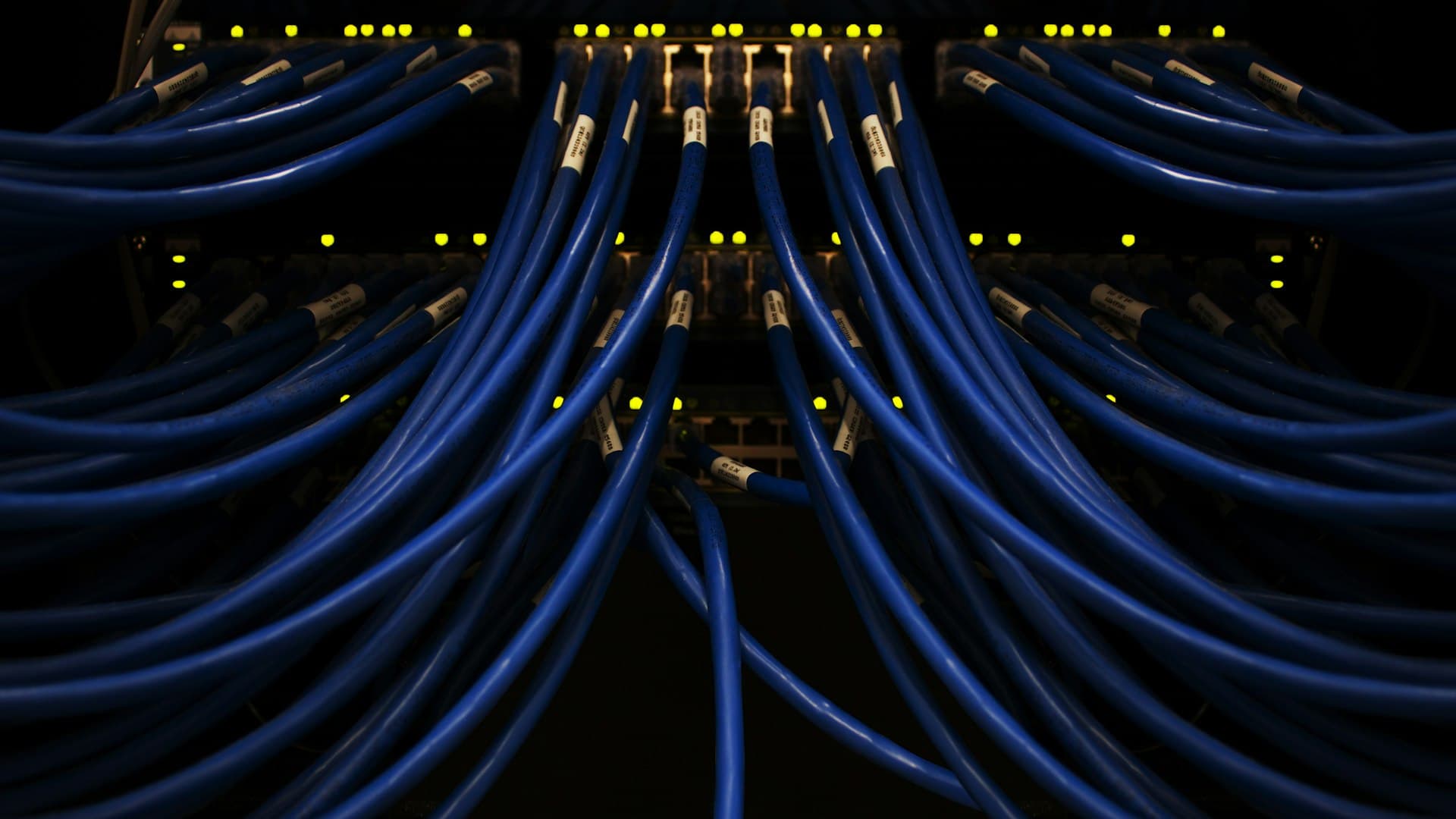
Every few months a major service fails in a way that takes a large part of the internet with it, and the cause turns out to be something in the layer everyone assumed had been abstracted away.
Abstraction hides the layer, it does not delete it
The story told about infrastructure over the last fifteen years is that it disappeared into the cloud. Servers became instances, then containers, then functions. Networks became configuration. Storage became an interface.
Each of those moves is real and useful, and none of them removed anything. The packet still has to reach a destination. The name still has to resolve. The certificate still has to be valid and current. The disk still has capacity. The clock still has to agree with other clocks.
What changed is who notices when one of those fails, and how hard it is to see.
Abstraction moves the failure further from the person experiencing it, which makes the fault harder to find and the person who can find it more valuable.
This is the working argument for the direction. Not nostalgia for racking servers, but the observation that the number of people who can reason about what is actually happening underneath has fallen faster than the need for them.
What the direction covers
The scope: operating systems, hardware, networks, servers, administration and troubleshooting.
Four areas.
Networking. Addressing, routing, name resolution, load balancing, firewalls and the path a request actually takes.
Operating systems. Processes, permissions, filesystems, services and logs, on the platforms the organisation runs.
Identity and directory. Authentication, authorisation, certificates and the systems that issue them.
Operations. Monitoring, backup and recovery, capacity, patching and structured troubleshooting.
It is always DNS, and why that joke is true
The running joke among infrastructure engineers points at something real about how systems fail.
Name resolution sits underneath almost everything, is invisible when working, and produces symptoms that look like other problems entirely. An application appears slow when resolution is timing out. A service appears down when a record points at a decommissioned address. A change propagates unevenly because of caching at several layers, so the system is broken for some users and fine for others, which is the hardest failure pattern to diagnose.
Three other members of the same family cause a similar share of incidents for the same reason.
Certificates. They expire. On a date that was known years in advance. Major outages at large organisations have been caused by exactly this, repeatedly, because renewal was manual and the person who knew about it left.
Time. Clock drift breaks authentication protocols, invalidates certificate checks, corrupts log correlation and causes distributed systems to behave incoherently. It presents as an authentication problem, so people investigate authentication.
Routing and path. Asymmetric routes, path changes, firewall rules added for one purpose and affecting another. Symptoms appear intermittently and only for some sources.
What unites them is that each is infrastructure everyone depends on and nobody owns, and each produces symptoms at a layer far from the cause. Engineers who know to check these first resolve in minutes what otherwise takes a day.
Where this sits in the domain
IT systems and computer networks is the seventh of eight directions in Astra Trainer's AI, data and computing domain, and it functions as a supply line for the rest of it. Cloud computing and DevOps, cybersecurity and platform engineering all recruit from here, and all of them rest on the understanding this direction builds.
It connects most directly to computer science for the operating system and network model, and to cybersecurity, where the ability to reason about what a system is really doing is the foundation of detection and response. You can see the eight directions here.
Troubleshooting is a method, not a talent
The most transferable and least taught capability in this direction. It is treated as something people either have or do not, and it is a procedure.
Establish what actually changed. Systems that worked yesterday and fail today usually changed, even when everyone says nothing changed. Deployments, certificate renewals, rule updates, expired credentials, a full disk crossing a threshold.
Define the scope precisely. All users or some. All locations or one. All the time or intermittently. Each answer eliminates whole categories of cause, and imprecision here is why investigations wander.
Work along the path. A request traverses a known sequence of components. Test at points along it and determine where behaviour stops matching expectation. This converts an open-ended problem into a search with a finite answer.
Change one thing at a time. Changing several and finding it works leaves you not knowing why, which means you cannot prevent it and cannot fix it next time.
Read the logs properly. Not the last error, which is frequently a downstream effect, but the first anomaly and the sequence around it, with times correlated across systems.
Know when to restore rather than diagnose. During an outage, restoring service and investigating afterwards is often correct. Confusing recovery with root cause is how the same incident recurs.
Taught explicitly, this makes ordinary engineers dramatically more effective. Left implicit, people develop it over years or never.
The career problem this direction actually has
Worth naming plainly, because it is the real constraint and it is not technical.
Infrastructure work is treated as overhead. It appears in budgets as cost, it is measured by absence of problems, and it is noticed almost exclusively when something fails. Development builds things that get announced. Infrastructure keeps things running, which produces no announcements.
Four consequences follow.
Pay and status trail adjacent roles with comparable or lesser difficulty, which pushes capable people out of the discipline.
Investment arrives after incidents and recedes afterwards, so capability is built reactively.
Outsourcing removed the training ground. The junior roles where infrastructure understanding was built have in many organisations been contracted out, which is the same pipeline blockage described in the cybersecurity direction.
The knowledge is undocumented and personal. Which systems matter, what normal looks like, where the strange dependency is. It leaves with the person, and the replacement rebuilds it slowly and expensively.
An organisation that wants cloud, security and platform capability should recognise that it is currently underinvesting in the population those disciplines recruit from, and that this is a decision it can reverse cheaply.
The roles, named
Systems administrators, across the major platforms.
Network engineers and architects.
Infrastructure engineers.
Identity and directory specialists.
Storage and backup engineers, whose importance becomes obvious exactly once.
Virtualisation specialists.
End user computing and endpoint engineers.
Service desk and technical support, the most common entry point into the whole domain.
Data centre technicians, a population that has grown again with the build-out of computing capacity.
Who can be trained into it
Service desk and support staff. The classic and still the best route. They already see the whole estate, know what breaks and have troubleshooting instinct that structured training turns into method.
Telecommunications technicians. Into networking, holding the physical and transmission layer.
Military communications and information systems personnel. Frequently excellent, arriving with both technical skill and operating discipline.
Electricians and building systems technicians. Into data centre and physical infrastructure work.
Anyone who has administered systems informally, in a small business or as the person others ask. Real capability with no formal recognition.
Developers. Into infrastructure and platform roles, needing the operational half they were never given.
Career changers from operational roles in logistics, manufacturing or utilities, where process discipline and shift working transfer directly.
Access, change control and continuity obligations. Administrative access to production systems is a high-privilege position governed by change management, logging and segregation of duty requirements, and in regulated sectors by specific control frameworks. Backup and recovery capability is subject to legal and contractual obligations in many industries, and untested backups have repeatedly failed when needed. Astra Trainer builds technical capability and awareness of where these duties apply. It confers no authorisation to access any system and is not a substitute for organisational control requirements.
What to take from this
Cloud abstractions moved infrastructure behind an interface without removing it, which made faults harder to locate and the people who can locate them more valuable.
Name resolution, certificates, time and routing cause a disproportionate share of outages because they are invisible until they fail and present symptoms far from their cause.
Troubleshooting is a teachable method rather than a talent, and teaching it explicitly is one of the highest-return technical interventions available.
The real constraint here is status and pipeline rather than demand, and outsourcing removed the junior roles where this understanding used to be built.
And every cloud, DevOps and security team recruits from this population. Underinvesting here is underinvesting in all of them.
Did the cloud make infrastructure skills obsolete?
No. It moved infrastructure behind an interface. Networks, operating systems, name resolution and storage still exist and still fail, and the abstraction puts the failure further from the symptom, which makes diagnosis harder.
Why do DNS, certificates and time cause so many outages?
Because everything depends on them, nobody owns them, they are invisible while working, and their failures produce symptoms at a completely different layer. Certificate expiry in particular has caused repeated major outages on dates known years in advance.
Can troubleshooting be taught?
Yes. Establish what changed, define scope precisely, test along the request path, change one thing at a time, read logs from the first anomaly rather than the last error, and distinguish restoring service from finding root cause.
Why is infrastructure undervalued?
Because it is measured by the absence of problems and noticed only during failures, so it appears in budgets as cost. Pay and status trail adjacent roles, investment arrives reactively after incidents, and outsourcing removed the junior roles that built the skill.
Who converts well into infrastructure roles?
Service desk and support staff first, then telecommunications technicians into networking, military communications personnel, electricians into data centre work, informal administrators, and developers needing the operational half.