
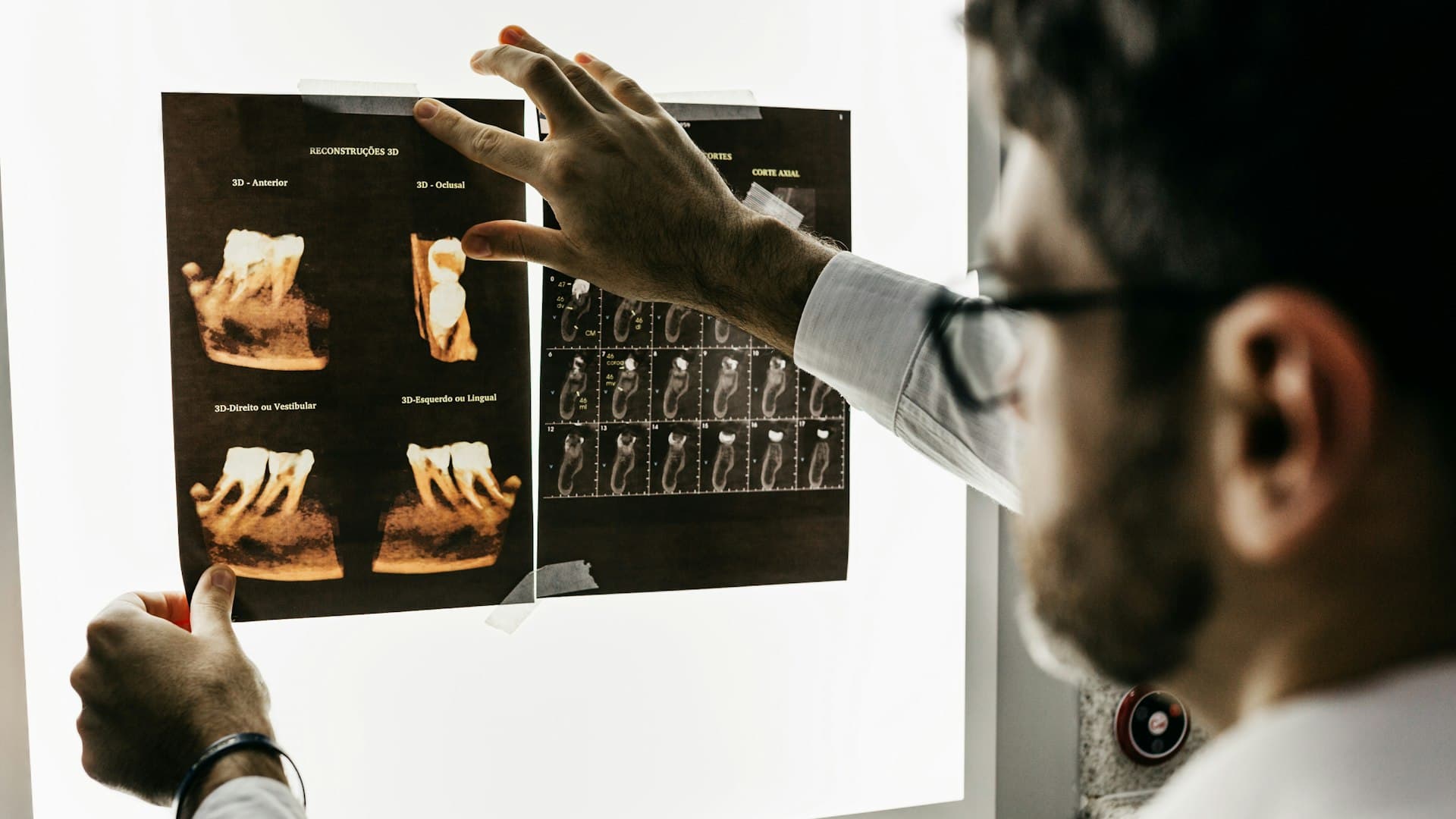
A patient presents short of breath. That single presentation is consistent with a cardiac problem, a respiratory one, an anaemia, a metabolic disturbance, a clot, an infection or an anxiety response.
The symptom is the same. What is breaking underneath is entirely different, and so is what needs to happen next.
The same presentation, several different causes
This is the central fact of the discipline and it has consequences well beyond the bedside.
Symptoms are the body's output. Several distinct failures produce overlapping outputs, because the body has a limited repertoire of ways to signal that something is wrong.
Treating a symptom as a category rather than as evidence of a mechanism is the error underneath a large share of clinical and technical mistakes alike.
The reverse is also true and less discussed. The same underlying problem presents differently in different people. Presentations vary with age, sex, comorbidity and medication, and atypical presentation in older patients is a well-recognised source of delayed recognition.
Any system, human or technical, built on the assumption that a condition looks one way will miss the people it does not look that way in.
What the direction covers
The scope: how disease develops, what breaks, and how symptoms connect back to mechanisms.
Four capabilities.
Mechanisms of disease. Inflammation, ischaemia, infection, neoplasia, degeneration, autoimmunity and metabolic disturbance as processes rather than as lists of conditions.
From mechanism to presentation. Working forward, so that a given process explains a given set of findings.
From presentation to differential. Working backward, which is the harder direction and the one that matters operationally.
Progression and compensation. The body compensates for a developing problem until it cannot, which is why some conditions appear to deteriorate suddenly when they have in fact been deteriorating for a long time. Anyone designing monitoring or early-warning systems needs this.
Why this matters outside the clinic
Three non-clinical areas where the absence of this layer causes measurable problems.
Clinical systems design. Electronic record systems, order sets, alerts and decision support are frequently designed by people who understand software and not disease. The result is systems that make the common case efficient and the complex case dangerous, because the complex case does not fit the structure.
Algorithms trained on clinical data. A model trained on symptom and outcome data learns associations, not mechanisms. When it encounters a population where the associations differ, it fails, and it fails confidently. Understanding pathophysiology is what lets a team anticipate where that will happen rather than discover it in deployment.
Triage and navigation services. Telephone and digital triage, urgent care streaming, and remote monitoring all involve decisions made from limited information. The quality of those decisions depends on whether the person or system behind them understands which presentations carry serious possibilities.
Where this sits in the domain
Pathophysiology and disease is the second of ten directions in Astra Trainer's medicine and healthtech domain, sitting directly on anatomy and physiology and feeding into pharmacology, clinical research, medical AI and imaging, and precision medicine.
Partners building clinical software or decision support usually scope it alongside health informatics and digital health, because the combination is what produces systems that work for the complex patient rather than only the straightforward one. Lessons are five minutes, so clinical and technical staff build it in parallel. You can see the ten directions here.
Multimorbidity, which breaks single-disease thinking
The single most important structural point in this direction, and the one least reflected in how healthcare technology is built.
Medicine organises itself by condition. Guidelines, specialties, pathways and datasets are all condition-shaped. In older populations, having several long-term conditions at once is the normal case rather than the exception.
Three consequences.
Guidelines conflict. Optimal management of one condition can worsen another. Resolving that requires understanding mechanisms rather than following two pathways simultaneously.
Medications interact. Each condition brings treatment, and the combined burden creates its own problems. This connects directly to the pharmacology direction.
Systems designed around single conditions fail the majority patient. A pathway, a dashboard or a risk model built for one condition in isolation describes a patient who is increasingly uncommon in the populations that use the most care.
For workforce planning this means the capability that matters is reasoning about interacting mechanisms, and that is a training question rather than a guideline question.
The roles, named
Nursing and advanced practice roles. Recognition and escalation depend on this. The US Bureau of Labor Statistics projects employment of nurse practitioners, nurse midwives and nurse anesthetists growing about 35 percent between 2024 and 2034.
Triage and urgent care staff. Decisions from limited information.
Clinical informatics specialists. Designing the systems that encode clinical reasoning.
Clinical data scientists. Modelling disease processes rather than only outcomes.
Medical writers and medical affairs staff. Communicating about conditions accurately.
Clinical trial staff. Understanding why a protocol excludes or includes who it does, which connects to the clinical research direction.
Product managers in healthtech. Making design decisions with clinical consequences, usually without clinical training.
Who can be trained into it
Registered clinical staff broadening scope. Nurses, paramedics, pharmacists and allied professionals extending into new areas, where structured learning supports the transition within their professional framework.
Healthcare support staff. Better recognition and escalation, which is a direct patient safety benefit.
Technical staff in healthtech. Engineers, analysts and product people who need to reason about disease well enough to design for it.
Life sciences staff moving toward clinical work. From laboratory or research backgrounds into clinical research or medical affairs.
Health insurance and payer analysts. Working with claims and utilisation data that encodes disease processes they may never have studied.
The boundary, stated plainly. Understanding disease mechanisms is not diagnostic competence. Diagnosis is a licensed clinical activity requiring supervised practice, professional registration and accountability, and it involves judgement about a specific person that no course produces. Training builds the reasoning that supports registered professionals and makes technical staff competent to design for clinical reality. It does not qualify anyone to diagnose, and nothing in this direction should be applied to an individual patient.
What to take from this
Symptoms are outputs and several different failures produce the same output, which is why symptom-level thinking fails.
Presentation also varies by person, so systems built on a single expected presentation miss the people who do not match it.
Multimorbidity is the normal case in the populations using the most care, and almost all healthcare technology is still built condition by condition.
The people who most need this outside the clinic are the ones designing clinical software and training models on clinical data, and they are rarely offered it.
And understanding mechanism supports clinical practice without being it. The line is sharp and worth keeping sharp.
Why is pathophysiology relevant to technical staff?
Because clinical systems, decision support and models trained on clinical data all encode assumptions about disease. Teams without this layer build systems that handle the common case well and the complex case dangerously.
What does multimorbidity change?
Nearly everything. Guidelines conflict, medications interact, and pathways or models built around a single condition describe a patient who is uncommon in the groups using the most care.
Why do algorithms trained on clinical data fail?
Because they learn associations rather than mechanisms. When deployed in a population where the associations differ, they fail confidently. Understanding mechanism is what lets a team anticipate that.
Does this training qualify anyone to diagnose?
No. Diagnosis is a licensed clinical activity built on supervised practice and professional registration. Training builds supporting reasoning and nothing in it should be applied to an individual patient.
Where does this fit in the domain?
Second of ten directions in Astra Trainer's medicine and healthtech domain, usually scoped with health informatics for partners building clinical software. You can see them here.