
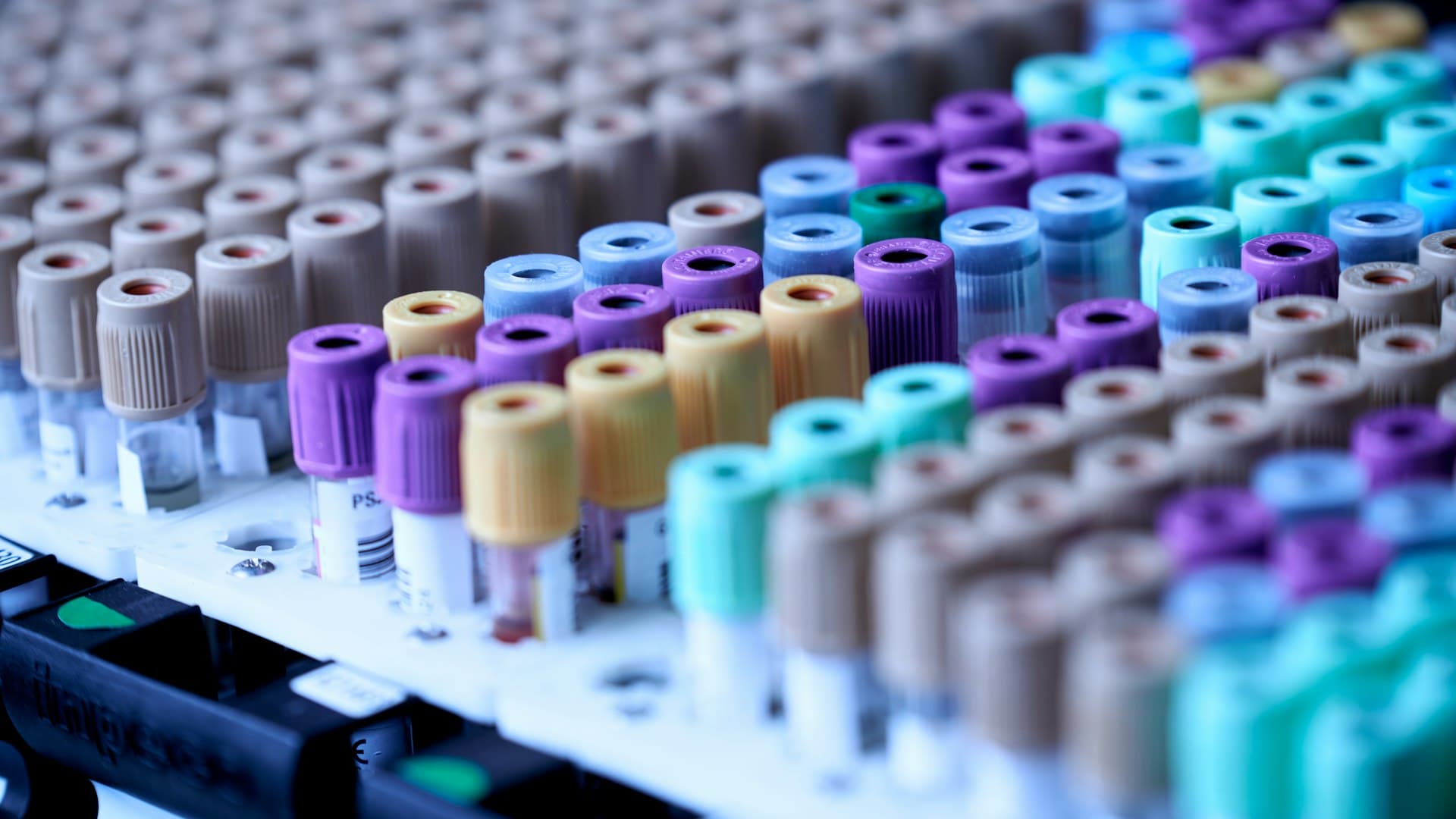
Precision medicine is usually described as a technology story. In workforce terms it is an interpretation story, and the distinction changes what an organisation should build.
Where the bottleneck sits
Running a molecular test is now a routine laboratory operation. Health systems and companies have invested heavily in the platforms.
What has not scaled at the same rate is everything after the result.
The laboratory produces a report. Someone still has to decide what it means for this patient, and that person is the constraint.
Four steps after the result, each needing people.
Interpretation. What the finding means biologically and clinically, covered in the genomics direction of the biotechnology domain and applied here.
Reporting. Producing something a treating clinician can act on, which is a distinct skill from doing the analysis.
Clinical integration. Deciding whether and how the result changes management, frequently in a multidisciplinary forum.
Communication. Explaining it to a patient and family, including uncertainty and implications for relatives.
Organisations that fund the platform and not these four steps have bought capacity they cannot convert into care.
What the direction covers
The scope: biomarkers, genomics, personalised treatment, companion diagnostics and molecular testing.
Four capabilities.
Molecular diagnostics. The technologies, what each detects, and their limitations.
Biomarker science. Covered below.
Targeted and stratified therapy. The logic of matching treatment to molecular characteristics, and the evidence behind specific pairings.
Companion diagnostics. Tests formally linked to a therapy, which carry their own regulatory and operational requirements and connect to the medical devices direction.
The multidisciplinary meeting as a staffing model
Molecular tumour boards and equivalent forums have become the standard mechanism for translating a molecular result into a clinical decision, and they are worth examining as a workforce structure.
Such a forum needs, simultaneously, a clinician who knows the patient and the disease, someone who understands the molecular finding, someone who knows the current evidence for relevant therapies, someone who knows what trials are open and whether this patient is eligible, and someone who understands access and reimbursement.
Very few people hold more than two of those. So the model works by assembling them, which means the scarce resource is not any single role but the availability of the whole set at the same time.
Two practical consequences.
Capacity is limited by the rarest participant. Frequently the person who can interpret the molecular finding in clinical context, which is precisely the role that barely exists as a training route.
Broadening capability broadens capacity. An oncologist with solid molecular literacy, or a clinical scientist with solid clinical context, reduces the number of people who must be present. That is a training intervention with a direct operational return.
Where this sits in the domain
Precision medicine and advanced diagnostics is the ninth of ten directions in Astra Trainer's medicine and healthtech domain, drawing on pathophysiology, pharmacology and clinical research, and connecting to health informatics for the data layer and medical devices for companion diagnostics.
It pairs directly with the biotechnology domain, where genetics and genomics covers variant interpretation and bioinformatics covers the analysis pipeline. Health systems building this capability typically need both, and the interpretation layer is the part that sits between them. You can see the ten directions here.
Biomarkers, and the word doing too much work
"Biomarker" is used for several quite different things, and the differences determine what evidence is required. Conflating them is a common and consequential error.
Diagnostic biomarkers indicate whether a condition is present.
Prognostic biomarkers indicate likely course regardless of treatment. Useful for planning and not for choosing a therapy.
Predictive biomarkers indicate whether a specific treatment is likely to work. This is the one that changes management, and it requires the hardest evidence: a demonstrated interaction between the marker and the treatment effect, not merely an association with outcome.
Pharmacodynamic biomarkers show a drug is having its intended biological effect, without establishing benefit.
Surrogate endpoints stand in for a clinical outcome in trials, and their validity is an ongoing scientific argument rather than a settled matter.
The frequent mistake is treating a prognostic marker as predictive: observing that patients with a marker do worse and concluding they should receive a particular treatment. That does not follow, and the distinction belongs in the training rather than in a later correction.
The roles, named
Clinical scientists in genomics and molecular pathology. The interpretation layer. Credentialled, regulated and short.
Variant curators and scientific curators. Building the evidence base that interpretation draws on, and a genuine entry route.
Molecular laboratory scientists. Running and validating the assays.
Genetic counsellors. A regulated profession with its own qualification route, short in most health systems, and central to the communication step.
Clinical bioinformaticians. The pipeline layer in a regulated diagnostic context, which is more demanding than research bioinformatics.
Pharmacists with molecular therapeutics knowledge, connecting to the pharmacology direction.
Companion diagnostic regulatory and quality staff.
Clinical trial staff for biomarker-stratified studies, which are operationally more complex than conventional trials.
Who can be trained into it
Laboratory staff already running molecular assays. The shortest route into interpretation and the most overlooked, because they are classified as technical rather than scientific.
Clinical staff broadening molecular literacy. Oncologists, haematologists, pathologists and pharmacists, where a modest increase in molecular understanding reduces dependence on the scarcest participants.
Clinical scientists from other disciplines. Already work under laboratory accreditation.
Bioinformaticians moving into clinical work. Need the regulated-environment layer, which is a real adjustment from research practice.
Nurses, into biomarker-stratified trial roles and into supporting the communication step.
Pharmaceutical and diagnostic industry staff working on companion diagnostics from either side.
Regulated throughout. Diagnostic laboratories operate under accreditation with documented competency requirements. Clinical variant interpretation and genetic counselling are regulated professional activities with defined qualification routes. Companion diagnostics are regulated devices. Training builds scientific and clinical capability and prepares people for those routes. It does not authorise anyone to issue a diagnostic report, counsel a patient, or place a test on the market.
The equity problem built into the evidence base
A technical issue with an equity consequence, and it belongs in the training rather than in a separate conversation.
Interpretation depends on reference data: what variants are known, how common they are in different populations, and what evidence exists linking them to disease or treatment response.
Those reference datasets have historically overrepresented some populations and underrepresented others. Two consequences follow directly.
Interpretation is less reliable for underrepresented groups. A variant that is common and harmless in a population that is poorly represented may be classified as uncertain or, worse, as significant, because the data establishing it as normal does not exist.
Uncertain results are returned more often to those groups, which means a test delivers less clinical value to people who may already receive less from the health system.
This is improving as more diverse data is collected, and it is not resolved. A workforce trained to understand it will caveat appropriately and push for better reference data. One that is not will report with unwarranted confidence, which is the more harmful of the two failure modes.
What to take from this
Testing capacity is not the constraint. Interpretation, reporting, clinical integration and communication are, and all four need people.
The multidisciplinary forum is limited by its rarest participant, so broadening molecular literacy among clinicians is a capacity intervention rather than an educational nicety.
Prognostic and predictive biomarkers are different things with different evidence requirements, and treating the first as the second is a common and consequential error.
Laboratory staff already running the assays are the shortest and most overlooked route into interpretation.
And reference data gaps make interpretation less reliable for underrepresented populations, which is a technical limitation with an equity consequence and belongs in the training.
What limits precision medicine capacity?
Interpretation and the steps after it, not testing. Health systems have funded platforms without funding the people who convert a result into a decision and a conversation.
What is the difference between prognostic and predictive biomarkers?
A prognostic marker indicates likely course regardless of treatment. A predictive marker indicates whether a specific treatment will work, and requires demonstrated interaction between marker and treatment effect. Treating the first as the second is a common error.
Who can be trained into interpretation roles?
Laboratory staff already running molecular assays are the shortest route and the most overlooked. Clinical staff broadening molecular literacy reduce the number of scarce specialists a decision requires.
Why does reference data diversity matter technically?
Because interpretation depends on knowing what is normal in a population. Where that data is thin, variants are classified as uncertain more often, so the test delivers less value to underrepresented groups.
Where does this fit in the domain?
Ninth of ten directions in Astra Trainer's medicine and healthtech domain, pairing with genomics and bioinformatics in the biotechnology domain. You can see them here.