
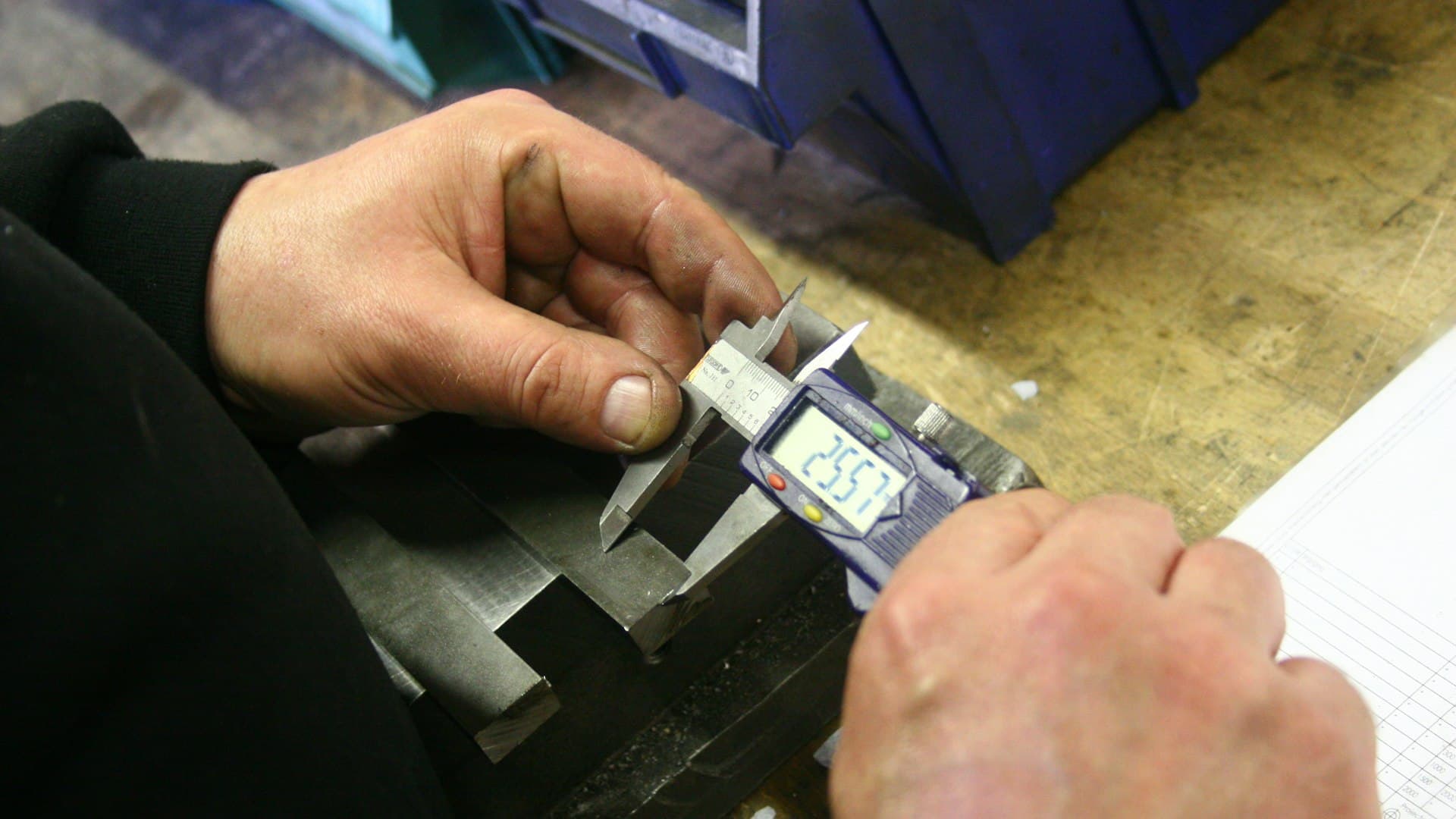
Quality engineering is widely understood as checking, which is roughly the opposite of what the discipline is for.
Sorting is the most expensive control there is
The logic of inspecting at the end is straightforward and the economics are terrible.
You have already paid for the defect. Material, machine time, labour and energy were consumed producing something you will scrap or rework.
Rework costs more than making it right. It is unplanned, off-line and frequently manual.
Inspection is imperfect. Human visual inspection of repetitive items misses defects at rates that are consistently higher than managers assume, and the effect worsens with fatigue, low defect rates and time pressure. This is the same base rate and vigilance problem that appears in the computer vision article.
It tells you nothing about cause. A reject pile is a symptom. It does not say which variable moved.
Inspection finds defects you have already paid to create, imperfectly, without telling you why they happened.
The alternative is not less checking. It is understanding the process well enough that it produces conforming parts, and using measurement to confirm that rather than to filter.
What the direction covers
The scope: QA and QC, failure analysis, FMEA, statistical quality control, reliability and certification.
Four areas.
Statistical process control. Understanding variation, distinguishing normal variation from a real change, and knowing when to intervene and when not to.
Process capability. Whether a process can meet the specification consistently, covered below.
Risk methods. FMEA and control planning, done before problems occur.
Reliability. How products fail over time, which is a different discipline from conformance at production.
Process capability, which changes the conversation
The single most useful concept in the direction, and the one that moves quality from reactive to preventive.
Capability compares the spread of what a process actually produces against the width of the specification it must meet.
Three things it tells you that inspection cannot.
Whether conformance is luck. A process whose natural spread is wider than the specification will produce defects no matter how carefully it is watched. Inspecting it harder does not change that; it only changes how many bad parts reach the customer.
Whether the process is centred. A capable process running off-target produces defects on one side while the spread is fine. The fix is adjustment, not tightening.
What to do about it. If the process cannot hold the specification, the options are reduce variation, recentre, widen the specification if the requirement allows, or change the process. All four are engineering decisions, and none of them is more inspection.
This also connects back to the manufacturing engineering article: a tolerance specified tighter than the process can hold guarantees an ongoing quality problem, and it was created at design.
Measurement system analysis, the step everyone skips
Worth its own section because skipping it invalidates everything downstream.
Every measurement contains variation from the process and variation from the measurement itself: the instrument, the method, the fixture, the environment and the person taking it.
Four consequences when measurement variation is large relative to process variation.
Good parts get rejected and bad parts accepted, because the reading, not the part, determined the decision.
Control charts show variation that is not in the process, which produces adjustment in response to noise, which increases real variation. This is one of the most reliable ways to make a stable process worse.
Capability studies are meaningless. You are measuring the gauge as much as the process.
Improvement projects chase phantoms. Months spent investigating variation that was in the measurement system.
The practical point is that measurement system analysis takes a day or two and is skipped constantly, usually because the gauge is assumed to be fine. It frequently is not, particularly for manual measurements and for characteristics near the limit of the instrument's resolution.
Where this sits in the domain
Quality engineering and reliability is the sixth of ten directions in Astra Trainer's advanced manufacturing domain, connecting to lean and Six Sigma for the statistical toolkit, to manufacturing engineering for tolerance and process decisions, and to maintenance and asset management for equipment condition.
It also connects outward to advanced materials for failure analysis, and to medicine and healthtech or space and aerospace where regulated quality systems apply. Partners in regulated manufacturing usually scope quality alongside the relevant regulatory direction. You can see the ten directions here.
FMEA done properly and FMEA done as a form
Failure mode and effects analysis is required in several industries and is performed well in a minority of cases.
Done properly, it is a structured conversation held before a design or process is frozen, with people who know the product, the process, the equipment and what has gone wrong before. It asks what could fail, what would happen, how likely it is, whether it would be detected, and what should change. Its value is in the conversation and in the changes it produces.
Done as a form, it is completed after the design is fixed, by one person, to satisfy a customer requirement, with risk numbers reverse-engineered to fall below a threshold so no action is needed.
Three tests for which one you have.
When was it done? After design freeze means it cannot change anything.
Who was in the room? One engineer filling a spreadsheet is not an analysis.
What changed because of it? If nothing, it was documentation.
The same distinction applies to control plans, which are either a description of how the process is genuinely controlled or a document produced for audit.
The roles, named
Quality engineers. Process capability, problem solving and prevention.
Supplier quality engineers. Where a large share of defects originate and where prevention is cheapest.
Metrology and calibration specialists. Measurement capability, which everything above depends on.
Reliability engineers. Life prediction, accelerated testing and field failure analysis.
Quality inspectors. The largest population.
Failure analysts. Determining why something broke, which connects to the materials domain.
Quality systems and compliance staff for regulated environments.
Customer quality engineers, handling field issues and returns, which is where the real defect data lives.
Who can be trained into it
Quality inspectors. The strongest conversion. They know which defects recur, which are cosmetic and which matter, and which machines produce them. Adding statistical method turns that into the ability to prevent rather than detect.
Machine operators. Know when the process is drifting before any chart does, and are rarely taught what the chart means or given authority to act.
Metrology and calibration technicians. Into measurement system analysis, which is directly adjacent and chronically neglected.
Manufacturing engineers. Into capability and control planning.
Maintenance staff. Equipment condition drives process variation, and the connection is rarely made explicitly.
Data analysts. Into quality analytics, needing the process context that makes a correlation meaningful.
Regulated quality systems. Quality management in medical devices, pharmaceuticals, aerospace, automotive and food operates under specific standards and regulation, with requirements for validation, change control, traceability and record retention that carry legal weight. Certification to a quality standard is held by an organisation following audit. Training builds quality engineering capability and understanding of where these obligations apply. It does not confer certification, auditor qualification or authority to approve product or process changes in a regulated environment.
What to take from this
Inspection finds defects you have already paid for, imperfectly, and tells you nothing about cause.
Process capability answers whether the process can meet the specification at all, which is a different and better question.
Measurement system analysis takes a day or two, is skipped constantly, and invalidates everything downstream when it is wrong.
Adjusting in response to measurement noise makes a stable process worse, which is a common and invisible failure.
And your inspectors know which defects matter. Give them the statistical method and they become the people who prevent them.
Why is end-of-line inspection a weak control?
Because the defect has already been paid for, rework is unplanned and expensive, human visual inspection misses more than managers assume, and a reject pile does not identify a cause.
What does process capability tell you?
Whether the process can meet the specification at all, and whether it is centred. A process whose natural spread exceeds the specification will produce defects regardless of how closely it is watched.
Why does measurement system analysis matter?
Because measurement variation contaminates every conclusion. It causes good parts to be rejected, makes control charts show noise, invalidates capability studies, and sends improvement projects after variation that was never in the process.
How do you tell a real FMEA from a form?
Ask when it was done, who was in the room, and what changed because of it. Completed after design freeze, by one person, with no resulting changes, means it was documentation.
Who converts into quality engineering?
Inspectors, who know which defects recur and matter; operators, who sense drift before the chart does; and metrology technicians into measurement system analysis.