
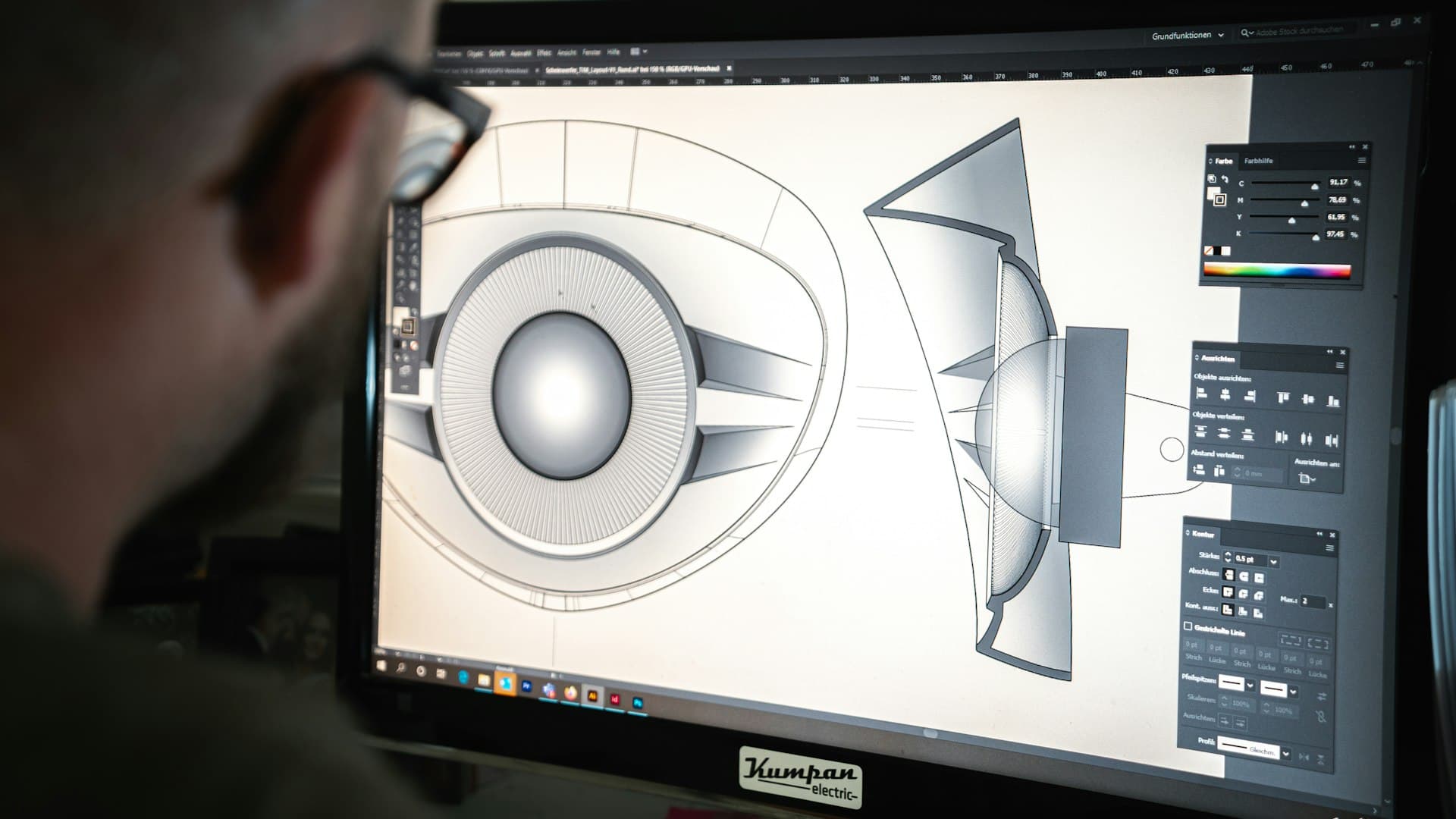
This direction covers the systems that hold what a product actually is, and the recurring failure has nothing to do with the software.
Which version is the real one
The question that costs manufacturers more than any other in this area.
A part is designed, revised, revised again for manufacture, revised once more for a customer variant. Somewhere there are files on a network drive, files in the PLM system, a drawing on the shop floor, a version at the supplier and a copy in someone's email.
Making the wrong revision is not a software problem. It is an ownership problem that software was bought to solve and cannot.
Four costs that follow, and all of them are invisible in the PLM business case.
Wrong parts made. Scrap, rework and delay, frequently discovered at assembly.
Supplier confusion. A supplier working to a superseded revision, which is usually blamed on the supplier.
Time spent verifying. Engineers checking whether the file they have is current, which is unrecorded and constant.
Loss of confidence. Once people distrust the system, they keep private copies, which makes the problem worse permanently.
What the direction covers
The scope: designing a product, CAD, simulation, CAM and the whole product lifecycle.
Four areas.
CAD and modelling. Creating geometry, and doing it in a way that survives change.
Drawing and definition. Communicating what the part must be, including geometric dimensioning and tolerancing.
CAM. Turning the model into machine instructions.
PLM and configuration management. Controlling versions, structures, changes and releases across the lifecycle.
Why change control gets routed around
The mechanism by which PLM implementations fail, stated plainly because it is predictable.
The process is slower than the need. A change that takes three weeks to approve, when production needs an answer today, will be made informally and documented later, or not at all.
The approval list is too long. Every function that was ever affected by a change gets added as an approver, and the result is a queue rather than review.
All changes are treated identically. A typographical correction on a drawing goes through the same route as a dimensional change affecting fit. People learn the process is disproportionate and stop respecting it.
The system is hard to use. If finding the current revision takes ten clicks and a search, people will use the copy on their desktop.
Three things that actually work.
Tier the process by impact. Fast route for low-impact changes, full route for changes affecting form, fit, function or safety.
Reduce approvers to those who can genuinely reject. Everyone else is informed, not consulted.
Make the right thing the easy thing. If the system is the fastest way to get the current file, people use it.
None of these is a software configuration. They are process design decisions, which is why implementations led entirely by IT underperform.
Where this sits in the domain
Product design, CAD/CAM and PLM is the seventh of ten directions in Astra Trainer's advanced manufacturing domain, connecting to manufacturing engineering for process and tooling, to quality engineering for tolerance and inspection definition, and to industrial IoT and digital twins, which depends on the product data this direction manages.
It also connects to the engineering and built world domain for the mechanical design foundation. Partners implementing PLM frequently discover the problem is configuration management practice rather than the tool, which is why the direction is scoped around discipline rather than software features. You can see the ten directions here.
Modelling discipline, which nobody teaches
The technical skill that separates a model which can be modified from one that has to be rebuilt.
Modern CAD is parametric and feature-based, which means the model contains a history of how it was constructed. Change something early in that history and everything after it updates, unless the model was built in a way that breaks.
Four practices that decide this.
Robust references. Features referenced to stable geometry and datums rather than to edges and faces that may disappear when something upstream changes. This single habit is the difference between a model that updates and one that produces errors.
Design intent captured deliberately. Relationships that express what must stay true, so that a change propagates correctly rather than requiring manual repair everywhere.
Sensible feature order. Building in an order that matches how the part is conceived and likely to change.
Clean sketches and constraints. Fully defined, without redundant or conflicting constraints.
Almost nobody is taught this. CAD training teaches how to produce geometry, and the difference between a model that survives three years of revisions and one that is rebuilt from scratch is entirely in these habits. For a manufacturer with long-lived products, that difference is substantial and entirely invisible until the first significant change.
Tolerancing is the other under-taught half. Geometric dimensioning and tolerancing communicates function rather than just dimensions, and it is used inconsistently, misunderstood widely, and consequential for both cost and inspection.
The roles, named
Design engineers and CAD users.
CAD administrators and standards owners. Small, and the difference between consistent and chaotic model data.
PLM administrators and configuration managers.
CAM programmers. Turning models into machine instructions, connecting to manufacturing engineering.
Drawing and GD&T specialists. Genuinely scarce and disproportionately useful.
Technical documentation staff.
Engineering change coordinators. Running the process described above.
Simulation engineers, where the model feeds analysis, which connects to mechanical engineering.
Who can be trained into it
Draughtspeople and CAD technicians. Already hold modelling discipline and drawing standards, frequently better than the engineers, and a clear progression exists that organisations rarely offer.
CAM programmers. Understand what a model needs to contain to be manufacturable, which is feedback the design side lacks.
Quality and inspection staff. Into GD&T, because they are the people who have to measure what the drawing says and therefore know when it is ambiguous.
Document controllers. Into configuration management, which is their discipline applied to engineering data.
Design engineers. Need modelling discipline and tolerancing, which their education likely omitted.
IT staff supporting engineering systems. Need the engineering process context to configure a system people will actually use.
Configuration control in regulated industries. In aerospace, medical devices, automotive and other regulated sectors, configuration management and engineering change control are regulatory requirements with traceability and record-retention obligations, and an undocumented change is a compliance breach regardless of its technical merit. Export control may also apply to technical data including models and drawings. Training builds capability and awareness of these obligations. It does not confer approval authority or export clearance.
What to take from this
Uncertainty about which revision is authoritative costs more than any licence, and it is an ownership problem rather than a software one.
Change control gets routed around when it is slower than the work, over-approved and undifferentiated by impact.
Tier the process, cut approvers to those who can genuinely reject, and make the system the fastest route to the right file.
Modelling discipline decides whether a model can be changed or must be rebuilt, and almost nobody is taught it.
And your draughtspeople and CAD technicians frequently hold that discipline already. They are rarely asked about the process they are required to follow.
What is the most common product data failure?
Uncertainty about which revision is authoritative, producing wrong parts, supplier confusion, constant verification time and loss of trust that leads people to keep private copies.
Why do PLM implementations underperform?
Because the change process is slower than the work, has too many approvers, treats all changes identically and is harder to use than a desktop copy. People route around it.
What is modelling discipline?
Building CAD models with robust references, captured design intent, sensible feature order and clean constraints, so that changes propagate rather than break. It determines whether a model survives years of revisions.
Why does GD&T matter?
Because it communicates function rather than only dimensions, and it drives both manufacturing cost and how the part is inspected. It is widely misunderstood and inconsistently applied.
Who converts into these roles?
Draughtspeople and CAD technicians, who often hold better modelling discipline than engineers; CAM programmers, who know what a model needs to be manufacturable; and inspection staff into GD&T.