
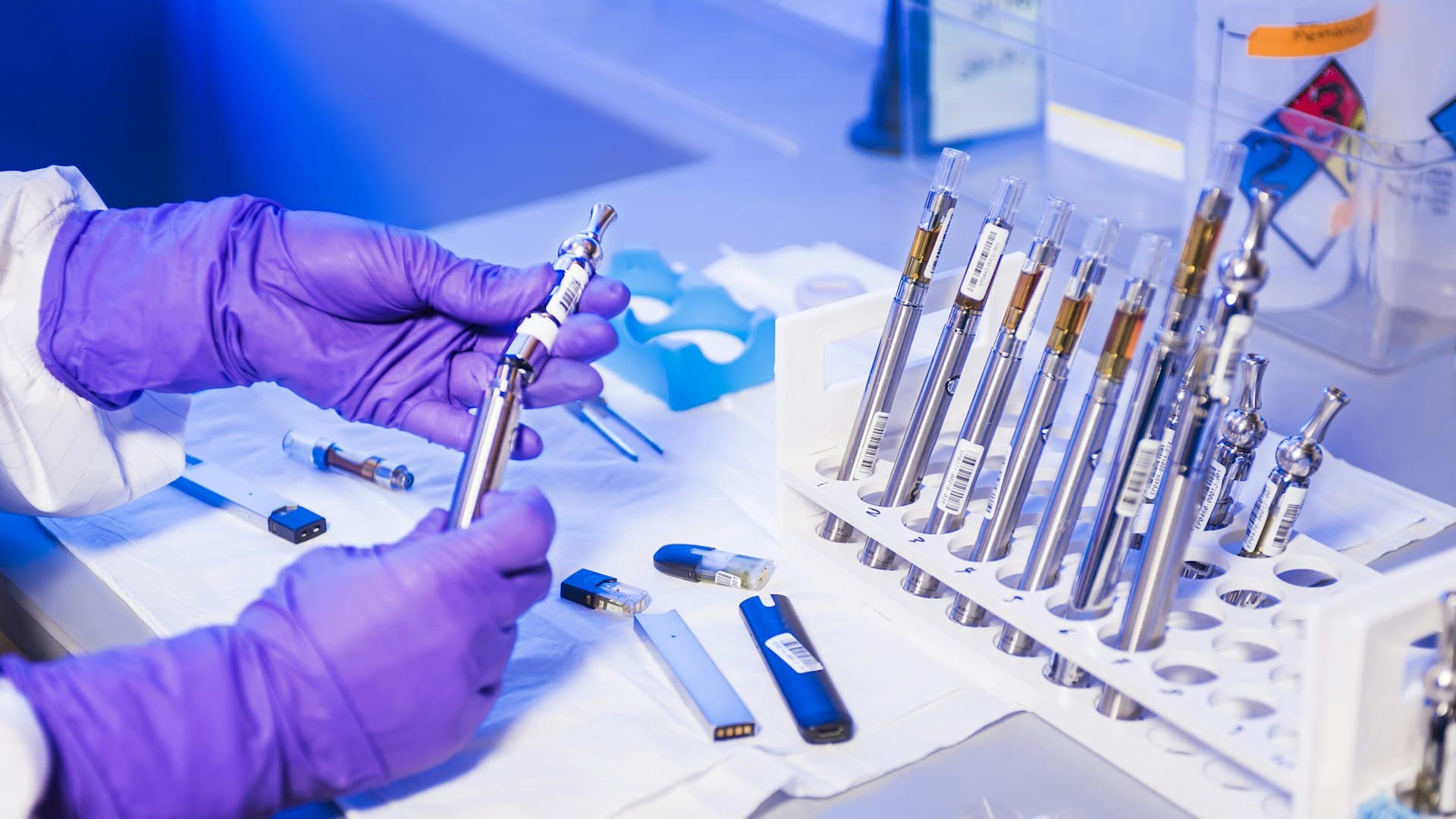
Pharmaceutical workforce conversations tend to centre on the discovery scientist: the person who finds the molecule, usually with a doctorate and a specialised background.
That role is real, it is genuinely hard to train for, and it accounts for a modest fraction of the people a drug development organisation employs.
The shape of the headcount
Follow a compound from target to market and the number of people involved grows at every stage.
Discovery is a relatively small group. Preclinical development is larger. Analytical and formulation development larger still. Clinical operations larger again, because trials involve monitoring, data management, site coordination and regulatory work across many locations. Manufacturing and quality are larger than all of it.
The discovery scientist is the person in the story. The organisation is mostly everyone downstream of them, and that is where the vacancies are.
The US Bureau of Labor Statistics projects employment of medical scientists growing about 9 percent between 2024 and 2034, above the average occupation. The supporting roles around each of those scientists are a considerably larger population and grow with them.
This matters for workforce planning because the roles that are hardest to fill are frequently the ones a plan does not name, and because several of them are trainable from adjacent starting points in months rather than years.
What the direction covers
The scope: finding molecules and biological targets, preclinical research, biologics and drug development.
Which spans considerably more than discovery.
Target identification and validation. Deciding what to go after and establishing that modulating it would help.
Screening and hit identification. High-throughput work, increasingly automated, and an operational discipline as much as a scientific one.
Lead optimisation. Turning a promising molecule into one with acceptable properties, which is where the chemistry and biology interact most closely.
Preclinical development. Safety, pharmacokinetics, formulation, and the package required before anything reaches a person.
Biologics development. Proteins and antibodies as therapeutics, which connects directly to the biochemistry and bioprocessing directions.
The development process itself. Phases, regulatory expectations, what has to be demonstrated when. Understanding this is what makes people in supporting roles effective rather than merely compliant.
Where the shortages actually are
Four areas, consistently short, none of which requires a doctorate.
Analytical development. Developing and validating the methods that characterise a molecule and demonstrate quality. Every submission depends on it. Persistently understaffed.
Formulation development. Making a molecule into something stable and administrable. Specialised, and a genuine bottleneck in biologics.
Clinical operations. Trial monitoring, site management, data management. Large teams, high turnover, and a training route that most organisations run informally.
Regulatory affairs. Assembling and defending submissions. A strange labour market: the work is learnable and the experience is prized, so organisations compete for experienced people rather than developing new ones, which keeps the shortage going.
Each of these is a structured-training problem. None of them is a research career.
Where this sits in the domain
Drug discovery and pharmaceutical biotechnology is the eighth of ten directions in Astra Trainer's biotechnology domain, drawing on biochemistry, cell and molecular biology and genetics upstream, and connecting to bioprocessing for anything that has to be manufactured.
For partners whose work is clinical rather than laboratory, the medicine and healthtech domain runs ten directions including clinical research and clinical trials, pharmacology and therapeutics, and healthcare systems and regulation, which is where the trial and regulatory layer is covered properly. That pairing is one of the more common cross-domain programs. You can see the biotechnology directions here.
Attrition, and why it shapes the workforce
Most compounds that enter development do not reach approval. That is a well-established feature of the industry rather than a sign of anything going wrong, and it shapes what the workforce needs to be good at.
Three consequences.
Killing things early is valuable. A compound that fails in year two is much cheaper than one that fails in year seven. That places real value on people who can generate a decisive negative result quickly and defend it, which is a specific skill and not the same as enthusiasm for a project.
Data quality is the constraint on decisions. If an assay is unreliable, a good compound gets dropped or a bad one advances. The analytical layer is therefore load-bearing for the whole portfolio, which is another argument for staffing it properly.
Resilience is a workforce property. People in this industry work for years on things that end. Organisations that treat a terminated program as a failure of the team make that worse, and turnover in these functions is expensive because the institutional knowledge is specific.
The roles, named
Research associates and scientists in discovery. Bench roles supporting screening and optimisation, frequently accessible with a bachelor's degree plus training.
Analytical development scientists. Method development and validation.
Formulation scientists. Stability and delivery.
Clinical research associates and coordinators. Running trials at site and monitoring level.
Clinical data managers. Trial data capture, cleaning and lock. Frequently short and rarely planned for.
Regulatory affairs associates. Submissions, correspondence, lifecycle maintenance.
Pharmacovigilance and drug safety associates. Adverse event handling and safety reporting, a growing function with statutory obligations attached.
Quality assurance professionals. Across GLP, GCP and GMP.
Who can be trained into it
Analytical chemists. Direct route into analytical development. Already hold the method and validation mindset.
Laboratory technicians and research associates. Frequently one structured step from a development role and frequently not told so.
Nurses and clinical staff. Strong route into clinical operations and pharmacovigilance. Already understand the clinical setting, patient safety and documentation, which is most of what those roles need.
Quality professionals from other regulated industries. Medical devices, food, aerospace. The quality mindset transfers; the pharmaceutical specifics are the training.
Data analysts. Into clinical data management, which is chronically short and rarely targeted.
Project managers from other technical industries. Drug development is a long, complex, dependency-heavy project, and that skill is transferable once the domain vocabulary is in place.
Where the boundaries are. Clinical research operates under Good Clinical Practice with defined training and qualification requirements; pharmacovigilance carries statutory reporting obligations; manufacturing and quality roles require GMP qualification; and clinical practice itself is a licensed profession. Structured training builds the domain knowledge that makes people effective and prepares them for these routes. It does not confer GCP or GMP qualification, professional registration, or authority to perform any regulated activity.
What training cannot do here
Two limits worth being explicit about.
Discovery research judgement. Deciding which target is worth pursuing, and reading an ambiguous result correctly, is built from years of encountering ambiguous results. That is the part of the field where the doctorate is doing real work rather than acting as a filter, and a training program should not pretend otherwise.
Regulatory experience. The knowledge of how submissions work is learnable. The judgement about how a specific agency will respond to a specific argument comes from having been through it. Training gets someone to competent; the experience is still required and should be planned for rather than assumed away.
What to take from this
The discovery scientist is a small part of the headcount and the largest part of the conversation.
Analytical development, formulation, clinical operations and regulatory affairs are the persistent shortages, and all four are structured-training problems rather than research careers.
High attrition through development means the workforce is shaped around generating decisive negative results efficiently, which places real value on the analytical layer.
Nurses and clinical staff are the strongest and most underused route into clinical operations, and data analysts into clinical data management.
And GCP, GMP and professional registration are separate requirements that training prepares people for rather than replacing.
Do drug development roles require a PhD?
Discovery research frequently does. Analytical development, formulation, clinical operations, data management, regulatory affairs and quality do not, and those account for most of the headcount and most of the shortage.
Which roles are hardest to fill?
Analytical development, formulation, clinical data management and regulatory affairs are persistently short. The last is partly self-inflicted, because organisations compete for experienced people rather than developing new ones.
Can clinical staff move into pharmaceutical roles?
It is one of the strongest conversions available. Nurses and clinical staff already understand the clinical setting, patient safety and documentation, which is most of what clinical operations and pharmacovigilance require.
Why does attrition matter to workforce planning?
Because most compounds fail, the organisation's real skill is failing cheaply and early. That makes reliable analytical data load-bearing for the whole portfolio and puts a premium on people who can produce a decisive negative result.
Where does this fit in the domain?
Eighth of ten directions in Astra Trainer's biotechnology domain, often paired with the medicine and healthtech domain for the clinical and regulatory layer. You can see them here.