
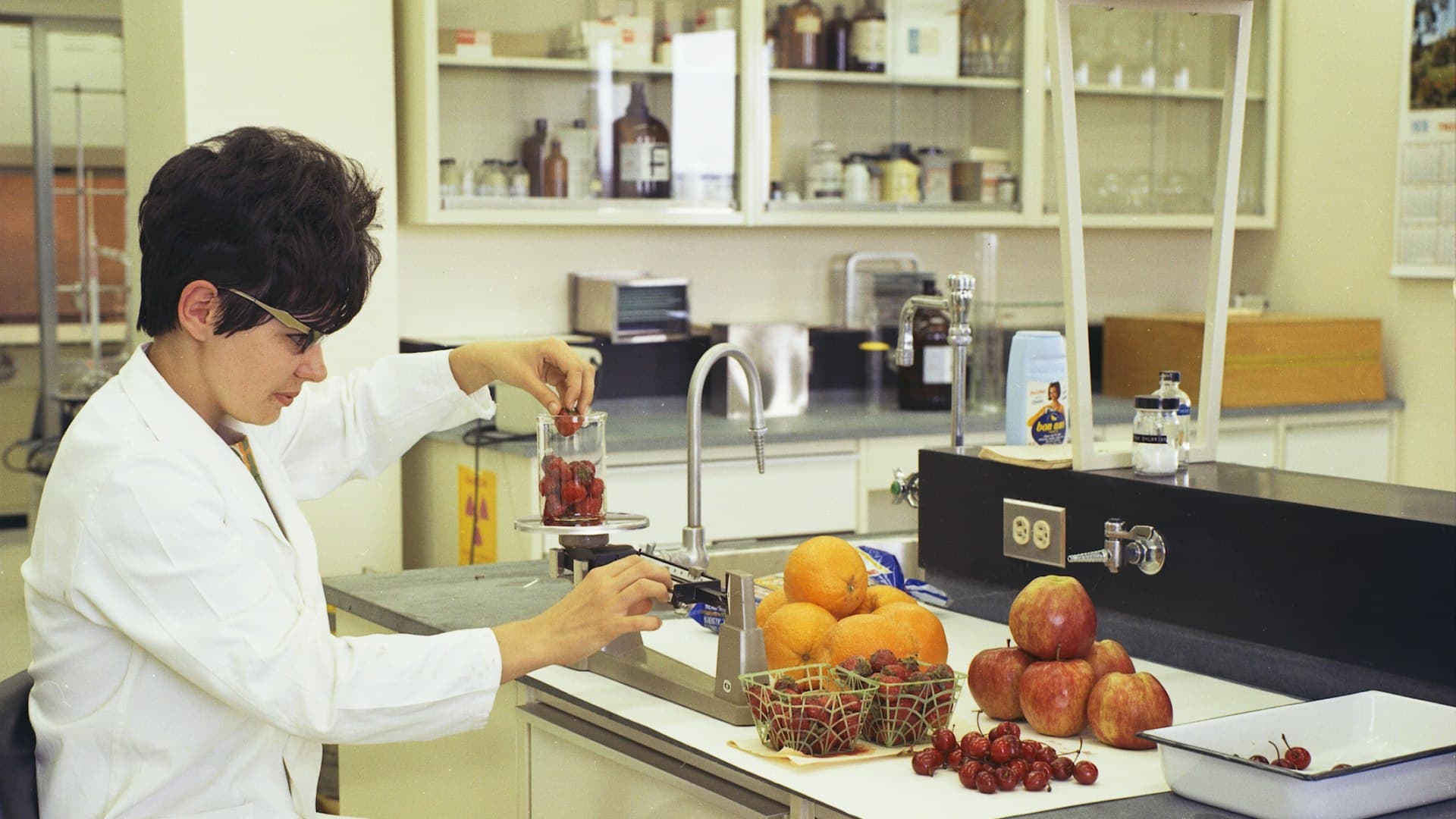
This direction covers more ground than its name suggests, and the three industries inside it are at very different stages. Treating them as one thing is how workforce plans in this area go wrong.
One direction, three quite different industries
Plant and crop biotechnology. Long-established, large, employing thousands of people in breeding programs worldwide. Unglamorous and commercially central.
Fermentation-derived ingredients. Enzymes, proteins, flavours, fats and other components produced by microbes rather than extracted from plants or animals. Commercially real, expanding, and economically sensitive to production cost.
Cultivated products. Animal cells grown directly into food. Small, capital-intensive, with genuine unresolved questions about cost at scale.
A workforce plan that treats these as one emerging field will over-hire for the newest part and under-hire for the part that actually employs people.
What the direction covers
The scope: plant genetics and crop biotechnology, cultivated products, fermentation and food biotech.
Underneath that, four capability areas.
Plant genetics and breeding. Trait development, marker-assisted and genomic selection, field trials, variety development.
Food fermentation. Both the traditional kind and precision fermentation for specific molecules.
Cell culture for food. Growing animal cells at food scale and food cost, which is a different problem from growing them at pharmaceutical scale and pharmaceutical cost.
Food safety and regulation. Which runs through all of it and is more demanding than people outside the industry expect.
Plant breeding, which is older and larger than the headlines
The least discussed and most established part of this direction.
Breeding programs run for years. A new variety takes multiple generations, field trials across locations and seasons, and a long evaluation against yield, disease resistance, quality and increasingly climate resilience.
Genomics changed the method rather than the timeline. Genomic selection lets breeders predict performance from sequence, which shortens cycles and increases the number of candidates that can be evaluated. It did not remove the field work, the phenotyping or the patience.
The workforce consequence is specific: breeding programs now need people who can handle genomic data alongside people who understand field agronomy, and the shortage is almost always in the combination. A breeder who cannot use the genomic tools and a data scientist who has never walked a trial plot are both limited, and this is the same two-halves problem described in the bioinformatics article.
There is also an unglamorous and permanent demand for field trial technicians, phenotyping staff and seed production specialists, and these roles are consistently hard to fill because nobody markets them.
Where this sits in the domain
Agricultural and food biotechnology is the ninth of ten directions in Astra Trainer's biotechnology domain. It draws on genetics and genomics for breeding work, microbiology and bioprocessing for fermentation, and connects to industrial biotechnology, which covers the non-food side of the same production methods.
Partners in food manufacturing frequently scope it with the advanced manufacturing domain, where quality engineering and reliability, supply chain and production operations, and maintenance and asset management cover the plant layer. Lessons are five minutes, so plant and field staff train without leaving the job. You can see the ten directions here.
Precision fermentation, and where the economics actually sit
Using engineered microbes to produce a specific food molecule is established practice for some products and an active commercial question for others, and the dividing line is cost per kilogram.
For high-value, low-volume ingredients such as enzymes, specific proteins, flavour compounds and vitamins, fermentation has been commercially normal for a long time. The economics work because the product is worth enough per kilogram to carry the production cost.
For commodity ingredients, the picture is different. The competitor is agriculture at enormous scale with very low unit costs, and matching it requires high yields, cheap feedstock, efficient downstream processing and large capital investment.
So the workforce question is an industrial one rather than a scientific one. Getting cost down means yield improvement, feedstock flexibility and downstream efficiency, which are bioprocessing and industrial biotechnology problems.
The broader frame: McKinsey Global Institute's Bio Revolution work put around 60 percent of the physical inputs to the global economy as, in principle, biologically producible. The phrase "in principle" is exactly where this section lives. The biology generally works. The cost per kilogram is the question, and it is answered by process engineers.
Cultivated products, stated honestly
Cultivated meat has attracted attention disproportionate to its current employment, and a workforce plan should be clear about the state of it.
What is true. It is scientifically demonstrated. Regulatory approval has been granted in a small number of jurisdictions for specific products. Companies are operating and employing people.
What is unresolved. Cost at scale. Growth media has historically been a major cost driver, and bringing it down to food-relevant levels is an active engineering problem. Scale-up faces the same physics described in the bioprocessing article, with the additional constraint that the output has to compete with a product that is already inexpensive.
What this means for hiring. The roles that matter are bioprocess and cost-reduction roles rather than cell biology roles. The organisations that get there will do it with process engineers, and a workforce plan built around cell biologists is planning for the demonstration rather than the business.
Saying this plainly is more useful than enthusiasm. Anyone planning a program in this space needs to know which problem they are hiring against.
The roles, named
Plant breeders and breeding technicians. The largest population in this direction.
Field trial and phenotyping staff. Persistently short, seasonal, and rarely planned for.
Fermentation scientists and operators in food and ingredient production.
Food safety and quality specialists. Every product in this space needs them, and the regulatory expectations for novel foods are higher than for conventional ones.
Downstream and purification staff for fermentation-derived ingredients, which is where a large part of the cost sits.
Regulatory affairs specialists for novel foods. A small, specialised and genuinely scarce group.
Sensory and application scientists. Making an ingredient behave correctly in an actual food product, which is a real discipline and frequently the last barrier to commercialisation.
Who can be trained into it
Food industry technical staff. Quality, product development and process staff already understand food manufacturing, safety and the regulatory environment. They need the biotechnology, which is the shorter half.
Brewing and traditional fermentation staff. Directly relevant practical experience, and a cultural familiarity with fermentation that is hard to teach.
Agricultural technicians and agronomists. Into breeding support and field trial work. Already hold the field knowledge.
Laboratory staff from clinical or analytical backgrounds. Into food testing and quality roles.
Chemical and process engineers. Into the fermentation and downstream side, where the cost problem is.
Data analysts. Into genomic selection and breeding analytics, pairing with people who know the field work.
The regulatory reality. Food production operates under food safety law, HACCP and site-specific requirements, and novel foods, genetically modified organisms and cultivated products face additional approval regimes that differ substantially between jurisdictions. A product approved in one country may not be permitted in another. Training builds the scientific and process understanding and the awareness of where these regimes apply. It does not constitute food safety certification, site qualification or any regulatory approval.
What to take from this
Three industries share this direction and they are at different stages. Plant breeding employs the most people and gets the least attention.
The breeding shortage is the combination of genomic capability and field knowledge, and almost nobody has both.
Precision fermentation is established for high-value ingredients and is an industrial cost problem for commodity ones, which makes it a process engineering hire rather than a biology hire.
Cultivated products are scientifically demonstrated with unresolved scale economics, and the roles that matter are in cost reduction.
And food industry staff, brewers and agricultural technicians are the natural pools for all of it, holding the half that is hardest to teach.
Where are most food biotechnology jobs?
In plant and crop breeding, which is long established and employs the most people, followed by fermentation-derived ingredient production. Cultivated products employ comparatively few.
Is precision fermentation commercially viable?
For high-value ingredients such as enzymes, specific proteins and flavour compounds, it has been normal for a long time. For commodity ingredients the question is cost per kilogram against agriculture at scale, which is a process engineering problem.
What is the state of cultivated meat?
Scientifically demonstrated, approved in a small number of jurisdictions for specific products, and facing unresolved cost-at-scale economics. The roles that matter are bioprocess and cost reduction rather than cell biology.
Who can move into these roles?
Food industry technical staff, brewing and fermentation operators, agricultural technicians and agronomists, and chemical or process engineers for the cost side. Each holds the part that is hardest to teach.
Where does this fit in the domain?
Ninth of ten directions in Astra Trainer's biotechnology domain, drawing on genomics, microbiology and bioprocessing. You can see them here.