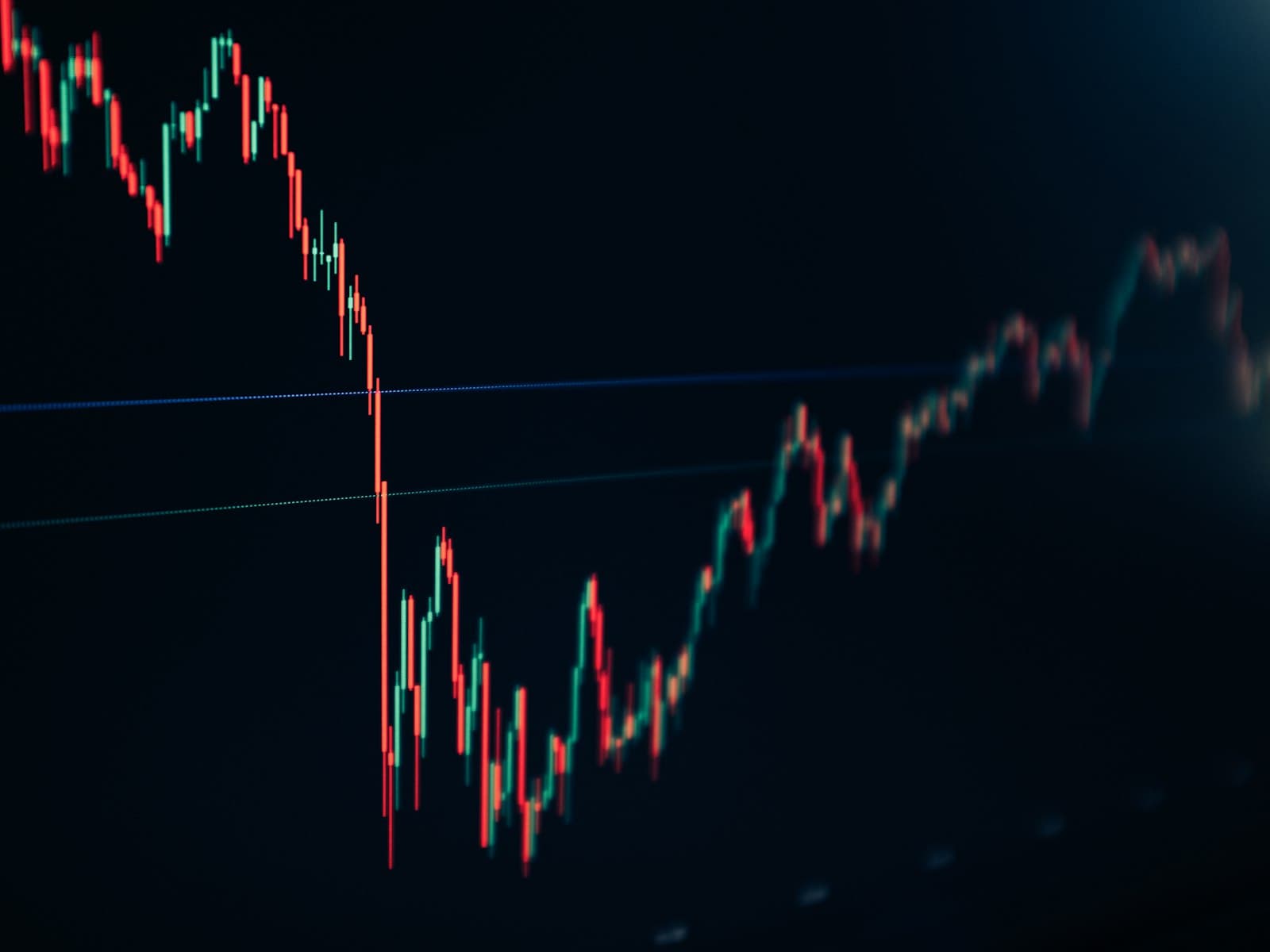
Bull vs bear market is the most familiar shorthand in finance, used every day in headlines and conversation. A bull market is a period when prices are rising and confidence is high. A bear market is a period of falling prices and pessimism. In practice, the labels have a more specific meaning: by convention, a bear market is a fall of 20 percent or more from a recent peak in a broad index such as the S&P 500. The images behind the names, a bull thrusting its horns up and a bear swiping its paws down, are easy to remember. Their real origins are stranger, and what past cycles show is more useful than the labels themselves.
This article explains how bull and bear markets are defined, where the names come from, what some notable cycles looked like, and why the labels are harder to apply in real time than in hindsight. It explains the terms and is not investment advice.
How bull and bear markets are defined
The definitions most often used in the financial press are thresholds measured from the most recent high or low of a broad market index.
| Term | Common definition |
|---|---|
| Correction | A fall of 10 to 20 percent from a recent high |
| Bear market | A fall of 20 percent or more from a recent high |
| Bull market | A sustained rise, often dated from a gain of 20 percent or more off a bear market low |
| Crash | A sudden, very steep fall over days rather than months; there is no fixed threshold |
These are conventions, not laws. No regulator declares a bear market, and a fall of 19.9 percent is not meaningfully different from one of 20.1 percent. The thresholds are useful mainly because they give everyone the same shorthand, and because they separate the ordinary ups and downs of markets from larger, longer shifts in sentiment.
Bull and bear are not official categories. They are labels, applied after the fact, to moods that were never obvious at the time.
Where the names come from
The bear arrived first. An old proverb warned against selling the bear's skin before catching the bear. In 18th-century London, traders who agreed to sell shares they did not yet own, expecting to buy them back later at a lower price, were nicknamed bearskin jobbers: they were selling a skin they had not caught. The name was shortened to bears, and it was in common use around the South Sea Bubble of 1720. A bear, in the original sense, was someone betting on falling prices, which is what short selling still means today.
The bull appears to have followed as a natural opposite, perhaps influenced by the pairing of bull and bear in the baiting spectacles of the time. By the late 18th century both words were established on the London exchange, and they crossed the Atlantic with the rest of its vocabulary. The famous bronze Charging Bull near Wall Street is much newer: the sculptor Arturo Di Modica installed it without permission in December 1989.
Bull vs bear market: what past cycles looked like
Bear markets differ enormously in speed and depth. A few from the United States show the range.
| Period | What happened |
|---|---|
| 1929 to 1932 | After the 1929 crash, the Dow Jones Industrial Average fell about 89 percent from its peak to its low in July 1932. It took until 1954 to regain its 1929 high. |
| 2007 to 2009 | During the global financial crisis, the S&P 500 fell by more than half from its October 2007 peak to its March 2009 low. |
| 2009 to 2020 | The bull market that followed ran for about eleven years, one of the longest on record. |
| 2020 | At the start of the pandemic, the S&P 500 fell about 34 percent in 33 days, from 19 February to 23 March, the fastest bear market on record, and recovered within months. |
| 2022 | As inflation and interest rates rose, the S&P 500 fell about 25 percent from its January peak to its October low. |
Two patterns stand out. Historically, bull markets in the United States have tended to last longer than bear markets, and the rises have been larger than the falls. And individual bear markets have been wildly different from each other, from a few weeks to many years, which makes averages a poor guide to any particular one.
Check yourselfUnemployment is still rising and the economic news is bad, yet share prices have started to climb. Before reading on, how would you explain that?Show the answerHide the answer
Prices move on expectations about the future, especially company profits and interest rates, not on what is happening now. So markets often fall before a recession is officially recognised and begin to recover while the news is still bad. The link between the stock market and the economy is real but loose, and mostly runs ahead of the data.
What tends to drive each
Markets move on expectations about the future, especially about company profits and interest rates, as explained in how the stock market works. Bull markets tend to coincide with economic growth, rising profits, low or falling interest rates and growing confidence. Bear markets tend to coincide with recessions, financial crises, sharp rises in interest rates, or the bursting of speculative excess.
The relationship with the economy is loose. Markets often fall before a recession is officially recognised, and often begin to recover while economic news is still bad, because prices reflect what investors expect rather than what is happening now. Interest rates matter in particular: the Federal Reserve's role in setting them, and why that moves markets, is covered in what the Federal Reserve is.
How this is taught inside Astra Trainer
The Markets direction in the Business & Finance world runs to eighteen courses, starting with Basics in Markets and Global Market Ecosystem, on how stocks, bonds, commodities, currencies and derivatives move money around the world.
Knowing what drives each kind of asset is what turns bull and bear from mood words into something you can reason about. Lessons take about five minutes and a guide walks you through anything strange.
The psychology of each
Bull and bear markets are as much about mood as about numbers. In a long bull market, rising prices can feed on themselves: gains attract attention, attention attracts new buyers, and caution starts to feel like missing out. In a bear market, the reverse happens: falling prices produce fear, fear produces selling, and good news is ignored.
Both moods tend to overshoot. The history of manias shows prices driven far beyond any sensible value by enthusiasm, and the history of panics shows prices driven far below it by fear. The investors who described these swings most vividly, from Charles Mackay in 1841 to the traders of the early 20th century, were largely describing crowd behaviour rather than economics.
Why the labels only work in hindsight
The difficulty with bull and bear is that they are defined by where prices end up, which cannot be known at the time. A 12 percent fall might stop there and be remembered as a correction, or continue and become a bear market. A rally in the middle of a bear market, sometimes called a bear market rally, can look exactly like the start of a new bull market until it fails.
This is why predictions about when a bear market will end, or a bull market will turn, have a poor track record. The labels are useful for describing what has happened and for putting current events in historical context. They are much less useful as a guide to what will happen next.
General information, not investment advice. This article explains how markets and financial instruments work. It does not recommend any fund, security or strategy. All investing carries a risk of loss, past performance does not predict future results, and rules, costs and tax treatment vary by country and provider. For decisions about your own money, consider speaking to a qualified, regulated adviser.
Why market cycles are worth understanding calmly
Headlines about bull and bear markets are written to sound urgent. Knowing how the terms are defined, how different past cycles have been, and how little the labels predict makes those headlines far easier to read without reacting to them.
Astra Trainer is built for that kind of steady understanding. Quizzes follow each topic and each course ends with a ten-question final exam, while daily quests, points and a streak keep five-minute lessons going. A Circle gives you a small group with a shared weekly goal and live sessions, useful when the news is loud and a calm conversation helps.
What to take from this
A bear market is conventionally a fall of 20 percent or more from a recent high in a broad index; a correction is 10 to 20 percent; a bull market is a sustained rise. These are conventions, not official rules.
The bear comes from 18th-century bearskin jobbers who sold shares they did not own; the bull followed as its opposite.
Past bear markets have ranged from 33 days in 2020 to the long collapse of 1929 to 1932, and US bull markets have historically lasted longer than bear markets.
Which is why the most useful way to think about bull vs bear market is as a description of the past, not a forecast: the labels tell you where prices have been, and very little about where they will go.
Test yourself
Question 1 of 3
One index falls 19.9 percent from its high before recovering; another falls 20.1 percent. What separates the two?
What is the difference between a bull and a bear market?
A bull market is a sustained period of rising prices and confidence. A bear market is a period of falling prices, conventionally defined as a decline of 20 percent or more from a recent high in a broad market index.
What is a market correction?
A correction is a fall of roughly 10 to 20 percent from a recent high. It is smaller than a bear market and relatively common. Like the other labels, it is a convention rather than an official definition.
Why is it called a bear market?
The term comes from 18th-century London, where speculators who sold shares they did not own, hoping to buy them back cheaper, were called bearskin jobbers, after the proverb about selling a bear's skin before catching the bear. The bull followed as its opposite.
How long do bear markets last?
They vary widely. The 2020 bear market in the S&P 500 lasted 33 days, while the fall that began in 1929 lasted until 1932. Historically, US bull markets have tended to last longer than bear markets.
Where can I learn how financial markets work in short lessons?
The Markets direction inside the Business & Finance world of Astra Trainer runs to eighteen courses, starting with Basics in Markets and Global Market Ecosystem, in five-minute lessons with quizzes. The first lesson needs no card.
Where this leads. How to Get Better With Money: The Order to Learn It places investing among the money topics worth learning, and explains which to understand first.