

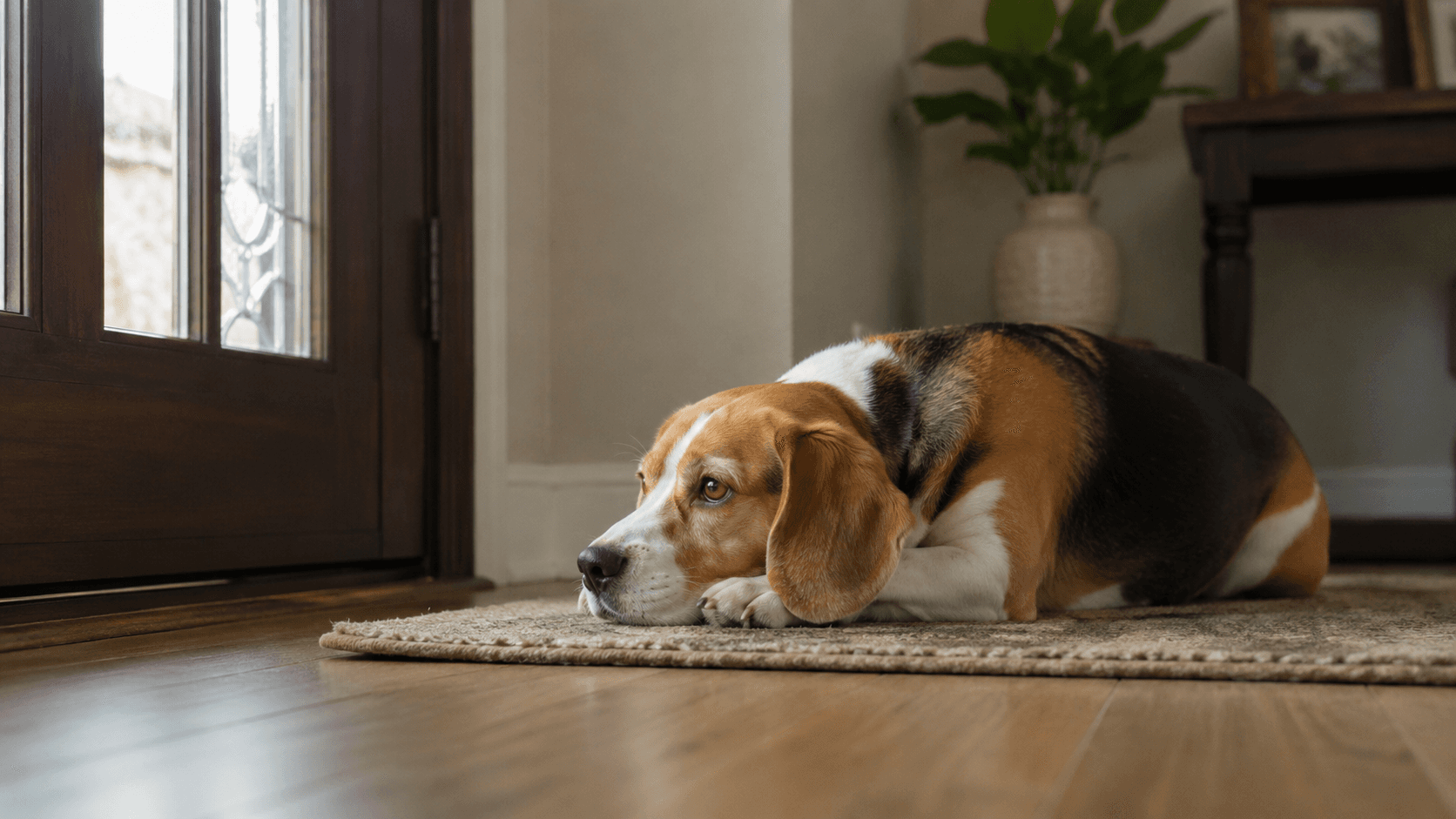
The scratched-up door frame. The note from a neighbour about the howling. The specific dread of picking up your keys, because you already know what the next twenty minutes sound like on the other side of the door. And underneath it, the part nobody talks about: the feeling that you're a hostage in your own home, and that you've somehow caused this, and that nothing you've tried has made a dent.
Very little of that is your fault, and separation anxiety is one of the more treatable behaviour problems in dogs — but the treatment doesn't look like most of the advice circulating about it. It runs on one variable above all others, and it isn't willpower or consistency. It's the dog's own anxiety threshold.
This article explains what the condition is and how it's treated. It isn't a diagnosis or a plan for your specific dog. Separation anxiety shares symptoms with several medical conditions, so a veterinary assessment is the correct first step rather than an optional extra.
What is separation anxiety in dogs?
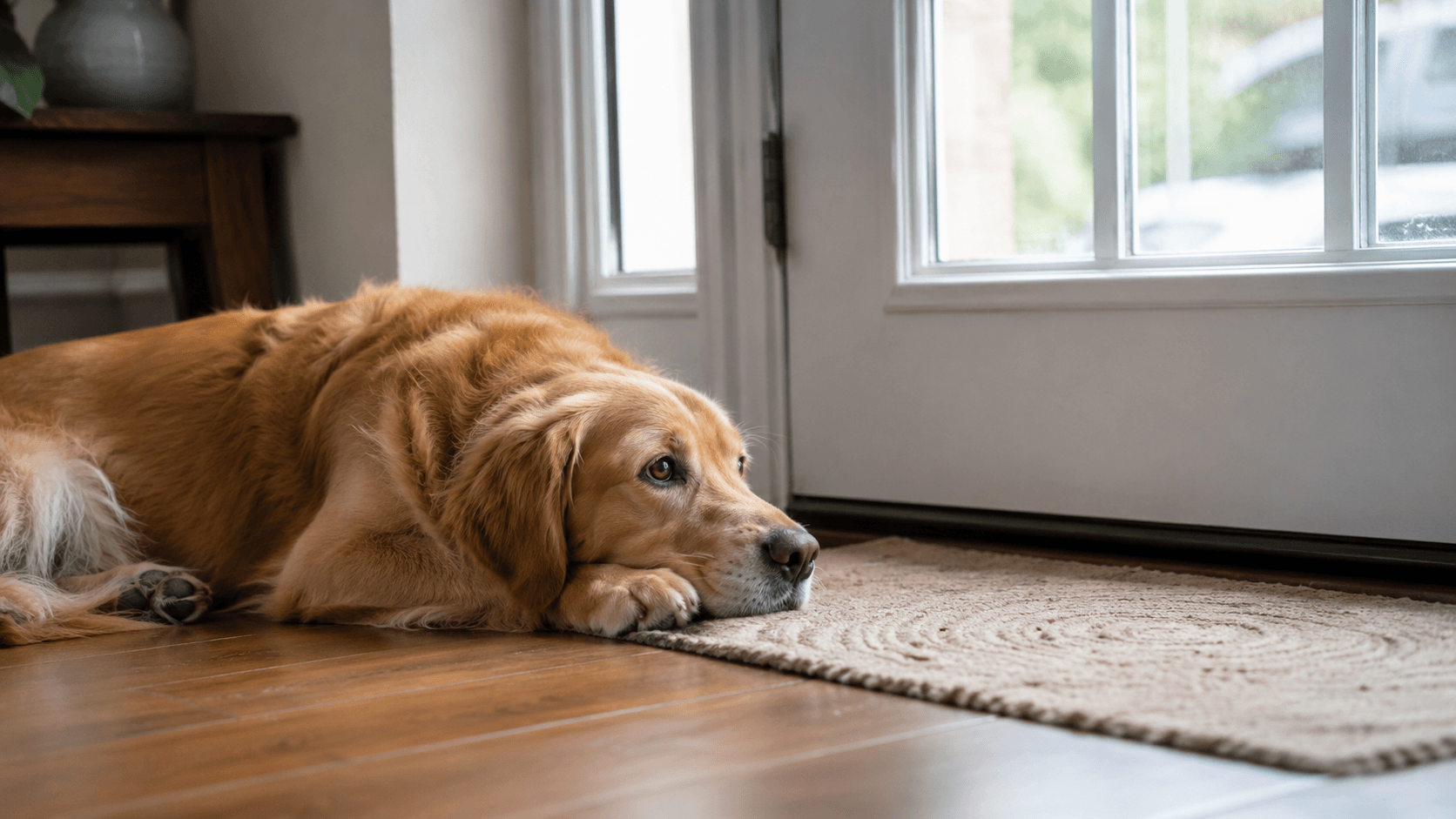
Separation anxiety is a genuine panic response triggered by being separated from a person the dog is attached to. Not disobedience, not spite, not a dog "punishing" its owner for leaving — a distress state closer to a panic attack, with the physiology to match.
That distinction matters practically, not just semantically. A dog choosing to misbehave can be redirected by better rules and clearer consequences. A dog in a panic state can't, because the thinking parts of its brain aren't fully available while it's happening. This is why approaches built on discipline tend to fail on this particular problem, and why the American Veterinary Society of Animal Behavior has consistently pointed away from punishment-based methods toward approaches that address the underlying emotional state.
The behaviours owners actually see — the destruction, the vocalising, the house-soiling, the drooling, the refusal to eat while alone — are symptoms of that panic, not the problem itself. Which is why suppressing individual symptoms rarely helps for long.
A dog with separation anxiety isn't misbehaving while you're out. It's frightened while you're out, and the damage is what fright looks like.
Check yourselfYour dog wrecks something every time you go out. Before reading on, decide: what single piece of evidence would tell you whether you are looking at panic, at distress about being alone, or at an under-occupied dog?Show the answerHide the answer
A recording of the first fifteen minutes after a departure. The wreckage looks much the same in all three cases; the timeline and the physical signs do not. Panic usually begins within minutes, often before the door has closed, with drooling, panting and refused food, and the damage is aimed at exits. Boredom tends to start later in the absence and goes after whatever happened to be interesting.
How do you tell separation anxiety apart from boredom or bad behaviour?
This is the most important question in the article, because the three look nearly identical in the aftermath and respond to entirely different treatment. A bored dog and a panicking dog can both destroy a sofa; only one of them needs a desensitisation protocol.
Specialists generally distinguish three things. True separation anxiety is attachment to a specific person — the dog panics when that person leaves, even if other people or dogs are present. Isolation distress is distress at being alone at all, which resolves if any company is present. And boredom or under-stimulation isn't anxiety at all — it's an under-exercised, under-occupied dog finding something to do.
| True separation anxiety | Isolation distress | Boredom / under-stimulation | |
|---|---|---|---|
| Trigger | One specific person leaving | Being left with no company at all | Nothing in particular — just unoccupied time |
| If another person or dog is present | Panic still occurs | Distress resolves | Fine, if there's something to do |
| Onset after departure | Usually within minutes, often before the door closes | Usually within minutes | Gradual, often later in the absence |
| Physical signs | Drooling, panting, trembling, refusing food, self-injury attempts | Similar but typically milder | Absent |
| What the destruction looks like | Focused on exits — doors, frames, windows | Often scattered | Whatever was interesting: bins, shoes, furniture |
| Responds to more exercise and enrichment | Not on its own | Partially | Usually yes |
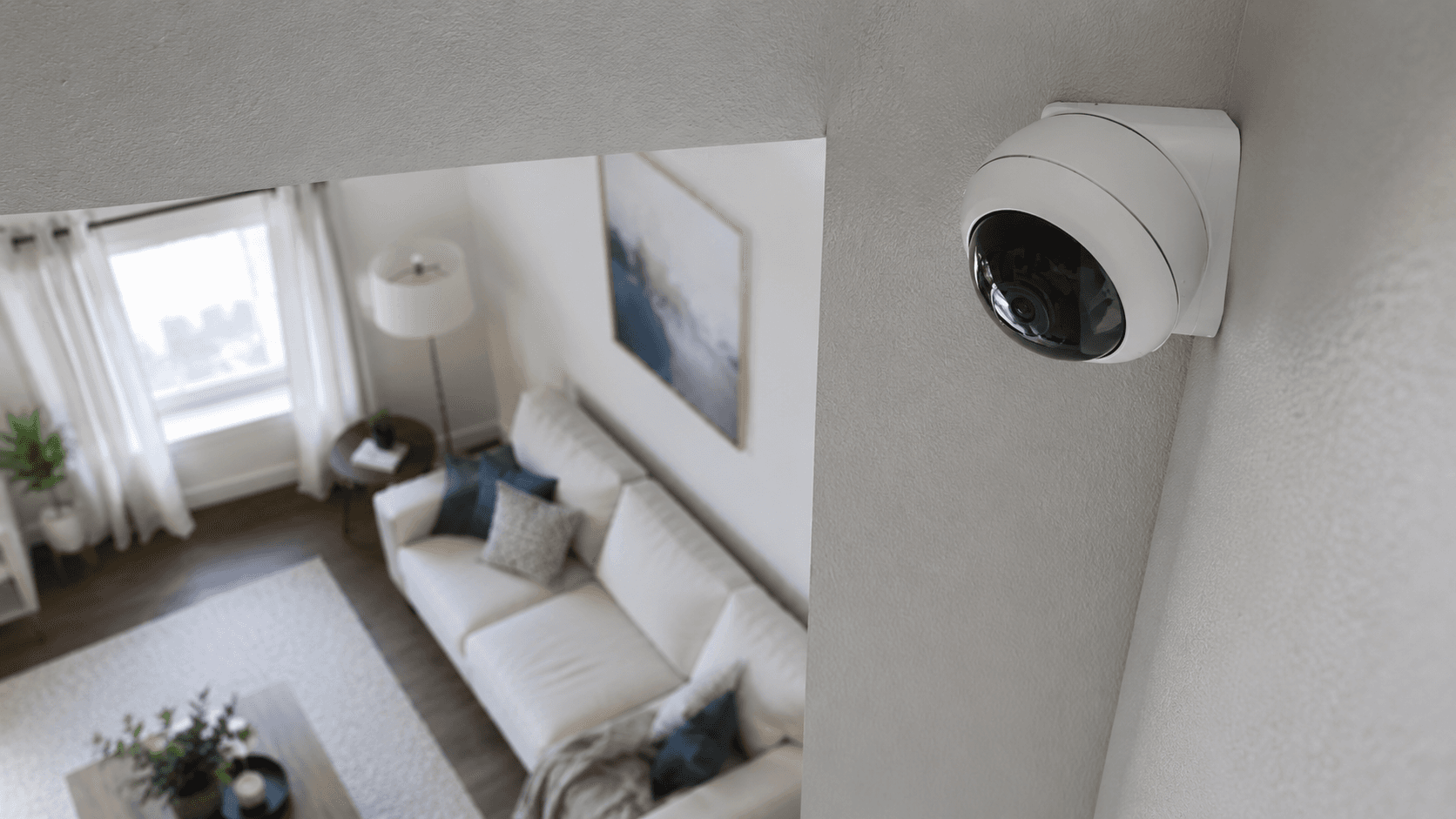
The clearest diagnostic tool is a camera. Recording what actually happens in the first fifteen minutes after a departure separates these three faster than any amount of inference from the wreckage afterwards, because the timeline and the physical signs are visible in a way they simply aren't after the fact.
What causes separation anxiety in dogs?
There's rarely a single cause, and the honest answer is that predisposition plus a triggering change explains most cases better than any one factor.
Commonly involved: a significant change in routine or household — a move, a new work schedule, a family member leaving. A history of rehoming or multiple homes. Being left alone for the first time much later than usual, or, conversely, an abrupt shift from constant company to long absences. Some genetic and individual predisposition, since dogs vary considerably in baseline anxiety. And a traumatic event that happened during an absence, which the dog has now associated with being alone.
What generally doesn't cause it: letting a dog sleep on the bed, giving affection, or 'spoiling' the dog. Applied animal behaviourist Patricia McConnell has been clear that the popular idea that ordinary affection creates separation anxiety doesn't hold up.
What is the step-by-step recovery plan?
The recognised protocol is systematic desensitisation combined with counter-conditioning, and its defining rule — the one that separates the version that works from the version that doesn't — is that the dog is never knowingly pushed past the point where anxiety begins.
Malena DeMartini-Price, whose work on this specific condition is among the most established in the field, built her treatment protocols around exactly that constraint. The dog's threshold, not the calendar, sets the pace. Progress that looks impossibly slow at the start tends to hold; progress that outruns the threshold tends to collapse and have to be rebuilt.
Here's what the process consists of, in the order it's generally approached:
- 1Medical assessment first. Before any behaviour work, a veterinary examination rules out the medical causes that produce overlapping symptoms — house-soiling and sudden distress in particular have several possible physical explanations.
- 2Establishing where the threshold actually is. The protocol depends on knowing the point at which the dog's distress begins, which is often far earlier than owners expect — frequently before the door closes. This is usually identified through video review rather than guesswork.
- 3Separating departure cues from the panic. Dogs typically learn to predict absence from a chain of small signals — shoes, bag, a particular routine. Part of the work involves those predictors ceasing to reliably mean "alone."
- 4Absences that stay under the threshold. The core of the protocol involves separations short enough that the dog remains genuinely calm throughout — not tolerating it, not enduring it, but unbothered.
- 5Building a positive association with being alone. Counter-conditioning runs alongside the desensitisation: the goal is for absence to predict something good rather than something frightening.
- 6Increasing duration in response to the dog, not the clock. Extension happens when the dog is consistently calm at the current level, and stalls or steps back when it isn't. This is where a specialist's read matters most.
- 7Managing real life during the process. The plan has to account for absences that genuinely can't be avoided — through day care, a sitter, or other arrangements — while the desensitisation work continues separately.
The reason this reads less like a schedule and more like a set of principles is that the numbers are genuinely individual. Two dogs with the same diagnosis can start at wildly different durations and progress at different rates, and the judgement about where a specific dog sits is the part that benefits most from a professional who can see the dog and the footage rather than a general framework.
There's also a related question owners run into early: whether a crate is part of the answer. For some dogs it provides genuine security; for others it substantially worsens the panic by removing the ability to move, and the resulting injuries can be serious. Treatment approaches beyond crate training covers that trade-off in more depth, because it's a decision that goes wrong often enough to deserve its own discussion.
Underneath all of it, a predictable daily structure tends to make the work easier — a dog that finds its household broadly legible has less baseline anxiety to work against. Foundational obedience and structure at home isn't a treatment for separation anxiety on its own, but it's a reasonable floor to build on.
How long does it take to fix separation anxiety?
Realistically, weeks to months, and anyone promising a specific number without having met the dog is guessing. Severity at the start, how consistently threshold-exceeding absences can be avoided, and individual variation between dogs all move the timeline substantially.
What's more useful than a duration estimate is knowing the shape of the progress. It's rarely linear. Plateaus are normal, and so are setbacks — a single unavoidable long absence, an illness, a household disruption can cost ground that was weeks in the making. That's a feature of how the condition works, not evidence that the approach has failed or that the dog is beyond help.
The most common reason this protocol fails isn't that it doesn't work. It's that it was run faster than the dog could tolerate.
What makes separation anxiety worse?
Several widely circulated pieces of advice actively set this condition back, and one of them is common enough to name directly.
- Leaving the dog alone to "cry it out." This is the single most damaging piece of advice in circulation on this topic. A dog in a panic state doesn't habituate that way — repeatedly exceeding the threshold intensifies the response and can produce self-injury.
- Punishing the aftermath. Returning to damage and scolding the dog adds a second layer of anxiety to departures without addressing the first.
- Escalating absences too quickly. Well-intentioned and probably the most common cause of stalled progress.
- Treating it as a discipline problem. Approaches built on asserting authority don't address a panic response, and confrontational methods tend to raise baseline anxiety.
- Inconsistent management during treatment. Doing careful sub-threshold work in the morning and then leaving the dog for six hours in the afternoon undoes the morning's progress.
- Adding a second dog to fix it. Sometimes suggested, rarely effective for true separation anxiety, since the attachment is to a specific person — and it introduces a second dog into a stressful household.
Where your own plan actually stands
Ticked: 0 of 5
Two or three ticks is an ordinary place to be reading this from. The third line is what the whole protocol rests on, and a single unavoidable six-hour absence can undo it, which is why the last line exists at all.
Does medication help, and when is it appropriate?
Sometimes, and it's a decision that belongs entirely to a veterinarian who has examined the dog.
In more severe cases, veterinary behaviour specialists — Karen Overall's clinical work in this area is among the most cited — may consider pharmacological support alongside behavioural work, on the reasoning that a dog whose baseline anxiety is extremely high may not be able to stay under threshold long enough for desensitisation to get traction at all. In that framing, medication isn't an alternative to the behavioural protocol. It's what makes the protocol possible for some dogs.
This article won't name specific medications, suggest dosages, or imply any particular option is worth trying. That assessment requires an examination, a history, and a prescribing veterinarian.
What if the plan isn't working?
Slow progress and no progress are different things, and telling them apart usually requires an outside perspective — which is the main argument for professional involvement earlier rather than later.
A few situations warrant escalating beyond self-directed reading fairly urgently: a dog injuring itself trying to escape; panic that triggers at absences so brief there's no sub-threshold starting point to work from; symptoms getting worse despite careful management; or a household situation where the required absences genuinely can't be avoided. None of these mean the case is hopeless. They mean the calibration needs someone qualified looking at it directly.
When to call a dog behaviourist and what the first session involves covers how to find someone appropriately credentialed for this — worth noting that separation anxiety is specialised enough that experience with it specifically matters more than general training credentials.
One last thing worth holding onto: this condition responds to treatment in the large majority of cases, and the owners who get there are not the ones who pushed hardest. They're the ones who went slowly enough that the dog never had to panic on the way.
Test yourself
Question 1 of 3
Your dog howls and scratches at the door whenever you leave, but settles completely on the days your flatmate is home. Which of the three does that point to?
What is separation anxiety in dogs?
A genuine panic response triggered by separation from a specific attached person — not disobedience or spite. The destruction, vocalizing, and house-soiling owners see are symptoms of that panic, not the problem itself.
How do you tell separation anxiety apart from boredom?
True separation anxiety is attachment to one specific person and persists even with other company present. Isolation distress resolves with any company. Boredom isn't anxiety at all — it responds to more exercise and enrichment. A camera recording the first fifteen minutes is the clearest diagnostic tool.
What causes separation anxiety in dogs?
Rarely a single cause — usually predisposition plus a triggering change like a move, new schedule, or history of rehoming. Ordinary affection and letting a dog sleep on the bed do not cause it, despite common belief.
What is the step-by-step recovery plan for separation anxiety?
Medical assessment first, then establishing the dog's actual anxiety threshold, separating departure cues from panic, practicing absences that stay under threshold, building positive association with alone time, and increasing duration based on the dog's response, not a fixed schedule.
How long does it take to fix separation anxiety in dogs?
Realistically weeks to months, and progress is rarely linear. Plateaus and setbacks are normal features of the condition, not evidence the approach has failed.
What makes separation anxiety worse?
Leaving a dog to 'cry it out' is the most damaging common advice — it intensifies panic rather than resolving it. Punishing the aftermath, escalating absences too fast, and inconsistent management during treatment also set progress back.