

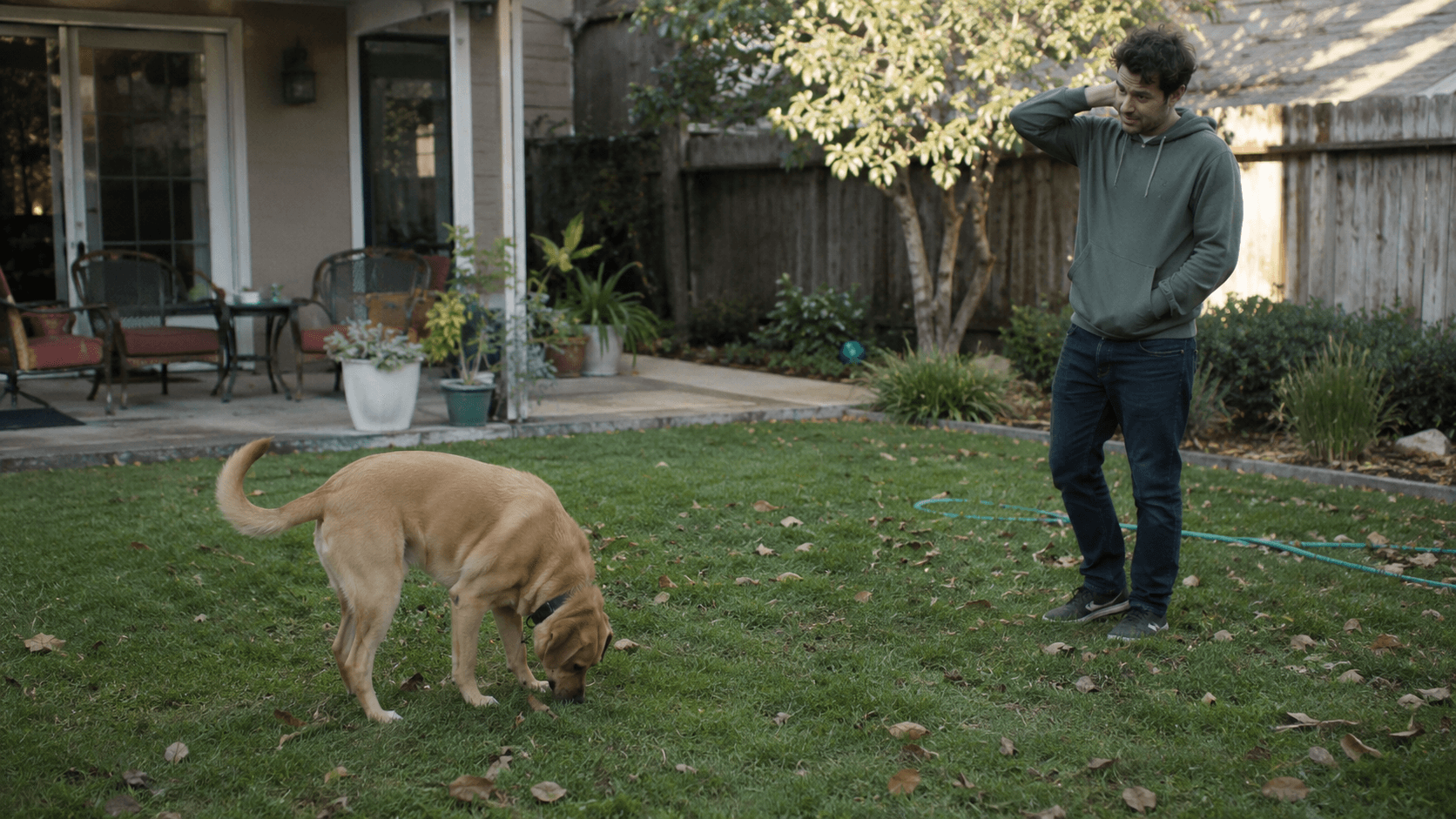
It happens at the worst possible moment. You're mid-conversation with a guest, you glance over, and your dog is calmly finishing something you'd rather not describe further. The immediate thought isn't really about the dog — it's about you. What am I doing wrong? Is this my fault?
Almost certainly not. Coprophagia — the technical term for eating feces — is one of the most common and most misunderstood behaviors in dogs, and it has very little to do with how well you're feeding or raising your dog. It's also, understandably, one of the least talked-about dog behaviors, which means most owners deal with it privately, assuming they're the only ones and that it must mean something is uniquely wrong. Neither assumption holds up.
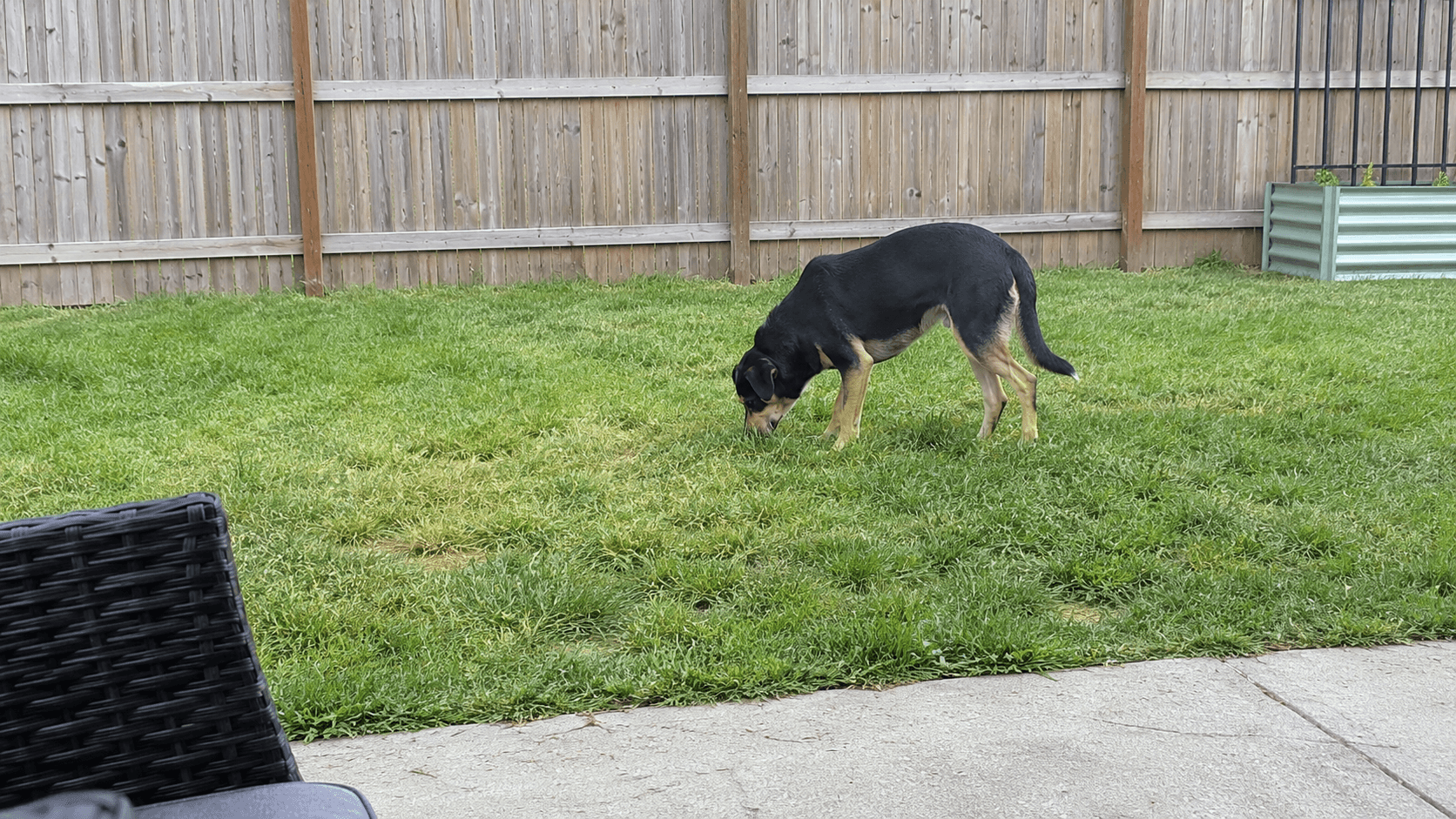
Why do dogs eat poop?
Because it's an old, mostly harmless instinct that dogs never fully lost, not because something is deficient in their diet or their upbringing. The most substantial research on this comes from a large owner survey run by the UC Davis School of Veterinary Medicine, led by researcher Benjamin Hart, and it found the behavior widespread across breeds, sexes, and households — common enough that it's closer to a normal canine quirk than a red flag.
One detail from that research is particularly telling: dogs that eat feces overwhelmingly prefer it fresh, generally within a day or two, rather than older waste. That pattern lines up with a den-hygiene instinct inherited from wild canine ancestors, who benefited from keeping the den area clean and from not leaving scent markers that could attract predators to a litter of vulnerable pups. The behavior likely persists simply because the underlying instinct never had a reason to disappear.
The behavior looks disgusting to us. To a dog's inherited instincts, it's closer to basic housekeeping.
Is coprophagia normal, or a sign something's wrong?
In the large majority of cases, it's normal — especially in puppies and in multi-dog households, where it shows up more often without indicating any underlying problem. Mother dogs cleaning up after very young puppies is textbook normal maternal behavior, and puppies exploring the world mouth-first sometimes pick up the habit simply by mimicking littermates or their mother.
The same UC Davis research looked directly at two of the most popular explanations — a nutritionally deficient diet, and attention-seeking or poor training — and didn't find strong support for either as the main driver in most dogs who do this. That's worth knowing, because both explanations tend to load owners with guilt that the evidence doesn't really back up.
It's also worth separating puppies from adult dogs here. A puppy dabbling in this while exploring its environment, or copying behavior it's seen from its mother, tends to fall away with maturity in a lot of cases without any intervention at all. An adult dog with a longstanding, consistent habit is a different picture from a puppy going through a phase, though neither one is automatically cause for alarm.
Check yourselfYour dog walks past everything in the garden but goes straight for the cat's litter tray. Before reading on, predict why cat waste in particular, and what that suggests about the fix.Show the answerHide the answer
Cat food is considerably higher in protein and fat than dog food, and a meaningful amount of that passes through undigested, so the tray genuinely smells better to a dog than most things in the house. Which means the fix is access rather than training: a covered tray, a baby gate, or a position the dog cannot physically reach.
Why do dogs eat cat poop specifically?
Because cat feces genuinely is more appealing to a dog, for a straightforward nutritional reason: cat food is considerably higher in protein and fat than dog food, and a meaningful amount of that passes through undigested. To a dog's nose, a litter box can be more enticing than most anything else in the house.
If this is the specific version you're dealing with, the most reliable fix has nothing to do with your dog's training and everything to do with access — a covered litter box, a baby gate, or placement somewhere the dog physically can't reach tends to solve this faster than any behavioral approach.
Does diet actually cause coprophagia?
Rarely as the primary cause, based on the available research, though diet isn't entirely irrelevant either. Poor digestibility or an imbalanced diet can, in some dogs, leave more undigested nutrient content in the stool, which theoretically makes it more appealing — but this turned out to be a less common driver than the popular narrative suggests, according to the survey data.
Where diet matters more concretely is in ruling things out. A dog on a diet appropriate to its life stage, activity level, and any digestive sensitivities is less likely to have stool that's unusually attractive for nutritional reasons, and understanding what your dog's stool normally looks like is a genuinely useful skill for catching digestive issues early.
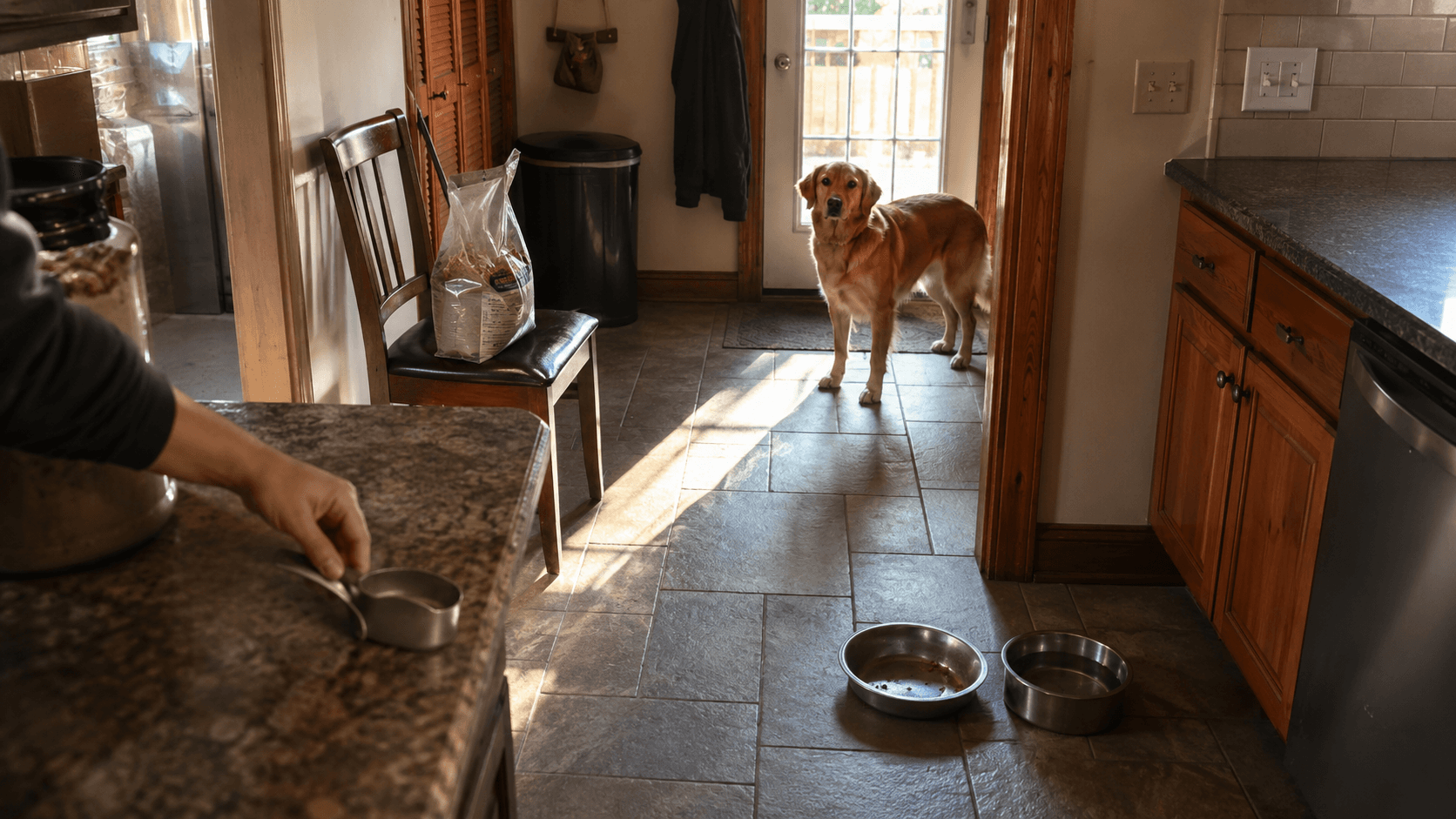
What actually helps reduce it?
Prompt cleanup is the single most reliable, evidence-backed approach — if the opportunity isn't there, the behavior can't happen, and this works regardless of the underlying cause. Beyond that:
- Manage access rather than relying on training alone. Quick yard cleanup, supervised outdoor time, and controlling access to litter boxes address the behavior directly rather than trying to argue a dog out of an old instinct.
- Increase mental stimulation. Boredom is a plausible contributing factor for some dogs, and more enrichment — walks, puzzle feeders, structured play — rarely hurts and sometimes helps.
- Be skeptical of taste-deterrent products. A range of supplements and additives are marketed specifically to make stool less palatable. The evidence supporting most of these is thin, and results are inconsistent enough that management and cleanup remain the more dependable approach.
- Don't punish it after the fact. Like most behaviors, correcting it well after it happened doesn't connect meaningfully in a dog's mind and mostly just adds stress without changing anything.
The three minutes of management this actually takes
Ticked: 0 of 5
Two ticks is enough to change the picture, and the first two lines are the two: the behavior needs an opportunity before it needs a motive. None of this is a verdict on how you feed or raise your dog, and the research does not support reading it that way.
When is coprophagia a medical concern?
When it starts suddenly in an adult dog with no prior history, or shows up alongside other symptoms like weight loss, changes in appetite, or visibly abnormal stool — those combinations are worth a veterinary visit rather than assuming it's the usual harmless version.
Less commonly, coprophagia can be connected to a genuine digestive issue — conditions affecting nutrient absorption, parasites, or enzyme insufficiencies. Eating another animal's feces can also transmit intestinal parasites, so reasonably prompt cleanup matters for health reasons too.
What to do next
For the overwhelming majority of dogs who do this, coprophagia is an old instinct with a modern-day yuck factor attached, not a sign of a nutritional gap or a training failure. Manage the opportunity, keep an eye out for the less common warning signs, and let go of the guilt — this one really isn't a referendum on how well you're taking care of your dog.
Understanding what a dog's digestion and stool are actually telling you is a genuinely useful skill beyond just this one behavior. For a broader look at getting portions and feeding right in general, our full guide to dog nutrition basics is a good next stop.
Test yourself
Question 1 of 3
You have already switched your dog to a better food and nothing changed. What does the article say diet's role in this actually is?
Why do dogs eat poop?
It's an old, mostly harmless den-hygiene instinct inherited from wild canine ancestors, not a sign of deficient diet or upbringing. Large-scale research found the behavior common across breeds, sexes, and households, and dogs overwhelmingly prefer it fresh.
Is coprophagia normal, or a sign something's wrong?
In most cases, normal — especially in puppies and multi-dog households. Research found little support for the two most popular explanations, nutritional deficiency and attention-seeking, as the main driver in most dogs.
Why do dogs eat cat poop specifically?
Cat food is considerably higher in protein and fat than dog food, and undigested content passes through, making cat feces genuinely more appealing to a dog's nose. The most reliable fix is restricting access to the litter box.
What actually helps reduce coprophagia?
Prompt cleanup is the single most reliable approach — if the opportunity isn't there, the behavior can't happen. Managing access, increasing mental stimulation, and avoiding punishment after the fact all help; taste-deterrent products have thin evidence support.
When is coprophagia a medical concern?
When it starts suddenly in an adult dog with no prior history, or appears alongside weight loss, appetite changes, or abnormal stool. Less commonly it connects to digestive issues like parasites or enzyme insufficiencies, worth ruling out with a vet.