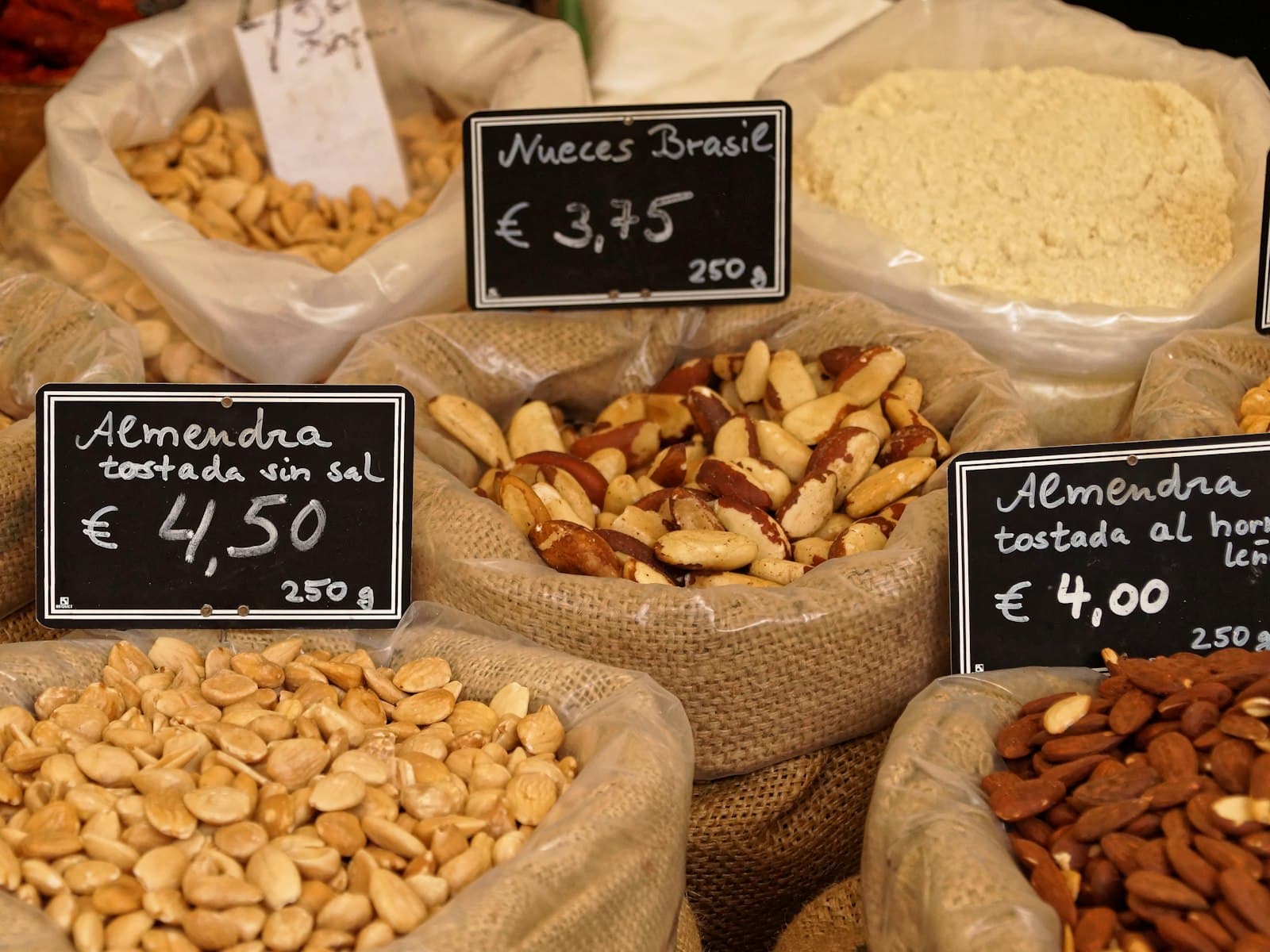
Charm pricing is the practice of setting a price just below a round number: 9.99 instead of 10, 4.95 instead of 5, 39 instead of 40. It is so common that most people stop noticing it, which is partly the point. The difference is one cent or one unit, and a rational buyer should not care. Yet decades of research show that buyers often do, and in ways that are surprisingly large. The reasons say a lot about how people read numbers, and they also explain when charm pricing helps, when it does nothing, and when a round number is the better choice.
This article explains what charm pricing is, the research behind it, why it works, when round prices work better, and how to think about using it honestly.
What charm pricing is
A charm price ends in a digit, usually 9, sometimes 5 or 7, that places it just under a round number. It is also called psychological pricing or odd pricing. The classic forms are prices ending in .99 or .95 for small items and whole numbers ending in 9 for larger ones, such as 49, 199 or 1,990.
A popular story says the practice began in the 19th century to stop cashiers stealing, because an odd price forced them to open the till to give change. The story is widely repeated and poorly documented. What is well documented is that the practice works on buyers, which is reason enough for it to have spread.
A charm price is one cent cheaper and, to the eye, a whole digit cheaper. The eye usually wins.
The left-digit effect
The main explanation is how people process numbers. We read left to right, and when we compare prices quickly, we give the first digit far more weight than those after it. A price of 2.99 is encoded as "two and something", while 3.00 is "three". The gap feels larger than one cent because the leftmost digit has changed.
In a 2005 paper in the Journal of Consumer Research, Manoj Thomas and Vicki Morwitz showed that nine-ending prices are judged as noticeably lower than a price one cent higher, but only when the leftmost digit changes. 2.99 feels cheaper than 3.00; 2.89 does not feel meaningfully cheaper than 2.90. The same bias appears outside prices: economists have found that used cars sell for noticeably less just after their mileage crosses a round 10,000-mile mark, because buyers focus on the first digit of the odometer.
Check yourselfIn a catalogue test, would a price ending in 9 do more work on a brand new item or on one customers already know? And would it add much when the page also carries an explicit sale sign? Predict before reading on.Show the answerHide the answer
More on the new item. The effect was strongest where customers had little idea what the price should be, and weaker when the catalogue also used explicit sale cues. The reason is that a 9 ending partly works as a signal of a deal, so it matters most when buyers have little else to judge value by, and it overlaps with other deal signals when they are present.
What the research on charm pricing shows
The strongest evidence comes from field experiments with real customers. In a study published in 2003 in Quantitative Marketing and Economics, Eric Anderson and Duncan Simester worked with a women's clothing catalogue that sent different versions of its catalogue, with different prices, to different customers. Prices ending in 9 increased demand in all three of their experiments. In one widely cited case, an item sold more at 39 dollars than at 34, even though the lower price was cheaper by five dollars.
They also found the effect was strongest for new items, where customers had less idea what the price should be, and weaker when the catalogue also used explicit sale signals. That fits a broader pattern: charm prices do the most work when buyers have little other information to judge value.
| Finding | What it suggests |
|---|---|
| Left-digit changes matter most | Charm pricing works when it moves the first digit, as in 3.00 to 2.99 |
| Stronger for unfamiliar items | It helps most when buyers have no reference price |
| Weaker alongside sale cues | A 9 ending partly works as a signal of a deal, so it overlaps with other deal signals |
Charm prices as a signal of a deal
The left-digit effect is not the only mechanism. Over time, many buyers have learned to associate prices ending in 9 with discounts and value. That makes a charm price a signal as well as a number: it says this is a good deal.
That signal is an advantage for value-oriented products and discount retailers. It can be a disadvantage for premium products, where the message a seller wants to send is quality, not cheapness. A luxury item priced at 999 can feel like it is trying too hard in a way that 1,000 does not. As explained in how to price your offer, price itself carries information about quality, and the ending of a price is part of that information.
How this is taught inside Astra Trainer
The Offers & pricing direction in the Marketing, Sales & Attention world runs to thirteen courses on shaping an offer people want and setting a price that holds up, including How People Perceive Price and Price Positioning.
Charm pricing is one small part of how price is perceived, and it only makes sense alongside the bigger question of what the price says about the offer. Lessons take about five minutes and a guide walks you through anything strange.
When round prices work better
Round numbers have their own psychology. In a 2015 study in the Journal of Consumer Research, Monica Wadhwa and Kuangjie Zhang found that round prices, such as 100.00, encourage people to judge by feeling, while precise prices, such as 98.76, encourage them to judge by reasoning. When a purchase is emotional, for example a camera for a family holiday, the round price made people more likely to buy. When it was practical, for example a camera for a class project, the precise price did better.
Together with the quality signal, that suggests a rough guide.
- Charm prices tend to suit value products, everyday purchases, unfamiliar items and buyers comparing prices quickly.
- Round prices tend to suit premium products, gifts and emotional purchases, and services where simplicity and confidence matter.
- Precise, unusual prices can suggest that a price has been carefully calculated, which can help in considered, practical purchases.
Using charm pricing honestly
Charm pricing is a presentation choice, not a deception. The price is displayed in full, and anyone who reads it sees exactly what they will pay. That puts it in a different category from hidden fees, fake discounts or countdown timers that reset, which the article on pricing psychology discusses in detail.
The honest limits are about proportion and consistency. A charm price does not make a weak offer strong; it slightly shifts perception at the margin. And if every other signal about a product says premium, a charm price that says bargain sends a mixed message. The question worth asking is not only which ending sells more, but which one tells the buyer the truth about what they are getting.
The simplest approach is to test. Where it is possible to show different prices to comparable groups, the result for a particular product and audience is worth more than any general rule.
Why price perception is worth understanding from both sides
Everyone who sets a price uses some kind of ending, and everyone who shops is influenced by them. Understanding the left-digit effect is useful whichever side of the counter you are on.
The Marketing, Sales & Attention world is built to make ideas like this stick. Quizzes follow each topic and each course ends with a ten-question final exam, while daily quests, points and a streak keep five-minute lessons going. A Circle gives you a small group with a shared weekly goal and live sessions, useful for comparing how different people react to the same price.
What to take from this
Charm pricing sets prices just below a round number. It works mainly through the left-digit effect, in which people give the first digit of a number too much weight.
Field experiments support it, especially for unfamiliar items, and in one catalogue test an item sold more at 39 dollars than at 34.
Charm prices also signal a deal, which helps value products and can hurt premium ones. Round prices often work better for emotional and premium purchases.
Which is why the most useful way to think about charm pricing is as a signal, not a trick: the ending of a price tells buyers something about the offer, so choose the ending that tells them the truth.
Test yourself
Question 1 of 3
According to the left-digit effect, which one-cent change is most likely to make a price feel noticeably cheaper?
What is charm pricing?
Charm pricing is setting a price just below a round number, such as 9.99 instead of 10 or 39 instead of 40. It is also called psychological or odd pricing, and it works mainly because people give the first digit of a price too much weight.
Why do prices end in 99?
Mainly because of the left-digit effect: 2.99 is read as two and something, so it feels meaningfully cheaper than 3.00. Research by Thomas and Morwitz in 2005 showed the effect appears when the leftmost digit changes. Prices ending in 9 also signal a deal.
Does charm pricing really work?
Field experiments suggest it often does. A 2003 study with a clothing catalogue found prices ending in 9 increased demand in all three experiments, with one item selling more at 39 dollars than at 34. The effect is strongest for unfamiliar items.
When should you use a round price instead?
Round prices often suit premium products, gifts and emotional purchases. Research by Wadhwa and Zhang in 2015 found round prices encourage people to judge by feeling, which helps when a purchase is emotional, while precise prices help practical purchases.
Where can I learn pricing psychology in short lessons?
The Offers & pricing direction inside the Marketing, Sales & Attention world of Astra Trainer runs to thirteen courses, including How People Perceive Price and Price Positioning, in five-minute lessons with quizzes. The first lesson needs no card.
Where this leads. What Is a Mini MBA, and Is It Worth Doing? places pricing alongside the other areas of the business syllabus, and explains the order to learn them in.