
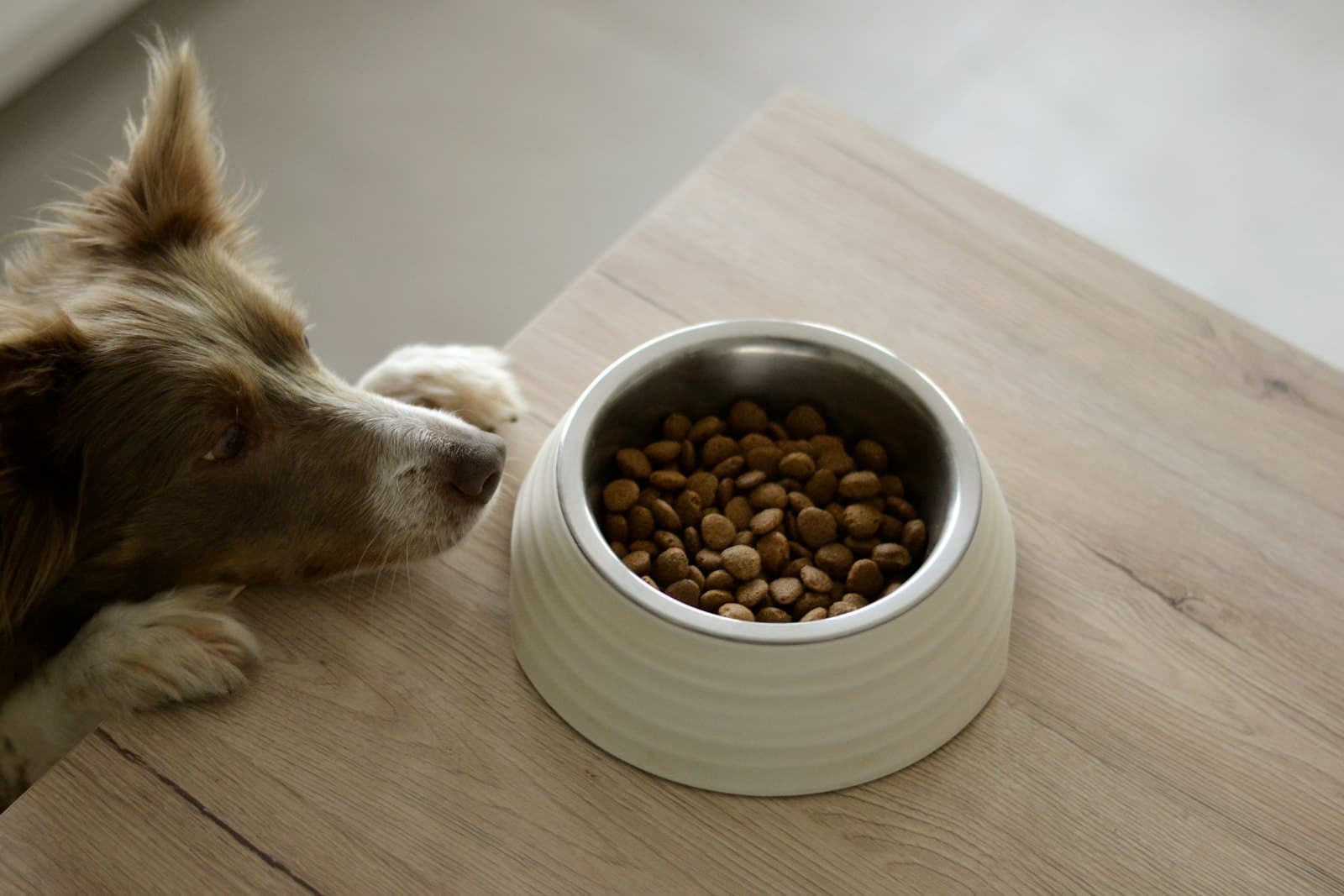
Three confident and contradictory opinions in thirty seconds is the normal experience of researching this, and it is why the subject produces more anxiety than almost any other part of owning a dog.
Everyone starts in the wrong place
The first question is almost always which food to buy. It is the worst possible starting point, for a structural reason.
Food choice is the question with the most commercial interest attached, the least consensus, and the weakest feedback. You change food, and then you have no way of telling whether anything improved, because you have no baseline and no measurement.
So the search continues indefinitely, each new opinion contradicting the last, and the dog gets switched between products without anything being learned. The problem is not that the person picked wrong. It is that the question cannot be answered in the position they are standing in.
The perception gap
Here is the finding that reorders the whole subject.
The Association for Pet Obesity Prevention found that 59 percent of United States dogs were classified as overweight or having obesity in 2022, up from 56 percent in both 2017 and 2018.
And more usefully: 36 percent of dog owners considered their dog's body condition normal when a veterinary professional scored it in the 6 to 9 range, meaning overweight to obese.
Over a third of owners were looking at an overweight dog and seeing a normal one. Not through carelessness. Through calibration, because what people see as normal is what they see most often, and most dogs now carry extra weight.
Over a third of owners looked at an overweight dog and saw a normal one. The eye is calibrated by what it sees most.
This is why measurement precedes choice. If your perception of your own dog is the instrument, and the instrument is unreliable in a known direction, every decision downstream inherits the error.
Stage one: what your dog actually needs
Two to three weeks, and it is mostly conceptual.
What the components of a diet do, why requirements differ by size and age and activity, and why a number printed on a bag is a population average rather than a prescription for one animal.
The single most useful idea here is that the feeding guidelines on packaging are a starting estimate calculated for an average dog of a given weight. Real requirements vary substantially between individual dogs of identical weight, driven by activity, metabolism, neuter status and age. The bag is not wrong. It is general, and your dog is specific.
Stage two: measurement before choice
Three to four weeks, and it is the stage that makes everything after it possible.
Two measurements, kept consistently.
Body condition, assessed by hand rather than by eye. The standard veterinary approach uses a nine-point scale. The practical version is a set of checks you can do in under a minute: whether ribs can be felt under light pressure without pressing, whether there is a visible waist looking down from above, and whether there is an upward tuck from chest to abdomen viewed from the side. Hands are more reliable than eyes here for exactly the calibration reason above, and coat length makes eyes worse still.
Portions, weighed rather than scooped. A scoop varies enormously between fills. Weighing takes a few seconds and converts feeding from an estimate into a number, and a number is the only thing you can adjust deliberately.
With those two in place, you have a baseline. Now a change to anything, including food, produces information.
Your vet is the reference point. This article is educational and does not diagnose or treat anything. Body condition scoring, target weight, and any weight change plan should be checked with your veterinary practice, who can also rule out medical causes for weight change, appetite change or digestive problems. Sudden weight loss, sudden appetite loss, or persistent digestive upset are veterinary matters rather than feeding-adjustment matters.
Stage three: choosing food, with less at stake
Two to three weeks, and it is a smaller question than it looked from the outside.
With measurement running, food choice stops being a leap of faith. You can change one thing and see whether anything moved.
The skill here is reading a label, and the rule is simple: the front of the bag is marketing and the back is regulated. Front-of-pack language about premium quality, ancestral diets and natural ingredients carries little defined meaning. The regulated panels on the back, the ingredient list, the guaranteed analysis and the nutritional adequacy statement, carry specific and checkable information.
The nutritional adequacy statement is the most useful line on the packaging and the least read. It states which life stage the food is formulated for and how that was established. Whatever else you learn to read, learn that one.
The other thing worth settling here is that no perfect food exists. Foods are suitable or unsuitable for a particular dog at a particular stage, which is a much more answerable question than which one is best.
Stage four: reading what comes back
Two to three weeks. The least appealing part of the subject and a genuinely useful daily signal.
Stool consistency, frequency and colour respond quickly to diet, and tracked over weeks they give faster feedback than weight does. Changes here typically show up days after a dietary change, where body condition takes weeks.
Appetite patterns belong here too. A dog leaving food is doing one of several things: not hungry because the portion is too large, uninterested because something has been taught about waiting for something better, or unwell. The first two are feeding questions. The third is a veterinary one, and telling them apart is the skill.
Stage five: life stages
Two to three weeks, and it is the part that keeps the work durable.
Requirements change across a life: a growing puppy, an adult at maintenance, the shift after neutering, the changes of older age. A feeding arrangement that was correct for two years quietly stops being correct, and without periodic measurement, nothing signals the change until the body condition has already shifted.
Three to four months covers the whole sequence, which is the shortest of the eighteen goal paths and the one with the most immediately visible results.
The path this article maps
Feed my dog right runs 3 to 4 months across 9 courses and two directions. Nutrition and food carries the system: needs, choosing food without the confusion, portions and daily feeding, digestive clues from the bowl, weight and metabolism, and feeding through every life stage. Dog language ties the bowl to behaviour, so a skipped meal reads as information.
Where it stalls
Searching for the perfect food. It does not exist, the search has no end condition, and it consumes the attention that measurement would use better.
Trusting your eye. Over a third of owners misread their own dog in the same direction. Hands are better, and a vet is better still.
Scooping rather than weighing. Converts every subsequent adjustment into guesswork.
Changing several things at once. New food, new portion and new schedule together means whatever happens cannot be attributed to anything.
Treating a set portion as permanent. Requirements change with age, activity and neuter status, and nothing announces the change.
What to take from this
Choosing a food is the last question, not the first, because without measurement no answer to it can be evaluated.
Most dogs now carry extra weight, and a third of owners cannot see it on their own dog, which makes perception the unreliable link.
Body condition by hand and portions by weight are the two measurements that make everything else legible.
The front of the bag is marketing and the back is regulated, and the nutritional adequacy statement is the line to learn.
And requirements change across a life, so the work is periodic rather than a decision made once.
What is the first thing to get right about feeding a dog?
Measurement, not food choice. Body condition assessed by hand and portions by weight give you a baseline, and without a baseline no change to food can be evaluated.
How do I know if my dog is overweight?
By hand rather than by eye: ribs felt under light pressure, a visible waist from above, an upward tuck from the side. In 2022, 59 percent of US dogs were classified overweight or obese, and 36 percent of owners rated their dog normal when a vet scored it overweight. Your vet is the reference point.
Should I follow the feeding guide on the bag?
As a starting estimate. It is calculated for an average dog of a given weight, and real requirements vary substantially between individual dogs of the same weight depending on activity, age and neuter status.
Which part of a dog food label matters?
The back. Front-of-pack language is marketing with little defined meaning, while the ingredient list, guaranteed analysis and nutritional adequacy statement are regulated and checkable. The adequacy statement is the most useful and least read line.
My dog leaves food in the bowl. Is that a problem?
It can mean the portion is too large, or that waiting has been rewarded before, or that something is wrong. The first two are feeding questions and the third is a veterinary one, so a persistent change in appetite is worth a vet visit.