A tarot course with a certificate sounds like one purchase: you learn the cards and get a document saying you did. The learning part is easy to judge, because you can try a lesson. The certificate is harder, because two very different documents go by the same name, and only one of them can be failed.
This guide sets out what each kind of certificate proves, the catch in free certificate offers, how to judge a programme before you enrol and a study plan that ends in an exam. Astra's own exam comes last, as one option among several.
Two kinds of tarot certificate
| Question | Completion certificate | Exam certificate |
|---|---|---|
| What you did | Finished the lessons | Reached a pass mark |
| Could you fail? | Usually not | Yes |
| What it shows | You went through a structured course | You met a stated standard on the day |
| What it cannot show | How much you kept | How you read for a person |
| How to check it | Usually only by asking the school | Ideally a number and a public verification page |
Neither is a licence. No licence anywhere tests tarot knowledge, so every certificate in this field is private, from a single teacher's course to a large society's scheme. The difference between the two kinds is the thing worth understanding before you pay for either.
Learning, then proving it
A course is where you learn the cards. An exam is where someone other than you checks that you did. The two can come from the same place or from different ones.
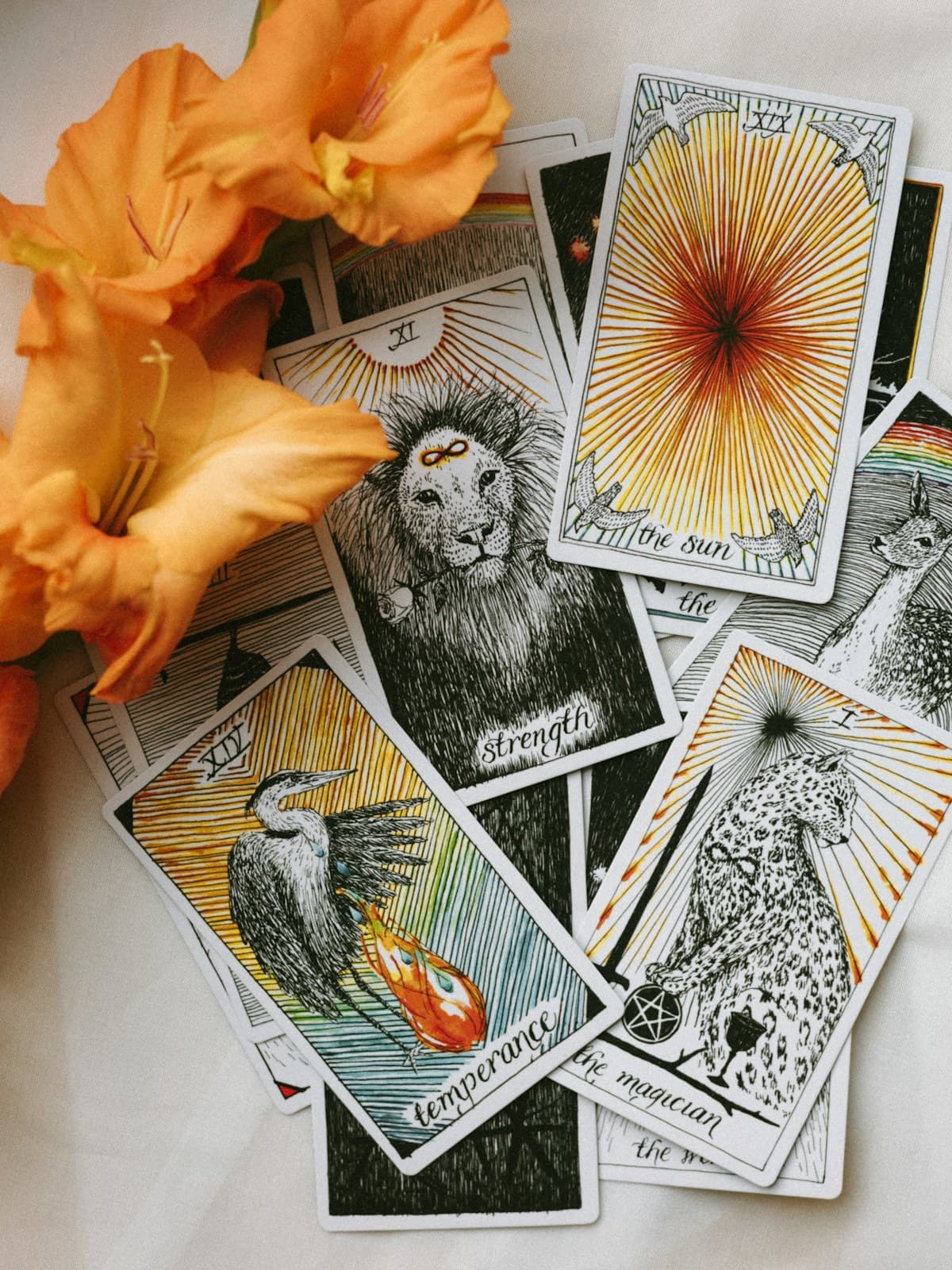
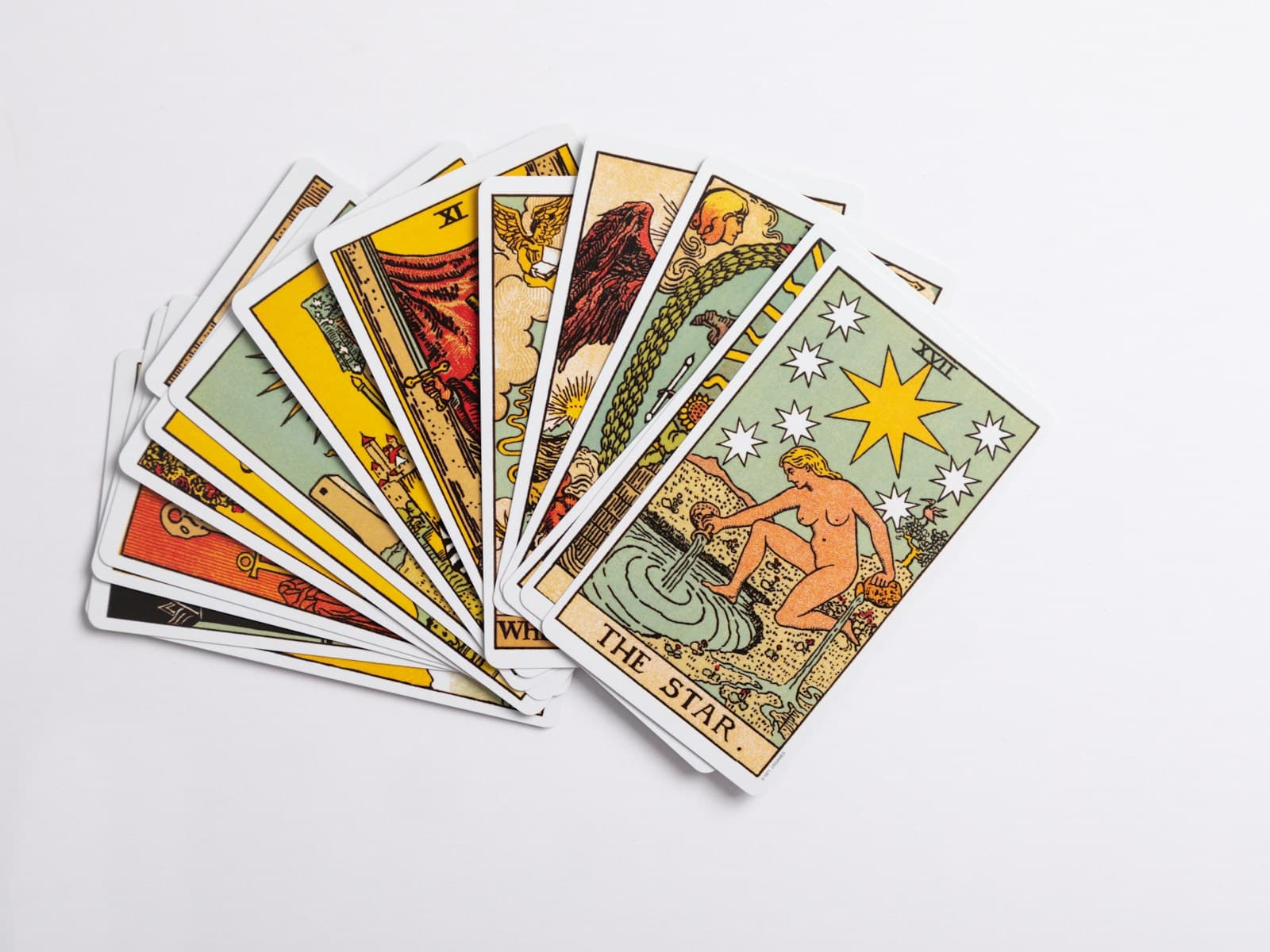
Photos: Joanna Kosinska and Zena Rice-Sarantis on Unsplash.
What a completion certificate proves
A completion certificate is a record of effort, and effort counts for something. Finishing a structured course means you met the whole deck in a sensible order instead of in scraps, and that you stuck with it.
What it cannot do is say how much stayed with you. Completion is usually measured by the platform, in lessons opened and videos watched, and the certificate goes to everyone who reaches the end. Two people with the same certificate can know very different amounts.
Some courses add a final quiz before the certificate. Ask three things: how many questions, what pass mark, and whether a failed quiz can be retaken at once until it lets you through. A quiz you can retry the same minute is closer to completion than to an exam.
What a passed exam adds
An exam adds the one thing a completion certificate cannot: the chance of failing. A pass mark means the document is withheld from people who do not reach the standard, so holding it says something about what you knew on the day.
How much it says depends on the design:
- A published pass mark. It tells you, and anyone who checks, what passing meant.
- A question bank. Questions drawn from a larger pool are harder to memorise than a fixed list.
- A clock. A time limit per question leaves little room for looking things up.
- Supervision, stated. A proctored exam shows who sat it; an unsupervised one shows that the account passed. Both are legitimate when the issuer says which.
- Verification. A unique number and a public page let a stranger confirm the certificate is real.
No exam can show how you read for a person across the table: how you draw out the real question, handle distress or know where to stop. That comes from practice with feedback, which How to Become a Tarot Reader: Honest Guide covers.
The catch in free certificate offers
Search for a tarot course with certificate and many results say free. Some are generous and genuinely free. Others follow a familiar pattern, and it helps to recognise it:
- Free lessons, paid certificate. The course costs nothing and the document costs money at the end. The certificate is then the product you are buying, so judge it as one: what did it test?
- Completion as the only requirement. If watching every video earns the certificate, the certificate records viewing.
- Borrowed authority. Claims such as internationally recognised or accredited, with no named body behind them, or with a body run by the same school. Ask who recognises the course and what they check.
- Titles out of scale. A master title after a few hours of video is the school's own label, and it means no more than that.
None of this makes free material bad. Plenty of it is excellent for learning. It only means the certificate attached to a course deserves a separate look from the teaching.
How to judge a tarot programme
Whatever you pay in money or time, a good programme lets you see most of the following before you start. Tick what you can confirm for the course you are considering.
Check the course before you enrol
Ticked: 0 of 6
The first four lines are about the teaching, the last two about the certificate. Read the two halves separately: a course can be good to learn from and still end in a certificate that proves little.
Look at the teaching as closely as the paper. The best sign in a tarot course is feedback: exercises where you read real spreads and find out where your reading went wrong. Meanings to read, with nothing that can tell you when you are wrong, is a reference book with a certificate at the end.
Check yourselfYou study one suit a week, Cups, then Wands, then Swords, then Pentacles, and every weekly quiz goes well. Before you read on: why might a mixed exam still catch you out?Show the answerHide the answer
Because a quiz on one suit tells you the suit before you start, so you only ever pick a meaning and never have to work out which part of the system applies. A mixed exam removes that clue: each question first asks you to recognise what kind of card or rule is in front of you. Mixing suits and topics in practice feels harder, and it trains exactly that step.
A study plan that ends in an exam
This plan works with any course, or with none. About three months of short daily sessions is a realistic run-up to a foundations exam. If you already know the deck, move faster through the first half.
- 1Weeks 1 to 3: the structure. The four suits and their elements, what each number and court rank adds, and the 22 majors in order. Test yourself before you check.
- 2Weeks 4 to 6: every card upright. Shuffle the whole deck each session instead of working through one suit at a time.
- 3Weeks 7 and 8: reversals. Choose one convention, write it down and apply it to every card.
- 4Weeks 9 and 10: pairs and three-card spreads. Say each pair as one sentence and name which card is the subject.
- 5Weeks 11 and 12: timed review. Mixed questions against the clock, a practice test, and time spent on the explanations for the questions you missed.
The shuffling in weeks 4 to 6 is the part people skip, because it feels harder. It is harder on purpose. Studying one suit at a time tells you the territory before each card appears, and an exam will not. Mixing topics, which learning researchers call interleaving, trains the step of recognising what is in front of you before you interpret it.
How to Memorize Tarot Cards goes further into the memory side, and How Long Does It Take to Learn Tarot? explains which stage takes the months.
Where Astra fits
Astra keeps learning and proving apart. The Tarot course is where you learn, and the level-1 Tarot certification exam is where you prove it. You can take the exam without the course, and subscribers get level 1 included.
The exam has 40 questions in 45 minutes, up to 90 seconds each, with a 70% pass mark. From 90% the certificate says With distinction, and the percentage is never printed. Two attempts are included, and the second opens 24 hours after the first.
Level 1 is unsupervised, with no webcam and no proctor, and we say so because it limits what the certificate shows: that your account passed a timed exam, not that anyone watched you take it.
A pass brings a certificate with your name, the direction, Level 1 · Foundation, a number in the form AST-XXX-XXXXXX, a QR code and a public verification page. It is valid for two years, then renewed with a short test, and it comes in eight languages as a PDF and an image, with an Add to LinkedIn button. It is not a licence, an accreditation, an official qualification or a right to practise. Level 2, which adds a practical task checked by a reviewer, is coming soon, with a waitlist.
What to take from this
A tarot course with a certificate gives you one of two documents. A completion certificate says you did the work. An exam certificate says you met a standard, and it is only as strong as its pass mark, its clock, its supervision and its verification.
Judge the teaching and the certificate separately, look twice at free courses that charge for the paper, and prepare for any exam the way it will test you: mixed, timed and from memory.
Test yourself
Question 1 of 3
A course ends with a quiz you can retake straight away until you pass. What is its certificate closest to?
Can you get a tarot certificate online?
Yes. Many tarot courses and exams run online. What matters is what the certificate records, completed lessons or a pass mark on an exam, and whether a stranger can verify it.
Are free tarot courses with certificates worth it?
As learning material, often yes. The certificate is a separate question. If the lessons are free and the certificate is paid for, judge the certificate by what it tested and whether it can be checked.
What is the difference between a certificate of completion and a tarot certification exam?
A certificate of completion says you finished a course, and everyone who finishes gets one. An exam certificate says you reached a pass mark, so it can be failed, and that is what lets it say something about what you knew on the day.
Is any tarot course accredited or officially recognised?
Some courses carry an accreditation from a private body, but none of them turns a certificate into a licence, because no licence anywhere tests tarot knowledge. When a course says accredited or officially recognised, ask by whom and what that body checks. Astra's certificate is not accredited and is not a state qualification.
How long does a tarot course with certificate take?
Courses run from a single weekend to a year or more. For exam-ready foundations, about three months of short, regular sessions is realistic, and less if you already know the deck.
Can I take a tarot exam without doing the course?
Yes, with exam-only certification. Astra's level-1 Tarot exam can be taken without its course: 40 questions in 45 minutes, with a 70% pass mark. A free 10-question practice test comes first if you want it.
Where this leads. How Long Does It Take to Learn Tarot? maps the three stages of learning tarot, and why combination, not memorisation, is where the months go.