The Upanishads
trans. F. Max Müller · 1879
5.0 · 3 ratings
About the book
The volume that opened the Sacred Books of the East: the oldest philosophical dialogues in the world, where sages answer kings and fathers answer sons about the Self behind the self. Müller's translation is the scholarly landmark — «tat tvam asi» arrived in English here.
Try the short course
Part 1 · Students sitting near a teacher. The first six slides, free.

1 / 6
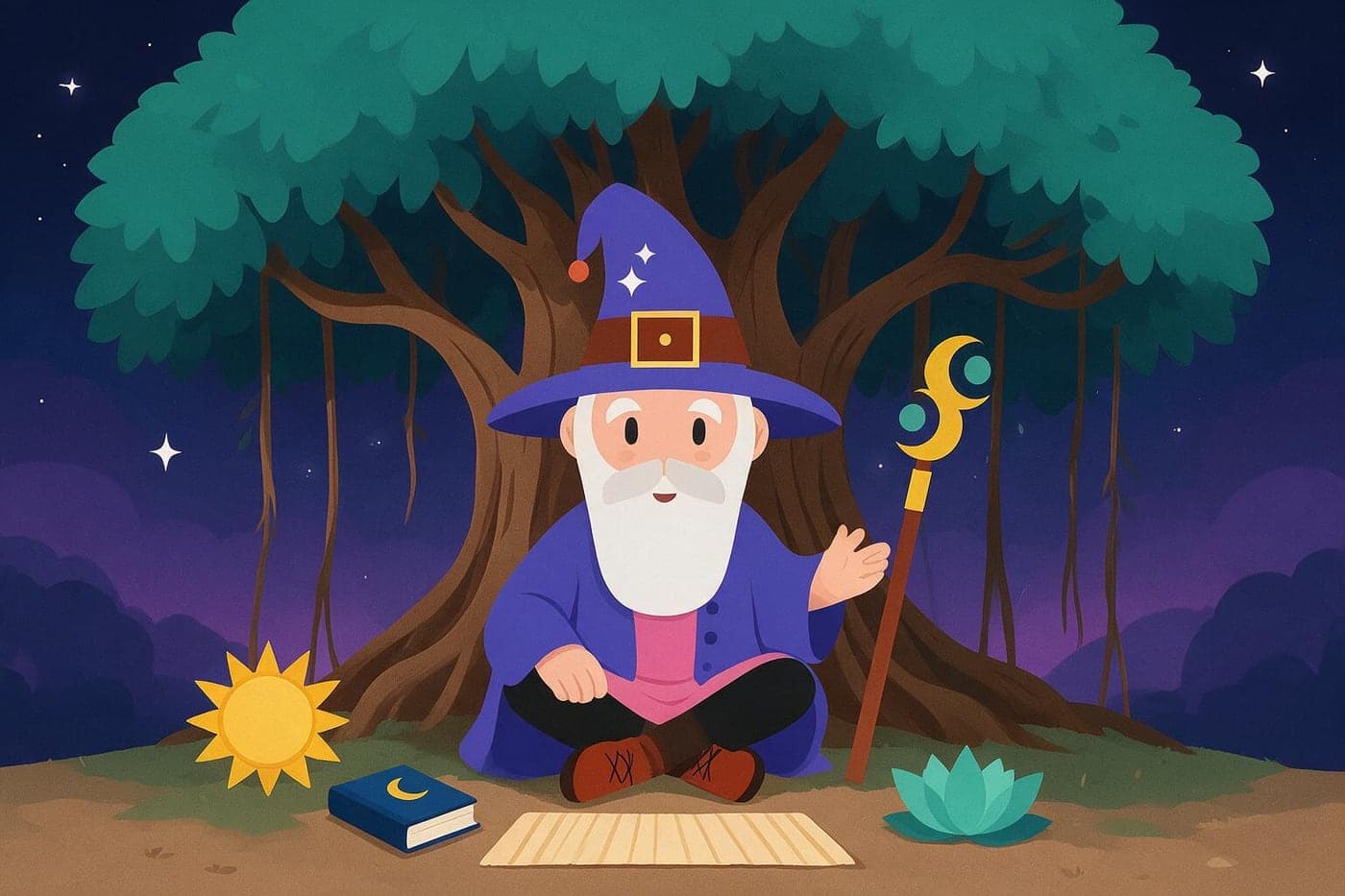
Picture the oldest classroom there is: no walls, no desks, just a teacher and a few students who have come close enough to hear him speak quietly.
Müller thought the word itself describes that scene. Upa-ni-shad breaks into upa, "near", ni, "down", and shad, "to sit". An Upanishad would be a sitting down near the teacher: pupils gathered at a respectful distance around the one who knows.
He was honest about the weak spot. In every text he had read, the word never once appears meaning a session of pupils. Wherever it turns up, it already means a doctrine, often a secret one. So the classroom is a guess from grammar. It is a good guess, and worth holding exactly that lightly.
Inside the course
20 parts- What an Upanishad is — Müller's introductionFree above
- The Chandogya begins: the meditation on the syllable Om
- The udgitha, the dogs' chant, and the gods who sang
- The fivefold and sevenfold Saman: ritual turned inward
Questions
Is The Upanishads free to read in Astra Trainer?
Yes. The full book opens free in the app’s reader, in English, Spanish, German, French, Italian, Polish, Portuguese, and Russian.
What is the short course?
20 short parts that walk through the book’s key ideas in slides, each with a quick quiz. The first six slides are free to try on this page.
Where do I get the app?
Astra Trainer is free on the App Store and Google Play. The Upanishads is waiting in the app’s library.