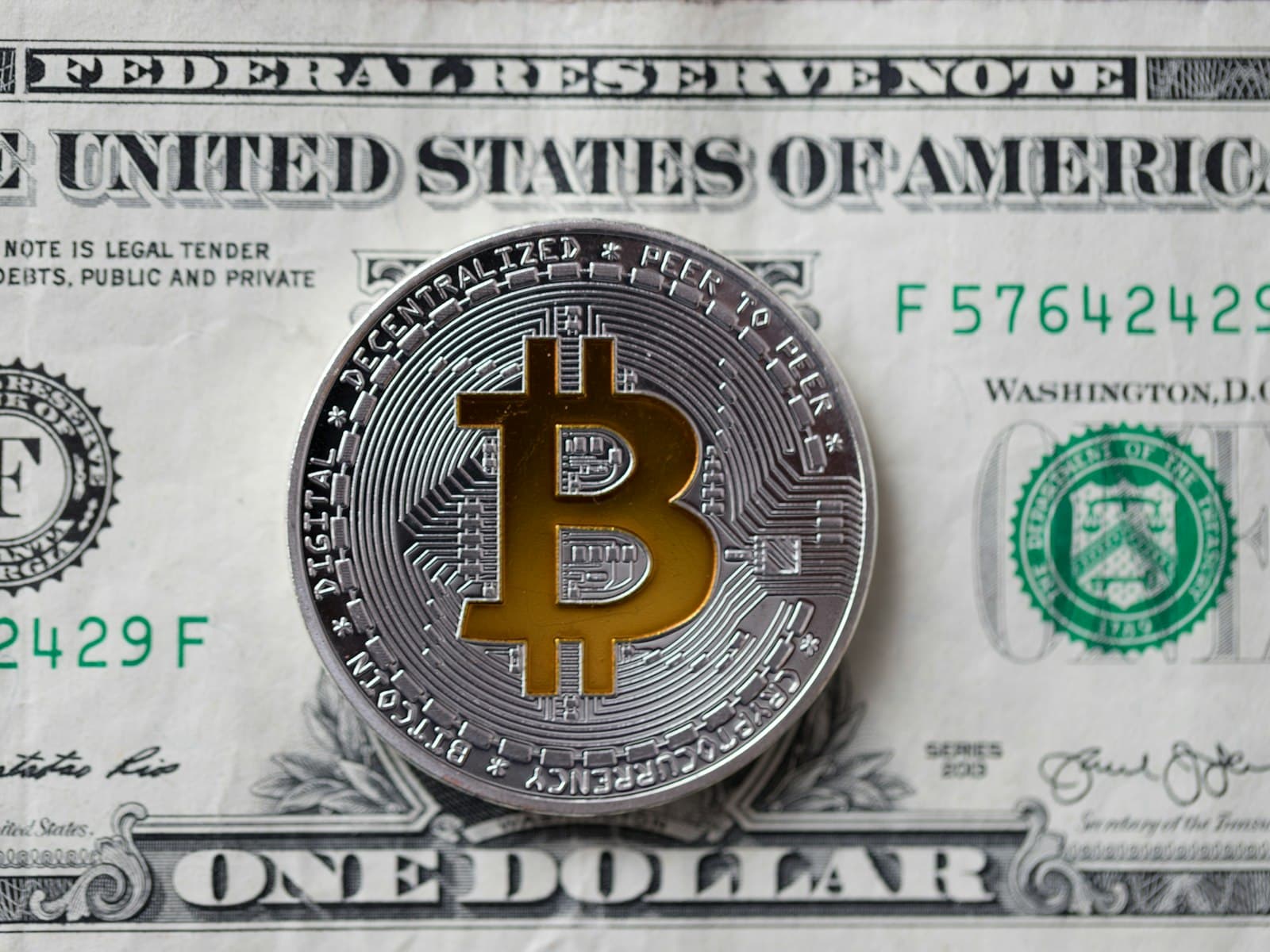
What is a stablecoin? It is a crypto token designed to hold a stable value, almost always pegged to one US dollar. It can be sent across a blockchain in minutes, at any hour, to anyone with a wallet, like any other crypto token. Unlike bitcoin or ether, whose prices move constantly, a stablecoin is meant to be worth the same tomorrow as today. That combination has made stablecoins one of the most used parts of the crypto world, with over 300 billion dollars' worth in circulation by September 2026. Whether a stablecoin actually stays stable depends entirely on what stands behind it.
This article explains what stablecoins are for, the three main types, what keeps the peg in place, the times it has failed, and how regulators now treat them. It explains the mechanism and is not financial advice.
What is a stablecoin used for?
Most crypto-assets are too volatile to use as money: a price that moves several percent in a day is a poor way to settle a bill. Stablecoins keep the technical advantages of a blockchain, fast transfers, no bank opening hours, programmable payments, without the price swings.
In practice they are used to move value between crypto exchanges, as a safe harbour when traders want to step out of volatile tokens without leaving crypto altogether, in decentralised finance applications, and increasingly for cross-border payments, particularly in countries where access to US dollars is limited.
A stablecoin is a promise that one token equals one dollar. Everything that matters is how that promise is kept.
The three main types
| Type | What backs it | Example | Main risk |
|---|---|---|---|
| Fiat-backed | Cash and short-term government debt held by the issuer | USDT (Tether), USDC | The reserves: whether they exist, are safe and can be reached |
| Crypto-collateralised | Other crypto-assets locked in smart contracts, worth more than the stablecoins issued | DAI | A sharp fall in the collateral's value |
| Algorithmic | A mechanism that creates and destroys tokens, with little or no reserve | TerraUSD (collapsed 2022) | A loss of confidence the algorithm cannot stop |
Fiat-backed stablecoins are by far the largest. Tether launched in 2014 and remains the biggest; USDC, issued by Circle, is second. The issuer holds reserves and, in principle, will redeem each token for one dollar.
Crypto-collateralised stablecoins, such as DAI, launched on Ethereum in December 2017, are created when a user locks up more crypto than the stablecoins they receive, for example 150 dollars of ether to borrow 100 dollars of DAI. If the collateral's value falls too far, it is automatically sold to protect the peg.
Algorithmic stablecoins try to hold the peg through incentives rather than reserves, typically by letting holders swap the stablecoin for a companion token. They work while confidence holds, and have a history of failing when it does not.
Check yourselfA fiat-backed stablecoin is trading at 1.01 dollars on exchanges. Before reading on, predict what large holders who can deal directly with the issuer would do, and what that does to the price.Show the answerHide the answer
They would deposit a dollar with the issuer, receive a newly created token, and sell it on the market for 1.01, pocketing the difference. That extra selling pushes the price back down toward one dollar. At 99 cents the loop runs the other way: buy cheaply, redeem for a full dollar. It works only while people trust that redemption is real.
How the peg holds
A stablecoin's price is set by trading on exchanges like any other token. What keeps it close to one dollar is arbitrage. If the token trades at 99 cents and large holders can redeem it with the issuer for a full dollar, they buy it cheaply and redeem it, pushing the price back up. If it trades at 1.01 dollars, they deposit a dollar with the issuer, receive a new token and sell it, pushing the price down.
That loop only works if people believe redemption is real: that the reserves exist, are held in safe and accessible assets, and will be paid out. The peg is therefore a question of trust in the backing, which is why the composition and auditing of reserves attracts so much scrutiny. In October 2021, Tether agreed to pay a 41 million dollar penalty to the US Commodity Futures Trading Commission, which found it had misrepresented how fully its token was backed in earlier years.
The logic is not new. It is the same problem banks have faced for centuries, explained in how banks create money: a promise to pay on demand is only as good as the assets behind it and the confidence of the people holding it.
How this is taught inside Astra Trainer
The Crypto direction in the Business & Finance world runs to eleven courses, including Coins vs Tokens, Web3 & DeFi and Liquidity, which cover what different tokens are, how they move between blockchains and what keeps decentralised markets working.
Stablecoins sit where crypto meets the traditional money system, so they are easiest to understand with a little of both. Lessons take about five minutes and a guide walks you through anything strange.
When the peg has broken
TerraUSD, May 2022. TerraUSD was an algorithmic stablecoin, then the third largest, designed so that one token could always be swapped for one dollar's worth of a companion token, LUNA. In May 2022, large withdrawals pushed it below its peg. Holders rushed to swap into LUNA, the system created LUNA in enormous quantities, its price collapsed, and the two tokens lost almost 45 billion dollars in market value within a week. TerraUSD fell as low as 12 cents.
USDC, March 2023. When Silicon Valley Bank was closed on 10 March 2023, Circle disclosed that about 3.3 billion dollars of USDC's reserves were held there. USDC fell to around 87 cents on trading markets. When US authorities announced that all SVB depositors would be protected, it returned to its peg within days. The episode showed that even a fully reserved stablecoin depends on where its reserves are kept.
Both cases fit the same pattern as a bank run. The question is not whether the token claims to be worth a dollar, but whether holders believe they can get that dollar back.
How regulators treat stablecoins
For years stablecoins operated with little specific regulation. That has changed.
- European Union. The Markets in Crypto-Assets Regulation, MiCA, applied its stablecoin rules from 30 June 2024. Tokens backed by a single currency, called e-money tokens, may only be issued by authorised banks or electronic money institutions.
- United States. The GENIUS Act, signed into law on 18 July 2025, created a federal framework for dollar payment stablecoins. Issuers must hold at least one dollar of permitted reserves, such as cash, insured deposits and short-term Treasury bills, for every dollar of stablecoins issued, and publish regular reports on those reserves.
The rules differ by country and are still being implemented, but the direction is clear: stablecoins are increasingly being treated like a form of regulated money rather than an unregulated crypto product. The role of central banks in the wider picture is covered in what the Federal Reserve is.
General information, not financial advice. This article explains how a technology works. It does not recommend any coin, token, wallet, exchange or platform. Crypto-assets can lose most or all of their value, rules differ by country and change quickly, and losses from lost keys, hacks or scams are usually irreversible. For decisions about your own money, consider speaking to a qualified, regulated adviser.
Why stablecoins make sense once money itself is clear
Stablecoins look new, but the questions they raise are old ones: what backs a promise to pay, who checks, and what happens when everyone asks for their money at once. Understanding how money and banks work makes stablecoins far easier to judge.
Astra Trainer is built to connect those ideas. Quizzes follow each topic and each course ends with a ten-question final exam, while daily quests, points and a streak keep five-minute lessons going. A Circle gives you a small group with a shared weekly goal and live sessions, useful for a subject where the headlines move faster than the explanations.
What to take from this
A stablecoin is a crypto token designed to hold a steady value, usually one US dollar, while moving on a blockchain.
Fiat-backed stablecoins rely on reserves held by the issuer, crypto-collateralised ones on locked crypto, and algorithmic ones on incentives alone. The peg holds through arbitrage, as long as holders trust redemption.
Pegs have broken: TerraUSD collapsed in 2022, and USDC briefly fell in 2023. Regulation in the EU since 2024 and the US since 2025 now sets rules for reserves.
Which is why the most useful answer to what is a stablecoin is a question: what exactly stands behind the promise that one token equals one dollar, and could you get that dollar back?
Test yourself
Question 1 of 3
To receive 100 dollars of DAI, a user locks up 150 dollars of ether. Why does the design ask for more collateral than the stablecoins issued?
What is a stablecoin?
A stablecoin is a crypto token designed to keep a stable value, usually pegged to one US dollar. It moves on a blockchain like other tokens but, unlike bitcoin or ether, is meant not to change in price.
How do stablecoins keep their value?
Most are backed by reserves of cash and short-term government debt that the issuer holds. Arbitrage keeps the price near one dollar: when it drifts, traders redeem or create tokens, which pushes it back, as long as redemption is trusted.
What are the types of stablecoins?
Fiat-backed stablecoins, such as USDT and USDC, are backed by cash-like reserves. Crypto-collateralised stablecoins, such as DAI, are backed by locked crypto worth more than the tokens issued. Algorithmic stablecoins rely mainly on incentives and have a history of failing.
Can a stablecoin lose its peg?
Yes. TerraUSD, an algorithmic stablecoin, collapsed in May 2022, and USDC briefly fell to about 87 cents in March 2023 when part of its reserves was held at the failed Silicon Valley Bank. A peg depends on confidence in the backing.
Where can I learn how crypto tokens work in short lessons?
The Crypto direction inside the Business & Finance world of Astra Trainer runs to eleven courses, including Coins vs Tokens, Web3 & DeFi and Liquidity, in five-minute lessons with quizzes. The first lesson needs no card.
Where this leads. How to Get Better With Money: The Order to Learn It places crypto among the money topics worth learning, and explains which to understand first.