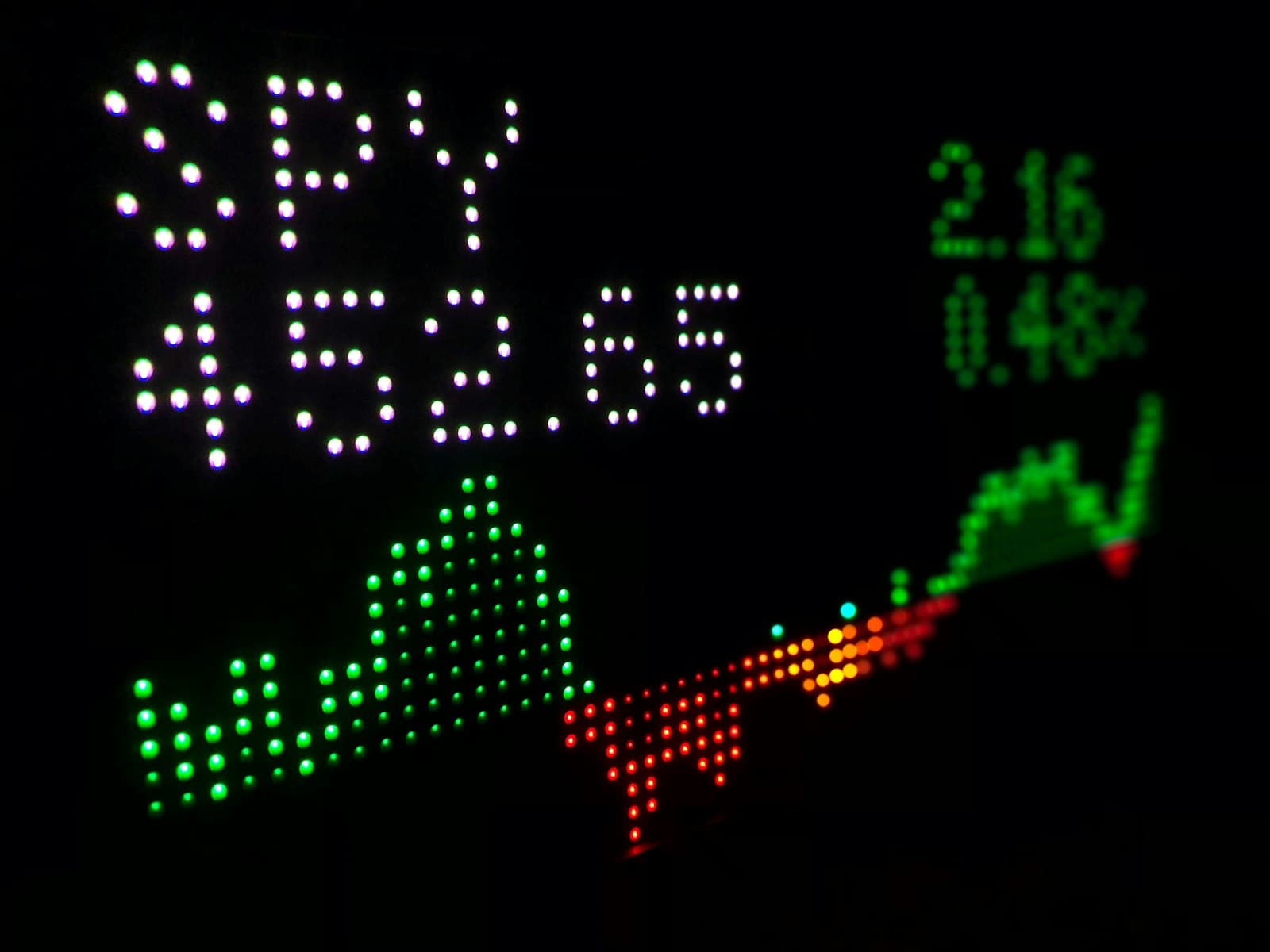
What is an index fund? It is an investment fund that copies a market index, such as the S&P 500, by holding the same securities in the same proportions, rather than employing someone to pick which ones to buy. The idea sounds almost too simple to matter, and when it was launched in 1976 it was widely mocked. Today index funds hold a large share of all money invested in US stock funds.
This article explains how an index fund is built, what an index actually is, where the idea came from, what the evidence says about active and passive management, and what an index fund does and does not protect against. It describes the instrument and takes no view on whether anyone should own one.
What is an index fund?
A fund pools money from many people and invests it together. Most funds historically were actively managed: a manager or team decides which stocks or bonds to buy, trying to do better than the market as a whole.
An index fund does something different. It picks a published index and holds whatever that index contains. If a company makes up 5 percent of the index, it makes up about 5 percent of the fund. When the index changes, the fund changes to match. There is no attempt to outperform; the aim is to match the index as closely as possible, minus costs.
Index funds come in two main forms. A traditional index mutual fund is bought and sold directly with the fund company, at a price set once a day. An exchange-traded fund, or ETF, tracks an index too, but its shares trade on a stock exchange throughout the day like a company's shares. The underlying idea is the same.
An active fund asks which companies will do best. An index fund does not ask. It simply buys the list.
What an index actually is
An index is a rule for selecting and weighting a group of securities, used to represent a market or part of one. It is a measurement, like a thermometer for a slice of the market.
The S&P 500, launched in its current form in 1957, contains 500 large US companies chosen by a committee, and weights them by market value, so the largest companies count for the most. The Dow Jones Industrial Average, dating from 1896, uses just 30 companies and weights them by share price, an older method. Other indexes cover smaller companies, particular countries, bonds, or the entire market.
The choice of index decides what an index fund owns. Two index funds can behave very differently if they track different indexes, which is why "index fund" describes a method, not a single product.
Where the index fund came from
The intellectual case came first. In 1974, the economist Paul Samuelson, later a Nobel laureate, published an essay called "Challenge to Judgment" in the first issue of the Journal of Portfolio Management. He argued that most professional managers could not reliably beat the market, and suggested that someone should set up a fund that simply tracked the S&P 500.
John Bogle, who had just founded the Vanguard Group, took up the idea. On 31 August 1976 Vanguard launched the First Index Investment Trust, the first index fund offered to ordinary investors. It aimed to raise up to $150 million and raised a little over $11 million. Critics called it a recipe for mediocrity, since it was designed never to beat the market.
The fund survived and was later renamed the Vanguard 500 Index Fund. Over the following decades, index funds grew from a curiosity to one of the largest categories of investment in the world.
Check yourselfMost actively managed funds trail their index over long periods. Before reading on, can you name a reason that would hold even if the managers were skilled?Show the answerHide the answer
Partly arithmetic. Active investors together make up much of the market, so before costs the average actively invested dollar must earn roughly the market return. Active funds usually charge more, so after costs the average has to fall behind. Some managers do beat the market; identifying them in advance has proved very difficult.
Active and passive: what the evidence says
The central argument for index funds is not that the market always rises. It is that most active managers, after costs, do worse than the index they are trying to beat.
S&P Dow Jones Indices tracks this in its SPIVA reports. Over the 15 years to the end of December 2024, 89.5 percent of US large-company funds did worse than the S&P 500. There was no category of US fund in which a majority of active managers beat their benchmark over that period.
The reason is partly arithmetic. Before costs, the average dollar invested actively must earn roughly the market return, because together active investors make up much of the market. After costs, which are usually higher for active funds, the average must fall behind. Some active managers do beat the market, but identifying them in advance has proved very difficult.
How this is taught inside Astra Trainer
The Markets direction in the Business & Finance world runs to eighteen courses on knowing what you own when you buy a stock, a bond or an option, and what each one promises in return, including a course on equity funds and the vehicles that hold them.
That framing is useful for index funds in particular, because the fund is only a wrapper. What matters is what is inside it and what that promises. Lessons take about five minutes and a guide walks you through anything strange.
Why fees matter so much
Every fund charges an annual fee, expressed as an expense ratio: a percentage of the money invested, taken each year. Index funds are usually cheaper, because there is no research team to pay. Many broad index funds charge well under 0.1 percent a year, while actively managed funds have often charged around 1 percent or more.
The difference looks small in any one year. Over long periods, because fees compound just as returns do, it grows. As a purely illustrative calculation: $10,000 growing at 6 percent a year before fees becomes about $56,600 after thirty years with a 0.05 percent annual fee, and about $43,200 with a 1 percent fee. Nothing about the investments differs; the gap is entirely the cost. The article on how compound interest works explains why.
| Feature | Index fund | Actively managed fund |
|---|---|---|
| Aim | Match an index | Beat an index |
| How holdings are chosen | By the index's rules | By a manager's judgement |
| Typical cost | Low | Higher |
| Risk of trailing the market | Small, mainly from fees | Significant |
| Risk of the market falling | Fully exposed | Usually exposed |
What an index fund does not protect you from
An index fund removes one particular risk: that a manager will choose badly and do worse than the market. It does not remove the risk of the market itself falling. When the index drops, an index fund tracking it drops by about the same amount. In 2008, the S&P 500 fell by more than a third, and every fund tracking it fell with it.
Index funds also hold everything in the index, including companies that may be overvalued, and weight by size, so a few very large companies can make up a big share of a broad index. And an index fund is only as diversified as its index: a fund tracking one country or one sector is concentrated in that country or sector.
General information, not investment advice. This article explains what an index fund is and how it is built. It is not investment advice and takes no position on whether anyone should buy, hold or sell any fund. All investments can fall in value, past performance does not predict future results, and fees and products differ by provider and country. Consider speaking to a qualified, regulated adviser before making investment decisions.
How to read what an index fund holds
Every index fund publishes the index it tracks, its expense ratio and its holdings. Three questions describe most of what it is:
- Which index? This decides what it owns: large companies, small ones, one country, the whole world, bonds.
- What does it cost? The expense ratio, taken every year.
- How closely does it follow the index? The difference between the fund's return and the index's, called tracking difference, shows how well it does its one job.
For the building blocks inside those holdings, the article on stocks, bonds and options explains what each kind of security actually promises.
Why understanding what you own takes practice
Fund names, indexes and fee structures are easy to confuse, and marketing does not always make them clearer. The antidote is a working vocabulary: knowing what an index is, what a fee costs over time, and what the fund actually holds.
Astra Trainer is built to make that vocabulary stick. Quizzes follow each topic and each course ends with a ten-question final exam, while daily quests, points and a streak keep five-minute lessons going. A Circle gives you a small group with a shared weekly goal and live sessions, useful for subjects people rarely talk through openly.
What to take from this
An index fund holds the securities in a published index, in the same proportions, instead of trying to pick winners.
The idea came from Paul Samuelson in 1974 and became a product with Vanguard's First Index Investment Trust in 1976, which raised just $11 million and grew into one of the largest funds in the world.
The evidence shows most active managers trail their index over long periods, largely because of costs, and fees compound over time just as returns do.
Which is why the most useful answer to what is an index fund is also a caution: it removes the risk of trailing the market, not the risk of the market itself.
Test yourself
Question 1 of 3
Two low-cost index funds are bought on the same day. One tracks the S&P 500, the other a single sector. What does the article say about how they will behave?
What is an index fund in simple terms?
An index fund is an investment fund that holds the same securities as a market index, such as the S&P 500, in the same proportions. Instead of a manager choosing investments, the fund follows the index's rules and aims to match its return, minus costs.
Who created the first index fund?
John Bogle's Vanguard Group launched the First Index Investment Trust, the first index fund for ordinary investors, on 31 August 1976. The idea had been proposed by the economist Paul Samuelson in a 1974 essay called Challenge to Judgment.
Are index funds safer than other funds?
They remove the risk of a manager doing worse than the market, but they carry the full risk of the market they track. If the index falls, the fund falls by about the same amount. This is general information, not investment advice.
What is the difference between an index fund and an ETF?
An index fund is defined by what it does: tracking an index. An ETF is defined by how it trades: on a stock exchange throughout the day. Many ETFs are index funds, while traditional index mutual funds are bought directly from the fund company at a daily price.
Where can I learn how markets and funds work in short lessons?
The Markets direction inside the Business & Finance world of Astra Trainer runs to eighteen courses on what you own when you buy a stock, a bond or a fund, in five-minute lessons with quizzes. The first lesson needs no card.
Where this leads. How to Get Better With Money: The Order to Learn It puts investing vocabulary in sequence with the money concepts that come before it.