
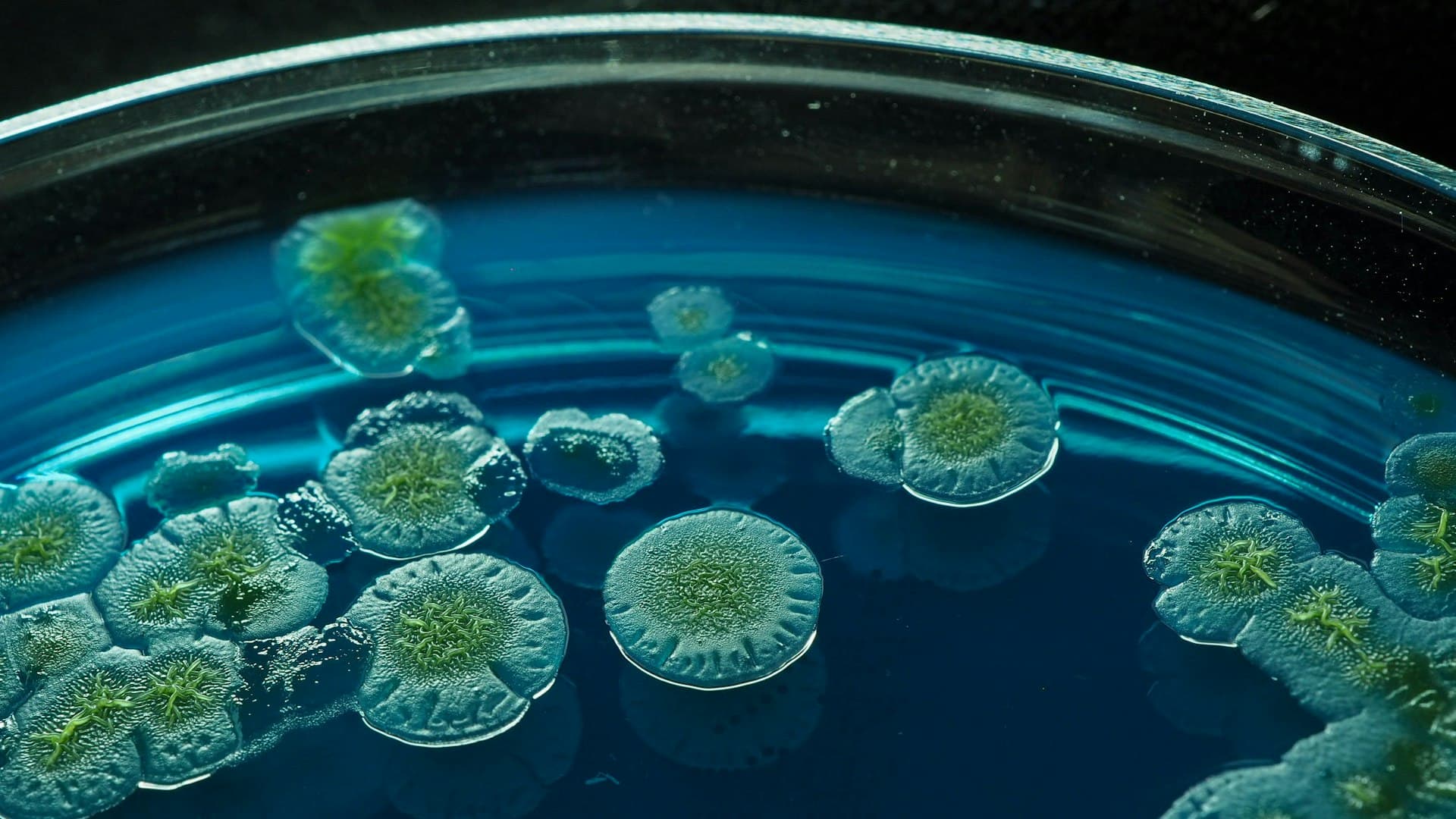
Microbiology used to be understood mainly as a medical subject. In an industrial context it is now three quite different jobs that happen to share a discipline, and most workforce plans only recognise one of them.
Three jobs one discipline is now doing
The microbe as the production system. Fermentation-derived proteins, enzymes, chemicals, biofuels, food ingredients. Here the organism is the manufacturing equipment, and understanding its physiology is production engineering.
The microbe as the threat. In pharmaceutical, biologics, food and medical device manufacturing, contamination is the risk that stops a plant. Sterility assurance, environmental monitoring and cleaning validation exist to manage it.
The microbe as the regulatory obligation. Microbial testing requirements run through pharmaceutical, food, water and cosmetics manufacturing. Someone qualified has to run those tests and defend them in an audit.
The same organism is the product, the hazard and the audit finding, depending on where in the building it is. Very few workforce plans staff for all three.
What the direction covers
The scope: bacteria, viruses, fungi and microbiomes, infection, and microbes put to industrial work.
That last clause is the part that distinguishes an industrial program from a medical one. The applied content is where the employment is.
Microbial identification and characterisation. Knowing what is growing, which matters equally when it is the product and when it is the problem.
Growth, physiology and metabolism. What an organism needs, what it produces, how it behaves under stress. The basis of both fermentation performance and contamination control.
Sterilisation, disinfection and preservation. What kills what, under which conditions, and how kill is demonstrated rather than assumed.
Microbiological methods. Culture, rapid methods, molecular identification, and the statistics of detecting something rare in a large volume.
Microbiomes. Community behaviour rather than single organisms, increasingly relevant in agriculture, food and health applications.
Sterility assurance, and why it is hard to staff
This deserves its own section because it is where the acute shortage usually is, and because the reason is not obvious.
The work sounds routine. Environmental monitoring, media fills, cleaning validation, investigation of excursions. Much of it is repetitive sampling and plating.
What makes it hard to staff is the judgement layer underneath the routine.
An excursion has to be investigated to root cause. A single colony on a settle plate in a filling area triggers an investigation, and the investigation has to reach a defensible conclusion. Doing that requires understanding where organisms come from, how they move, what the identification tells you about the likely source, and what the monitoring data over time is saying.
Absence of evidence is the normal result. Most sampling finds nothing, which makes complacency the occupational hazard. The value of the role is concentrated in the rare event, and the person has to stay sharp through long stretches where nothing happens.
The regulatory consequence is severe and delayed. A weak contamination control program does not fail visibly on a Tuesday. It fails in an inspection, or in a recall, and by then the practices that caused it are years old.
So the role needs people who understand microbial ecology well enough to investigate properly, and organisations frequently staff it with people trained only to execute the sampling schedule.
Where this sits in the domain
Microbiology is the fourth of ten directions in Astra Trainer's biotechnology domain, feeding directly into bioprocessing and biomanufacturing, agricultural and food biotechnology, and industrial biotechnology further along the track.
Partners in regulated manufacturing frequently scope it together with bioprocessing, because the same people need to understand both the organism they are growing and the organisms they are keeping out. Lessons are five minutes, so plant and laboratory staff train without leaving shift, and each course closes with a ten-question final exam. You can see the ten directions here.
Microbes as production equipment
The industrial fermentation side has a different failure mode, and it is worth naming because it is usually misattributed.
When a fermentation underperforms, the investigation tends to look at equipment: agitation, oxygen transfer, temperature control, feed rate. Those are real and they are also the easy things to measure.
The other half of the answer is microbial. Strain stability over generations, by-product accumulation inhibiting growth, the organism's response to the shear and gradient conditions that only exist at scale, and contamination that is not severe enough to stop the batch but is severe enough to take yield.
Diagnosing that requires someone who thinks about the organism as a living system under stress rather than as a process input with a specification.
The commercial context: McKinsey Global Institute's Bio Revolution work put around 60 percent of the physical inputs to the global economy as, in principle, biologically producible. Nearly all of that would be microbial production, and nearly all of it would run into exactly these problems on the way to scale.
The roles, named
Quality control microbiologists. Release and stability testing, water systems, raw materials. The largest single population.
Sterility assurance and contamination control specialists. Environmental monitoring, investigations, cleaning and disinfection programs.
Fermentation and strain scientists. Keeping production organisms performing, and improving them.
Food and beverage microbiologists. Safety testing, shelf life, spoilage investigation, fermentation control.
Water and environmental microbiologists. Utilities, wastewater, environmental compliance.
Clinical and diagnostic microbiologists. A regulated route with its own qualification requirements.
Who can be trained into it
Food and beverage laboratory staff. Already handling culture, aseptic technique and time-sensitive sampling. Frequently the closest available people and rarely considered for pharmaceutical roles.
Brewing and fermentation operators. Practical microbial process experience and an intuitive feel for how a culture behaves.
Clinical laboratory staff. Strong on identification and on working under accreditation.
Water treatment operators. Already manage microbial control in a utility context.
General laboratory technicians. Have the discipline and documentation habits and need the microbiology.
Cleanroom operators in any regulated industry. Already live inside the behavioural half of contamination control, which is the part that is hardest to instil in someone who has never worked that way.
Containment and clinical boundaries. Work with pathogenic organisms is governed by biosafety containment levels, institutional approval and facility-specific authorisation, and clinical microbiology is a regulated professional activity in most jurisdictions. Structured training builds the scientific understanding and prepares people for those routes. It does not authorise work at any containment level, does not constitute biosafety training for a specific facility, and does not qualify anyone to issue clinical results.
What to take from this
Microbiology is doing three industrial jobs at once and most plans staff for one.
Sterility assurance is the acute shortage, and it is hard because the routine work conceals a judgement requirement that only shows up during an investigation or an inspection.
Fermentation underperformance is diagnosed as an equipment problem more often than it should be, because the people available can measure the equipment and not the organism.
Food, brewing, water and clinical laboratory staff are strong conversions, and cleanroom operators from any regulated industry already hold the behavioural half.
And containment and clinical qualification are separate regulated routes that training prepares people for rather than replaces.
Why is sterility assurance hard to staff?
Because the routine sampling hides a judgement requirement. Investigating a contamination excursion to a defensible root cause needs someone who understands where organisms come from and how they move, not only someone who can execute the monitoring schedule.
Is industrial microbiology different from medical microbiology?
Substantially. Industrial work covers microbes as production organisms and as contamination risk, alongside the identification and control skills that both share. The applied content is where most of the employment is.
Who can move into these roles?
Food and beverage laboratory staff, brewing and fermentation operators, clinical laboratory staff, water treatment operators, and cleanroom operators from any regulated industry, who already hold the behavioural discipline.
Does training authorise work with pathogens?
No. Containment levels, institutional approval and facility-specific biosafety authorisation are separate requirements. Training builds understanding and prepares people for those routes.
Where does this fit in the domain?
Fourth of ten directions in Astra Trainer's biotechnology domain, usually scoped with bioprocessing for regulated manufacturing partners. You can see them here.