
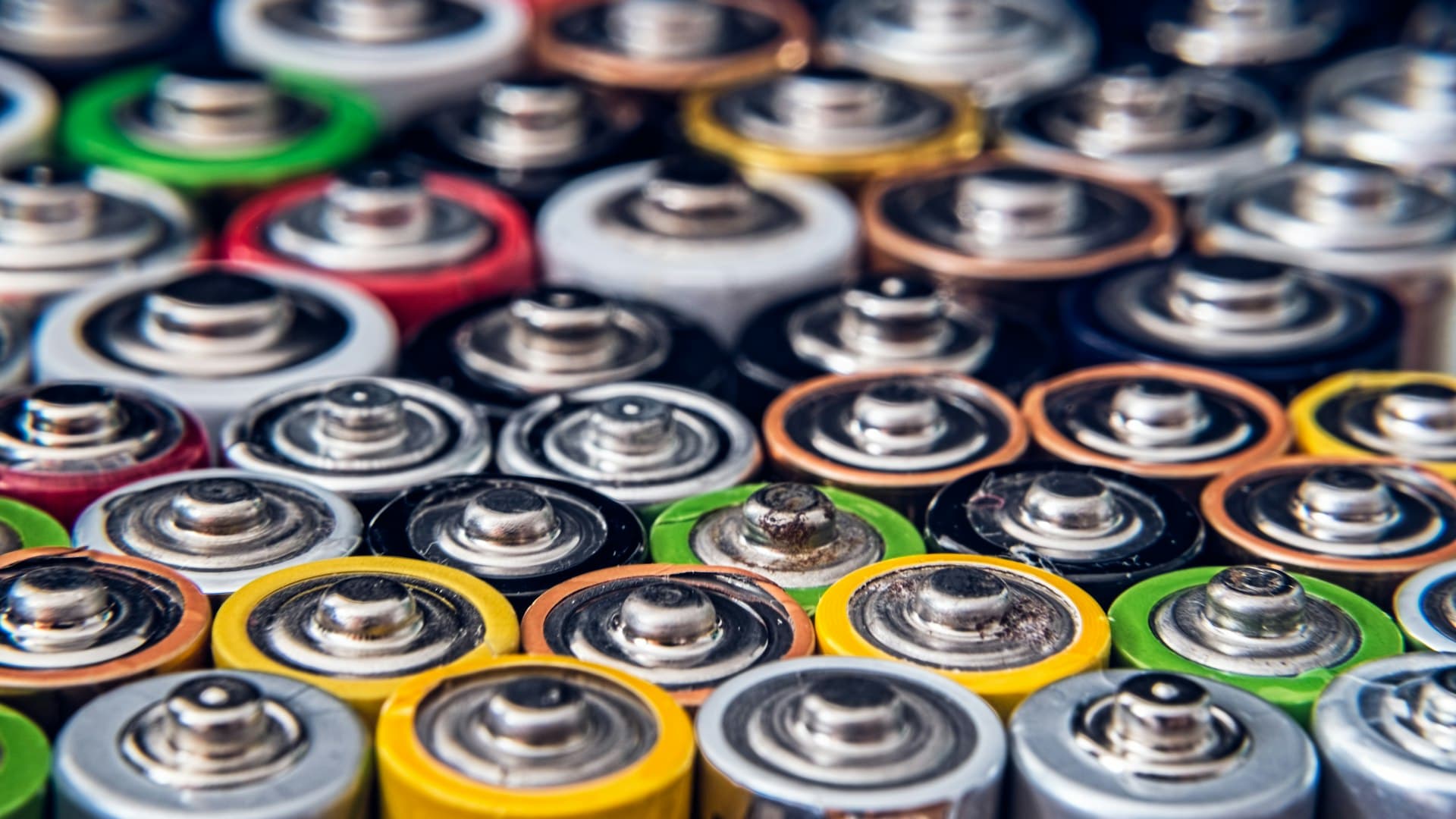
Battery plants are announced as automotive facilities, staffed partly from automotive, and then behave like chemical plants for the first two years.
The category error behind a lot of hiring
The finished object is a component in a vehicle, so the mental model becomes assembly. Inside, the process says otherwise.
Electrode manufacturing is slurry mixing, precision coating onto foil, drying and calendering. That is coating process engineering, with rheology, thickness uniformity and drying profiles determining whether the product works. Cell assembly happens in dry rooms held at extremely low humidity, because the electrolyte and lithium compounds react with water. Formation, the first controlled charge and discharge cycle, is an electrochemical process that takes time and equipment and cannot be rushed without damaging the cell.
The disciplines that matter are chemical engineering, process control, coating technology, contamination control and analytical measurement.
The building looks like a car factory. The process behaves like a chemical plant with a cleanroom attached.
This has a direct hiring consequence. A plant staffed on the assumption that it needs assembly operators and industrial engineers will be short of process engineers, quality chemists, contamination control specialists and metrology people, and it will discover that during the ramp, which is the most expensive moment to discover anything.
What the direction covers
The scope: battery chemistry, cell design, battery management systems, manufacturing processes, grid scale storage and recycling.
Four areas.
Electrochemistry and materials. Chemistries, electrode materials, electrolytes and the degradation mechanisms that set life.
Cell and pack engineering. Cell format, pack architecture, thermal design and mechanical integration.
Manufacturing. Electrode processing, assembly, formation, and the quality systems around them.
Systems. Battery management, safety, grid integration, second life and recycling.
Why yield ramps take years
The single most consistent surprise in this industry, and the one that has caused the most financial damage.
A new cell plant does not produce saleable cells at design rate on day one, or in month six. Ramps are commonly measured in years, and early scrap rates can be very high. Several well capitalised programmes have publicly struggled with exactly this.
Four reasons, all of them process rather than equipment.
Defects are invisible and consequential. A particle of metallic contamination a few tens of micrometres across, embedded in an electrode, can eventually cause an internal short. It cannot be seen in a finished cell by inspection. This is why contamination control resembles semiconductor practice rather than general manufacturing.
Testing takes time by nature. Formation cycles take hours. Life and reliability assessment takes far longer. The feedback loop between a process change and knowing whether it helped is slow, which limits how fast learning can happen.
The process window is narrow. Coating thickness, drying rate, calendering pressure, moisture level and electrolyte fill all interact, and drifting outside the window produces cells that pass initial test and fail in service.
Scale changes behaviour. Processes validated on pilot lines do not simply transfer. Larger coaters, faster lines and bigger dry rooms introduce non-uniformities that did not exist at small scale.
The workforce implication is direct. The people who shorten a ramp are process engineers, quality chemists and experienced operators who can read a process. Hiring them late is the most expensive version of this mistake.
Where this sits in the domain
Energy storage and battery technology is the third of nine directions in Astra Trainer's energy, climate and nuclear domain. It connects directly to energy systems and electric power grids, since grid-scale storage is now a protection, control and market participation problem as much as a chemistry one, and to renewable energy engineering, where storage is what makes variable generation dispatchable.
It also connects outward to advanced materials for electrode and electrolyte chemistry, to advanced manufacturing for the process and quality layer, and to space and mobility for vehicle integration. You can see the nine directions here.
The battery management system is the product
An aspect consistently underweighted outside the industry.
Lithium cells must be kept within limits on voltage, current and temperature. Exceeding them degrades the cell, and exceeding them substantially can cause thermal runaway. The battery management system enforces those limits, estimates how much charge is left and how much the pack has aged, balances cells against each other, and manages thermal behaviour.
Three reasons it decides the commercial outcome.
It sets usable capacity. Conservative limits protect the cells and reduce the range or duration the customer experiences. Aggressive limits do the reverse and shorten life. The margin between the two is worth a great deal of money across a fleet.
State estimation is genuinely difficult. The internal state of a cell is not directly measurable. It is inferred from voltage, current and temperature through models that must stay accurate as the cell ages and across temperature. Poor estimation shows up as a range figure customers do not trust.
It is a safety system. In many applications it falls under functional safety requirements, which changes how it must be developed, verified and documented.
This is embedded systems work, control engineering and electrochemistry at once, and people who hold all three are scarce.
Grid storage is a different business from vehicles
Both store energy in lithium cells and almost everything else differs.
Weight and volume barely matter in a grid installation, which removes the constraint that drives vehicle chemistry choices. That is why lithium iron phosphate, heavier per unit of energy but cheaper, longer lived and thermally more tolerant, dominates much of stationary storage.
Duration is the specification. A grid asset is described by how many hours it can discharge at rated power, and the economics of a one hour asset and a four hour asset are entirely different.
Cycling patterns differ. Frequency response assets cycle shallowly and constantly. Energy shifting assets cycle deeply once or twice a day. Degradation behaves differently under each, and warranty terms reflect that.
Revenue is a market problem. Stationary storage earns from arbitrage, ancillary services and capacity payments, which is a commercial and regulatory question rather than an engineering one, and it connects directly to the energy markets direction.
Fire safety is site specific. Large stationary installations are subject to standards and permitting covering spacing, detection, suppression, ventilation and emergency response, and these requirements have tightened following real incidents.
Staff moving from vehicles to grid storage or the reverse commonly carry assumptions that no longer apply, and the correction is cheap if it happens in training rather than in a project.
The roles, named
Battery process engineers. The ramp-critical role.
Electrochemists and cell designers.
Battery management system engineers. Embedded, control and estimation.
Pack and thermal engineers.
Battery test and validation engineers, including abuse and safety testing.
Quality and metrology specialists, particularly contamination control.
Grid storage systems engineers, spanning power electronics, protection and market interface.
Battery recycling and second life engineers, a growing area as first generation fleets age.
Materials engineers for electrodes, electrolytes and separators.
Who can be trained into it
Chemical process operators and engineers. The strongest conversion into cell manufacturing, from chemicals, coatings, paper, film and pharmaceuticals. Slurry handling, coating, drying and process control transfer almost directly.
Semiconductor process and cleanroom staff. Contamination control discipline is exactly what cell plants need and frequently lack.
Pharmaceutical manufacturing staff. Documented process discipline and environmental control.
Embedded and control engineers. Into battery management, needing the electrochemistry rather than the software.
Analytical laboratory staff. Into materials characterisation and failure analysis.
Electrical and power electronics engineers. Into grid storage systems.
Automotive engineers. Into pack integration and vehicle interface, which is where their knowledge genuinely applies, rather than into cell process work where it mostly does not.
Battery hazards are serious and regulated. Lithium cells can enter thermal runaway, producing intense fire and toxic gas that is difficult to extinguish, and high voltage packs present electrocution and arc flash risk. Electrolytes and electrode materials are hazardous substances, and transport of cells is governed by dangerous goods regulation. Installation of stationary storage is subject to fire codes, permitting and emergency planning requirements that vary by jurisdiction. Astra Trainer builds technical understanding. It does not provide the hazard training, authorisation or site qualification that working with these systems requires.
What to take from this
Cell manufacturing is chemical process work in a controlled environment, and staffing it as assembly produces a shortage of exactly the people who shorten a ramp.
Yield ramps take years because defects are invisible, testing is slow by nature, the process window is narrow and scale changes behaviour.
The battery management system decides usable capacity, perceived quality and safety, and it demands embedded, control and electrochemical knowledge together.
Grid storage and vehicle storage are different businesses with different chemistries, duty cycles and revenue models.
And the best available recruits for cell plants are working in chemicals, coatings, pharmaceuticals and semiconductor fabs today.
Why is a battery plant not like a car plant?
Because the core process is slurry mixing, precision coating, drying and electrochemical formation in low humidity dry rooms. The governing disciplines are chemical engineering, process control and contamination control rather than assembly.
Why do cell factories take years to reach good yield?
Because critical defects such as metallic contamination are invisible in finished cells, formation and life testing make the feedback loop slow, the process window is narrow, and processes validated at pilot scale behave differently on full size lines.
Why does the battery management system matter so much?
Because it sets how much of the pack's capacity is usable, estimates internal state that cannot be measured directly, and enforces the limits that prevent thermal runaway. In many applications it is a functional safety system.
How does grid storage differ from vehicle batteries?
Weight and volume barely matter, so cheaper and longer lived chemistries dominate. The specification is duration rather than range, cycling patterns and degradation differ, and revenue comes from markets rather than from a product sale.
Who converts well into battery manufacturing?
Chemical process operators and engineers first, then semiconductor cleanroom staff for contamination control, pharmaceutical manufacturing staff, embedded engineers into battery management, and automotive engineers into pack integration.