
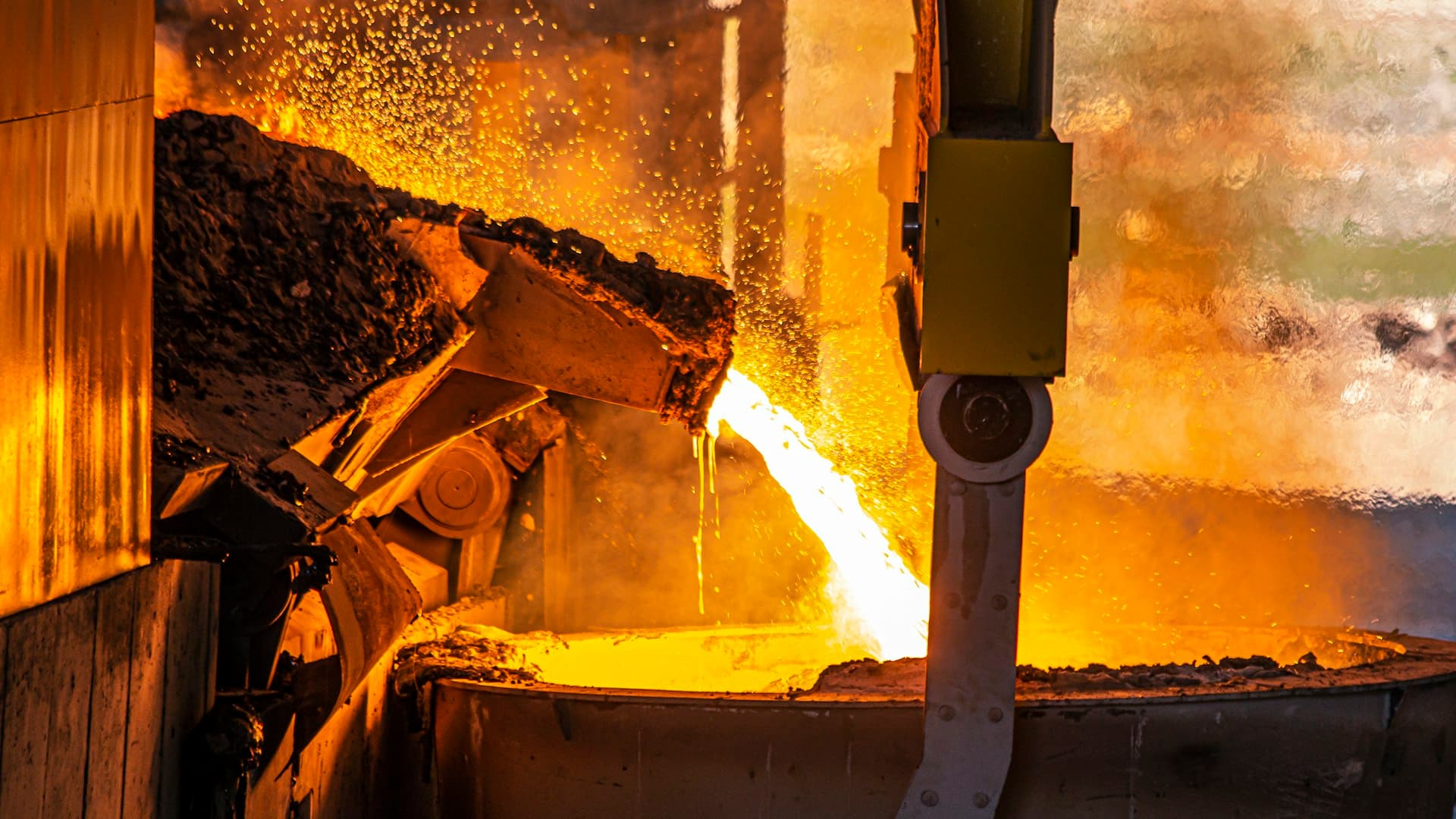
Most discussion of industrial emissions assumes the problem is energy. For the hardest sectors it is not.
Process emissions are chemistry, not fuel
The distinction that reorganises everything in this direction.
Cement production heats limestone to produce clinker. The chemical reaction, calcination, releases carbon dioxide from the rock itself. That release is not a consequence of how the kiln is heated. It is the reaction. A substantial share of cement's emissions come from this route, and they persist even if the kiln runs on entirely clean energy.
Primary steelmaking reduces iron ore using carbon, typically coke in a blast furnace. The carbon strips oxygen from the ore and leaves as carbon dioxide. Again, this is the chemistry doing what it is there to do.
Ammonia, lime and several other chemical processes have the same structure.
You cannot decarbonise a reaction by changing its power supply.
The options are genuinely limited and each is substantial. Change the chemistry, as hydrogen-based direct reduction does for steel. Change the material, as alternative cement formulations and supplementary cementitious materials attempt. Capture the carbon dioxide and store it permanently. Or use less of the material through design, reuse and efficiency, which is underrated and frequently the cheapest tonne available.
Each of those is a different technical programme requiring different people, and treating industrial decarbonisation as a single subject is how organisations end up training for the wrong one.
What the direction covers
The scope: carbon capture and storage, carbon utilisation, direct air capture, industrial process emissions and hard to abate sectors.
Four areas.
Process emissions. Where they come from, sector by sector, and which routes exist to reduce them.
Process heat. Electrification, hydrogen, biomass and the temperature thresholds that decide between them.
Capture, transport and storage. Technologies, costs, infrastructure and monitoring.
Systems and economics. Carbon pricing, border adjustment, lead markets and what actually makes a project viable.
Heat is the other hard half
Industry needs heat at very different temperatures, and the difficulty scales sharply with the number.
Low temperature heat, below roughly 150 degrees, covers a great deal of food, drink, textile and light manufacturing use. Industrial heat pumps address much of it today and the case is often economic without subsidy.
Medium temperature heat, to a few hundred degrees, can be delivered by electric resistance, steam systems and higher temperature heat pumps, with cost depending heavily on the ratio between electricity and gas prices.
High temperature heat, above roughly a thousand degrees for cement, glass, ceramics and metals, is where it becomes hard. Electric options exist and are not mature at the scale and duty these processes require, furnaces are enormous capital assets with long lives, and the process itself is often sensitive to how heat is delivered rather than merely to how much.
This is where hydrogen has its most defensible case, and where biomass and concentrated solar heat appear in specific settings.
The practical point for a workforce is that electrifying heat is usually an engineering project inside an existing plant, involving heat integration, process redesign and electrical infrastructure, and the people who can do it are process engineers with an electrical understanding. That combination is scarce.
Where this sits in the domain
Carbon management and industrial decarbonisation is the eighth of nine directions in Astra Trainer's energy, climate and nuclear domain. It depends on climate science and climate technology for credible measurement, on hydrogen and fuel cell technology for the high temperature and chemical reduction routes, and on energy systems and electric power grids for the electricity that any electrification route requires.
It also connects outward to advanced manufacturing, where process change is implemented, and to advanced materials, where alternative cements and low carbon material substitution sit. You can see the nine directions here.
Carbon capture, at its real position
A technology that attracts strong views in both directions, and the accurate picture is less satisfying than either.
It works. Capturing carbon dioxide from a concentrated industrial stream is established chemical engineering, and geological storage draws on decades of subsurface practice.
It is expensive, and the cost varies enormously with the concentration of the source. Capturing from a high purity stream, such as ammonia production, is far cheaper than capturing from dilute flue gas, which is far cheaper again than capturing from ambient air.
The deployed record is much shorter than the announced record. A significant number of projects have been cancelled, and several operating facilities have reported capture rates below their design figures. That is a fact about the sector's delivery history and it belongs in any honest assessment.
Direct air capture is at a very early stage. The physics is unforgiving: carbon dioxide is a trace component of air, so the energy required per tonne is high and costs are currently far above point source capture. It may have a role for genuinely unavoidable emissions. It is not a near term industrial solution.
Using captured carbon dioxide is not the same as storing it. Most utilisation routes release it again, sometimes quickly. Only durable mineralisation and permanent geological storage keep it out of the atmosphere, and conflating the two is one of the more common misrepresentations in this field.
Infrastructure is the practical constraint. Capture without transport and storage is stranded. Pipelines and storage sites require permitting, monitoring and long term liability arrangements that in most places do not yet exist at scale.
A reasonable position is that capture is likely necessary for process emissions where no chemistry change exists, is not a substitute for reduction where alternatives are available, and should be evaluated project by project rather than endorsed or dismissed as a category.
Why the replacement cycle decides the timeline
The constraint that receives least attention and explains most of the pace.
A cement kiln, a blast furnace or a steam cracker is a capital asset with a life measured in decades. It is rebuilt or substantially relined at intervals, and those moments are when a fundamental technology change is affordable. Between them, the economic case for abandoning a working asset is very difficult.
Three implications.
Timing beats availability. A plant facing a rebuild decision in the next few years is where a technology change can actually happen. A plant that has just been relined is locked in for a long period whatever the policy environment.
Decisions are effectively one way for a generation. Choosing a conventional rebuild commits the emissions for the asset's life, which is why these decisions attract regulatory and investor attention.
Workforce planning follows the asset calendar. The skills needed are known years in advance, because the rebuild schedule is known. This is one of the few areas in this domain where workforce demand can be forecast with real confidence, and it is rarely used that way.
The roles, named
Process engineers for industrial decarbonisation projects.
Carbon capture engineers. Capture, compression and conditioning.
Carbon storage and subsurface specialists, overlapping heavily with oil and gas subsurface work.
Industrial heat and energy efficiency engineers.
Electrification engineers, the scarce process and electrical combination.
Materials specialists for alternative cements and low carbon materials.
Measurement, reporting and verification specialists for captured and stored volumes.
Industrial decarbonisation project developers, handling technical, policy and financing questions together.
Carbon pricing and policy analysts.
Who can be trained into it
Process and chemical engineers from heavy industry. The core population. They know the plant, and what they need is the decarbonisation option set and its economics.
Plant operators and technicians in cement, steel, glass and chemicals, who understand where the energy and material actually go.
Oil and gas subsurface staff. Into carbon storage, which is close to existing practice.
Energy managers. Into heat integration and electrification, already holding the consumption picture.
Electrical engineers. Into industrial electrification, needing the process side.
Environmental and compliance staff. Into measurement and verification of captured volumes.
Project finance and commercial staff. Into project development, where the binding constraint is usually the business case rather than the engineering.
Industrial and carbon dioxide handling hazards. Heavy industrial plant involves high temperature processes, molten material, confined spaces and major accident hazards governed by statutory regimes. Carbon dioxide at high concentration is an asphyxiant and is handled at high pressure or in supercritical phase, with specific hazards in transport and injection. Storage sites carry permitting, monitoring and long term liability requirements set by law and differing by jurisdiction. Astra Trainer builds technical understanding. It does not provide hazard training, authorisation or any permission to design, operate or work on these systems.
What to take from this
The hardest industrial emissions come from chemistry rather than fuel, so clean electricity does not reach them.
The routes are changing the chemistry, changing the material, capturing the carbon or using less, and each is a different programme needing different people.
High temperature process heat is the other hard half, and electrifying it is a process engineering project inside a live plant.
Carbon capture works, costs a great deal, has under-delivered against announcements, and is not interchangeable with carbon utilisation.
And the rebuild calendar is the real timeline. Workforce demand in this direction can be forecast years ahead from the asset schedule, which almost nobody does.
Why can cement and steel not simply use clean electricity?
Because a large share of their emissions comes from chemistry rather than energy. Calcination releases carbon dioxide from limestone, and primary steelmaking uses carbon to strip oxygen from iron ore. Changing the power supply does not affect either.
What are the actual options for process emissions?
Change the chemistry, such as hydrogen-based direct reduction of iron; change the material, such as alternative cement formulations; capture and permanently store the carbon dioxide; or use less material through design and reuse.
Why is high temperature heat hard to electrify?
Because electric options at the scale and duty of cement kilns, glass furnaces and metals processing are not mature, the furnaces are long-lived capital assets, and many processes are sensitive to how heat is delivered rather than only how much.
Does carbon capture work?
Yes, and it is expensive and has under-delivered relative to announcements, with several operating facilities reporting capture rates below design. It is most defensible for process emissions with no chemistry alternative, and it should be judged project by project.
Why does the plant replacement cycle matter?
Because major industrial assets are rebuilt on multi-decade cycles, and those rebuild moments are when a fundamental technology change is affordable. The schedule is known years ahead, which makes workforce demand unusually forecastable.