
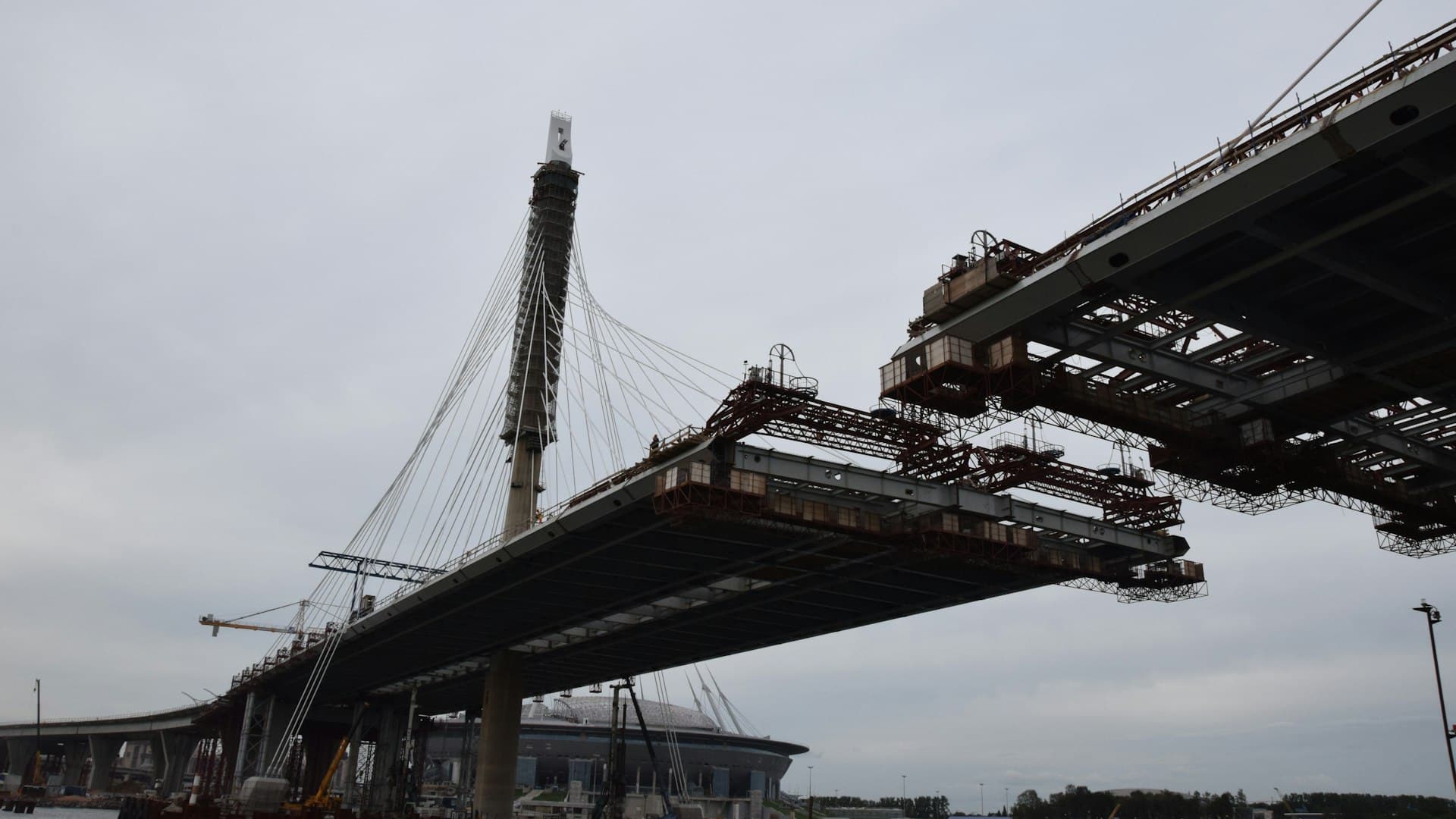
Civil engineering is taught as the design of new things and practised mostly as the care of old ones.
The work shifted and the training did not
In economies with mature infrastructure, the stock of roads, bridges, water systems, sewers and public works already exists. Much of it was built in concentrated post-war periods and is now at or beyond its original design life.
The consequence is that the dominant activity is assessment, maintenance, strengthening, renewal and life extension.
A graduate arrives trained to design a bridge and is asked whether a bridge built in 1963 can carry a load nobody anticipated, using drawings that may not match what was built.
Three things follow.
Different skills are required. Inspection, condition assessment, structural appraisal of existing structures, and deciding between repair, strengthen and replace.
The decisions are harder to justify. Spending on maintenance produces no visible new asset, which makes it politically weaker than building something, and deferred maintenance accumulates quietly until it does not.
Records are the constraint. Assessing an asset requires knowing what it is made of and how it was built, and for older assets that information is frequently incomplete, inaccurate or lost.
What the direction covers
The scope: the infrastructure a country runs on, including roads, bridges, water systems, geotechnics and public works.
Four areas.
Geotechnics. Soil and rock behaviour, foundations, retaining structures and slopes. Covered below because of its outsized effect on projects.
Transport infrastructure. Roads, pavements, bridges and their design, assessment and maintenance.
Water and environmental engineering. Supply, drainage, wastewater, flood management and the interaction between them.
Asset management. Condition, deterioration, prioritisation and whole-life decision making across a portfolio.
Assessing an existing asset is harder than designing a new one
A point that surprises people outside the field and which explains why the skill is scarce.
When you design, you choose. You specify the material, you know the dimensions, you apply the code, and everything is defined.
When you assess, almost nothing is defined.
The as-built condition is uncertain. Drawings may not reflect what was constructed, and modifications over decades may be undocumented.
Material properties are unknown. Concrete strength, reinforcement grade and section loss to corrosion all have to be investigated or assumed.
Deterioration is hidden. Reinforcement corrosion, internal cracking and foundation movement are frequently not visible from the surface.
Codes have changed. The structure was designed to a code that no longer applies, and assessing it against current codes may condemn something that has performed well for sixty years. Deciding how to handle that is a judgement, not a calculation.
Loads have changed. Vehicles are heavier, usage patterns differ, and climate loading is shifting.
The capability required is engineering judgement under uncertainty, supported by investigation, and it is developed over years. It is also the capability retiring fastest.
Where this sits in the domain
Civil engineering is the second of six directions in Astra Trainer's engineering and built world domain, sitting alongside structural engineering, which covers the analysis layer in more depth, and construction engineering and management, which covers delivery.
It connects to advanced materials for concrete deterioration and corrosion, and to energy, climate and nuclear for climate adaptation and the infrastructure the energy transition requires. Partners are usually asset owners, consultancies or public bodies, and the common scope is civil plus structural plus asset management. You can see the six directions here.
Ground conditions, which decide more projects than anything else
The most reliable predictor of a civil project going wrong, and the most consistently under-investigated.
Ground is not designed, it is discovered. What is under a site is variable, invisible and known only through the samples taken.
Four recurring problems.
Site investigation is cut first. It costs money early, produces no visible progress, and its value is proving that something is not there. It is the classic example of an expenditure whose benefit is invisible when it works.
Variability between boreholes. Ground can change substantially between investigation points, and the interpretation between them is a judgement.
Groundwater. Frequently the actual problem: seasonal variation, perched water, and the effect of construction on flow.
Contamination. Previous land use, discovered during excavation, with disposal and remediation costs that were not in the budget.
The workforce point is direct: geotechnical engineers and engineering geologists are a small population with disproportionate influence over project outcomes, and organisations that treat site investigation as a procurement line rather than an engineering decision pay for it later.
Climate adaptation is a civil engineering job
The World Economic Forum's Future of Jobs Report 2025 found 47 percent of employers worldwide naming stepped-up carbon reduction as a driver of transformation. A large share of that work, and of adaptation work generally, lands in this discipline.
Three concrete areas.
Design assumptions are moving. Infrastructure is designed against expected extremes derived from historical records, and where the distribution shifts, existing assets are protecting against the wrong thing. Assessing that across a portfolio is a substantial body of work.
Flood management and drainage. Both hard infrastructure and nature-based approaches, at catchment scale rather than site scale.
Embodied carbon. Concrete and steel are carbon-intensive, and reducing the carbon in a structure requires material and design decisions made early. This connects directly to the materials domain and to industrial decarbonisation in the energy domain.
Adaptation work is also mostly retrofit, which returns to the theme: the existing stock is the workload.
The roles, named
Civil design engineers.
Geotechnical engineers and engineering geologists. Small, decisive, persistently short.
Bridge and highway structures engineers, particularly in assessment.
Water and drainage engineers.
Infrastructure asset managers. Condition, deterioration modelling and investment prioritisation.
Inspection engineers. Principal inspections of bridges and structures, a defined and demanding activity.
Flood risk and climate adaptation specialists.
Site and resident engineers. Overseeing construction against design, which is where problems are caught or missed.
Who can be trained into it
Site staff and foremen. Know how things were actually built, including the deviations, which is exactly what assessment needs and what drawings do not record.
Surveyors. Already measure and record assets accurately, and geospatial capability transfers directly to condition recording and asset management.
Inspection technicians. Into structural assessment, with the theory added to existing observation skill.
Mechanical engineers. Into civil roles, needing the ground, materials and code layers.
Environmental scientists. Into flood risk, drainage and contaminated land.
GIS and data analysts. Into asset management, where deterioration modelling across a portfolio is a data problem that the discipline is only beginning to staff properly.
Professional licensure and public safety. Civil engineering work affecting public safety is subject to professional registration or licensure in most jurisdictions, with design and assessment sign-off restricted to appropriately qualified and registered engineers. Structural assessment of public infrastructure carries specific competence requirements. Site work is governed by construction safety regulation with duties on designers as well as contractors. Training builds engineering understanding and supports the route to registration. It does not confer licensure, registration or authority to sign off any design or assessment.
What to take from this
The dominant work is maintaining and assessing existing assets, and training still emphasises designing new ones.
Assessment is harder than design because as-built condition, material properties, hidden deterioration, changed codes and changed loads are all uncertain at once.
Ground conditions cause more overruns than anything else, and site investigation is the first thing cut because its value is invisible when it works.
Climate adaptation lands here, it is mostly retrofit, and embodied carbon connects the discipline to materials decisions made early.
And site staff and surveyors hold the as-built knowledge that assessment depends on, which drawings frequently do not.
Is civil engineering mostly new construction?
Not in economies with mature infrastructure. Most activity is assessment, maintenance, strengthening and life extension of assets built decades ago, and the skills required differ from design.
Why is assessing an existing structure harder than designing one?
Because nothing is defined. As-built condition, material properties and hidden deterioration are uncertain, codes have changed, and loads have changed. It requires judgement under uncertainty rather than calculation.
What causes most civil project overruns?
Ground conditions. Site investigation is cut first because its value is proving something is not there, ground varies between boreholes, groundwater is frequently the real problem, and contamination surfaces during excavation.
Where does climate work land?
Largely in civil engineering: design assumptions based on shifting historical extremes, flood management at catchment scale, and embodied carbon in concrete and steel. Mostly as retrofit of existing assets.
Who converts into civil roles?
Site staff and foremen, who know how things were actually built; surveyors, whose measurement and geospatial skills transfer to asset management; and inspection technicians into structural assessment.