
This is the direction where public expectation and engineering reality have diverged most, which makes it the one most worth writing carefully.
Where autonomy actually works today
The honest picture is neither dismissive nor breathless.
Working commercially, in constrained environments. Mining haulage, port container handling, warehouse and logistics vehicles, and increasingly agricultural machinery. These environments are private, mapped, controlled and populated by trained people, which removes most of the hard problems.
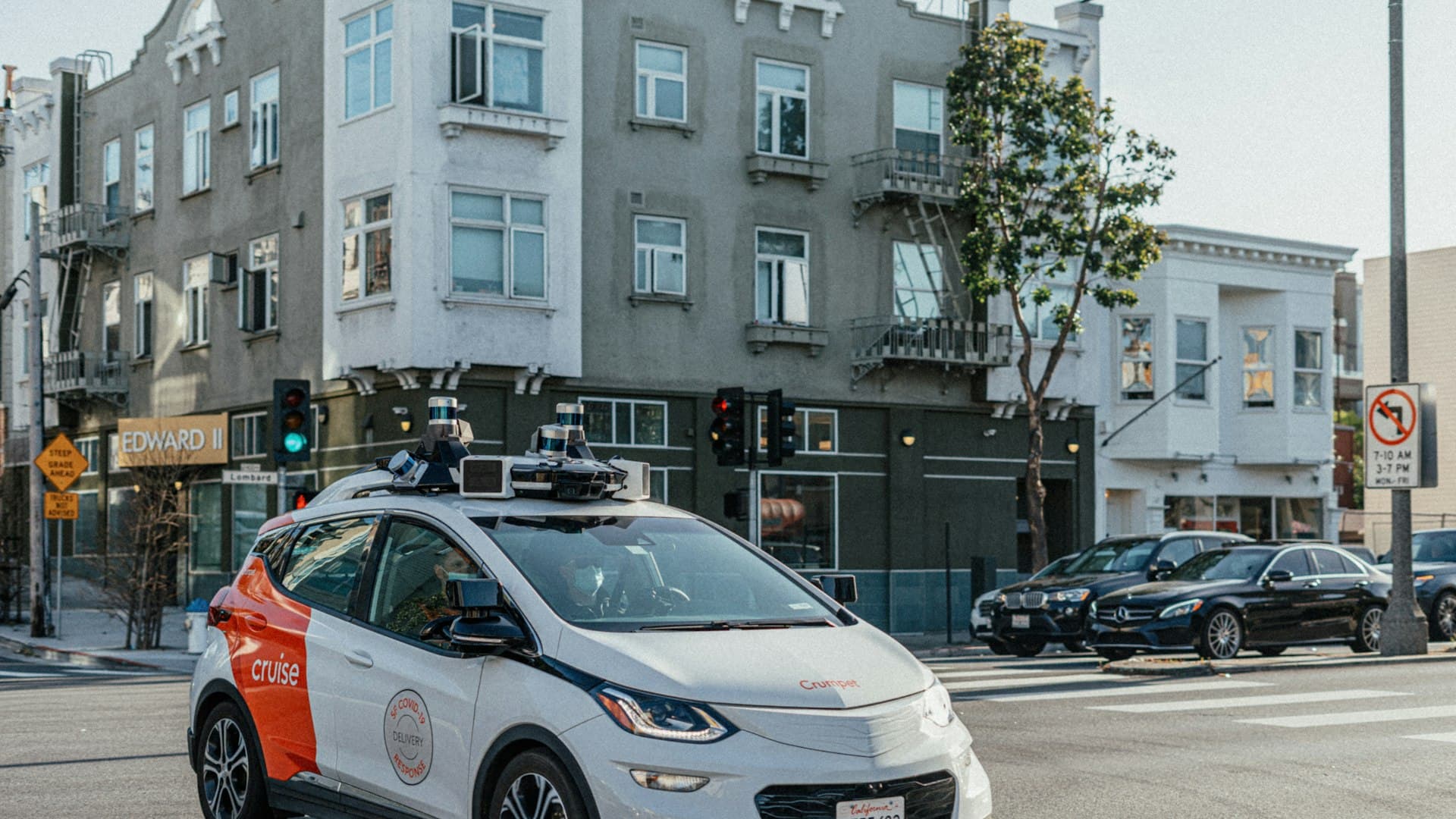
Operating in limited public deployments. Robotaxi services in specific cities, within defined areas, under defined conditions, with remote support. Real, commercially operating, and geographically narrow.
Widely deployed as driver assistance. Lane keeping, adaptive cruise, automatic emergency braking. These are assistance systems requiring a human driver, and the gap between them and autonomy is qualitative rather than incremental.
Not solved. General autonomous driving anywhere, in any weather, without constraints.
The constrained environments are where the jobs are now. The unconstrained problem is where the attention is.
The World Economic Forum's Future of Jobs Report 2025 ranks autonomous and electric vehicle specialists seventh on the list of fastest-growing jobs worldwide to 2030, the highest-placed green transition role. That demand is real and it is not all in robotaxis.
The operational design domain, and why it is the whole argument
The most useful concept in this field and the one that should appear in every procurement conversation.
An operational design domain is the set of conditions under which a system is designed to function: which roads, which speeds, which weather, which lighting, which traffic, with what support.
Once you have that concept, the question "is this vehicle autonomous" stops being meaningful. The real questions are what its operational design domain is, how reliably it detects that it is leaving that domain, and what it does when it does.
Three implications.
Comparing systems requires comparing domains. A system that handles a mapped industrial site flawlessly and a system that handles urban streets in clear weather are not on the same scale.
The boundary detection is safety-critical. Knowing it is outside its competence is arguably harder than operating inside it, and it is where a lot of engineering effort goes.
Widening the domain is not linear. Each extension, rain, snow, night, unmapped roads, adds disproportionate difficulty, which is the mechanism behind the long tail.
What the direction covers
The scope: perception, mapping, planning, navigation and control behind a vehicle that drives itself.
Five areas.
Perception. Detecting and classifying the world from cameras, radar and lidar, which draws on the computer vision direction.
Localisation and mapping. Knowing where the vehicle is, precisely, including where satellite positioning is unavailable.
Prediction. Estimating what other road users will do, which is harder than perception and less discussed.
Planning and decision making. Choosing a trajectory that is safe, legal, comfortable and progresses toward the goal.
Control. Executing the trajectory, which is the control systems direction applied.
Where this sits in the domain
Autonomous vehicles is the sixth of nine directions in Astra Trainer's robotics and autonomous systems domain, built on control systems and computer vision, and sitting alongside drones and aerial robotics, which shares most of the underlying problems in a different medium.
It pairs closely with the space, aerospace and new mobility domain, which covers automotive engineering and electric vehicles, and future mobility and transportation systems, and with AI, data and computing for the machine learning layer. Partners deploying autonomy in industrial settings usually scope across all three. You can see the nine directions here.
The long tail, stated plainly
The central engineering difficulty, and the reason repeated timeline predictions have not held.
Driving consists mostly of ordinary situations that are now handled well, and a very large number of rare situations, each individually uncommon and collectively frequent.
Debris in the road. A traffic officer directing traffic contrary to the signals. An unusual vehicle. A pedestrian behaving unpredictably. Temporary road layouts. Faded or contradictory markings. Extreme weather. Local driving conventions that differ from the written rules.
Three properties make this hard rather than merely laborious.
The tail does not end. Every deployment encounters new cases. Handling the ones you have seen does not bound the ones you have not.
Rare events need enormous exposure to evaluate. Demonstrating a low rate of a rare failure requires a very large amount of driving, which is why simulation and targeted scenario testing carry so much weight, and why validation is its own discipline.
Some cases require judgement rather than perception. Deciding what to do when the correct action is ambiguous, or when following the rules would be unsafe, is not solved by seeing more clearly.
None of this says the problem is unsolvable. It says that progress is asymptotic, and that any workforce plan built on a specific near-term arrival date is building on the weakest available assumption. This article deliberately makes no prediction about when.
Validation is the discipline, not the driving
The part of the field that employs the most people and receives the least attention.
Scenario-based testing. Defining the situations a system must handle and testing against them systematically, rather than accumulating miles and hoping for coverage.
Simulation. Running enormous numbers of variations, including the dangerous ones you cannot test on a road. Building and validating the simulator is itself a substantial engineering effort.
Safety assurance. Making an argued, evidenced case that a system is acceptably safe. This is a formal discipline with its own standards, covering both functional safety and safety of the intended functionality, meaning hazards arising from performance limitations rather than from faults.
Data pipeline and triage. Fleets generate vast data, and finding the interesting events in it is a real job.
Remote operations. Deployed services rely on human support for situations the vehicle escalates, which is an operational role that exists now and is rarely mentioned.
For workforce planning this is the useful correction: the field needs safety engineers, test engineers, simulation engineers, data engineers and operations staff in larger numbers than it needs perception researchers.
The roles, named
Perception engineers.
Localisation and mapping engineers.
Planning and behaviour engineers, where prediction and decision making sit.
Safety engineers. Functional safety and safety of the intended functionality. Persistently short and central.
Validation and test engineers, including scenario design.
Simulation engineers.
Data engineers and triage specialists for fleet data.
Remote assistance operators and supervisors.
Vehicle integration engineers, putting the system into a real platform with real power, thermal and packaging constraints.
Who can be trained into it
Automotive engineers. Understand vehicles, integration, validation culture and automotive safety standards. Need the autonomy stack. The most natural route and frequently overlooked in favour of software hiring.
Aerospace engineers. Bring genuine safety-critical systems discipline, certification thinking and redundancy design, which is exactly what the safety assurance layer needs.
Control engineers. Direct route into planning and control.
Software engineers. Into perception and planning, needing the physical and safety layers.
Test engineers from any safety-critical industry. Rail, aviation, medical devices. The validation mindset transfers and the domain is the shorter gap.
Professional drivers and vehicle operators. Into safety driving, scenario definition and remote operations, where knowing how road situations actually develop is the useful input and is rarely sought.
Regulation, testing and liability. Testing and deploying automated driving systems on public roads is regulated and requires specific authorisation that differs by jurisdiction, usually including safety driver requirements, reporting obligations and insurance. Vehicle systems are subject to type approval and functional safety standards. Training builds engineering understanding. It does not confer testing authorisation, regulatory approval, or any assessment of a specific system's safety, and safety assurance for a real system requires qualified professionals working to the applicable standards.
What to take from this
Autonomy works today in constrained environments, and those environments employ people now. The unconstrained problem is where the attention goes.
The operational design domain is the concept that makes any comparison meaningful, and detecting the boundary is as hard as operating inside it.
The long tail does not end, rare events need enormous exposure to evaluate, and some cases need judgement rather than better perception. Progress is asymptotic and this article makes no timeline claim.
Validation, safety assurance, simulation, data triage and remote operations employ more people than perception research does.
And automotive and aerospace engineers, plus test engineers from any safety-critical industry, are the conversions that fill the roles actually open.
Where do autonomous systems work today?
In constrained environments: mining, ports, warehouses and agriculture, where the site is private, mapped and populated by trained people. Public robotaxi services operate in defined areas under defined conditions with remote support.
What is an operational design domain?
The conditions a system is designed to function in: roads, speeds, weather, lighting, traffic and support. It makes "is it autonomous" a meaningless question and replaces it with better ones.
Why do timelines keep slipping?
The long tail of rare situations. It does not end, demonstrating a low rate of rare failure requires enormous exposure, and some cases need judgement rather than better perception.
Which roles does the field actually need?
Safety engineers, validation and test engineers, simulation engineers, data triage specialists and remote operations staff, in larger numbers than perception researchers.
Who converts into this field?
Automotive engineers, who understand vehicles and validation culture; aerospace engineers, who bring safety-critical and certification discipline; and test engineers from rail, aviation or medical devices.