
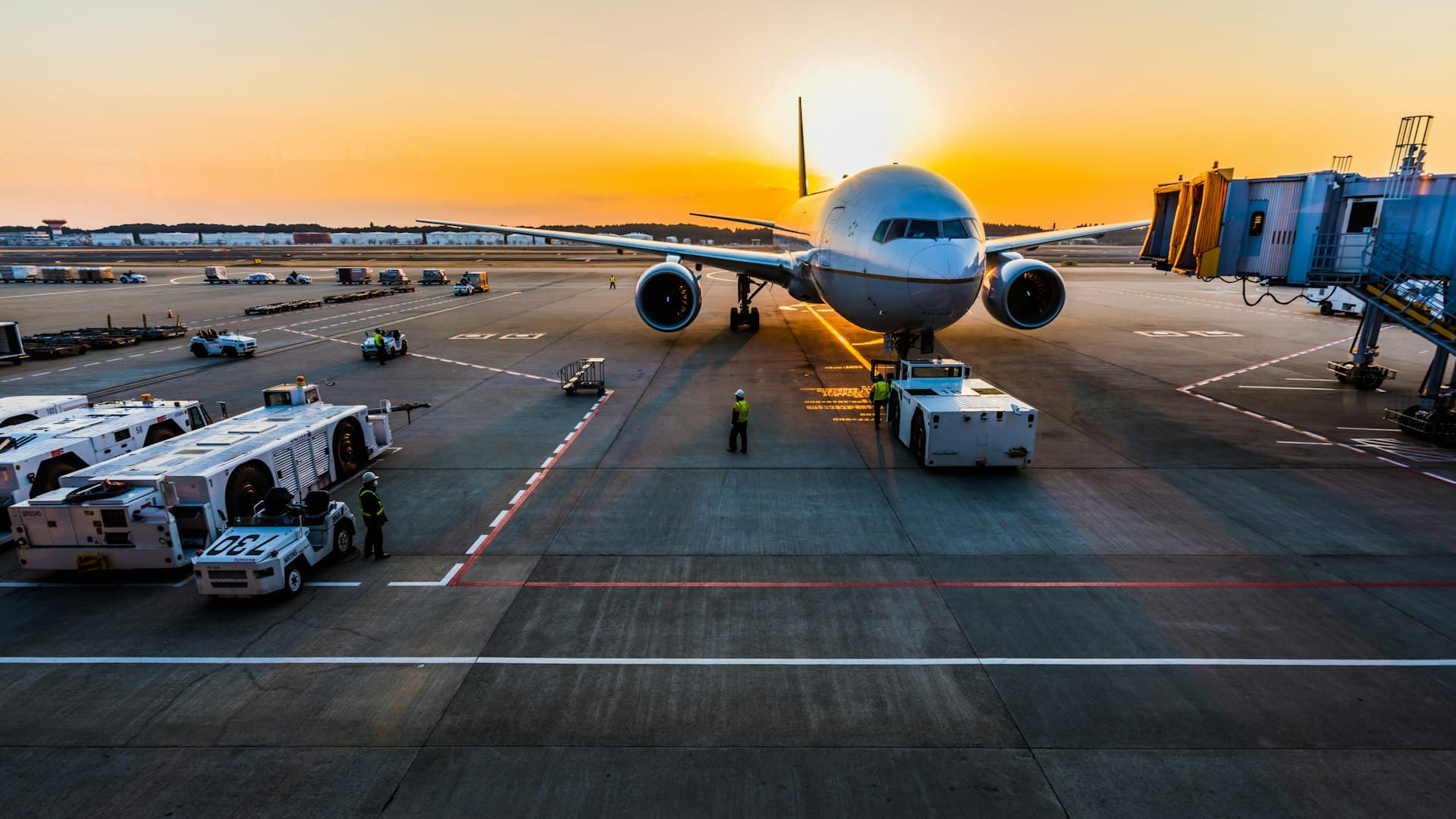
Aviation is a system that only works because a lot of specific people do specific licensed jobs, and almost all of the public attention goes to one of them.
The visible job and the invisible ones
Pilots are visible, aspirational and well documented. The roles that most constrain an airline or an airport are generally not.
Licensed aircraft maintenance engineers. Certifying staff who release an aircraft to service. The licence takes years of training and documented experience, plus type ratings for each aircraft type. Without enough of them, aircraft do not fly regardless of how many pilots are available.
Air traffic controllers. Long selection and training, high attrition during training, strict medical requirements, and capacity that cannot be increased quickly.
Flight dispatchers and operations controllers. Planning flights, managing fuel, weather, routing and the daily reality of disruption. Licensed in some jurisdictions and consistently under-recruited.
Ground handling staff. Loading, pushback, de-icing and turnaround. High turnover, frequently outsourced, and a direct constraint on on-time performance.
An airline can have aircraft, crew and passengers and still not fly, because there is nobody licensed to sign the aircraft off.
What the direction covers
The scope: air transport as a system, airline operations, airport management, safety and regulation.
Four areas.
Airline operations. Network and schedule, fleet assignment, crew rostering within legal duty limits, and operations control.
Airport operations. Airside and landside, capacity, slots, turnaround and ground handling.
Air traffic management. Airspace structure, separation, flow management and the coordination between them.
Safety and regulation. Safety management systems, oversight, reporting and the regulatory framework the whole system operates inside.
Why the training pipelines are long by design
The structural feature that makes aviation workforce planning different, and it is not accidental.
Most operationally critical roles are licensed, which means competence is defined, examined and maintained under regulatory oversight. Licences require theory, practical training, documented experience, medical fitness in several cases, and recurrent checking to stay valid.
Four consequences.
Capacity cannot flex quickly. A shortfall in licensed staff takes years to correct, and the decision to train has to be made long before the demand is visible.
Downturns damage the pipeline disproportionately. Training capacity that is reduced during a slow period takes longer to rebuild than the demand takes to return, and experienced people who leave frequently do not come back.
Type ratings constrain flexibility. Both flight crew and maintenance engineers are qualified on specific aircraft types, so a licensed person is not interchangeable across a mixed fleet.
Recurrent training is permanent cost. Maintaining competence is an ongoing obligation, not a one-time investment, which makes continuous short-form learning a natural fit for the knowledge component.
Where this sits in the domain
Aviation operations, airlines and airports is the sixth of nine directions in Astra Trainer's space, aerospace and new mobility domain, sitting alongside aeronautical engineering and avionics, and connecting to drones and aerial robotics in the robotics domain, where airspace integration is the shared question.
Partners here are usually airlines, airports, ground handlers or regulators, and the direction is typically scoped for the knowledge layer that supports licensed competence rather than as a replacement for it. Lessons are five minutes, which suits shift-based operational staff and fits the recurrent-knowledge requirement well. You can see the nine directions here.
Disruption is the operational discipline
The most useful reframing for anyone entering this field.
Running a normal day is straightforward. The schedule exists, the aircraft are where they should be, the crew are legal and the weather is fine. Almost nobody's skill is tested.
The operational skill is in the other days.
Disruption propagates. A delayed aircraft is late for its next rotation, and the crew approach their duty limits. One weather event in one hub can degrade a network for days.
Recovery is an optimisation under constraints. Aircraft, crew legality, passenger connections, slots, curfews and maintenance requirements all interact, and the objective is contested between cost, passengers and next-day integrity.
Crew legality is hard. Duty and rest limits are legal requirements, and a recovery plan that busts them is not a plan.
Decisions are time-pressured and consequential. Cancel early and you strand people; wait and you may strand them longer.
The workforce implication is that operations control staff need judgement built from experience, and the way to accelerate that is structured knowledge plus exposure to scenarios, rather than a manual.
Safety culture as an exportable asset
Worth a section because it is one of the few practices in this entire section that other industries genuinely should copy.
Aviation developed, over decades and after painful experience, a set of practices that are unusual.
Structured reporting of events and near-misses, including ones that caused no harm, on the basis that they reveal the conditions that would.
Just culture. A distinction between honest error, which is reported and learned from, and wilful violation, which is not tolerated. Without this distinction people do not report, and without reports the system learns nothing.
Crew resource management. Training in communication, authority gradient and speaking up, developed after accidents where someone knew something and did not say it effectively.
Standard operating procedures and checklists for the specific reason that memory degrades under stress.
Systematic investigation focused on causes rather than blame.
Healthcare has borrowed some of this deliberately, and the concepts connect directly to the medicine and healthtech domain. Manufacturing, energy and construction borrow less of it than they should.
The roles, named
Licensed aircraft maintenance engineers. The most binding constraint.
Air traffic controllers.
Flight dispatchers and operations controllers.
Airport operations managers and duty managers.
Ground handling supervisors and staff.
Safety managers and safety management system specialists.
Network planners and revenue management analysts. The commercial side, quantitative and less discussed.
Compliance and airworthiness management staff at operators.
Who can be trained into it
Military aviation personnel. The strongest pool for maintenance, operations and air traffic roles, arriving with the culture, the discipline and frequently much of the technical content.
Staff from other licensed safety environments. Rail signalling, maritime operations, nuclear operations. The relationship with procedure and licence transfers directly.
Logistics and transport operations staff. Into ground handling and operations control, where disruption management is the shared skill.
Engineering technicians. From any precision maintenance background, into aircraft maintenance, subject to the licence route.
Analysts. Into network planning and revenue management, which is quantitative work that does not require an aviation background to start.
Customer operations staff. Into disruption management, where understanding passenger impact is part of making a good decision.
These roles are licensed and the licence is the job. Aircraft maintenance certification, air traffic control, flight crew and in many jurisdictions flight dispatch require formal licences issued by aviation authorities, with defined training, examination, experience, medical and recurrent requirements. Type ratings are separate and aircraft-specific. Training builds the knowledge that supports licensed competence and recurrent obligations. It does not confer any licence, rating or authorisation, and nothing here substitutes for approved training at an approved organisation.
What to take from this
The binding constraints are licensed maintenance engineers, controllers and dispatchers, not pilots, and they receive a fraction of the attention.
Pipelines are long because competence is licensed, so capacity decisions have to be made years before demand appears and downturns damage the pipeline disproportionately.
Operational skill is disruption management, and it is built from scenario exposure rather than from a manual.
Aviation's safety culture, especially just culture and structured reporting of near-misses, is one of the genuinely exportable practices in this section.
And military aviation personnel, plus staff from rail, maritime or nuclear operations, are the conversions that already hold the relationship with procedure that this sector requires.
Which aviation shortages actually bite?
Licensed aircraft maintenance engineers, air traffic controllers and flight dispatchers. Without certifying staff an aircraft cannot be released to service regardless of crew availability.
Why can capacity not be increased quickly?
Because the roles are licensed, requiring defined training, examination, documented experience and in several cases medical fitness. Decisions to train must precede visible demand by years.
What is the core operational skill?
Managing disruption. Normal days test almost nobody. Recovery involves aircraft, crew legality, connections, slots and curfews interacting under time pressure.
What should other industries copy from aviation?
Structured reporting of events and near-misses, just culture distinguishing honest error from wilful violation, crew resource management, and investigation focused on causes rather than blame.
Who converts into aviation roles?
Military aviation personnel first, then staff from rail signalling, maritime or nuclear operations, who already hold the relationship with procedure and licensing that the sector requires.