
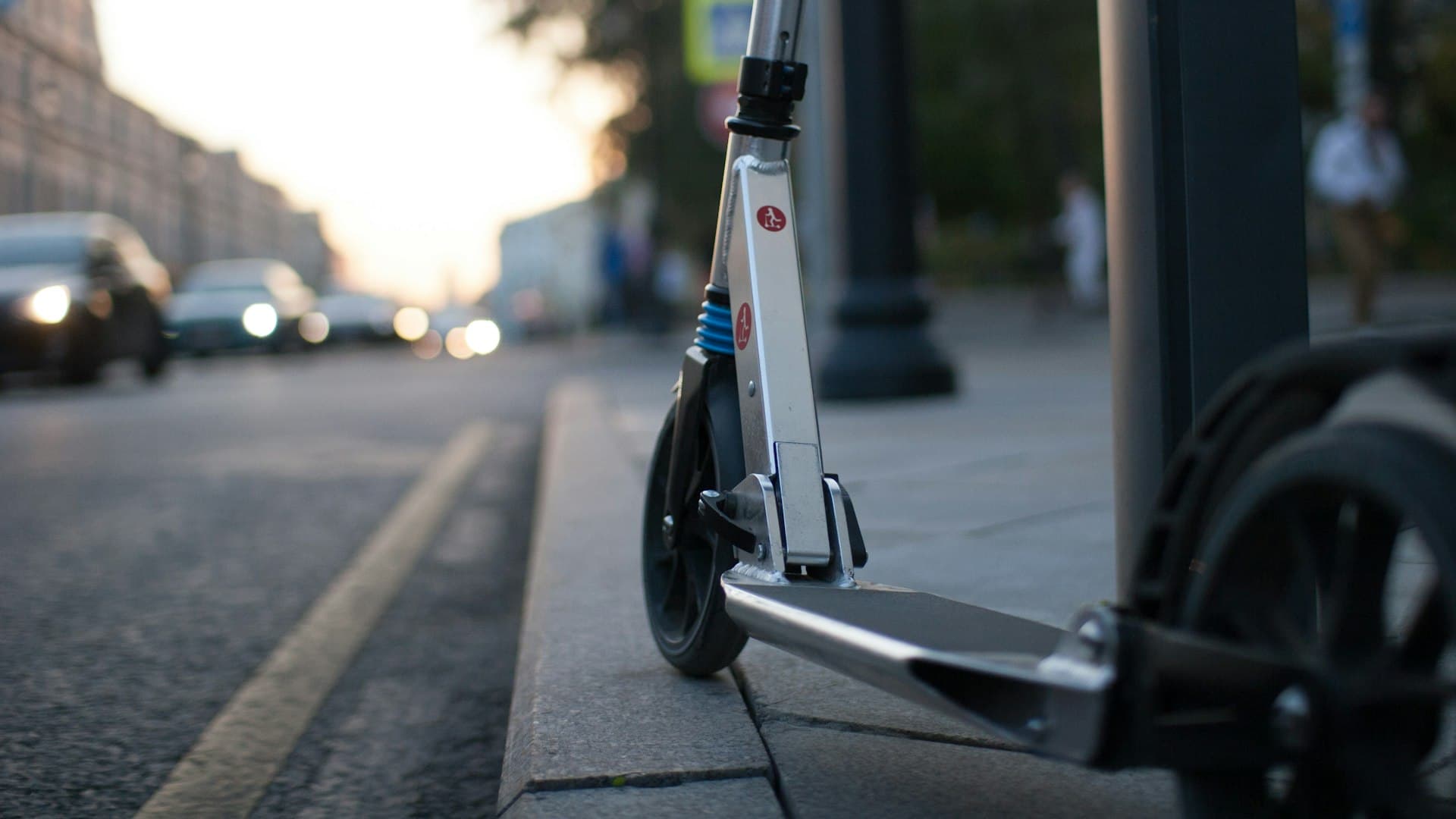
Future mobility is the direction with the highest ratio of announced projects to surviving services, which makes the failure pattern the most useful thing to write about.
The pattern across a decade of schemes
Integrated mobility platforms, shared micromobility, demand-responsive transport and various on-demand services have been launched, piloted and withdrawn repeatedly across many cities.
The post-mortems rarely say the technology did not work. The app worked, the vehicles worked, the routing worked.
What fails is the arrangement between the organisations that would have to cooperate for the service to exist.
This makes it a workforce question of a specific kind: the capability that is short is not engineering, it is the ability to work across technical, commercial, regulatory and operational boundaries simultaneously.
What the direction covers
The scope: autonomous mobility, urban air mobility, connected transport and mobility infrastructure.
Four areas.
Transport systems and planning. How networks are designed, how demand behaves, and what actually changes travel choices.
Shared and on-demand mobility. Operating models, fleet management, and the economics of utilisation.
Connected and cooperative transport. Vehicles, infrastructure and traffic management exchanging data.
New modes. Micromobility, autonomous shuttles and urban air mobility, each with its own regulatory and infrastructure question.
The four integration problems
Named specifically, because they are what a workforce plan has to staff against.
Ticketing and payment. Combining modes into one journey with one payment requires operators to accept a shared fare structure and settle revenue between them. Fare structures encode long-standing policy, subsidy and political commitments, so changing them is not a technical exercise. This is the single most common point of failure.
Data sharing. Journey planning across modes requires real-time data from every operator. Operators may be commercially competitive, may regard the data as an asset, and may have systems that do not expose it. Mandating sharing is a policy instrument, and where it does not exist the platform is incomplete and therefore not worth using.
Who owns the customer. An aggregating platform sits between operators and passengers. Operators reasonably resist becoming an invisible supplier with no relationship and no pricing control. This is a genuine commercial conflict rather than a misunderstanding.
Regulation designed around modes. Rules were written for taxis, buses, rail and private cars as separate categories. Services that do not fit, such as demand-responsive shared vehicles, fall between regimes and face uncertainty that deters investment.
A team of excellent engineers cannot resolve any of these four, which is why so many technically successful pilots do not become services.
Where this sits in the domain
Future mobility and transportation systems is the eighth of nine directions in Astra Trainer's space, aerospace and new mobility domain, sitting next to automotive engineering and electric vehicles and connecting to autonomous vehicles in the robotics domain.
Because the failure modes are integration rather than technology, partners typically scope it alongside the engineering and built world domain, where urban planning and smart cities covers the city systems layer, and with AI, data and computing for the platform and data engineering half. It also connects to energy for charging infrastructure and grid impact. You can see the nine directions here.
Curb space is the contested resource
An observation that is more useful than most mobility strategy documents.
Cities have spent decades managing road space. The constraint that now binds in dense areas is the curb: the strip at the edge of the road where things stop.
Competing for it are parked cars, deliveries, ride-hail pickups, buses, cycle infrastructure, micromobility parking, waste collection, accessible parking and outdoor seating.
Three consequences.
Every new mobility service consumes curb. A service that works beautifully and has nowhere to stop is not deployable.
Curb management is becoming an active discipline. Dynamic allocation by time of day, pricing, digital permitting and enforcement. It is a small and growing specialism.
Delivery growth has changed the picture more than passenger mobility has. The rise in home delivery put sustained pressure on curb space that most planning frameworks were not written for.
Urban air mobility, described rather than predicted
Handled carefully, because this is the area in the whole section most subject to confident forecasting.
What is true: multiple electric vertical take-off and landing aircraft are in development, several have flown, and certification programmes are under way with civil aviation authorities. Some initial commercial operations have begun in limited forms in some jurisdictions.
The constraints, stated as constraints rather than as obstacles about to fall.
Certification. These are novel aircraft configurations, and establishing the means of compliance for them is substantial work for both manufacturers and regulators.
Noise. Community acceptance in dense areas depends on it, and acceptance is a political process rather than an engineering one.
Infrastructure. Landing sites need space, power at significant capacity, and planning permission, in exactly the places where all three are hardest to obtain.
Air traffic integration. Operating at volume in urban airspace requires traffic management capability that is being developed rather than deployed.
Pilots. Early operations are piloted, which means the economics depend on a labour cost that autonomy is supposed to remove eventually, and autonomous passenger flight faces its own certification question.
This article makes no claim about when or whether this becomes a mass-market mode. A workforce plan should treat it as a developing sector employing people in certification, testing, infrastructure and operations now, which is true, rather than as a scheduled arrival.
The roles, named
Transport planners. Network design, demand modelling and appraisal.
Mobility service operations managers. Fleet, utilisation, rebalancing and field operations.
Data and platform engineers for journey planning and ticketing systems.
Transport modellers and data analysts.
Policy and regulatory specialists for new modes, which is the gating capability.
Curb and kerbside management specialists. Small and growing.
Charging and depot infrastructure engineers.
Accessibility specialists. Ensuring services work for people with reduced mobility, which is both a legal requirement in many places and a design discipline.
Who can be trained into it
Public transport operations staff. The most underused group. They know how services actually run, why the timetable is what it is, and what happens when it breaks. Mobility projects designed without that knowledge produce services that cannot be operated.
Transport planners. Need the data and platform layer added to existing network and demand expertise.
Data analysts and software engineers. Into platform roles, needing the transport domain, which is the half they most conspicuously lack.
Logistics and fleet managers. Into shared mobility operations, where utilisation and rebalancing are the same problems they already solve.
Local government officers. Into mobility policy and curb management, since they hold the regulatory and political context that determines what is possible.
Customer operations staff. Into service design, where understanding what actually frustrates passengers is more valuable than it is treated as being.
Regulatory and accessibility obligations. Passenger transport services are regulated, with licensing, safety, insurance and accessibility requirements that differ by mode and jurisdiction, and new modes frequently sit in uncertain regulatory territory. Aviation-based services are subject to aircraft certification and operating approval. Accessibility requirements are legal obligations in many jurisdictions rather than design preferences. Training builds understanding of these frameworks. It does not constitute regulatory advice, licensing or approval for any service.
What to take from this
These projects fail on ticketing, data sharing, customer ownership and mode-based regulation, and none of those is an engineering problem.
The scarce capability is working across technical, commercial, regulatory and operational boundaries at once, which is a person rather than a team structure.
Curb space is the binding physical constraint in dense cities, and delivery growth drove that more than passenger mobility did.
Urban air mobility employs people now in certification, testing, infrastructure and operations, and this article deliberately makes no claim about when it scales.
And public transport operations staff hold the knowledge that determines whether a designed service can actually be run. They are rarely in the room early enough.
Why do mobility platforms fail?
Ticketing and revenue settlement between operators, data sharing where operators compete, disputes over who owns the customer relationship, and regulation written around separate modes. The technology usually works.
Why does curb space matter?
Because it is the contested resource in dense cities, competed for by parking, deliveries, ride-hail, buses, cycling and micromobility. A service with nowhere to stop is not deployable.
When will urban air mobility be mainstream?
This article makes no prediction. Certification of novel configurations, noise and community acceptance, landing infrastructure, air traffic integration and early reliance on pilots are all real constraints. It employs people now in certification, testing and infrastructure.
What capability is actually short?
People who can work across technical, commercial, regulatory and operational boundaries simultaneously. Excellent engineers cannot resolve a revenue settlement dispute or a licensing gap.
Who converts into these roles?
Public transport operations staff, who know how services actually run; transport planners needing the data layer; logistics and fleet managers into shared mobility operations; and local government officers into policy and curb management.