
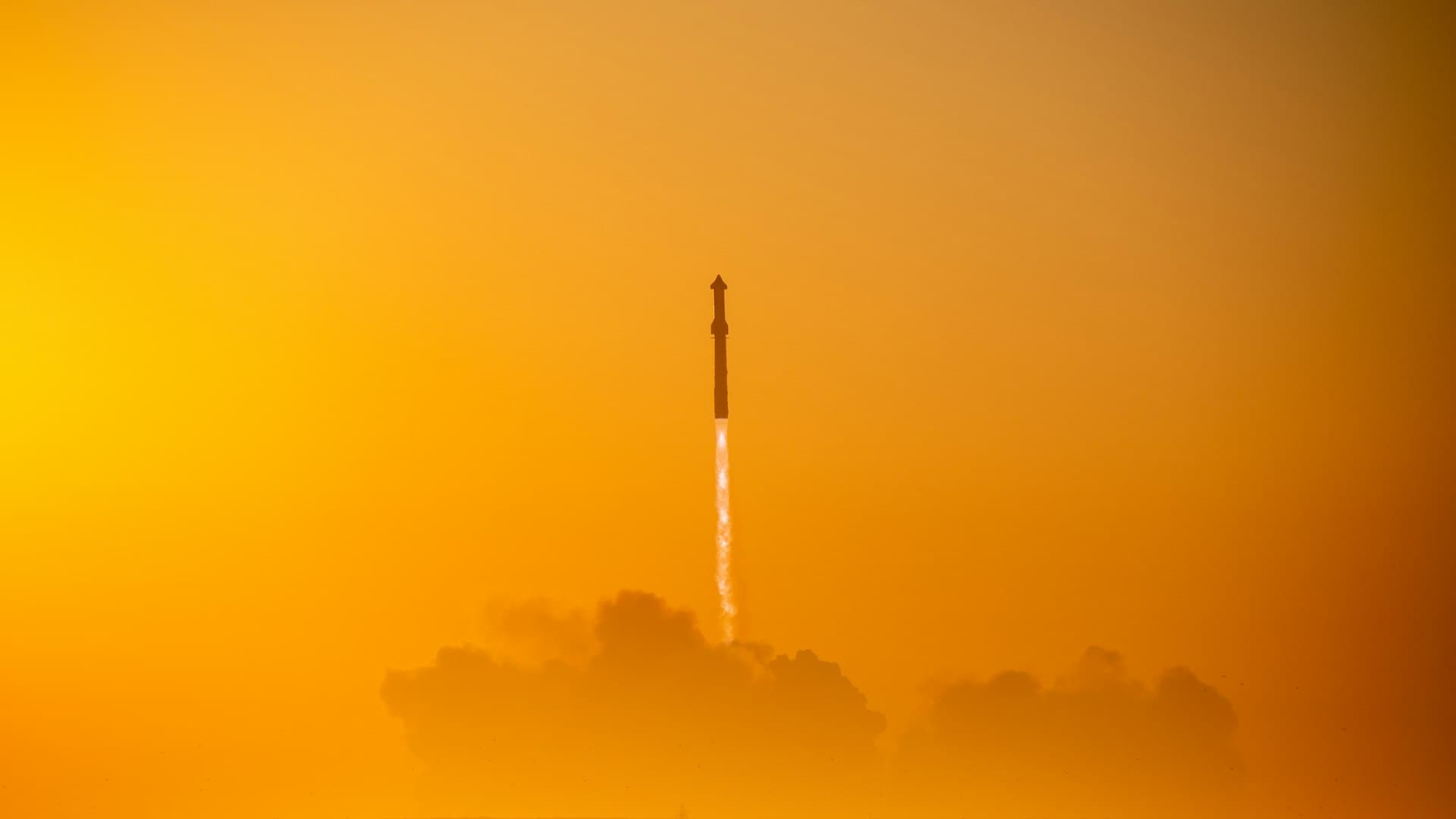
Launch is the most visible part of the space sector and a minority of its employment, which is worth saying at the start.
From building rockets to operating them
For most of the sector's history a launch vehicle was a manufactured product that was used once. The engineering organisation was a factory with a test department attached.
Recovering and reflying hardware changed the shape of the work.
An expendable rocket is a manufacturing problem. A reusable one is an inspection and maintenance problem, and those need different people.
Four changes.
Inspection became central. Deciding whether recovered hardware is fit to fly again requires knowing what to look for, how to measure it and what limits mean. This is the same non-destructive testing and integrity assessment capability discussed in the materials domain, applied to a returning vehicle.
Refurbishment became a discipline. Cleaning, replacing life-limited parts, repairing damage, requalifying. Closer to aircraft maintenance than to rocket manufacturing.
Life prediction became necessary. How many flights a component can take, and how to know when it is approaching the limit. Fatigue and damage tolerance thinking, borrowed from aviation.
Operations tempo rose. More flights per year means launch operations, range coordination and turnaround management employ more people.
For workforce planning the conclusion is direct: a reusable launch organisation needs maintenance, inspection and operations capability that an expendable one did not, and those skills exist in aviation rather than in space.
What the direction covers
The scope: rocket engines and fuels, launch systems, staging and launch operations.
Four areas.
Propulsion fundamentals. Thrust, specific impulse, nozzle behaviour, and the relationship between propellant choice and vehicle performance.
Engine systems. Combustion chambers, injectors, cooling, turbopumps, valves and control.
Vehicle and staging. Structures, tanks, separation, and the trade-offs that determine how many stages and of what size.
Launch operations. Propellant loading, countdown, range safety, recovery and turnaround.
Why rocket engines are hard
Specific reasons, because "rocket science" as a phrase conveys nothing useful.
Combustion instability. Pressure oscillations in the chamber can couple with combustion and grow until they destroy the engine, in milliseconds. It has been studied for decades and predicting it reliably from first principles remains difficult, which is why development involves so much testing.
Thermal extremes at close range. Combustion gas temperatures exceed the melting point of the chamber material, so the wall survives only because it is actively cooled, often by the propellant itself flowing through channels millimetres away. Small manufacturing defects in those channels are catastrophic.
Turbomachinery. Turbopumps deliver enormous flow rates at high pressure, spinning very fast, sometimes pumping cryogenic fluids on one end and hot gas on the other. They are among the most highly loaded rotating machines built.
Materials at their limits. Cryogenic temperatures, hydrogen embrittlement, oxygen compatibility, thermal fatigue. This connects directly to the metallurgy and materials directions.
Everything must work together, first time, for minutes. There is no partial success.
Where this sits in the domain
Rocketry and propulsion is the third of nine directions in Astra Trainer's space, aerospace and new mobility domain, sitting alongside astronautics and space systems and satellite engineering, and feeding the space economy direction where launch economics are discussed.
It depends heavily on advanced materials, particularly metallurgy, ceramics and surface engineering, and on energy for cryogenics and hydrogen handling. Partners building launch capability typically scope across those domains rather than treating propulsion as self-contained. You can see the nine directions here.
Test is where the work happens
The part of propulsion engineering that employs the most people and receives the least attention.
Because combustion instability and many other failure modes resist prediction, propulsion development is fundamentally empirical. Engines are tested extensively, and test campaigns dominate development schedules.
That produces a substantial and specific workforce requirement.
Test stand engineering. Designing and operating facilities that can hold an engine while it produces enormous thrust, feed it propellant at rate, and survive a failure.
Instrumentation. Measuring pressure, temperature, vibration, flow and strain in an extremely hostile environment, at high sample rates, reliably.
Data analysis. A single test produces enormous quantities of data, and finding the signal that indicates a developing problem is the skill.
Propellant systems operation. Handling cryogenics and hazardous fluids safely, which is a competence-based role with formal requirements.
Post-test inspection. Examining hardware after firing, which loops back to the inspection capability reusability made central.
An organisation planning a propulsion programme that budgets for designers and not for this is planning for half the work.
The roles, named
Propulsion engineers. Engine cycle, performance and integration.
Combustion engineers. Injectors, chambers and stability. Small and highly specialised.
Turbomachinery engineers. Pumps and turbines, a discipline shared with power generation and aviation.
Fluid systems engineers. Valves, lines, pressurisation and propellant management.
Test engineers and test stand operators. The largest engineering population in a development programme.
Instrumentation engineers.
Structures engineers for tanks and load paths, where thin-walled pressurised structures are the discipline.
Launch operations engineers and technicians. Countdown, propellant loading, recovery and turnaround.
Welding and manufacturing specialists. Rocket structures involve demanding welding, and qualified welders are a genuine constraint.
Who can be trained into it
Aircraft maintenance technicians. The strongest and least-recruited conversion in a reusable launch organisation. Inspection discipline, life-limited part management, turnaround under schedule pressure and airworthiness culture all transfer directly, and those are exactly the capabilities reusability created demand for.
Turbomachinery engineers from power generation. Gas turbine and steam turbine experience transfers to turbopumps more than the different applications suggest.
Process and cryogenics engineers from industrial gas or LNG. Already handle cryogenic fluids at scale, safely, which is a substantial part of launch operations.
Test engineers from automotive or aerospace. The instrumentation and data analysis skills transfer; the hazard scale does not, and that requires supervised experience.
Welders and NDT technicians from pressure equipment or aerospace, into rocket structures.
Military and range operations personnel into launch operations.
This is genuinely dangerous work. Launch vehicle propulsion involves cryogenic fluids, high-pressure systems, hypergolic and toxic propellants in some applications, and stored energy sufficient to destroy a facility. Propellant handling, pressure system work and test operations are governed by site safety regimes with formal competence, authorisation and medical requirements, and range operations are subject to range safety authority. Launch vehicles and propulsion technology are also subject to export control in most jurisdictions. Training builds engineering understanding and hazard awareness. It does not confer competence authorisation, site permissions or export clearance, and no part of this work should be approached without supervised qualification.
What to take from this
Reusability turned launch from a manufacturing business into an inspection, refurbishment and operations business, and those skills live in aviation.
Engines are hard for specific reasons: combustion instability, actively cooled walls above the material's melting point, extreme turbomachinery and materials at their limits.
Development is empirical, so test campaigns dominate schedules and test engineering employs more people than design.
Propellant handling is hazardous work with formal competence requirements, and supervised experience is not optional.
And aircraft maintenance technicians are the conversion nobody makes, despite holding precisely the capability reusability created.
How did reusability change the workforce?
It shifted the sector from manufacturing toward inspection, refurbishment, life prediction and operations. Those capabilities exist in aviation maintenance rather than in traditional space engineering.
Why are rocket engines difficult?
Combustion instability resists reliable prediction, chamber walls survive above the material's melting point only through active cooling, turbopumps are among the most highly loaded rotating machines built, and materials operate at their limits.
Where does the employment actually sit?
In test. Because development is empirical, test stand engineering, instrumentation, data analysis, propellant operations and post-test inspection employ more people than design does.
Who converts into propulsion work?
Aircraft maintenance technicians for reusable operations, turbomachinery engineers from power generation, and cryogenics and process engineers from industrial gas or LNG.
Where does this fit in the domain?
Third of nine directions in Astra Trainer's space, aerospace and new mobility domain, depending heavily on advanced materials and energy. You can see them here.