
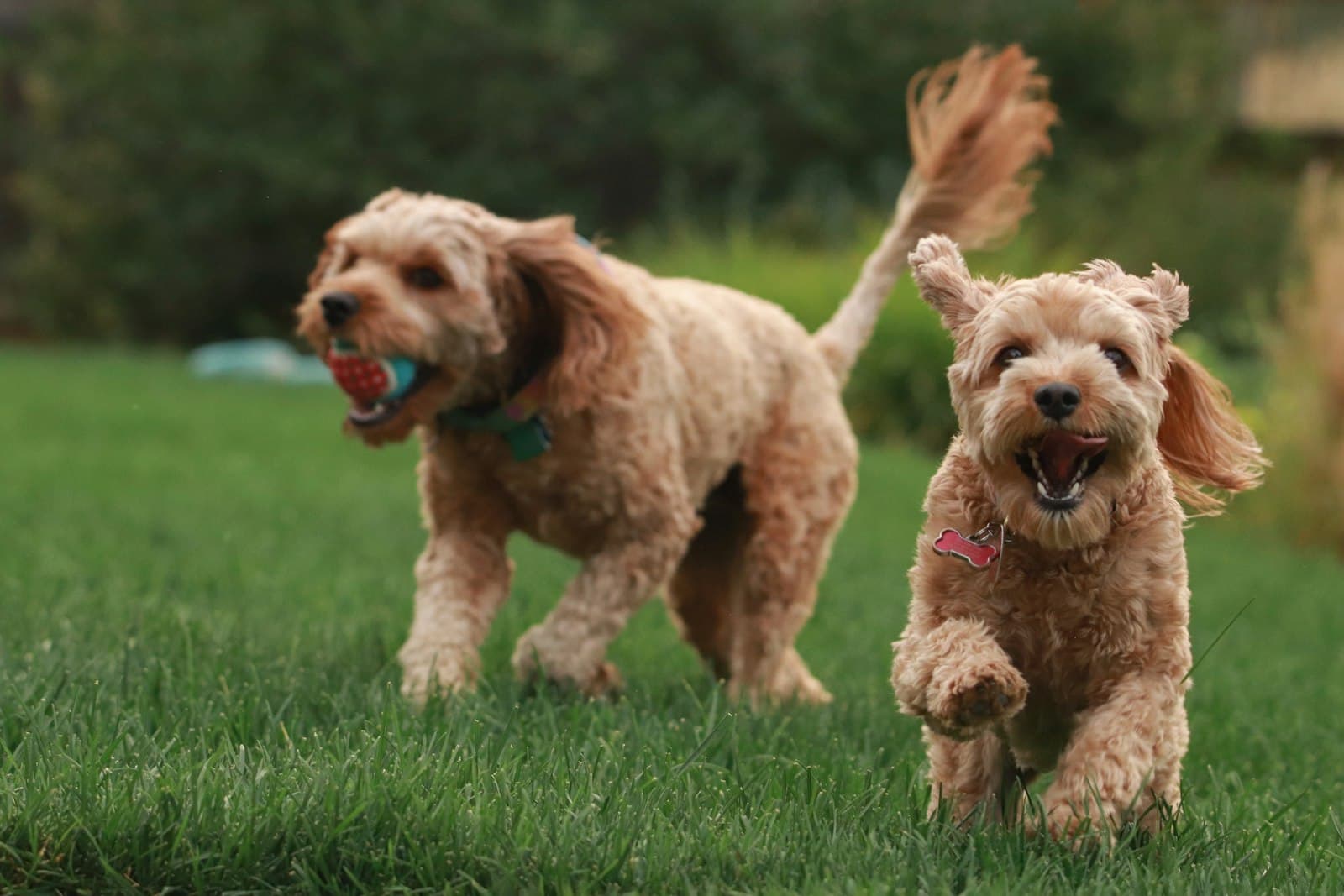
The most useful thing to know about the first year is that it is not one situation. It is four or five, and each has a different job.
The year is not uniform
Owners generally receive advice as though a puppy were a small constant thing. It is not. The same approach applied at ten weeks and at eight months produces different results, because the animal at those two points is doing different developmental work.
The characteristic error runs in one direction: applying later-phase priorities early. Focusing on obedience at nine weeks, during the window where social experience is the thing that cannot be recovered, trades something irreplaceable for something that can be taught at any point in the following decade.
| Phase | The job | What it looks like |
|---|---|---|
| 8 to 12 weeks | Social experience, broad and positive | Exhausting, and the highest-stakes phase |
| 3 to 4 months | Teething, routine holding | Biting, some regression |
| 4 to 6 months | Consolidation | Apparent progress, then a slide |
| 6 to 12 months | Adolescence | Selective deafness, a second fear period |
Weeks 8 to 12: the window that does not reopen
The American Veterinary Society of Animal Behavior places the primary socialisation window between 3 and 14 weeks, with the first three months of life the critical period during which sociability outweighs fear. Its position statement describes this as the primary window for a puppy to adapt to new people, animals and experiences, and notes that incomplete socialisation during it raises the risk of later fear, avoidance and aggression.
Most puppies go home at around eight weeks, so an owner typically gets four to six weeks of it. That is the entire allocation.
Two things about this period are routinely misunderstood.
Quality is not volume. The goal is a wide range of experiences that the puppy finds manageable. AVSAB's own framing is exposure to as much as can be achieved safely and without producing overstimulation, withdrawal or fear. A puppy that is frightened by an experience has not been socialised to it, and may have been sensitised against it.
It is not only other dogs. Surfaces, sounds, vehicles, people of different appearances and ages, being handled, being alone briefly. Most later problems attach to categories nobody thought to include.
Four to six weeks is the whole allocation, and it is the only part of the year that cannot be repeated later.
The vaccination tension, stated honestly
Here is the genuine conflict, and it deserves to be stated rather than smoothed over.
The socialisation window closes before the vaccination course finishes. Keeping a puppy entirely isolated until fully vaccinated protects against infection and consumes most of the period that cannot be recovered.
AVSAB's position is that puppies can begin socialisation classes as early as 7 to 8 weeks, having had at least one set of vaccines a minimum of 7 days beforehand plus a first deworming, and staying current on vaccines throughout. Their reasoning is that behavioural problems, not infectious disease, are the leading cause of dogs being relinquished or euthanised, which makes under-socialisation the larger risk for most puppies.
This is a decision to make with your own vet. Local disease prevalence, your puppy's health, and your specific circumstances all bear on it, and this article is educational rather than veterinary advice. The point here is that the trade-off is real and that a considered position exists, not that any particular choice is right for your dog.
Months 3 to 4: teething and the first wobble
Adult teeth arrive and biting intensifies. This is a physical process, not a training failure, and it does not respond well to being treated as defiance.
House training frequently regresses here too. A puppy that had been reliable for a fortnight starts having accidents again, and the usual interpretation, that the puppy knows better and is being difficult, is wrong. Bladder control is developing and routine disruption shows up immediately.
The job in this phase is mostly holding the routine steady while the body does its work.
Months 4 to 6: when everything appears to break
This is the phase that produces most of the despairing search queries, and almost all of it is normal.
Recall degrades. A puppy that returned reliably at four months starts considering the offer at six. Nothing has been undone. The world became more interesting than you at exactly the developmental point where independence increases.
The response that works is to reduce the difficulty, temporarily: shorter distances, fewer distractions, a long line outdoors. The response that does not work is escalating pressure, which teaches the puppy that returning is unpleasant.
A second fear period also commonly appears somewhere in this stretch, in which things previously accepted suddenly become alarming. It passes. Forcing exposure during it is the reliable way to make it stick.
Months 6 to 12: adolescence
The longest phase and the one owners are least warned about.
Adolescent dogs test boundaries, respond less consistently, and can appear to have forgotten training that was solid. This is not regression to zero. It is the same material being re-established under harder conditions, and it takes longer the second time.
Consistency is the whole of it here, and this is where conflicting advice does its damage. A household where recall is enforced differently by different people, or where a rule holds on weekdays and not weekends, produces a dog that has correctly learned that the rule is unreliable. Almost any coherent approach beats an incoherent mixture of better ones.
The path this article maps
Raise my puppy without chaos runs 4 to 6 months across 15 courses and three directions, kept in the order the year happens. Puppy school carries the whole first year. Nutrition and food covers feeding a growing puppy at every stage. Dog language covers early signals, caught before they set.
Where it stalls
Spending the socialisation window on obedience. Sit can be taught at any age. The window cannot be reopened.
Reading normal development as failure. The six-month recall slide and the second fear period are both predictable, and both get interpreted as something having gone wrong.
Collecting advice from everywhere. Conflicting approaches applied in rotation teach inconsistency, which is worse than any one of them applied consistently.
Quantity over quality in early experiences. An overwhelmed puppy at a busy event has not been socialised, and may have learned the opposite of the intended lesson.
Escalating during a fear period. Pushing a frightened puppy through the thing it fears is the most reliable way to make a temporary fear permanent.
What to take from this
The year has phases with different jobs, and applying a later phase's priorities early trades something irreplaceable for something that is not.
Weeks 8 to 12 are the part that cannot be repeated, and quality of experience matters more than quantity.
The vaccination conflict is real, veterinary behaviour has a clear position on it, and the decision belongs with your own vet.
The regressions at three months and at six months are developmental rather than behavioural, and treating them as defiance makes them worse.
And in adolescence, consistency beats method, which means the most damaging thing in the whole year is usually a household applying four good approaches at once.
When is the puppy socialisation window?
AVSAB places the primary window between 3 and 14 weeks, with the first three months the critical period. Most puppies go home around eight weeks, which leaves an owner four to six weeks of it.
Should I keep my puppy at home until fully vaccinated?
This is a genuine trade-off to settle with your vet. AVSAB's position is that puppies can begin classes at 7 to 8 weeks with at least one set of vaccines given 7 days prior, because behavioural problems rather than infectious disease are the leading cause of dogs being relinquished.
Why has my puppy started having accidents again?
Regression around three to four months is common. Bladder control is still developing and routine changes show up immediately. It is rarely defiance, and any sudden or severe change is worth a veterinary check.
Why has my puppy stopped coming when called at six months?
Because adolescence has started and the world became more interesting. The fix is to reduce difficulty temporarily, shorter distances and fewer distractions, rather than to increase pressure.
What matters most across the whole year?
Consistency. A household applying several good approaches inconsistently teaches a puppy that rules are unreliable, and that is harder to undo than any single imperfect method.