Pick up two crystal books and the entries will broadly agree. That agreement is the most suspicious thing about them, and tracing where it came from is more interesting than the entries themselves.
The lists are newer than the stones
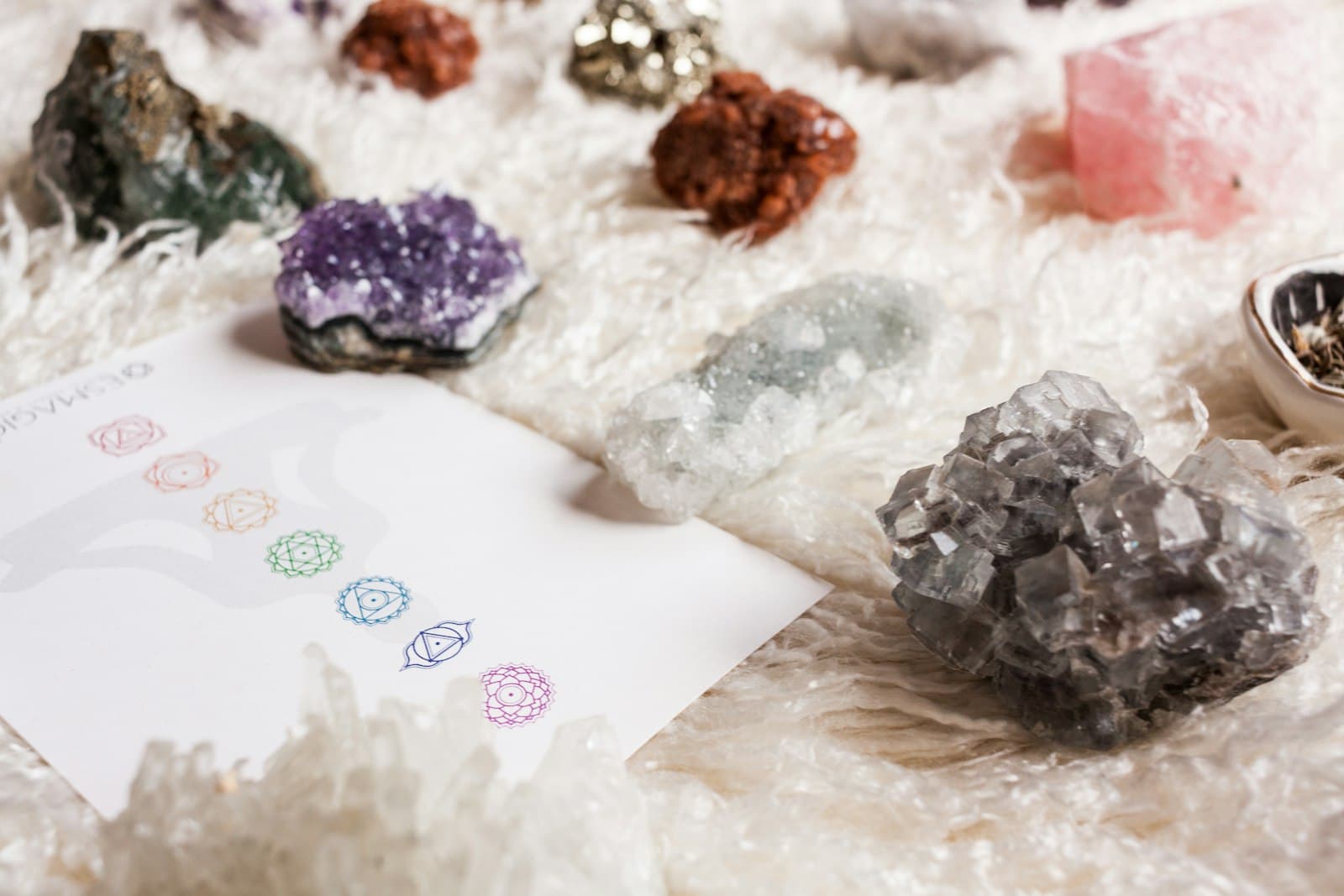
The modern format is familiar: a stone, a colour, a chakra, a set of qualities, a short instruction. It reads like a reference work distilling long tradition.
The historical record is considerably messier. Sources across cultures and centuries disagree about which stone does what, attribute contradictory properties to the same stone, and frequently describe stones that cannot be securely identified with anything sold today. Where the modern list gives a settled answer, the older material gives an argument.
The current standardisation came largely through twentieth-century publishing, and specifically through the New Age movement of the 1970s onward, which took older lapidary material, theosophical colour schemes and the by-then-popular chakra system, and produced something consistent enough to reprint.
Two crystal books agreeing is not evidence of an ancient tradition. It is evidence that they share a recent ancestor.
None of this means the older material is absent. It means the neat version is the newest layer, and the interesting content sits underneath it.
Colour did most of the work
The strongest pattern in the historical material, and once seen it is difficult to unsee.
Across many traditions, stones of similar colour attracted similar associations regardless of their composition.
Red stones were associated with blood, vitality, courage and heat. Garnet, carnelian, red jasper and ruby collected overlapping reputations despite being unrelated materials.
Green stones were associated with growth, vegetation, fertility and renewal. Emerald, malachite, jade and green jasper share this cluster.
Blue stones were associated with sky, water, calm and distance. Lapis lazuli, turquoise and sapphire again.
Black stones were associated with earth, night and boundaries, in various traditions protective and in others inauspicious.
Clear and white stones were associated with purity, light and clarity, which is close to a universal.
The implication is worth stating plainly. If a modern book tells you that a stone's properties come from its mineral composition or its crystal structure, notice that historically the association followed the colour, and stones of entirely different composition that happen to look alike were given the same meaning. That is a fact about how the symbolism was built.
Rarity, trade and where a stone came from
The economic layer, which is almost entirely absent from modern treatments and explains a great deal.
Scarcity conferred status. A stone available only through a long trade route was expensive, restricted to the wealthy, and accumulated reputation accordingly. Value and significance moved together.
Distance added mystery. Lapis lazuli reached the ancient Mediterranean and Egypt from a small number of sources in what is now Afghanistan, across enormous distances. Its prestige is inseparable from that journey.
Availability deflated meaning. When new deposits or new extraction methods made a stone common, its status generally fell. Amethyst is the standard example: historically ranked among the most precious stones, and considerably less exalted after large deposits were found and supply expanded.
That last point is the one to sit with. A stone's meaning changed because of mining economics. Whatever else the symbolic tradition is tracking, it is demonstrably responsive to supply.
How this is taught inside Astra Trainer
This is Crystal Traditions, one of twelve sub-topics in the Chakras and Energy direction of the Spiritual world, covering minerals, symbolism, history and cultural meanings.
It is taught as cultural history rather than as a properties list, which is consistent with the direction's stated aim of understanding energy language across cultures without supernatural claims. Lessons take about five minutes, and there is a discussion thread under every one.
The lapidary tradition
The genre the modern crystal book descends from, and knowing it exists reframes the whole category.
A lapidary is a text cataloguing stones and their supposed virtues. The form is ancient and was extremely productive in the medieval and early modern periods, in Europe, the Islamic world and elsewhere. These texts list stones, describe their appearance and origin, and attribute properties.
Three features of the genre are worth knowing.
They copied each other extensively. Later lapidaries reproduce earlier ones, including errors, which is how a single attribution could propagate for centuries and acquire the authority of consensus.
They mixed registers freely. A single entry might cover where a stone is found, how to test whether it is genuine, what it is worth, and what it protects against. Practical mineralogy and symbolic attribution sat in the same paragraph without apparent tension.
They were partly commercial. Information about identifying genuine stones and detecting imitations mattered to people buying and selling, and some of these texts served that audience directly.
The structural resemblance to a modern crystal book is exact: a list of stones with attributed properties, largely copied from predecessors, serving a market. The tradition is real and continuous. What it is a tradition of is cataloguing and attribution, not a body of verified findings.
Names have moved
The technical problem that makes historical crystal claims difficult to evaluate, and it is rarely mentioned.
Mineral names have shifted substantially over centuries. Historical sources often named stones by colour and appearance rather than by composition, because composition was not knowable. Several distinct minerals shared a name, and a single mineral went by several.
The clearest example is sapphire. In classical and medieval sources the word frequently refers to lapis lazuli rather than to the corundum gemstone the word denotes today. So a medieval attribution to sapphire may be an attribution to an entirely different material.
Two consequences.
Historical claims may not transfer. "The ancients believed sapphire did X" may be a claim about a different stone, and the modern book repeating it has usually not checked.
Modern trade names compound it. A good deal of material sold with evocative names is dyed, heat-treated, reconstituted or simply a common mineral renamed for sale. Anyone taking the subject seriously needs the mineralogy alongside the symbolism, which is exactly the combination most books omit.
How to read a crystal book
Four practical tests, all of which are about the book rather than the stones.
Does it say where a meaning came from? A book that attributes an association to a specific culture, period or text is doing history. One that states properties without provenance is copying.
Does it distinguish traditions? Chinese, Indian, Mesoamerican, European and Islamic sources treat stones differently. A book presenting one universal meaning has flattened all of them.
Does it mention the mineralogy? Composition, hardness, formation, common treatments and imitations. Their absence suggests the author did not consider the physical stone especially relevant.
Does it make health claims? This is the clearest signal. Any book claiming a stone treats, prevents or cures a condition has left cultural history entirely and is making a claim that no evidence supports.
No crystal treats any illness. There is no evidence that crystals or minerals have therapeutic effects on physical or mental health conditions, and this article makes no such claim. Crystals must never be used in place of medical care, and delaying proper treatment for a serious condition can cause real harm. Some minerals are genuinely hazardous to handle or should never be put in water, including materials containing lead, copper, asbestos or arsenic. For any health concern, see a qualified medical professional.
What to take from this
The tidy modern meaning list is a twentieth-century product, and the agreement between books reflects a shared recent ancestor rather than ancient consensus.
Colour drove most historical association, which is why unrelated minerals of the same shade carry the same reputation.
Scarcity and trade route shaped status, and amethyst's fall after new deposits were found shows the symbolism responding to supply.
The lapidary genre is the direct ancestor of the modern book, and its defining habits were copying and attribution.
And stone names have moved, so historical claims frequently concern a different mineral from the one now sold under that name.
Are crystal meanings ancient?
The practice of attributing properties to stones is genuinely ancient. The standardised lists in modern books are not; they were largely assembled in the twentieth century from older lapidary material, colour schemes and the chakra system.
Why do different stones have the same meaning?
Because historically colour drove the association more than composition did. Red stones of unrelated mineralogy collected overlapping meanings, as did green, blue and black ones.
What is a lapidary?
A text cataloguing stones and their supposed virtues, a productive genre in the medieval and early modern periods. They copied each other extensively, mixed practical and symbolic information, and are the direct ancestor of the modern crystal book.
Why did amethyst lose status?
Because supply increased. It was historically ranked among the most precious stones and became considerably less exalted once large deposits were found, which shows symbolic value responding to mining economics.
Do crystals have healing properties?
No evidence supports crystals treating, preventing or curing any condition, and this article makes no such claim. They should never replace medical care. Some minerals are also genuinely hazardous to handle or to place in water.