
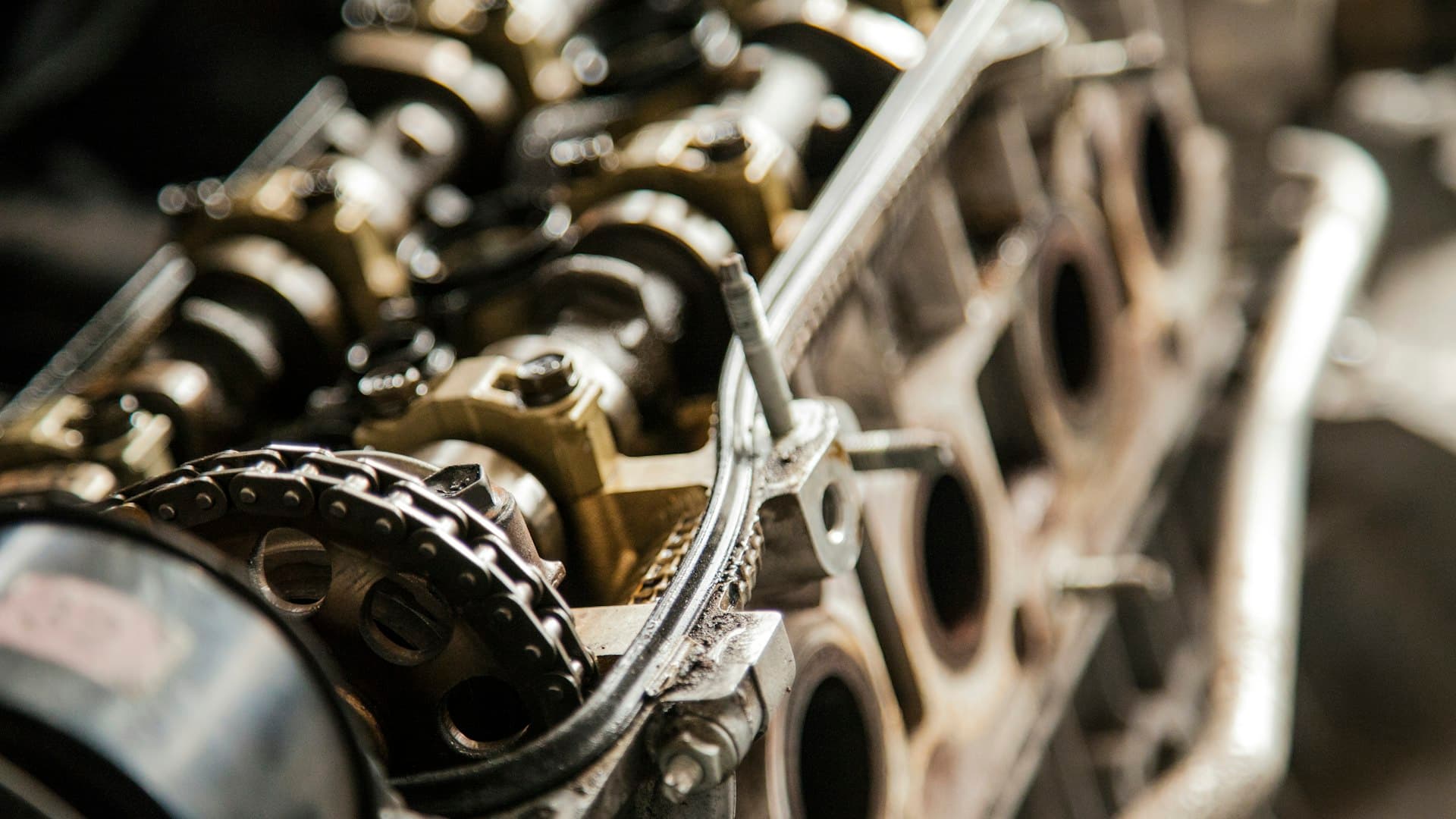
Mechanical engineering does not appear on lists of emerging fields, and it sits underneath most of them.
The base layer under four other domains
Read the other clusters in this section and the same conversion keeps appearing.
Robotics needs people who understand structures, actuation and stiffness. Aerospace needs structures, loads and thermal. Energy needs rotating machinery, heat transfer and pressure systems. Manufacturing needs processes, tooling and machine design. Materials needs someone who understands what the part is being asked to do.
Mechanical engineering is the discipline everything else assumes and almost nothing else teaches.
That has a specific workforce consequence. An organisation entering any of those fields frequently finds its constraint is not the specialist knowledge it thought it needed, but the mechanical foundation underneath it. Hiring a robotics specialist into a team that cannot design a fixture does not produce a working cell.
What the direction covers
The scope: mechanics and thermodynamics, machines, fluids, heat transfer and mechanical design.
Four areas.
Mechanics of materials and machine elements. Stress, deflection, fatigue, bearings, gears, fasteners and the components every machine is built from.
Thermodynamics and heat transfer. Energy conversion, cycles, conduction, convection and radiation. Underlies every energy and thermal management problem.
Fluid mechanics. Flow, pressure drop, pumps, fans and the behaviour of anything that moves through a pipe or over a surface.
Design and manufacture. Turning requirements into a part that can actually be made, assembled, maintained and paid for.
Where the capability gap actually shows up
Specific and consistent across industries, and rarely where people expect.
Tolerances and fits. Specifying dimensions with realistic tolerances, understanding how tolerances stack through an assembly, and knowing what a tight tolerance costs. Over-tolerancing is one of the most common and expensive habits in mechanical design, and it comes from uncertainty rather than from need.
Design for manufacture. Knowing what a machinist, a moulder or a fabricator can actually make, and at what cost. A design that is theoretically correct and awkward to produce fails commercially.
Design for assembly and maintenance. Whether a human can physically build it, and whether they can get a spanner to the bolt that needs replacing in service.
Failure modes. What breaks, how, and what it looks like beforehand. This connects directly to the metallurgy and corrosion directions in the materials domain.
Thermal and fluids intuition. A persistent and under-recognised shortage. Many mechanical engineers gravitate to structures, leaving thermal and fluid problems to a smaller group, at exactly the time when battery thermal management, data centre cooling and heat pump systems are all expanding.
Where this sits in the domain
Mechanical engineering is the first of six directions in Astra Trainer's engineering and built world domain, alongside civil, structural, architecture and building science, construction engineering and management, and urban planning and smart cities.
It is also the most cross-referenced direction in the whole section. Partners frequently scope it as foundational literacy before or alongside directions in robotics, advanced manufacturing, energy and materials, because those domains assume it. Lessons are five minutes, so working engineers build it without leaving project work. You can see the six directions here.
Simulation, and the judgement it does not supply
The most consequential change in mechanical engineering practice over the last two decades, and the one with the least-discussed downside.
Finite element analysis, computational fluid dynamics and multibody simulation are now available inside CAD packages, usable by engineers who have not studied the underlying numerical methods.
That is genuinely good. It also produces a specific failure mode.
The software always produces a result. A colourful stress plot appears whether or not the model, the loads, the constraints, the material properties or the mesh were appropriate.
Boundary conditions are where the errors live. How a part is constrained and loaded in the model is a modelling judgement, and a wrong assumption there produces a confidently wrong answer that looks identical to a right one.
Mesh and convergence matter. Results that change with mesh refinement are not results, and checking that is a habit rather than a step the software enforces.
Singularities produce infinite stresses. Sharp internal corners in a model generate stresses that rise without limit as the mesh refines, and reading those as real is a classic and common mistake.
The capability that matters is the ability to estimate the answer roughly before running the simulation, and to notice when the simulation disagrees. That is hand calculation and physical intuition, and it is the part being squeezed out of engineering education by the availability of the tools.
An organisation with analysts who can run software and cannot sanity-check it has bought confidence rather than capability, which is the same pattern as the medical AI and computer vision articles in other domains.
The roles, named
Design engineers. Product, machine and equipment design across every sector.
Stress and analysis engineers.
Thermal engineers. Short, and demand is rising with electrification and data centres.
Fluids and HVAC engineers.
Machine design engineers in special purpose machinery and automation.
Manufacturing and process engineers, which connects to the advanced manufacturing domain.
Maintenance and reliability engineers.
Test engineers. Physical validation, which is the check on everything above.
Who can be trained into it
Technicians and machinists. The strongest and most overlooked route. They know what can be made, how things go together and what fails, which is exactly the judgement layer engineering education is thinnest on. Adding the analytical foundation produces engineers with intuition rather than only method.
Maintenance engineers and technicians. See failures constantly, which is the fastest way to develop design judgement, and rarely get the theory.
Draughtspeople and CAD technicians. Already work in the design environment, often with strong practical knowledge, and a clear progression exists that organisations frequently do not offer.
Physics graduates. Strong fundamentals, needing the applied and manufacturing layers.
Engineers from other disciplines. Electrical and chemical engineers needing mechanical literacy to work in multi-disciplinary teams, which is the mechatronics point from the robotics domain.
Apprentice-trained engineers. Frequently hold unusually good practical breadth and are undervalued relative to graduates.
Where mechanical work is regulated. Design and inspection of pressure equipment, lifting equipment and machinery are governed by codes and regulation, with specific competence and certification requirements for design approval, inspection and sign-off. Professional engineering licensure applies in many jurisdictions for work affecting public safety. Training builds engineering understanding and supports those routes. It does not confer licensure, design approval authority or inspection certification.
What to take from this
Mechanical engineering is the foundation under robotics, aerospace, energy, manufacturing and materials, and the constraint in a new field is frequently this layer rather than the specialist one.
The gap is design judgement rather than analysis: tolerances, manufacturability, assembly, maintenance access and failure modes.
Thermal and fluids capability is short and getting shorter relative to demand from electrification and cooling.
Simulation became accessible faster than the judgement to check it, and the useful skill is estimating the answer before running the model.
And technicians, machinists and maintenance staff hold the practical half that education is thinnest on. They are the conversion with the best return.
Why does mechanical engineering keep appearing as a conversion route?
Because robotics, aerospace, energy, manufacturing and materials all assume it. Organisations entering those fields frequently discover the constraint is the mechanical foundation rather than the specialist knowledge.
What is the most common capability gap?
Design judgement rather than analysis. Realistic tolerancing, design for manufacture and assembly, maintenance access, and knowing what fails and how it looks beforehand.
What is the risk with accessible simulation?
The software always produces a result. Boundary conditions, mesh convergence and stress singularities are where errors live, and a confidently wrong answer looks identical to a right one.
Which specialism is most short?
Thermal and fluids. Many engineers gravitate to structures, while battery thermal management, data centre cooling and heat pumps are all expanding demand.
Who converts into mechanical engineering roles?
Technicians and machinists, who know what can be made and what fails; maintenance staff, who see failures constantly; and CAD technicians, who already work in the design environment.