
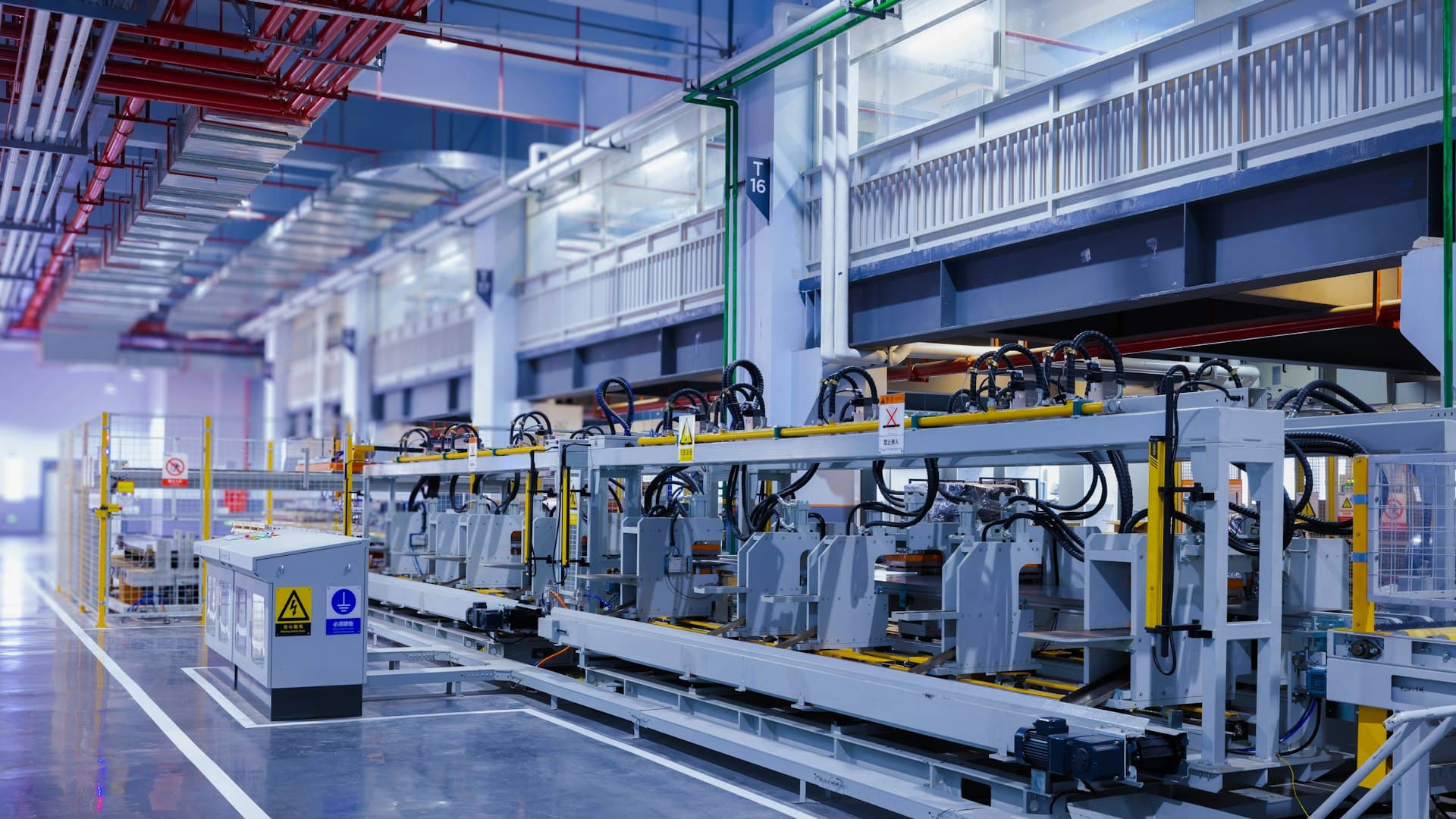
Manufacturing engineering is the least glamorous discipline in this domain and the one with the most leverage over margin.
Cost is decided upstream of the factory
By the time a product is in production, most of its cost is fixed. The material is chosen, the processes are selected, the tooling exists, the line is laid out and the cycle time is what it is.
Continuous improvement then works on what remains, which is real and bounded.
The factory can shave percentages. The decisions made before the factory existed set the number those percentages apply to.
This is why manufacturing engineering capability is a commercial question rather than a technical one, and why organisations that treat it as a support function rather than a design input pay for it in every unit they make.
What the direction covers
The scope: processes, equipment, planning and costing, and how production is organised.
Four areas.
Manufacturing processes. Machining, forming, joining, casting, moulding and finishing, and what each is good at, costs and constrains.
Process planning. Sequencing operations, selecting equipment, specifying fixtures and setting parameters.
Tooling and fixturing. Designing what holds and shapes the part, which is frequently the largest single engineering effort in a new product introduction.
Cost engineering. Understanding where cost comes from, estimating it before committing, and identifying where it can be removed.
The four decisions that lock in cost
Specific, because this is a direction that stays vague otherwise.
Process selection. Whether a part is machined, cast, moulded, formed or printed determines its cost curve against volume. A process that is cheapest at a hundred units is rarely cheapest at a hundred thousand, and the choice is frequently made at low volume and never revisited.
Tolerance specification. Tolerances drive cost non-linearly. Halving a tolerance can require a different process, a different machine or an additional operation. Over-tolerancing is the most common expensive habit in engineering, and it comes from uncertainty rather than requirement, which is the same point the mechanical engineering article makes from the design side.
Tooling strategy. Hard tooling is expensive upfront and cheap per part; soft tooling reverses that. Choosing wrongly for the actual volume and product lifetime is a mistake that cannot be undone once the tool is cut.
Line layout and flow. How material moves determines work in progress, floor space, handling cost and lead time. This is where the lean direction and this one meet.
Why design and manufacturing argue
The most consistent organisational dysfunction in manufacturing, and it is structural rather than personal.
The objectives differ legitimately. Design is measured on function, weight, performance and time to market. Manufacturing is measured on cost, yield and schedule. Both are doing their jobs.
The sequence is usually wrong. Design completes, then manufacturing is asked how to make it. By then the expensive decisions are already in the drawing, and manufacturing's input arrives as objection rather than contribution, which is why it is received badly.
The feedback loop is slow or absent. Problems found in production rarely travel back to the designers in a form that changes the next design, so the same issues recur across products.
Neither side has the other's knowledge. Designers are rarely taught what processes cost. Manufacturing engineers are rarely involved early enough to influence anything.
The fix is not a process document. It is manufacturing literacy among designers and design literacy among manufacturing engineers, which is a training intervention rather than a reorganisation.
Where this sits in the domain
Manufacturing engineering is the first of ten directions in Astra Trainer's advanced manufacturing domain, which runs through industrial automation and control, Industry 4.0, lean and Six Sigma, additive, quality and reliability, CAD/CAM and PLM, industrial IoT and digital twins, supply chain and production operations, and maintenance and asset management.
It pairs with the engineering and built world domain for the mechanical foundation, and with advanced materials, because process selection and material selection are the same decision approached from two sides. Lessons are five minutes, so engineers build it around launch schedules. You can see the ten directions here.
The roles, named
Manufacturing engineers. Process planning, tooling and production support.
Industrial engineers. Work study, layout, capacity and flow. Employment projected to grow about 11 percent to 2034.
Tooling engineers. Fixture, jig and die design. Persistently short.
Process engineers for specific technologies such as welding, moulding or machining.
Cost engineers and estimators. Small population, direct effect on margin.
New product introduction engineers. Bridging design and production, which is where the argument above gets resolved or does not.
CNC programmers. Turning a design into machine instructions, and closer to manufacturing engineering than the job title suggests.
Production engineers supporting the line day to day.
Who can be trained into it
Machinists and setters. The strongest conversion. They know what a process can actually hold, how long a setup takes and why a drawing is difficult, which is exactly the knowledge process planning needs and which cannot be learned from a textbook.
Toolmakers. Into tooling engineering, where their judgement about what can be made and how it will wear is directly applicable and genuinely rare.
Production supervisors. Know where the line actually loses time, which is the input industrial engineering most needs.
CNC programmers. A short step into process planning and manufacturing engineering.
Mechanical engineers. Need the process and cost layers, which engineering education covers thinly.
Quality inspectors. Understand what goes wrong and how often, which feeds process capability work.
Machinery and process hazards. Manufacturing environments carry machinery, thermal, chemical and pressure hazards governed by safety regulation, with requirements for guarding, energy isolation and competence for specific tasks. Some processes carry additional regimes, including welding fume, respirable dust and hazardous substances. Training builds engineering understanding and hazard awareness. It does not confer site authorisation, task-specific competence or permission to operate equipment.
What to take from this
Most product cost is committed before production begins, and continuous improvement works on the remainder.
Process selection, tolerances, tooling strategy and line layout are the four decisions that set the number.
Design and manufacturing argue because the sequence puts manufacturing's input after the expensive decisions, which turns contribution into objection.
The fix is mutual literacy rather than a process document, which makes it a training problem with a clear return.
And machinists, toolmakers and supervisors hold the practical judgement this role runs on. They are the conversion that works.
Where is manufacturing cost actually decided?
Before production starts, in process selection, tolerance specification, tooling strategy and line layout. Continuous improvement works on what remains after those decisions.
Why is over-tolerancing so expensive?
Because tolerances drive cost non-linearly. Halving a tolerance can require a different process, machine or additional operation, and tight tolerances are frequently specified from uncertainty rather than requirement.
Why do design and manufacturing conflict?
Their objectives differ legitimately, and the usual sequence means manufacturing is consulted after the expensive decisions are in the drawing, so its input arrives as objection rather than contribution.
Who converts into manufacturing engineering?
Machinists and setters, who know what a process can hold and why a drawing is difficult; toolmakers into tooling engineering; production supervisors into industrial engineering; and CNC programmers into process planning.
Where does this fit in the domain?
First of ten directions in Astra Trainer's advanced manufacturing domain, pairing with mechanical engineering and advanced materials. You can see them here.