
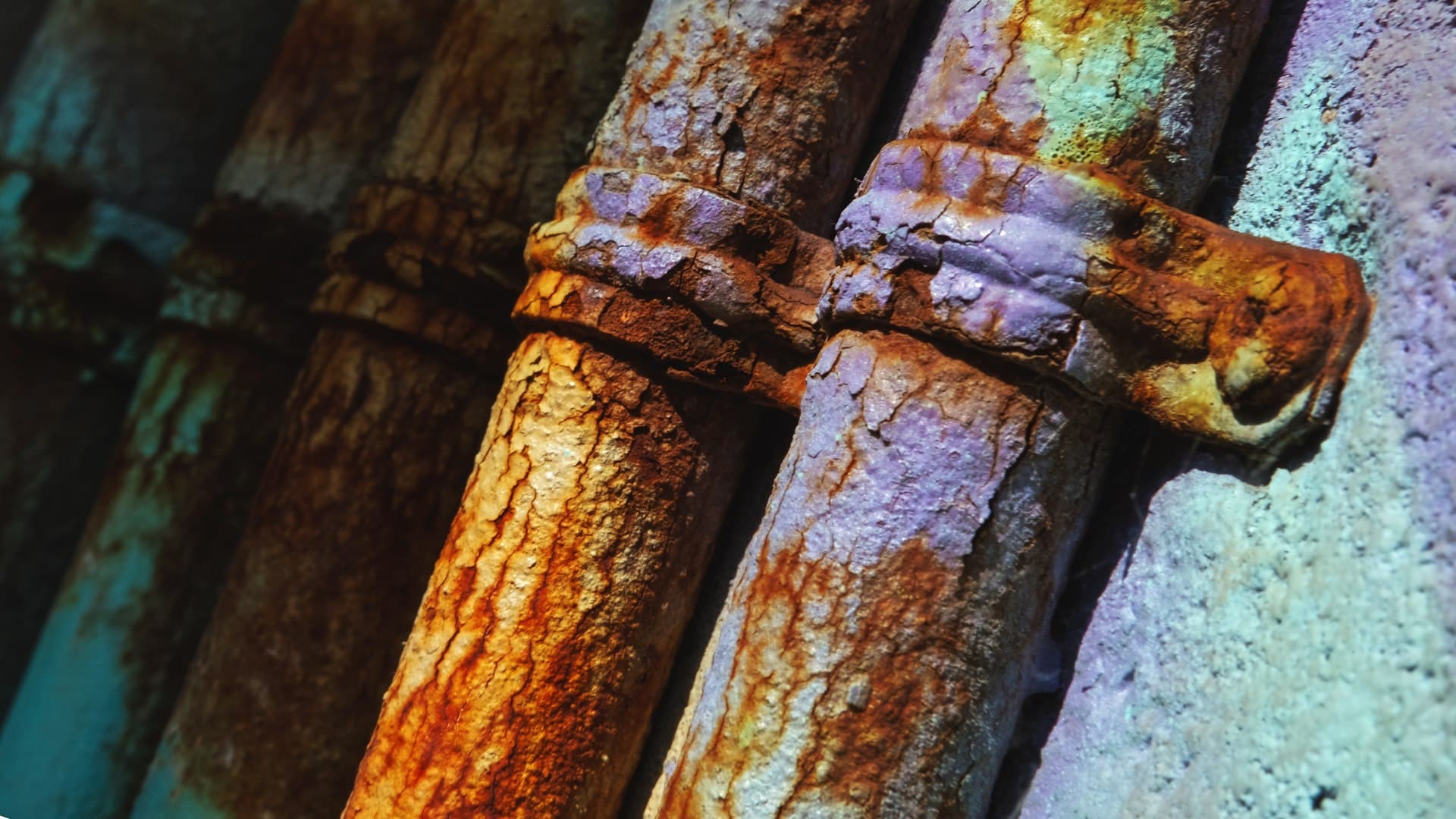
Corrosion has the unusual property of being both enormously expensive and almost never named as a line item.
A cost recorded under other names
When a pipe is replaced, it is maintenance. When a bridge needs strengthening, it is refurbishment. When a plant shuts down early, it is an outage. When a heat exchanger fouls and efficiency drops, it is energy cost.
All of those are frequently corrosion, and because none of them is recorded as corrosion, the aggregate is invisible to the people allocating budget.
The organisation spends the money either way. The only question is whether it spends it on prevention, where it is planned, or on replacement, where it is not.
Two structural consequences follow, and both are workforce consequences.
Prevention is undervalued. Spending on materials selection, coatings and monitoring shows up as cost, while the failures it avoided never appear at all. This is the same attribution problem as the training measurement article in the hub cluster, and it has the same answer: measure the proximate indicator rather than claiming the avoided catastrophe.
The expertise is thin. Corrosion engineering is a small specialism with an ageing population, and organisations frequently have none, relying instead on contractors who sell coatings.
What the direction covers
The scope: coatings and wear, degradation, corrosion prevention and the protection of assets.
Four areas.
Corrosion mechanisms. The electrochemistry underneath, and the specific forms it takes.
Materials selection and design. Choosing materials and designing geometry so corrosion is less likely, which is cheaper than any treatment.
Protection methods. Coatings, cathodic protection, inhibitors, and control of the environment.
Monitoring and inspection. Knowing what is happening inside an asset before it fails.
The failure modes that surprise people
General uniform corrosion, metal thinning evenly, is the version most people picture and the least dangerous, because it is visible and predictable.
The ones that cause failures are localised.
Pitting. Small deep pits in an otherwise sound surface, often in stainless steels in chloride environments. Very little metal lost, and a through-wall perforation.
Crevice corrosion. Under gaskets, washers, deposits and in joints, where stagnant conditions develop. Design creates crevices, and corrosion finds them.
Galvanic corrosion. Two different metals in electrical contact in an electrolyte, and the less noble one corrodes faster. This is a design decision. A fastener chosen for convenience can consume the structure around it, and the consequence appears years after the designer has moved on.
Stress corrosion cracking. A susceptible material, a specific environment and tensile stress together produce cracking, when none of the three alone would. Like environmental stress cracking in polymers, it passes tests conducted separately.
Erosion corrosion and cavitation. Flow removes protective films, exposing fresh metal continuously. Common at bends, valves and pump impellers.
Microbiologically influenced corrosion. Bacteria creating local conditions that drive attack, which is where this direction meets microbiology.
The common feature: minimal general metal loss, sudden failure, and an inspection regime measuring wall thickness that finds nothing until it is too late.
Where this sits in the domain
Surface engineering and corrosion is the tenth of eleven directions in Astra Trainer's advanced materials domain, drawing on metallurgy for alloy behaviour, ceramics and nanotechnology for coatings, and energy materials for hydrogen embrittlement and electrochemistry.
Partners with physical assets typically scope it with the advanced manufacturing domain, where maintenance and asset management, and quality engineering and reliability cover the inspection regime, and with energy, climate and nuclear for pipelines, offshore and plant. Lessons are five minutes, which suits inspection and maintenance crews. You can see the eleven directions here.
Coatings, which fail at the preparation stage
The most consistently useful practical finding in the field.
When a protective coating fails early, the cause is overwhelmingly surface preparation rather than the coating product.
Surface cleanliness. Oil, salt, dust and old coating residue prevent adhesion. Soluble salt contamination is a particular problem because it is invisible and draws moisture through the coating afterwards.
Surface profile. Coatings need a specified roughness to key into. Too smooth and adhesion is poor, too rough and peaks stand proud of the film.
Application conditions. Temperature, humidity and dew point all affect curing, and applying outside the specified window produces a film that looks right and performs badly.
Film thickness. Too thin gives inadequate protection, too thick can crack. Edges, welds and corners are where thickness is hardest to achieve and where failures start.
The workforce point: the person who determines whether a coating system works is the blaster and the applicator, not the specifier. An organisation buying coatings without competent inspection is buying appearance.
Why this matters more as infrastructure changes
Three developments increase the demand for this capability.
Ageing assets. Much industrial and civil infrastructure is operating beyond its original design life, and life extension decisions require knowing the real remaining condition.
New energy infrastructure. Offshore wind structures in seawater, hydrogen systems facing embrittlement, carbon capture systems handling wet acidic gas streams. Each brings environments the existing corrosion knowledge base is still extending into.
Material substitution. Lightweighting and decarbonisation drive material changes, and new combinations create galvanic couples and environments nobody has decades of experience with.
The roles, named
Corrosion engineers. Small population, high leverage, frequently absent entirely.
Cathodic protection specialists. Design and monitoring for pipelines, tanks and marine structures. A certified specialism.
Coating inspectors. Certified roles with established schemes, and the people who actually determine coating outcomes.
Materials selection engineers in plant and infrastructure design.
Inspection engineers and integrity engineers. Risk-based inspection and fitness-for-service assessment.
Surface treatment and thermal spray engineers.
Tribologists. Wear, friction and lubrication, a related and even smaller specialism.
Asset integrity managers. Where this meets the maintenance and asset management direction.
Who can be trained into it
Coating applicators, blasters and painters. The most natural route and the one with a real career structure attached, since coating inspection certification schemes provide a recognised progression. They already understand application in practice.
Inspection technicians. Non-destructive testing and visual inspection staff, into integrity and corrosion roles.
Maintenance engineers and technicians. See the consequences constantly and can move from replacing to preventing.
Metallurgists and materials engineers. Need the electrochemistry and the environmental specificity.
Chemists. Into inhibitor and water treatment chemistry, which is a substantial part of corrosion control in process plants.
Marine and offshore staff. Live with the most aggressive corrosion environment there is.
Certification and hazard. Coating inspection, cathodic protection and non-destructive testing operate under recognised personnel certification schemes with examination and experience requirements, and integrity assessment of pressure equipment is governed by codes. Surface preparation and coating work carries respirable dust hazards including crystalline silica, solvent exposure, confined space entry and work at height. Training builds technical understanding and prepares people for certification routes. It does not confer certification or authorisation to approve an asset as fit for service.
What to take from this
The cost is large and invisible because it is booked under maintenance, replacement and downtime, which is why prevention is systematically underfunded.
The dangerous forms are localised and fail suddenly with almost no general metal loss, so an inspection regime measuring wall thickness can find nothing until it is too late.
Galvanic corrosion is a design decision whose consequences appear years later, after the designer has gone.
Coating failures are surface preparation failures, so the blaster and inspector determine the outcome more than the specifier does.
And painters, blasters and inspection staff are the natural entry route, with certification schemes that give it a genuine career structure.
Why is corrosion cost invisible?
Because it is recorded as maintenance, replacement, outage or energy cost rather than as corrosion. The aggregate never appears anywhere, so prevention looks like pure cost.
Which corrosion types cause failures?
Localised forms: pitting, crevice corrosion, galvanic attack, stress corrosion cracking, erosion corrosion and microbiologically influenced corrosion. They fail suddenly with minimal general metal loss.
Why do protective coatings fail early?
Almost always surface preparation: cleanliness, soluble salt contamination, incorrect profile, application outside the specified temperature and humidity window, or inadequate thickness at edges and welds.
Who can move into corrosion roles?
Coating applicators and blasters first, with certification schemes giving a clear progression, followed by inspection technicians, maintenance staff and chemists into inhibitor and water treatment work.
Where does this fit in the domain?
Tenth of eleven directions in Astra Trainer's advanced materials domain, usually scoped with maintenance and asset management in advanced manufacturing. You can see them here.