
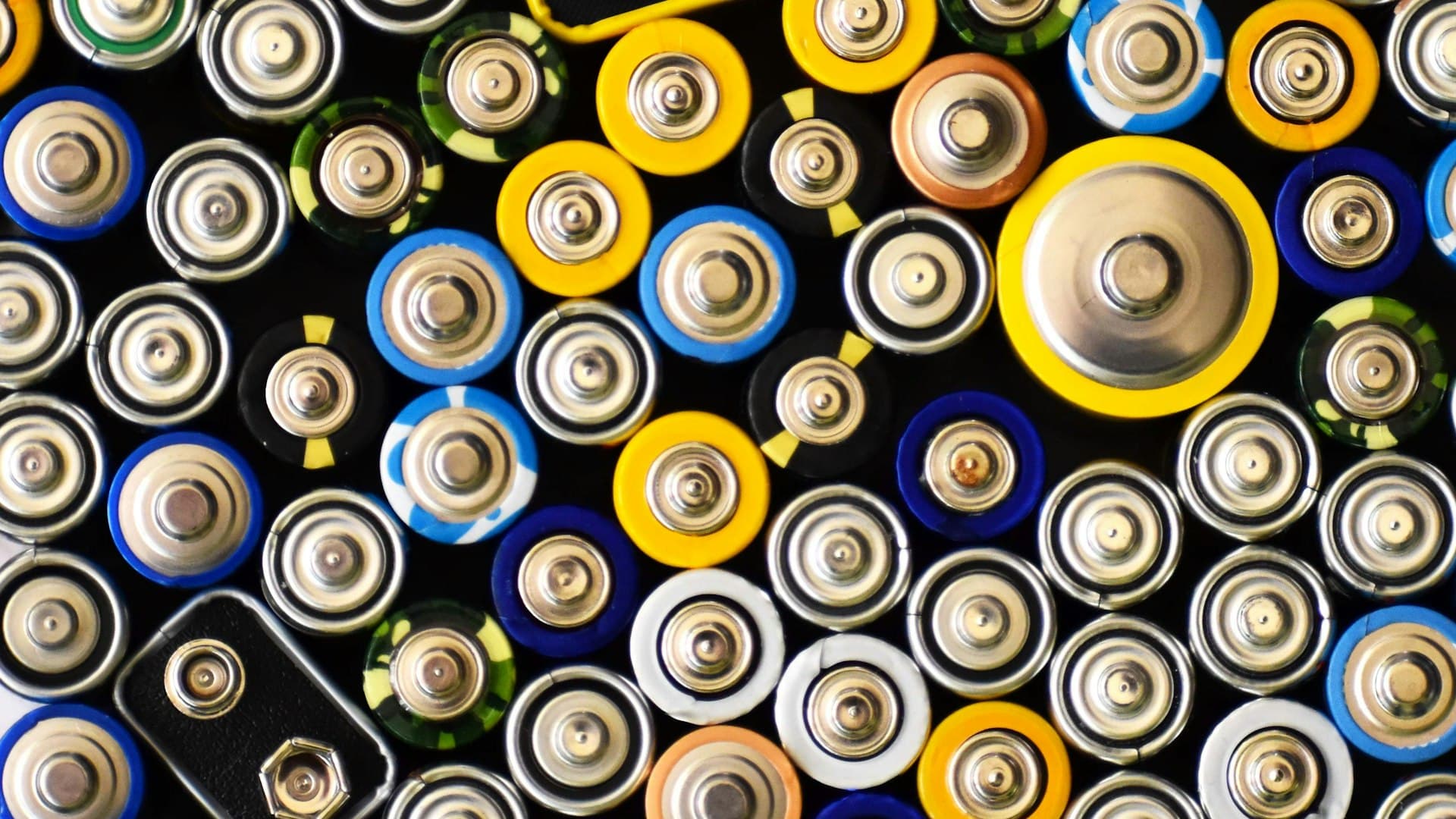
Energy materials is where the transition either works economically or does not, and the deciding factor is rarely the discovery of a new compound.
Everyone knows the chemistry
The main lithium-ion chemistries are published, studied and broadly understood. So are the leading alternatives. Chemistry is not usually the moat.
What separates a cell manufacturer that succeeds from one that does not is making the same cell, to the same specification, millions of times, with defect rates low enough for a product that stores a large amount of energy in a small space.
A battery factory is a coating and assembly operation with extreme cleanliness requirements. The chemistry is the easy part to acquire.
Four manufacturing variables carry most of the outcome.
Electrode coating uniformity. Active material is coated onto foil. Thickness variation causes local differences in current density, which produces uneven ageing and localised degradation.
Contamination. Metallic particles in a cell can cause internal short circuits, which is a safety problem rather than a quality one. Cleanliness requirements approach those of some semiconductor processes.
Moisture control. Electrolytes and electrode materials are moisture sensitive, so assembly happens in dry rooms with very low humidity, which is expensive and unforgiving.
Formation. The first charge cycles form a layer on the electrode that determines the cell's whole life, and this step is slow, energy intensive and a substantial fraction of factory cost.
What the direction covers
The scope: batteries, solar cells, hydrogen materials, catalysts and energy storage.
Four areas.
Electrochemistry and battery materials. Cathodes, anodes, electrolytes, separators, and how each contributes to energy, power, life and safety.
Photovoltaic materials. Silicon and thin film cells, and emerging materials including perovskites.
Catalysts. For hydrogen production, fuel cells and industrial processes, which links to industrial biotechnology and chemical processing.
Materials for hydrogen. Storage, and the embrittlement problem that constrains using existing infrastructure.
Degradation is the product specification
The most important reframing in this direction.
A battery is not sold on its performance when new. It is sold on how it performs after years of cycling, which means the engineering problem is degradation.
Four mechanisms that matter commercially.
Interface layer growth. The protective layer formed during first charge continues to grow slowly, consuming lithium and increasing resistance. Most calendar ageing traces here.
Lithium plating. Under fast charging or low temperature, lithium can deposit as metal rather than intercalating. It reduces capacity and, in the worst case, can create internal short circuits. This is the central constraint on fast charging.
Particle cracking. Active material expands and contracts with cycling, and particles crack, exposing fresh surface and accelerating degradation.
Thermal effects. Elevated temperature accelerates nearly every degradation mechanism, which is why thermal management is a cell-level design concern rather than a packaging afterthought.
The workforce implication: the people who improve a battery product are those who understand degradation mechanisms and can connect a field failure or a capacity fade curve back to a cause. That capability is scarcer than cell design capability.
Where this sits in the domain
Energy materials is the ninth of eleven directions in Astra Trainer's advanced materials domain, drawing on ceramics for solid electrolytes, nanotechnology for electrode and catalyst structures, surface engineering for coatings and interfaces, and critical minerals for the supply chain underneath all of it.
It pairs with the energy, climate and nuclear domain, which covers energy storage and battery technology, hydrogen and fuel cells, and renewable energy engineering, and with advanced manufacturing for the factory layer. Cell manufacturing partners usually need all three. You can see the eleven directions here.
Beyond batteries: catalysts, solar and hydrogen
Three areas in the same direction, each with a specific constraint worth naming.
Catalysts. Central to hydrogen production by electrolysis, to fuel cells and to industrial chemistry. The recurring problems are cost, since several effective catalysts rely on scarce platinum group metals, and durability, since catalysts degrade and poison in real operating conditions rather than in laboratory ones. Reducing precious metal loading while maintaining activity and lifetime is the live engineering problem.
Photovoltaics. Silicon dominates and is a mature, cost-optimised manufacturing business where incremental efficiency and cost matter. Perovskites have achieved impressive laboratory efficiencies and their constraint is stability: degradation under heat, moisture and light exposure over the decades a module must survive. Anyone planning a workforce around them should know that the open question is lifetime, not efficiency.
Hydrogen materials. Storage is difficult because hydrogen has low volumetric energy density, and containment materials face hydrogen embrittlement, which degrades many metals. This is a materials constraint on using existing gas infrastructure and it connects directly to the metallurgy and corrosion directions.
The roles, named
Battery materials scientists. Cathode, anode and electrolyte development.
Cell design engineers.
Electrode coating process engineers. The role that most determines factory yield, and consistently short.
Battery manufacturing engineers and technicians. The largest population as gigafactory capacity grows.
Cell testing and characterisation specialists. Cycling, ageing studies and failure analysis.
Battery safety and abuse testing specialists. A regulated and hazardous specialism.
Catalyst scientists and engineers.
Photovoltaic process engineers in cell and module manufacturing.
Recycling process engineers for battery materials recovery, linking to critical minerals.
Who can be trained into it
Coating and printing industry staff. The least obvious and one of the strongest conversions. Electrode manufacturing is a precision coating operation, and people from printing, converting and web coating understand uniformity, tension control and defect detection at speed. Battery companies routinely overlook them.
Pharmaceutical and food manufacturing staff. Cleanliness discipline, humidity control and batch documentation all transfer to dry room operations.
Chemists and electrochemists. Into materials development and testing.
Chemical engineers. Into process scale-up and factory design.
Semiconductor fab staff. Contamination control and thin film experience transfer, particularly to photovoltaic manufacturing.
Automotive manufacturing staff. Into cell and pack assembly, where volume manufacturing discipline is the relevant asset.
Serious hazards, and why supervised experience is not optional. Battery materials work involves flammable electrolytes, reactive lithium compounds and cells capable of thermal runaway, which produces intense fire and toxic gas. Abuse testing is a specialised activity requiring dedicated facilities. Hydrogen work carries flammability and embrittlement risks, and several catalyst and photovoltaic materials are toxic. Training builds scientific and process understanding and hazard awareness. It does not substitute for site-specific safety authorisation, facility qualification, or the supervised experience these operations require.
What to take from this
The chemistry is widely known. Making it uniformly, cleanly and at scale is the differentiator, and a cell factory is a precision coating operation.
Degradation is the real product specification, and the scarce capability is connecting a capacity fade curve or a field failure back to a mechanism.
Catalyst cost and durability, perovskite stability, and hydrogen embrittlement are the three named constraints in the rest of the direction, and each is a materials problem rather than a concept problem.
Coating and printing staff are the conversion nobody makes, and pharmaceutical manufacturing staff bring the dry room discipline.
And the hazards here are severe enough that supervised experience is part of competence rather than an addition to it.
Is battery development mainly about new chemistry?
No. The main chemistries are widely understood. The differentiator is manufacturing: electrode coating uniformity, contamination control, moisture control and the formation step that determines cell life.
Why does degradation matter more than initial performance?
Because batteries are sold on lifetime. Interface layer growth, lithium plating, particle cracking and thermal effects determine what the product is actually worth, and connecting field data back to a mechanism is the scarce skill.
What limits perovskite solar cells?
Stability rather than efficiency. Laboratory efficiencies are impressive; degradation under heat, moisture and light over the decades a module must survive is the open question.
Who converts into battery manufacturing?
Coating, printing and web converting staff, who understand precision coating at speed and are routinely overlooked. Pharmaceutical and food manufacturing staff bring cleanliness and humidity discipline for dry rooms.
Where does this fit in the domain?
Ninth of eleven directions in Astra Trainer's advanced materials domain, pairing with the energy, climate and nuclear domain and with advanced manufacturing. You can see them here.