
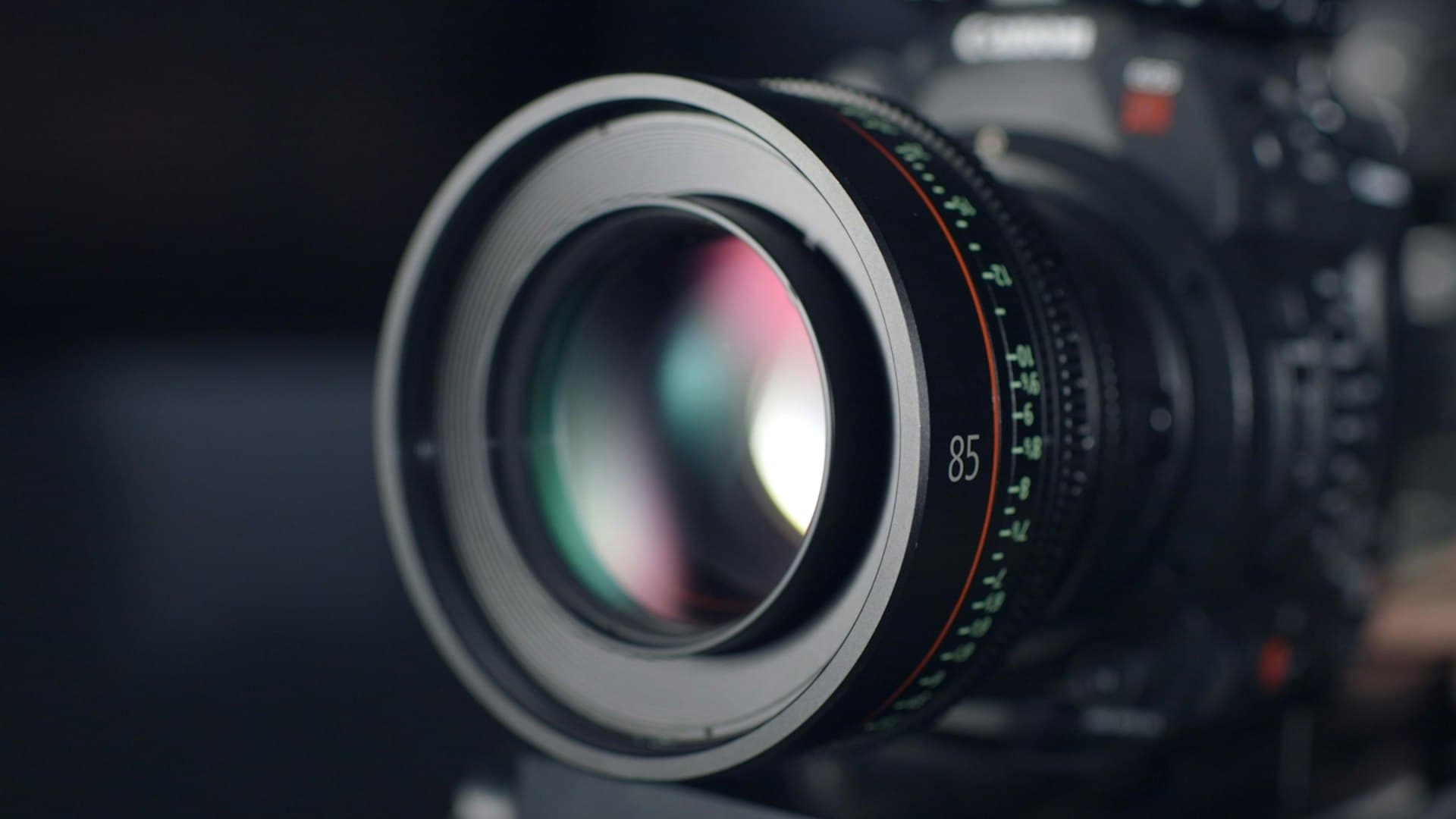
Computer vision has improved enormously and the failure rate of industrial vision projects has not fallen nearly as much, which tells you where the difficulty actually is.
The problem is upstream of the model
The instinct when a vision system underperforms is to improve the algorithm. In industrial settings that is usually the wrong lever.
Illumination is the primary variable. What you can see depends on how the object is lit. Backlighting, diffuse lighting, directional lighting, structured light and specific wavelengths each make different features visible. A defect invisible under one arrangement is obvious under another, and the difference is far larger than any algorithmic improvement.
Optics and geometry matter as much. Resolution at the part, depth of field, working distance, perspective. If the defect is smaller than a pixel, no model finds it.
Part presentation. If the object arrives at a consistent position and orientation, the problem becomes far easier. Fixturing is frequently cheaper than modelling.
A great deal of what gets solved with a neural network could have been solved with a different light and a fixture, faster, cheaper and more reliably.
This reverses the usual hiring instinct. The scarce capability is not another machine learning engineer. It is someone who can set up a scene so the information you need is actually in the image.
What the direction covers
The scope: cameras and image processing, object recognition, spatial awareness and sensor fusion.
Four areas.
Imaging fundamentals. Cameras, sensors, lenses, lighting and the physics of getting a usable image. The part that decides everything downstream.
Classical image processing. Filtering, thresholding, edge and blob analysis, template matching, calibration. Deterministic, explainable, fast, and sufficient for a large share of industrial tasks.
Learned methods. Detection, segmentation and classification, for problems that resist explicit description.
3D and sensor fusion. Stereo, structured light, time of flight and lidar, plus combining vision with other sensing, which is what feeds the autonomy directions later.
Worth noting for scoping: classical methods remain the correct answer for many industrial applications, because they are deterministic and their failure modes are predictable. A team that reaches for learning on every problem will build something harder to validate than it needed to be.
Why a good demo becomes a bad deployment
Five specific mechanisms, all of which are foreseeable.
Lighting drifts. Lamps age and dim. Daylight changes through the day and the season. A system commissioned in winter behaves differently in July. Controlled, enclosed illumination is the standard mitigation and it is frequently skipped for cost.
The scene gets dirty. Lenses accumulate dust, oil and coolant mist. Performance degrades gradually, so nobody notices until it is bad.
The product changes. A new supplier, a slightly different finish, a different batch colour. The system was tuned on what existed then.
Vibration and positioning drift. A camera mount that moves slightly changes the geometry the calibration assumed.
The training data was not representative. Collected over a short period, under good conditions, without the variation the line actually produces.
All five are distribution shift, the same phenomenon described in the medical AI article in this section. A system learns the conditions it was built in, and the conditions change.
The workforce consequence is that ongoing monitoring is a permanent staffing requirement rather than a project task, and that someone has to own performance after commissioning.
Where this sits in the domain
Computer vision and machine perception is the fifth of nine directions in Astra Trainer's robotics and autonomous systems domain. It sits underneath autonomous vehicles and drones, which depend on perception, and alongside industrial robotics, where vision-guided picking and inspection are the two most common applications.
For partners staffing this from the software side, the AI, data and computing domain covers artificial intelligence and machine learning, and data science and analytics. The pairing that actually works is imaging and optics capability plus machine learning capability, and organisations usually have the second. You can see the nine directions here.
Inspection, and the base rate problem again
The most common industrial application and the one where performance claims are most often misread.
Defect inspection is a rare-event problem. In a well-run process, defects are uncommon, and that changes what any accuracy figure means.
If defects occur rarely and the system flags a small percentage of good parts as defective, the flagged pile will be mostly good parts. The system can have excellent stated accuracy and still generate mostly false alarms, which leads operators to stop trusting it and eventually to ignore it.
This is exactly the base rate issue from the epidemiology article, and it applies with full force here.
Three practical consequences.
Ask for performance at the real defect rate, not on a balanced test set. A vendor demonstration on a dataset with equal good and bad parts tells you almost nothing about line behaviour.
Decide which error is worse and tune for it. Missing a defect and rejecting a good part have different costs, and that is a business decision rather than a technical one.
Data collection is the binding constraint. Learned inspection needs many examples of each defect type, and a good factory does not produce many defects. Teams routinely underestimate how long it takes to accumulate a usable defect library, and this is the single most common reason inspection projects stall.
The roles, named
Machine vision engineers. Industrial vision, encompassing optics, lighting and application. The scarce combination.
Vision system integrators. Specifying and commissioning systems on real lines.
Computer vision engineers. More software-oriented, in autonomy and product development.
Imaging and optics engineers. Specialists in the part that decides the outcome.
Data annotation leads. Managing the labelling that learned systems depend on, which is more consequential than its status suggests.
Quality engineers with vision capability. Connecting inspection to the quality system.
Perception engineers in autonomous systems, which is where this meets the vehicle and drone directions.
Vision maintenance technicians. Keeping systems performing after commissioning, and almost never planned for.
Who can be trained into it
Quality inspectors. The most overlooked pool. They know what a defect looks like, which defect types matter, how they vary and which ones are cosmetic versus functional. That knowledge is exactly what a vision project needs and what a machine learning engineer cannot supply, and it is the part that takes years.
Controls and automation engineers. Already integrate sensors into production systems and need the imaging layer.
Photographers and imaging technicians. An unusual conversion and a genuinely good one, because they understand lighting and optics intuitively, which is the half most software teams lack.
Software engineers. Into the algorithmic side, needing the physical layer: that the image is a measurement with noise, geometry and illumination baked into it.
Maintenance technicians. Into keeping deployed systems working, which is where the value leaks away.
Metrology and measurement staff. Already think in calibration, repeatability and measurement uncertainty, which transfers directly.
Where vision carries safety or regulatory weight. Vision used as a safety function, for example presence sensing in a machinery guarding application, must meet functional safety requirements and cannot be assembled from general-purpose components without meeting those standards. Vision-based inspection in regulated production, including pharmaceutical and medical device manufacturing, requires validation under the applicable quality system. Training builds engineering understanding. It does not confer functional safety certification or validation authority.
What to take from this
Most industrial vision problems are solved at the light, the lens and the fixture, not in the model, and that reverses the usual hiring instinct.
Classical methods are deterministic and sufficient for many industrial tasks, so reaching for learning on every problem creates validation difficulty you did not need.
Deployed systems degrade through lighting drift, dirt, product change, mount movement and unrepresentative training data. All five are foreseeable, and monitoring is a permanent role.
Defect inspection is a rare-event problem, so ask for performance at the real defect rate and expect data collection to be the constraint.
And your quality inspectors hold the defect knowledge the whole project depends on. Photographers, oddly, hold the other half.
Why do industrial vision projects fail?
Usually upstream of the algorithm. Illumination, optics and part presentation determine whether the information you need is in the image at all, and no model recovers information that was never captured.
Should we always use machine learning?
No. Classical image processing is deterministic, fast and explainable, and it is sufficient for a large share of industrial tasks. Learned methods are for problems that resist explicit description, and they are harder to validate.
Why does a good demo fail on the line?
Lighting drifts, lenses get dirty, products change, mounts move, and training data rarely captures real variation. It is the same distribution shift that affects any deployed model.
Why is defect inspection accuracy misleading?
Because defects are rare in a good process. A system with high stated accuracy can still flag mostly good parts, which destroys operator trust. Ask for performance at the real defect rate.
Who converts into vision roles best?
Quality inspectors, who know what defects actually look like and which matter, and photographers or imaging technicians, who understand lighting and optics. Metrology staff transfer directly on calibration and uncertainty.