

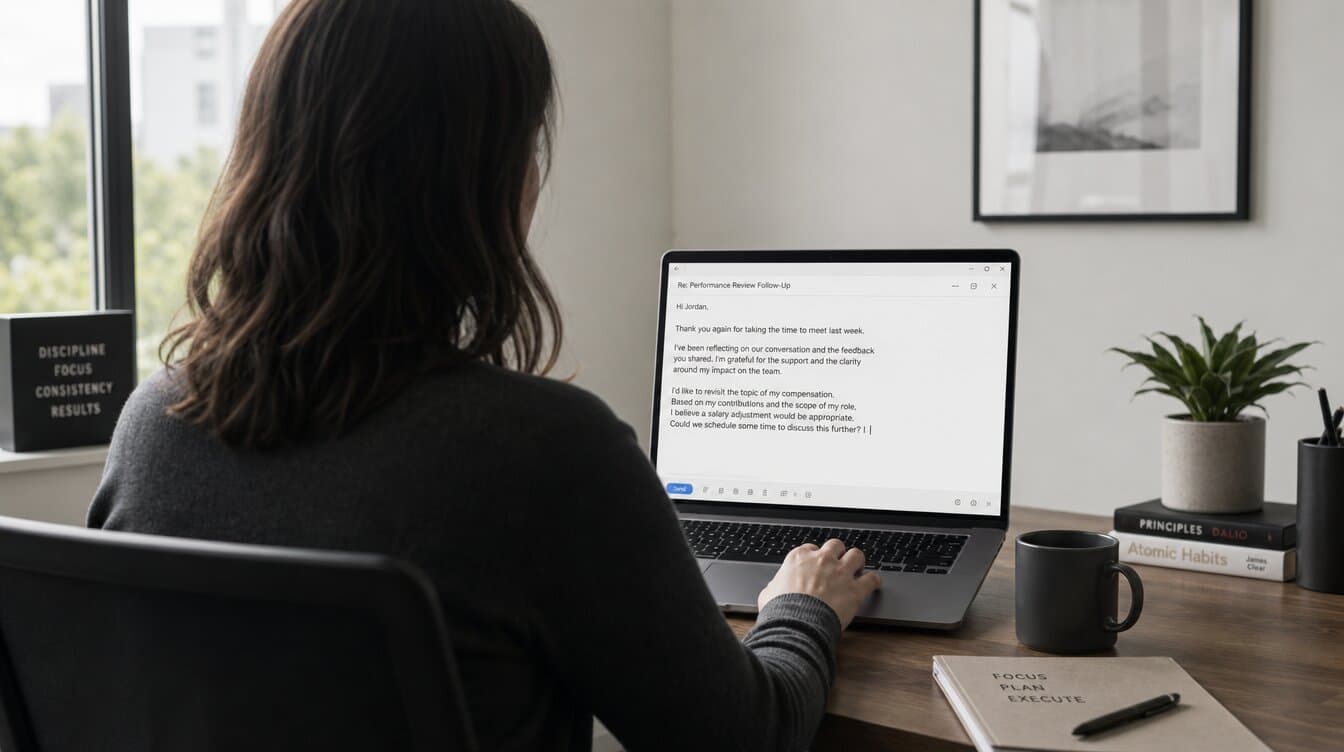
You said yes. Maybe out loud on a call, maybe in a quick reply email, and now that it's done, the number you agreed to feels smaller than it did in the moment of relief. You're wondering if the window closed the second you said "sounds great" — and whether going back now makes you look flaky, greedy, or both.
That regret is common, and it usually shows up for a predictable reason: relief at finally having an offer makes almost any number feel acceptable in the moment, and it's only once the adrenaline settles that the actual figure gets weighed clearly against what you know you're worth.
It's usually not too late, and going back doesn't automatically make you look bad. The core principles that got you this far are the same ones covered in Negotiation Skills 101. Negotiating a job offer covers the ideal window — before you've said yes at all — but if that window already closed, this is about what's actually still possible from here.
Is it actually too late to negotiate after you've said yes?
No, not usually. A verbal acceptance is a strong signal of intent, not a binding contract, and companies understand that candidates sometimes need to revisit a detail after the initial relief of getting an offer settles into a clearer-eyed look at the numbers.
That said, your leverage has genuinely shifted. Before you said yes, the company was still actively choosing between you and its other options. Once you've accepted, they've usually stopped that process and started planning around you starting. That doesn't mean the door is shut — it means the ask needs to be smaller, more specific, and framed carefully.
It also helps to be honest with yourself about why you didn't negotiate the first time. If it was simple relief or not knowing what to say, that's fixable. If it was a genuine, informed decision that the offer was fair and only started to feel small after comparing notes with a friend, that's worth weighing more carefully before reopening things.
Does it matter whether you've signed anything yet?
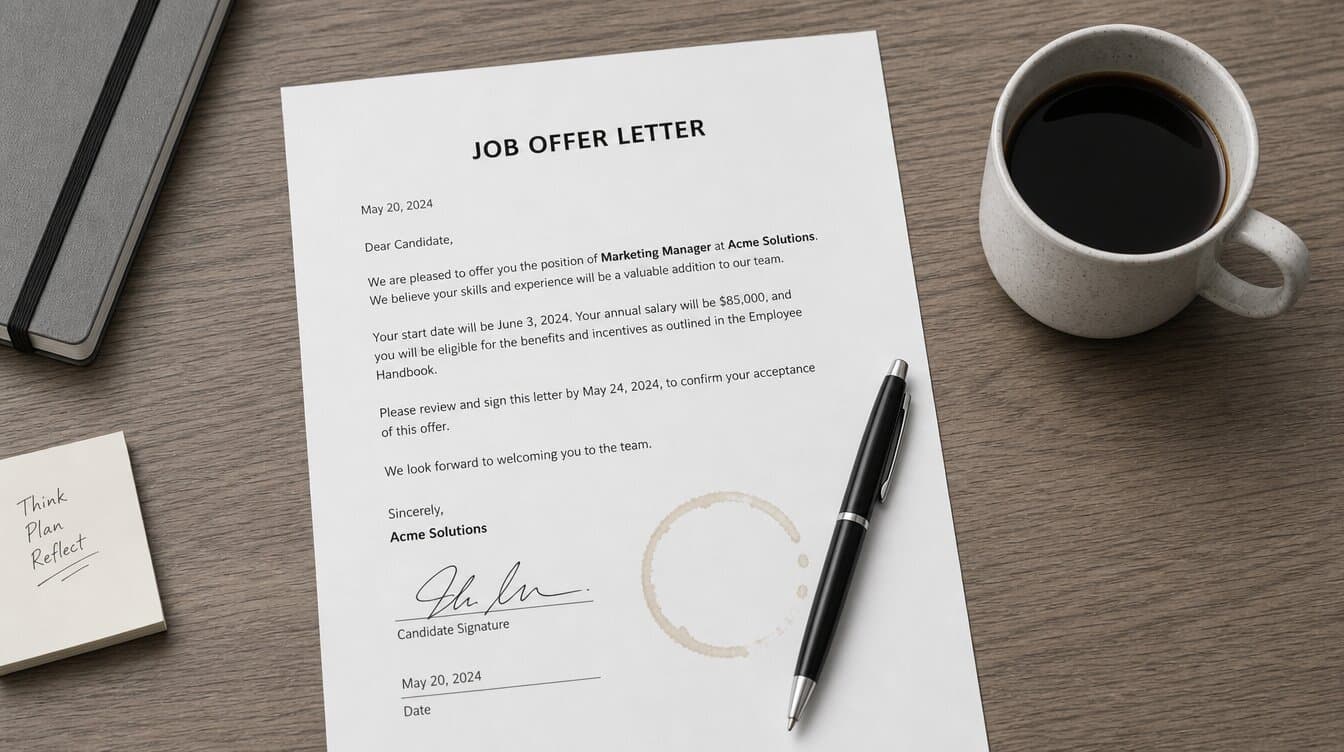
Yes, meaningfully. A verbal yes with no signed paperwork is the most flexible version of this situation — nothing formal has been exchanged, and revisiting a number is closer to a normal continuation of the conversation than a reversal. A signed offer letter or contract is a firmer commitment, and reopening the topic afterward carries more weight.
The earlier you go back, the more it reads as "still finalizing details." The later you go back, the more it needs a genuinely good reason attached to it.
Will reopening the conversation make you look bad?
Rarely, if it's done calmly, briefly, and without drama. Companies negotiate compensation constantly and generally don't read one additional, well-framed request as a character flaw. What tends to land badly isn't the act of asking again — it's asking again repeatedly, or attaching threats or ultimatums to a request that started out reasonable.
The tone you bring matters as much as the content: a calm, appreciative follow-up reads very differently than one that implies you feel shortchanged or misled, even if the actual words are similar.
Check yourselfYou accepted two days ago and now want to revisit the base salary. Before you read on: should the message acknowledge that you already said yes, or open as though this is a fresh conversation?Show the answerHide the answer
Acknowledge it, briefly and without apologizing. Trying to disguise that you're reopening something already agreed rarely works, and a short, direct acknowledgment reads better than the pretense. Name what changed since you accepted, keep the ask to one thing — the base — and ask for a short conversation rather than arguing it in writing.
How do you reopen the conversation without it feeling awkward?
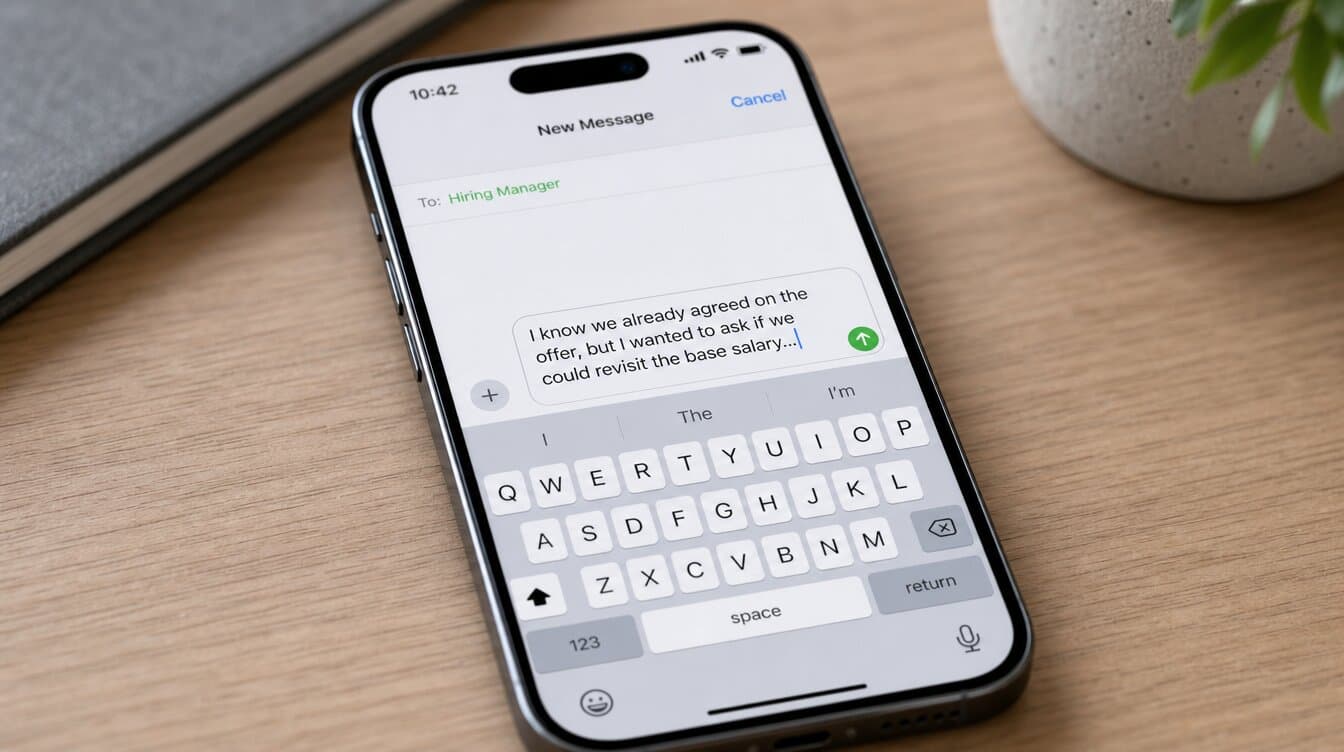
Reopen it briefly, own the timing honestly, and keep the ask specific rather than vague. Trying to disguise the fact that you're revisiting something already agreed rarely works — a direct, short acknowledgment is more effective than pretending this is a fresh conversation.
"I wanted to follow up on the compensation we discussed — since accepting, I've had a chance to look more closely at market data for this role, and I'd like to revisit the base salary specifically. Would you be open to a quick conversation?"
This names what changed, keeps the ask narrow, and doesn't pretend the earlier agreement didn't happen. For more on the underlying language this is built on, a full salary negotiation script covers the broader toolkit.
Before you send the message, check these
Ticked: 0 of 5
All five and the request is an ordinary piece of business. Any item you cannot tick is usually the one that would make the conversation land badly.
What if they say no now that you've already agreed?
Accept it gracefully and move forward without letting it sour the start of the role. A no at this stage is more common than a yes, precisely because your leverage has shifted since you accepted, and pushing harder after a clear no tends to do more damage than the original ask was worth.
Asking again after you've said yes is a real option, not a guaranteed win — and knowing that going in makes a no easier to absorb without it feeling like a personal failure.
If the answer is no, it's worth asking when the topic can reasonably be revisited — a review cycle, a specific milestone — so the conversation has a natural next chapter instead of ending on a flat refusal with nowhere to go.
What to do next
Saying yes too quickly isn't a mistake you have to live with silently. In most cases, there's still room to go back, especially if nothing is signed yet, as long as the ask is specific, calm, and honest about the timing. It won't always work, but the fear that the window closed the second you said yes is usually bigger than the reality.
Test yourself
Question 1 of 3
You said yes on Friday and signed the offer letter on Monday. It is now Wednesday and you want to revisit the base. What has changed?
Is it actually too late to negotiate after you've said yes?
No, not usually. A verbal acceptance is a strong signal of intent, not a binding contract. Your leverage has shifted, so the ask needs to be smaller and more carefully framed, but the door isn't closed.
Does it matter whether you've signed anything yet?
Yes. An unsigned verbal yes is the most flexible version of this situation. A signed offer letter carries more weight and needs a genuinely good reason to reopen — new market information, not just a change of feeling.
Will reopening the conversation make you look bad?
Rarely, if done calmly and once. What damages your standing isn't asking again — it's asking repeatedly or attaching threats to a request that started out reasonable.
What if they say no after you've already accepted?
Accept it gracefully. A no at this stage is more common than a yes since your leverage has shifted. Ask when the topic can reasonably be revisited rather than pushing past a clear no.