

You know you're supposed to negotiate. You've read that much. What nobody hands you is the actual sentence to say when the number lands and the room goes quiet and it's your turn to respond. So you say "sounds great," and the moment passes, and you spend the drive home rewriting the conversation you should have had.
This article is that sentence, and the ones that come after it. Every script below is built to be adapted, not recited word for word — the goal is to give you a working structure and real phrasing you can shape around your own situation, not a script to memorize like lines in a play. Negotiation Skills 101 covers the underlying principles — BATNA, interests versus positions, why this feels so uncomfortable — if you want the theory first. Here, we're skipping straight to the words.

What should you say to open a salary negotiation?
Open by asking for the conversation, not by launching straight into a number. A simple, low-friction opener works better than a dramatic one:
"Thank you for the offer — I'm excited about this. Before I confirm, I'd like to talk through the compensation. Do you have a few minutes this week?"
This does two things. It signals genuine interest, which matters because employers are more flexible with candidates they believe are close to yes. And it separates "asking to negotiate" from "negotiating," which lowers the stakes of the first message. You're not making demands in a text — you're requesting a conversation, which almost nobody refuses.
If you're already in the room and the number has just been said out loud, a good bridge is:
"Thank you — can I take a moment to respond properly, rather than react on the spot?"
That single sentence buys you the pause most people skip, and pausing before responding is worth more than anything clever you could say in the moment.
Avoid leading with an apology ("sorry, I know this is awkward") or a justification for even asking ("I hope this doesn't sound greedy"). Both signal that you expect to be told no, and counterparts calibrate their flexibility to how much resistance they expect from you.
How do you justify asking for more?
You justify it with evidence, not emotion — market data, your specific contributions, or a comparison to a documented range, stated plainly and without apologizing for saying it.
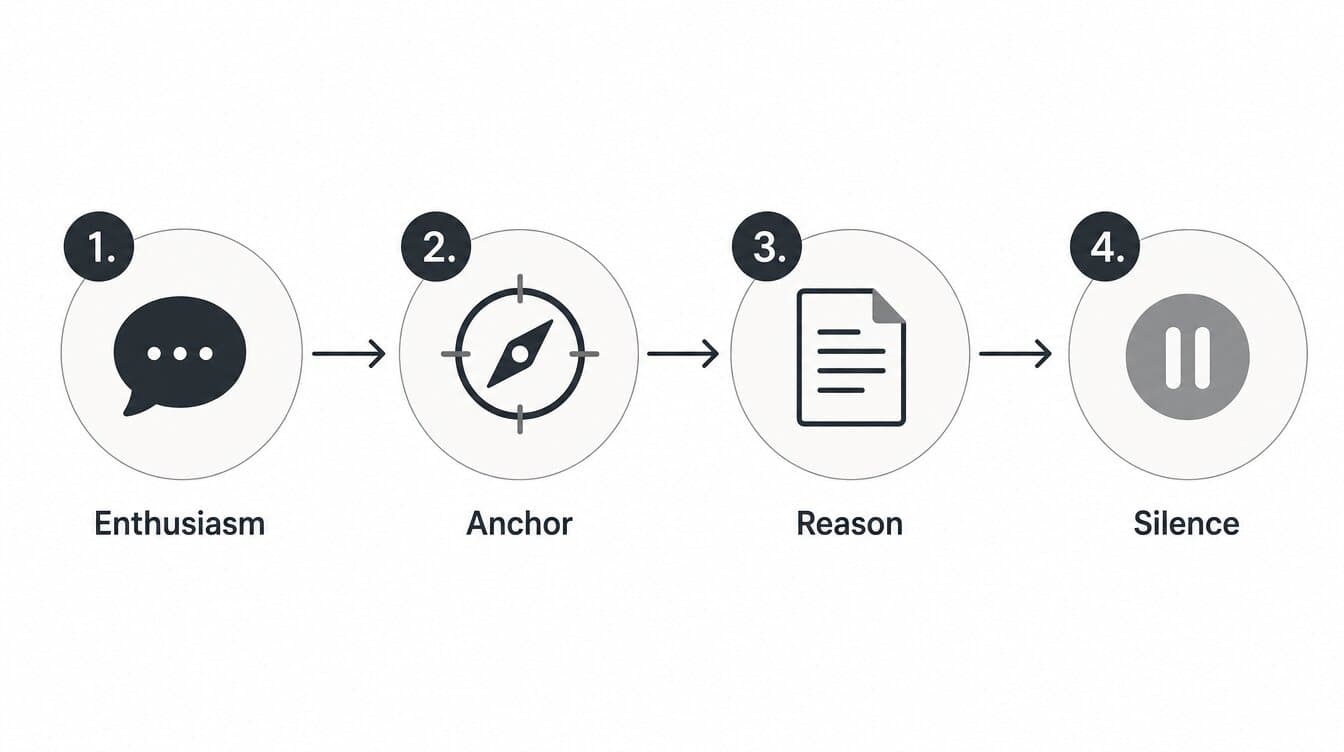
Here's the sequence that tends to work, in order:
- 1State your enthusiasm first. "I'm genuinely excited about this role and the team" — said before any ask, this frames what follows as a negotiation between two people who both want the deal to happen, not a confrontation.
- 2Name your number, anchored to something external. "Based on what similar roles are paying in this market, I was expecting something closer to $X." External anchoring works because it moves the conversation from "what do you personally think you deserve" to "what does this role objectively cost."
- 3Add one specific reason, briefly. "Given the scope of this role includes [specific responsibility], I think that number reflects it fairly." Keep this to one sentence. A long justification reads as pleading; a short one reads as confidence.
- 4Stop talking. After you've stated the number and the reason, let the silence sit. This is the single hardest step and the one most people skip by immediately softening their own ask.
Silence after an ask is not awkwardness to fill. It's the moment doing its job.
What do you say when they push back?
You label the pushback out loud before responding to it — a technique borrowed from hostage negotiation, where naming what the other person is feeling defuses their defensiveness before you even get to your counter. The psychology of negotiation and what hostage negotiators can teach us covers this in more depth, but the short version applies directly here.
If they say the number is high, try:
"It sounds like that's outside what you were expecting to offer — can you help me understand the constraint?"
This does two things at once. It names their position without conceding yours, and it turns their pushback into information you can actually use, rather than a wall you have to climb over.
If they counter with a lower number, resist the instinct to immediately accept or immediately restate your original ask. A middle move works better:
"I appreciate you moving on that. Is there room to meet somewhere between the two, or is there flexibility elsewhere — signing bonus, review timeline, title — that could close the gap?"
This reopens the conversation onto more variables instead of treating salary as the only lever, which is often where the actual room to negotiate was hiding.
One more common form of pushback is a flat, unexplained no: "That's just not something we can do." Rather than backing down or repeating your ask louder, try turning it into a question about process rather than a dead end:
"I understand — is that a policy limit, or is there someone else who'd have visibility into more flexibility?"
This isn't confrontational, and it does something useful: it either surfaces a real constraint you can work within, or it reveals that the "no" was more of a default answer than a hard rule.
What if they say the budget is fixed?
Treat "the budget is fixed" as information about one specific number, not as the end of the entire conversation. Compensation is rarely a single line item — it usually includes base, bonus, equity, start date, vacation, remote flexibility, and title, and "fixed" almost never applies to all of them at once.
A useful response:
"I understand the base is set. Is there flexibility on signing bonus, start date, or an earlier compensation review, since those seem to sit outside the base band?"
This is exactly the situation negotiating pay without a competing offer is built around — when your leverage isn't a rival offer, it comes from finding the variables that aren't actually fixed, and asking about them specifically rather than accepting the first "no" as final.
If the answer is genuinely no across the board, ask directly:
"Understood — when would it make sense to revisit this, and what would need to be true for that conversation to go differently?"
This converts a flat no into a concrete future checkpoint, which costs you nothing to ask for and often gets granted precisely because it feels so reasonable.
Check yourselfYou and the employer have agreed a number out loud and the conversation is winding down. Before you read on: what does the article say to do before you say yes?Show the answerHide the answer
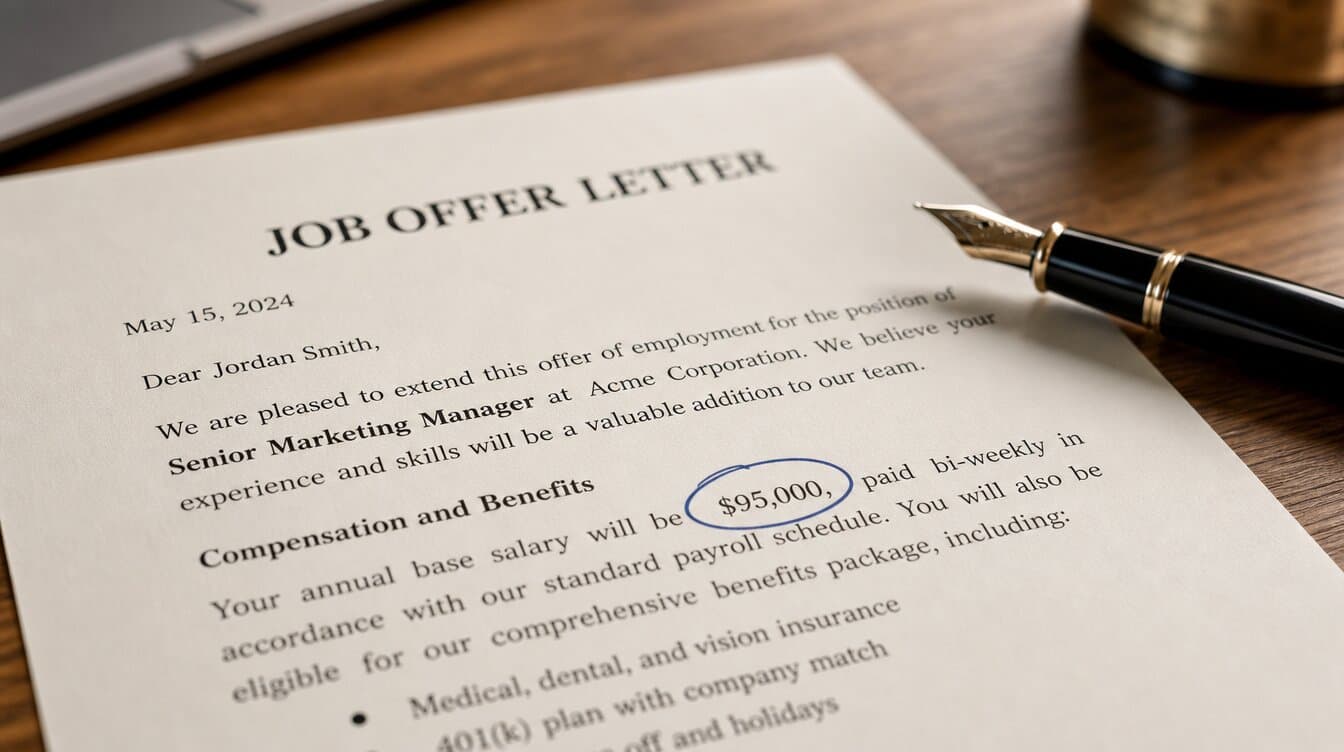
Confirm the whole package in writing, base, bonus structure and start date, and ask for it plainly, because requesting it is standard practice rather than distrust. Then close warm whether or not you got everything you asked for: you are about to spend years with these people, and how you negotiated is remembered about as long as what you negotiated.
How do you close the negotiation once you have a number?
Close by confirming the full package out loud or in writing before you say yes, and by leaving the conversation warm regardless of the outcome — you'll likely work with these people, and how you negotiate is remembered as much as what you negotiated.
A clean close sounds like:
"That works for me. Can you send over the confirmed offer with the base, bonus structure, and start date so I can review it in writing?"
Getting it in writing isn't distrust — it's standard practice, and asking for it signals that you take the process seriously.
If you didn't get everything you asked for, it's worth closing with something that keeps the door open rather than something that reads as resigned:
"I appreciate you working with me on this — I'm looking forward to getting started."
That line costs nothing and preserves the relationship you're about to spend years inside.
Decide, before you close, whether an unmet ask is worth revisiting later or worth letting go entirely. Not every gap needs to be reopened at the next review — some are better left behind so the relationship starts on solid footing rather than a running tally of what you didn't get.
What if the negotiation happens over email instead of in person?
Slow down even more than you would in person, because email strips out tone, and a request that would sound calm and confident out loud can read as cold or demanding in text if it's too terse.
A workable email opener:
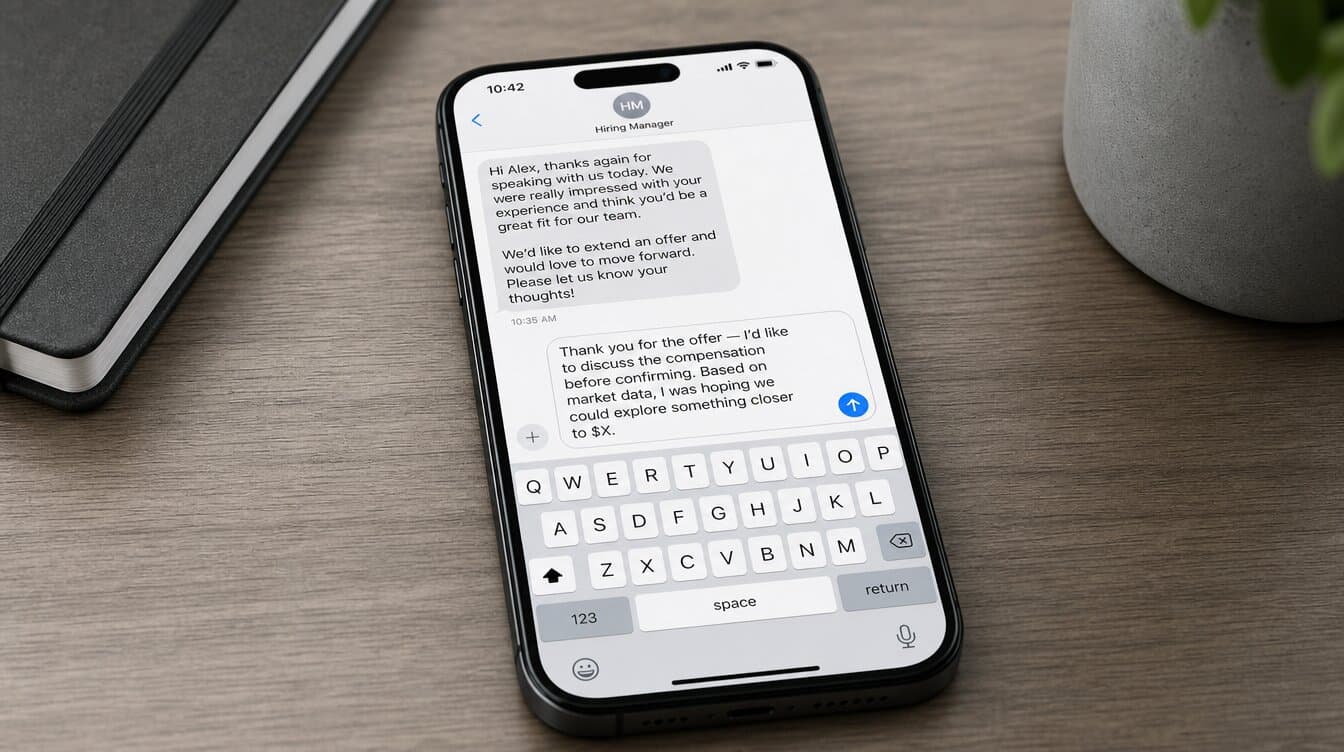
"Thank you for the offer — I'm excited about the opportunity. I'd like to discuss the compensation before confirming. Based on market data for similar roles, I was hoping we could explore something closer to $X. Would you be open to a quick call to talk through it?"
Two email-specific habits matter more than they would face to face. First, always ask for a call rather than negotiating the whole thing over email — a live conversation surfaces flexibility that a written back-and-forth tends to flatten into a series of fixed positions, which is exactly the trap common salary negotiation mistakes covers in more depth. Second, keep your written asks specific and few — one clear number, one clear reason, one clear question — rather than a long list, since a long email invites a long, noncommittal reply.
There's also a timing consideration specific to email that doesn't come up in person: response speed. Replying within a day signals genuine interest and keeps momentum on your side; waiting a week can read as hesitation, even if you're simply busy. If you need more time to think, say so explicitly rather than going quiet — a short "I'd like a couple of days to review, could I follow up by Thursday?" costs nothing and prevents the silence from being misread.
If putting any of this into words at all feels disproportionately hard — not just uncomfortable but genuinely difficult to make yourself do — that's a common enough experience that it has its own patterns worth understanding, covered in salary negotiation for women and the confidence gap that isn't really about confidence.
Run through this before the conversation
Ticked: 0 of 6
The fourth item is the one most people skip under pressure. Anything unticked is worth ten minutes now rather than improvisation in the moment.
What to do next
None of these lines are magic. They work because each one does a specific job: lowering the stakes of asking, anchoring to something external, naming resistance instead of fighting it, and leaving room to keep talking instead of accepting the first no. Read them over before your next conversation, adjust the specifics to your situation, and say them out loud once before you need them for real — rehearsed words come out steadier than words you're inventing under pressure.
Test yourself
Question 1 of 3
The number is said out loud on the call, and then the room goes quiet and it is your turn. What does the article recommend you say?
What should you say to open a salary negotiation?
Ask for the conversation, not the number directly: 'I'd like to talk through the compensation before I confirm — do you have a few minutes this week?' This signals genuine interest and separates asking to negotiate from negotiating itself, which lowers the stakes of the first message.
How do you justify asking for more money?
With evidence, not emotion, in this order: state your enthusiasm first, anchor your number to external market data, add one specific reason briefly, then stop talking. Silence after the ask is the hardest and most important step — it's not awkwardness to fill, it's the moment doing its job.
What do you say when they push back on your salary ask?
Label the pushback before responding to it: 'It sounds like that's outside what you expected — can you help me understand the constraint?' If they counter with a lower number, ask about other variables like signing bonus or review timeline instead of only re-litigating the base number.
What if they say the budget is fixed?
Treat it as information about one line item, not the whole conversation. Ask about signing bonus, start date, or an earlier compensation review — 'fixed' rarely applies to every part of the package. If the answer is genuinely no everywhere, ask when it would make sense to revisit.
How do you close a salary negotiation once you have a number?
Confirm the full package in writing before saying yes, and leave the conversation warm regardless of outcome. 'Can you send over the confirmed offer so I can review it in writing?' Getting it in writing is standard practice, not distrust.
How is negotiating salary over email different?
Slow down more than in person, since email strips out tone. Always ask for a call rather than negotiating fully in writing — live conversation surfaces flexibility that email flattens into fixed positions. Keep written asks specific and few, and reply within a day to signal genuine interest.