

Psychology & Mind
Why you repeat what you repeat — habits, self-sabotage, and the patterns running underneath, and how to change them.
Learn this in the app — the Psychology & Mind world →
How to Set Boundaries Without Making Them Rules
How to set boundaries that hold: what a boundary is and is not, why it is kept by your own actions, and how to stay steady when someone pushes back on it.
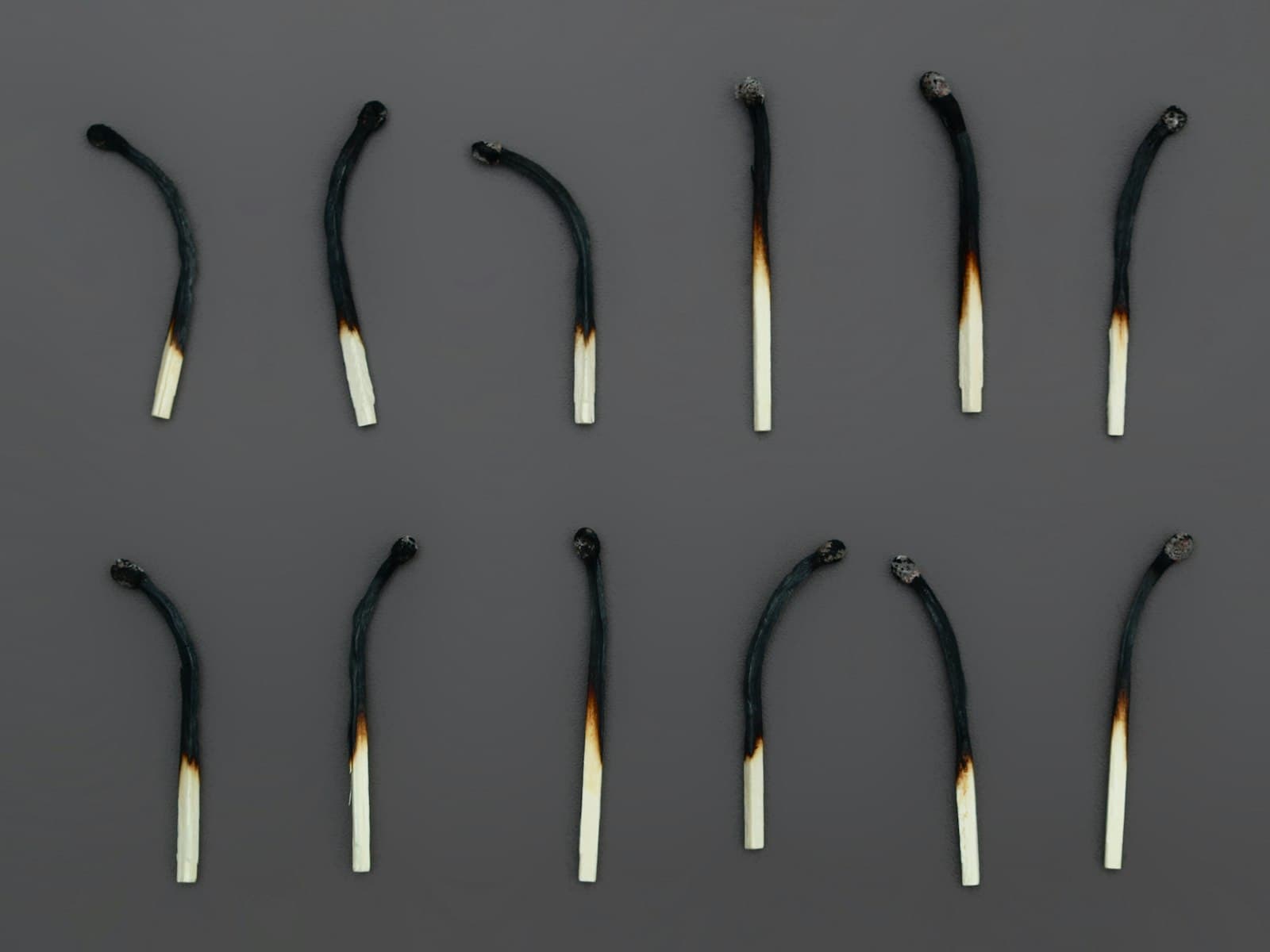
Burnout Symptoms: What the WHO Definition Actually Says
Burnout symptoms as the WHO defines them: exhaustion, cynicism about work and reduced efficacy. Where the idea came from, and how it differs from depression.

Why Do I React Before Thinking? The Actual Sequence
Why do I react before thinking? Because the reaction arrives first and the explanation arrives second. That order changes what you can do about it.

Why Criticism Hurts More Than Praise
Why criticism hurts more than praise: nine people liked it, one did not, and you are thinking about the one. The asymmetry is documented and has a mechanism.

Why Am I a People Pleaser? Where It Comes From
Why am I a people pleaser? It is not kindness and not a disorder. It is a learned strategy that worked once, with costs that accumulate quietly.

The Intention Action Gap: Why Deciding Is Not Doing
The intention action gap is wider than people assume. The reliable fix is not more commitment but deciding in advance exactly when and where you will act.

How to Say No Without Guilt, or Three Days of Dread
How to say no without guilt is not about finding the words. It is the two seconds before them, when the automatic yes fires. Here is what interrupts it.
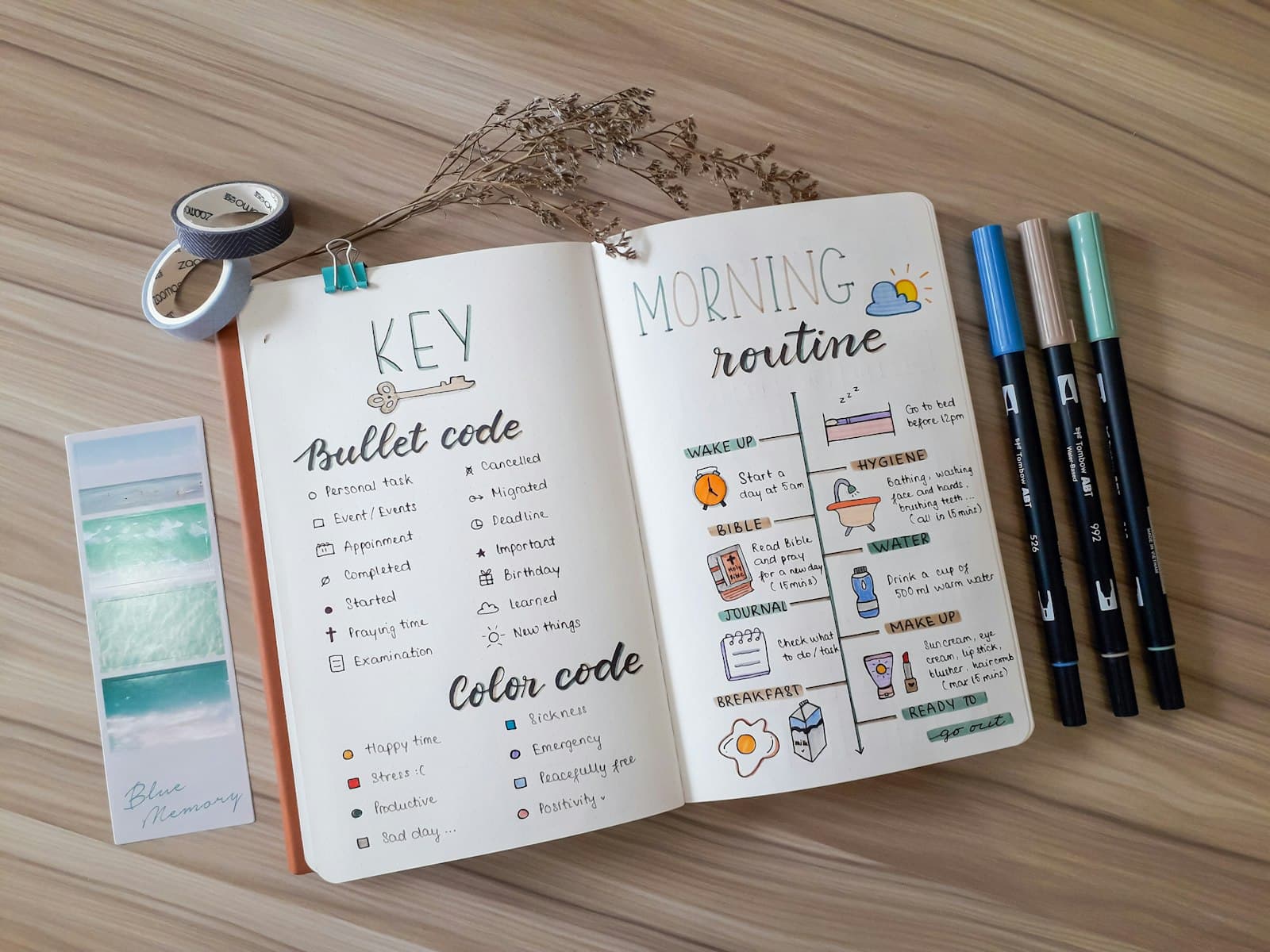
How to Change a Habit Pattern With Small Experiments
How to change a habit pattern without becoming a different person: resolutions ask for a new self by Monday, experiments change one variable at a time.

Environment Design for Habits Beats Willpower
Environment design for habits works because most behaviour is decided by what is easy, not by what you intend. Change the friction, not your resolve.

Emotional Reasoning: When a Feeling Becomes Evidence
Emotional reasoning is how feelings get promoted into facts. Feeling like a fraud is not evidence of being one. Here is how to drop the conclusion.

Defence Mechanisms in Psychology: The Four Most Used
Defence mechanisms in psychology come from a theory with mixed evidence, but the descriptions hold up. Here is what each of the four looks like in practice.

Cognitive Biases About Yourself, Not About Shopping
Cognitive biases about yourself matter more than the consumer version. Anchoring, framing, the halo effect and priming shape how you judge your own work.

Self-Sabotage and Weight Loss: Breaking the Cycle
Progress that reverses right when it starts working isn't always a willpower problem. Here's the psychology — and physiology — behind the cycle.

Self-Sabotage in Relationships: How It Shows Up
Right when a relationship starts feeling genuinely safe, something pulls it apart. Here's the psychology behind sabotaging connection specifically.

Subconscious Patterns: Why You Repeat Mistakes
Different job, different partner, same problem showing up anyway. Here's what the research says about why patterns follow you across situations.

Why Am I Self-Sabotaging My Own Success?
The promotion, the relationship, the progress — and then something pulls it apart right as it's working. Here's the psychology behind that specific timing.

Why Do I Self-Sabotage? The Hidden Pattern Behind It
Undermining your own success right when things are going well isn't random. Here's what the research says is actually happening underneath it.

How to Quit Procrastinating on What Actually Matters
You handle routine tasks fine — it's the important project or conversation that stalls for months. Here's why that specific pattern happens.

Overcome Procrastination When You're Not Lazy
"I'm just lazy" isn't a diagnosis — it's an explanation that tends to make procrastination worse. Here's what the research says instead.

Break the Procrastination Habit: A Framework
A dozen productivity hacks rarely add up to a system. Here's a framework grounded in actual motivation research, not another disconnected tip.
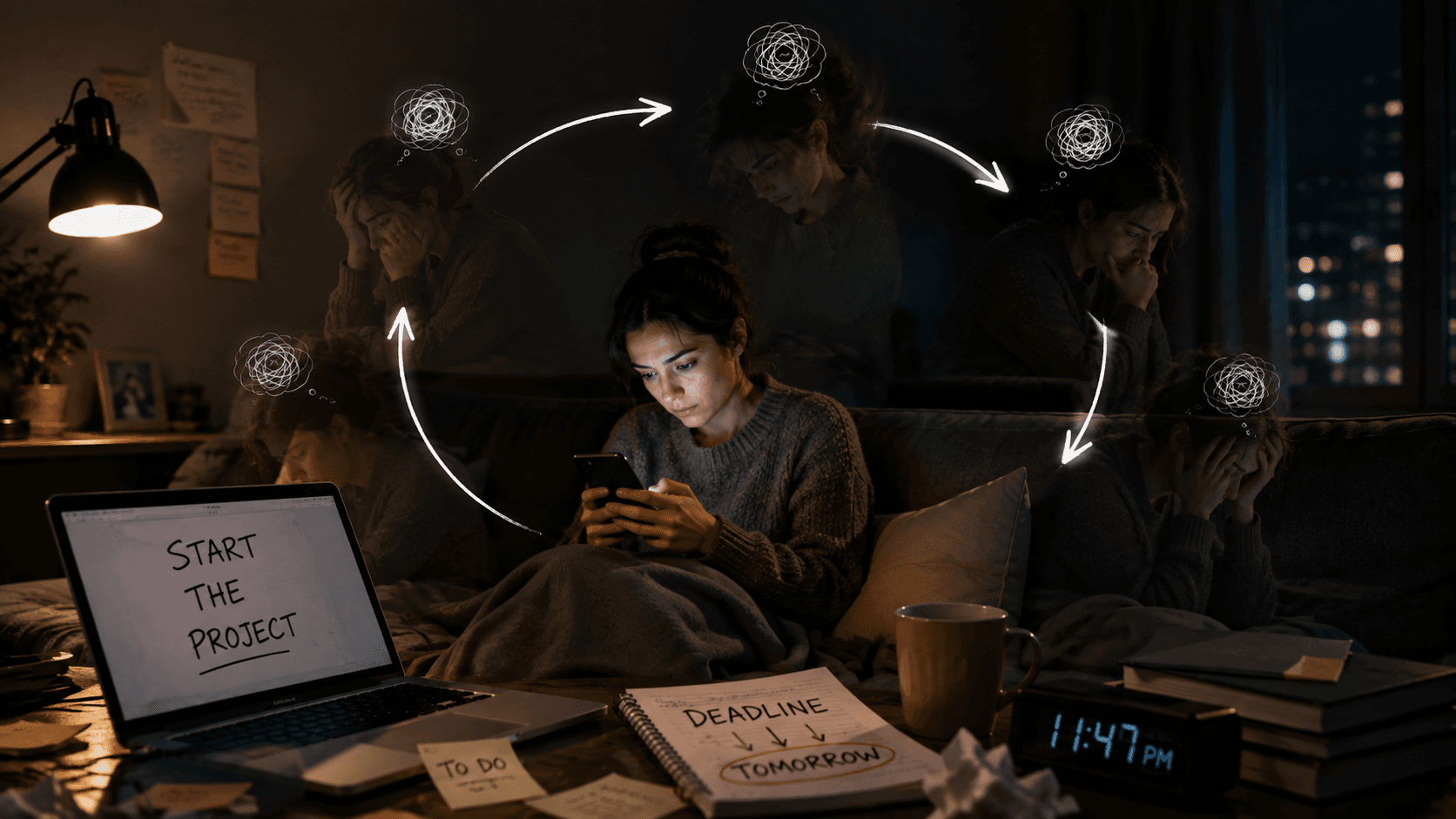
The Procrastination-Anxiety Loop (and How to Break It)
Anxiety makes you avoid the task, avoiding it makes the anxiety worse. Here's how that loop actually works, and where it comes apart.

How to Stop Procrastinating: The Real Reason Willpower Fails
Procrastination isn't a time-management problem or a willpower failure — it's emotion regulation. Here's what the research actually shows.