Search for an astrology course with a certificate and you will find a great many offers, from free video series to diplomas that take years. Almost all of them promise a certificate. What that certificate records varies enormously, and it is worth knowing what you are buying before you choose a course for its paper.
This guide covers the difference between a completion certificate and a passed exam, what free certificate offers usually include, how to judge a course before you enrol, and a study plan that ends in an exam you could actually fail.
Two different things called a certificate
The word certificate covers two documents that look alike and say different things.
| Question | Completion certificate | Certificate of a passed exam |
|---|---|---|
| What does it record? | That you reached the end of a course | That you cleared a set bar on a test |
| How do you earn it? | Finishing the lessons, sometimes with short quizzes | Answering questions under set conditions |
| Can you fail? | It depends on the course | Yes, if you do not know enough |
| What does it tell a client? | That you studied | What you knew on the day |
Neither is a licence. There is no professional licence for astrologers, so every astrology certificate is voluntary and speaks for whoever issued it. The only question is what it can honestly show, and a course that ends in a real exam gives you both documents in one.
Check yourselfBefore you read on: a course lets you retake each lesson quiz as often as you like, with the same questions, and issues a certificate at the end. What does that certificate actually measure?Show the answerHide the answer
Mostly persistence. When the same questions can be retried until they are passed, everyone who keeps going finishes, so the certificate records that you reached the end rather than how much you knew at any point. Persistence is worth something. What turns a certificate into evidence of knowledge is an assessment you could fail, ideally with questions you have not seen before.
What a completion certificate proves
A completion certificate records that you reached the last lesson. How much more it says depends on what stood between you and that lesson.
At the weak end, the certificate appears automatically once every video has played. At the strong end, a teacher reads your written chart interpretations, returns them with comments and withholds the certificate until the work meets a standard. Many online courses sit in between, with short quizzes after each lesson.
The detail that matters most is what happens when you get something wrong. If you can retry the same quiz until you pass, the certificate measures persistence rather than knowledge. Persistence is worth something. It is just not what a client assumes the certificate means.
None of this makes a completion certificate worthless. It is honest evidence that you worked through a structured syllabus from start to finish. Present it as exactly that and it will never mislead anyone.
Free astrology courses with a certificate
Free offers come in a few recognisable shapes, and it helps to know which one you are looking at.
- A free course with a free certificate. Usually short, often an introduction to the signs and planets, with a certificate on completion. Good for deciding whether you want to go further. The certificate adds little.
- A free course with a paid certificate. The lessons cost nothing and the document does. Ask what the payment buys: an assessment, a review of your work, or only the file.
- A certificate in exchange for your email. A marketing funnel, which is fine as long as you know that is what it is.
- A free trial of a paid course. Any certificate comes with the paid part.
One test works for all of them. Would the certificate still mean something to a stranger who has never heard of the course? If there is no assessment, no number and no way to check it, the answer is no, whatever it costs.
Free material is still an excellent way to learn. Free chart calculators and ephemerides are easy to find, and so are old editions of classics such as William Lilly's Christian Astrology, first published in 1647. Use free resources for the learning, and get your evidence of knowledge from something that tests it.
How to judge an astrology course before you enrol
Ten minutes with a course's own pages will tell you most of what you need. Look for these.
- 1A full syllabus, published before you pay. A foundations course should cover the signs, the planets, the houses and angles, the major aspects, essential dignity and a method for reading a whole chart. If it jumps to forecasting in week two, the basics will be thin.
- 2Stated conventions. Tropical or sidereal zodiac, traditional or modern rulerships, which house system. A course that never says so is teaching one set of choices as if no other existed.
- 3Whole charts, early and often. You learn to read by reading. Look for exercises on complete charts, not only on single placements.
- 4Feedback on your own work. Someone who reads your interpretations and shows you where they fall apart is worth more than any number of extra videos.
- 5An assessment you could fail. If there is a final exam, find out how it works and what happens if you do not pass.
- 6A certificate someone else can check. A number and a public verification page, or at least a named issuer that will confirm it.
- 7Honest limits. A course that tells you plainly that astrology is not medical, legal or financial advice will teach you to say the same to clients.
Check the course you are considering
Ticked: 0 of 6
Four or more ticks: a course worth a closer look. Three or fewer: ask about the unticked lines before you pay. You may be paying mostly for lessons, which can be fine, but not for a certificate that proves much.
A study plan that ends in an exam
If you want a certificate that proves knowledge, plan backwards from the exam. At a few hours a week, a foundations plan like this one takes about three months. Reading whole charts fluently takes longer, and keeps improving long after the exam.
- 1Weeks 1 to 3: the signs. Elements, modalities and polarity, and the ruler of each sign in both the traditional and the modern scheme. Zodiac Signs and Their Dates is a quick reference.
- 2Weeks 4 and 5: the planets. What each one signifies, which are personal and which generational, and why. See What Each Planet Actually Signifies.
- 3Weeks 6 and 7: the houses and angles. The twelve houses, which of them are angular, succedent and cadent, and why the birth time decides them.
- 4Weeks 8 and 9: aspects. The five major aspects, orbs, and the difference between applying and separating.
- 5Week 10: dignity. Domicile, exaltation, detriment and fall, and what strong does and does not mean.
- 6Weeks 11 and 12: whole charts and practice questions. Read three or four charts aloud in a fixed order, then test yourself against the clock.
Two habits make the plan work. Test yourself instead of rereading: answering from memory and then checking is one of the most reliable findings in learning research. And read aloud: saying a chart out loud exposes the gaps that silent study hides. How to Become an Astrologer explains why synthesis, practised out loud on whole charts, is the real threshold between students and readers.
Where the studying happens
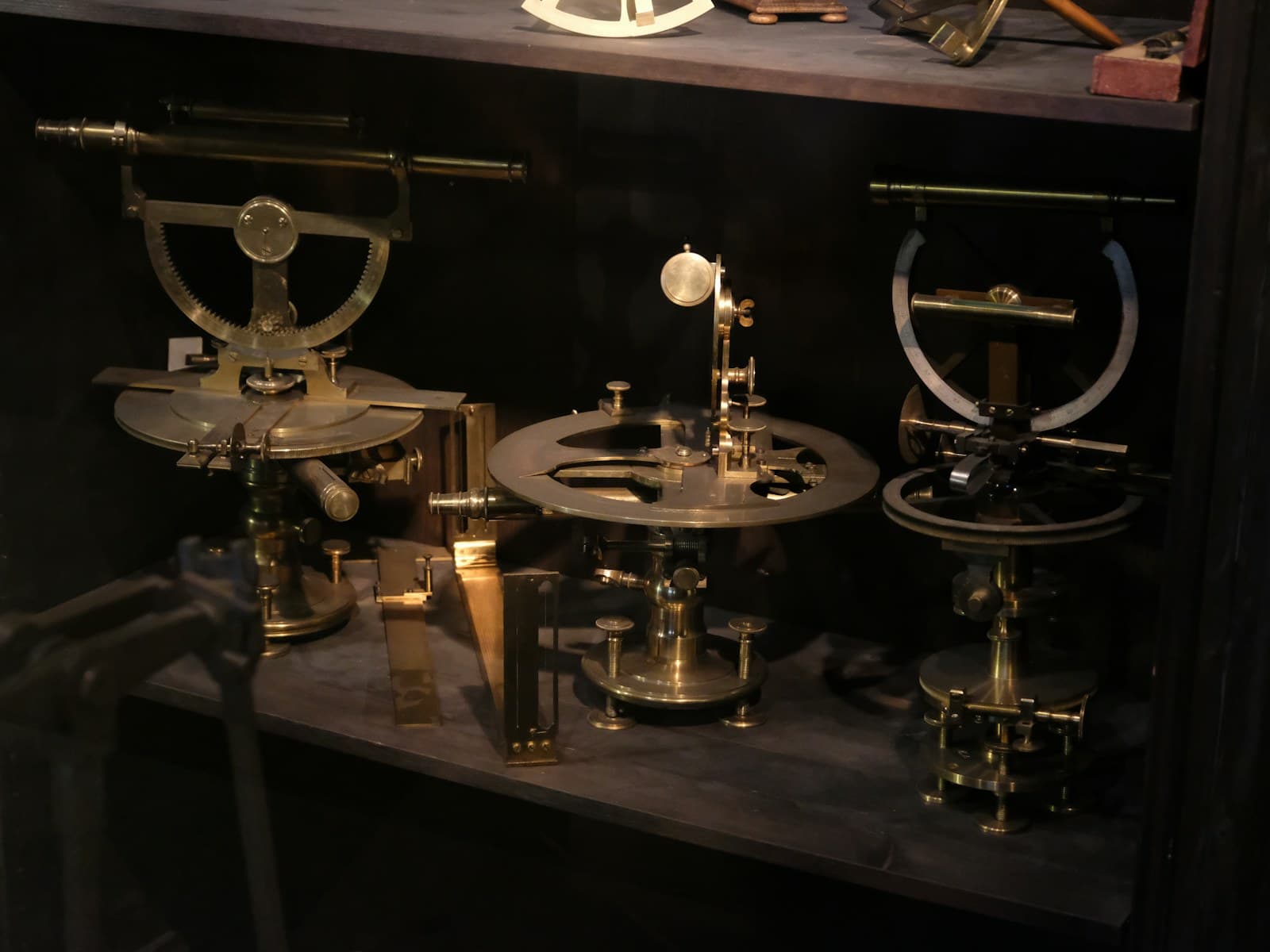
A course supplies the syllabus. The learning happens at your own desk, with books, paper and a pencil.

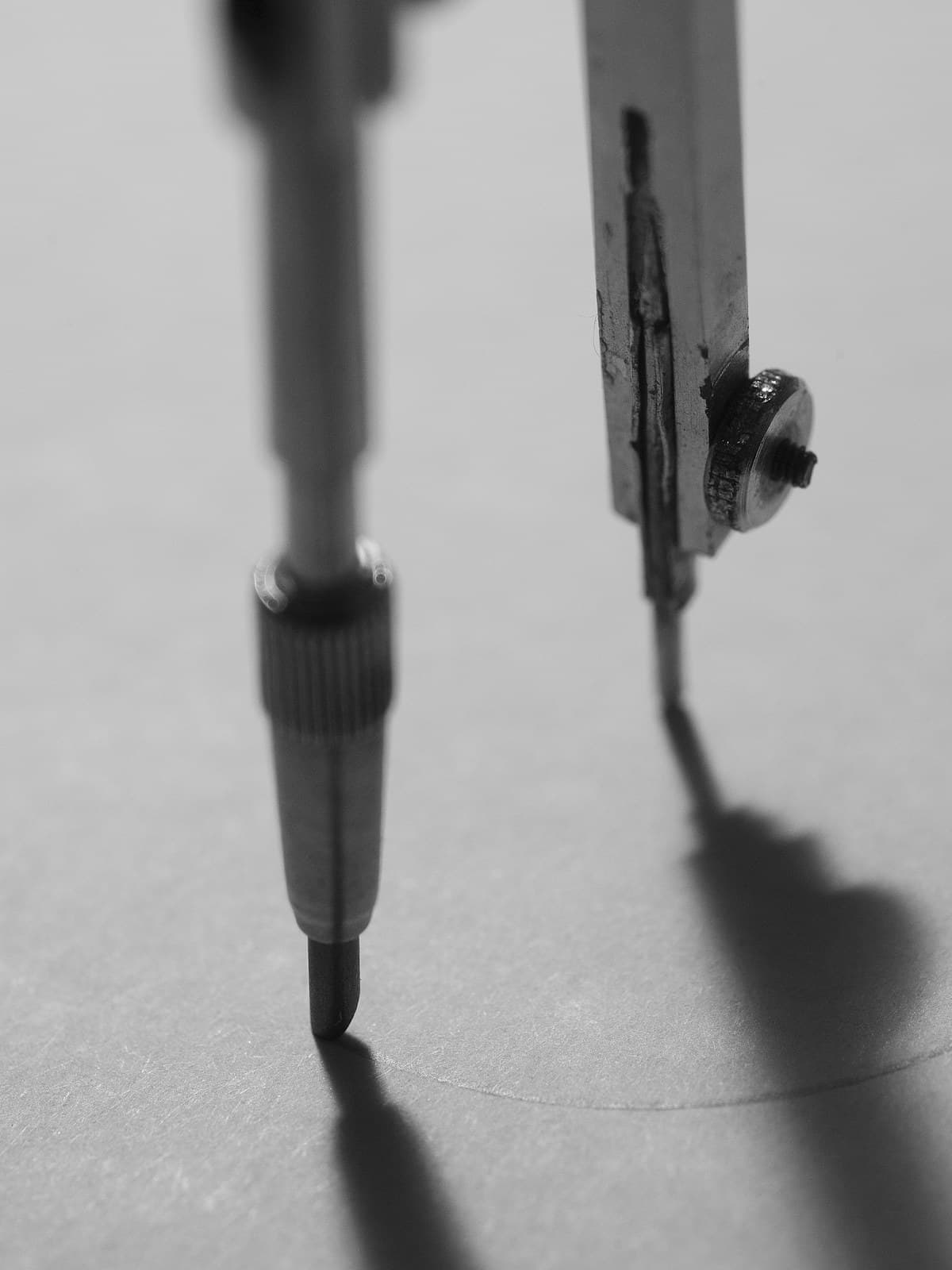
Photos: Prateek Katyal and Andrey Soldatov on Unsplash.
Separating the course from the certificate
There is another way to get an astrology course with a certificate: take them as two separate things. That is how Astra's certification works.
Astra's certification is the exam and the certificate, with no course attached. The astrology course in the Astra app is one way to prepare, and subscribers get the level-1 exam included, so for them it works as a course with a certificate at the end, provided they pass. If you learned somewhere else, from a school, from books or from a teacher, you can take the exam without the course. It checks what you know, not where you learned it.
- 40 questions in 45 minutes, up to 90 seconds a question, and a pass mark of 70 percent. From 90 percent the certificate says With distinction; the percentage itself is never printed.
- Unsupervised: no webcam and no proctor.
- Two attempts included, the second opening 24 hours after the first.
- A certificate with your name, the direction, Level 1 · Foundation, a number, a QR code and a public verification page, valid for two years and then renewed with a short test. It comes as a PDF and an image, in eight languages, with an Add to LinkedIn button.
It is not a licence, an accreditation, a state or official qualification, or a right to practise. It shows that you passed a foundations exam without supervision, and its verification page lets anyone confirm that it was issued to you. Level 2, which adds a practical task checked by a reviewer, is coming soon, with a waitlist.
Before any of that, the free practice test gives you 10 questions with answers and explanations, with no sign-up. It is a quick way to find out whether you need a course first.
What to take from this
The certificate from an astrology course is only as good as the assessment behind it. A completion certificate shows that you finished. A passed exam shows what you knew on the day.
Free courses are fine for learning, and their certificates rarely prove much. Judge any course by its syllabus, its stated conventions, the amount of work on whole charts, and whether anyone reads what you write.
And if the course and the certificate come from different places, that is not a compromise. It can be the clearest way to show what you know, because the test does not belong to the teacher.
Test yourself
Question 1 of 3
An astrology course is free, but its certificate costs extra. Which question best tells you whether the certificate is worth paying for?
Are free astrology courses with a certificate worth it?
For learning, often yes. The certificate is usually the weakest part: if there is no assessment, no number and no way for anyone else to check it, it shows only that you finished. Use free courses to learn, and get evidence of knowledge from an assessment you could fail.
Is an online astrology certificate recognised?
Recognised by whom is the real question. There is no professional licence for astrologers, so no certificate gives you official standing to practise. Established schools and societies are well known within the astrological community, and a certificate with a public verification page can at least be checked by a stranger.
How long does an astrology course take?
Short introductions take a few hours. A course that covers the foundations properly, meaning signs, planets, houses, aspects and dignity, usually takes some months at a few hours a week. Reading whole charts fluently takes longer, and improves with every chart you read aloud.
What should a good astrology course cover?
The signs, planets and houses, the major aspects and orbs, essential dignity, the angles and the chart ruler, and a method for reading a whole chart in order. It should also say which conventions it uses and be clear about what astrology is not: medical, legal or financial advice.
Can I get an astrology certificate without finishing a course?
Yes. Exam-only certificates check what you know, however you learned it. Astra's level-1 astrology exam, for example, does not require any course, and a free 10-question practice test with answers and explanations shows the style first.
Do astrology course certificates expire?
Completion certificates usually do not. Exam-based certificates sometimes have a validity period so that knowledge is checked again. Astra's is valid for two years, after which a short renewal test keeps it current.