Search for how to become a certified tarot reader and you will find plenty of courses that promise the title, and very little about what it means. The short answer: no licence anywhere tests what a tarot reader knows, no regulator keeps a register of qualified readers, and certified tarot reader is not a protected title. That makes the certificate behind the phrase matter more, not less, because its whole value rests on who issued it and what they checked.
This guide covers what certification can and cannot mean in tarot, the routes that exist, what clients actually look at, how to prepare for a tarot exam and where Astra's level-1 exam fits. For the craft of reading for other people, including the ethical lines, read How to Become a Tarot Reader: Honest Guide alongside it.
What the word certified means in tarot
In licensed professions, certification sits on a legal floor. A regulator sets the standard, keeps a register and can strike people off. Tarot has no such floor: no exam you must pass to read for money, no regulator that sets a standard for readers and no register of approved ones.
Where local rules touch paid readings at all, they deal with the business side: a permit in some places, consumer protection law in others, and in a few places limits on paid fortune-telling itself. None of them check whether you can read a spread.
So every tarot certificate is private. A school, a society or an exam provider decided what to test, set its own standard and put its name on the result. Many respected certificates in other fields work the same way, so this is not a flaw. It just changes the question. The useful question is never whether a reader is certified. It is who certified them, and for what.
Three routes to a tarot certificate
Tarot certificates come from three places, and the paper can look much the same.
| Route | What it shows | The question to ask |
|---|---|---|
| Course certificate | That you finished a structured course | Could anyone fail it? |
| Independent board | That you met that organisation's standard | Who sets the standard, and how is it marked? |
| Exam-only certification | That you reached the pass mark on one exam | What is the pass mark, and was it supervised? |
Course certificates are the kind you meet most often. Many tarot courses end with a certificate of completion, and some add a final quiz. A completion certificate is honest about what it records: that you did the course. It cannot say how much you kept, because finishing is the only requirement.
Independent boards are not attached to a single course. Some tarot organisations run certification schemes of their own, for example the Tarot Certification Board of America, which has offered certification at several levels, one of them named Certified Tarot Reader. The independence is the strength. The status is still private: a title like this carries the weight of the organisation's reputation, not of law.
Exam-only certification separates the test from the teaching. You learn wherever you like, from books, a teacher, videos or years of reading for friends, and then sit an exam that does not ask where you learned. It suits people who already read and want a record of it without paying for a course they do not need. Its limit is the mirror image of its strength: an exam checks knowledge, not how you are with a person across the table.
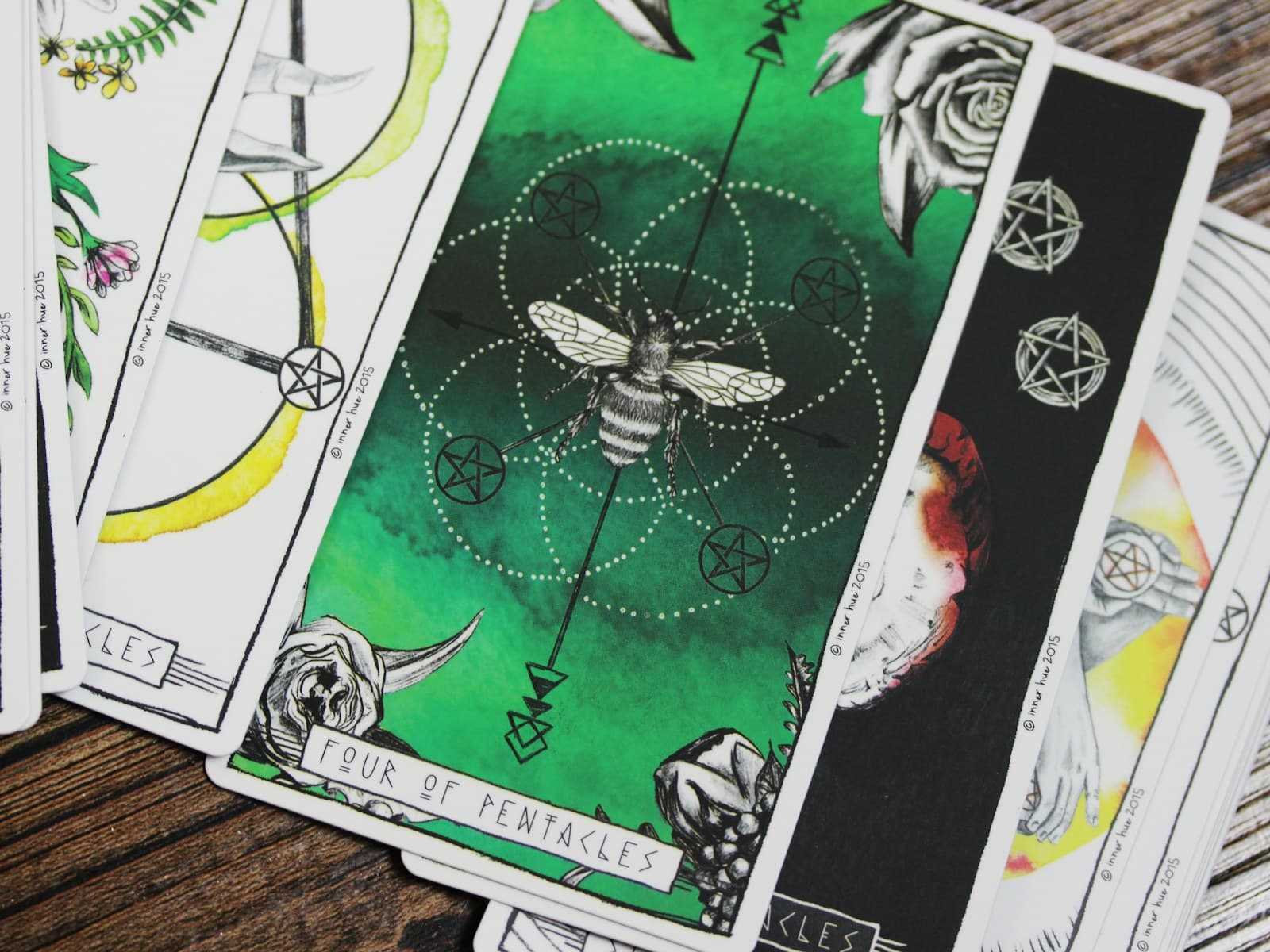
Where the knowledge gets used
Every route to a certificate ends in the same place: cards on a table and a question in front of them.
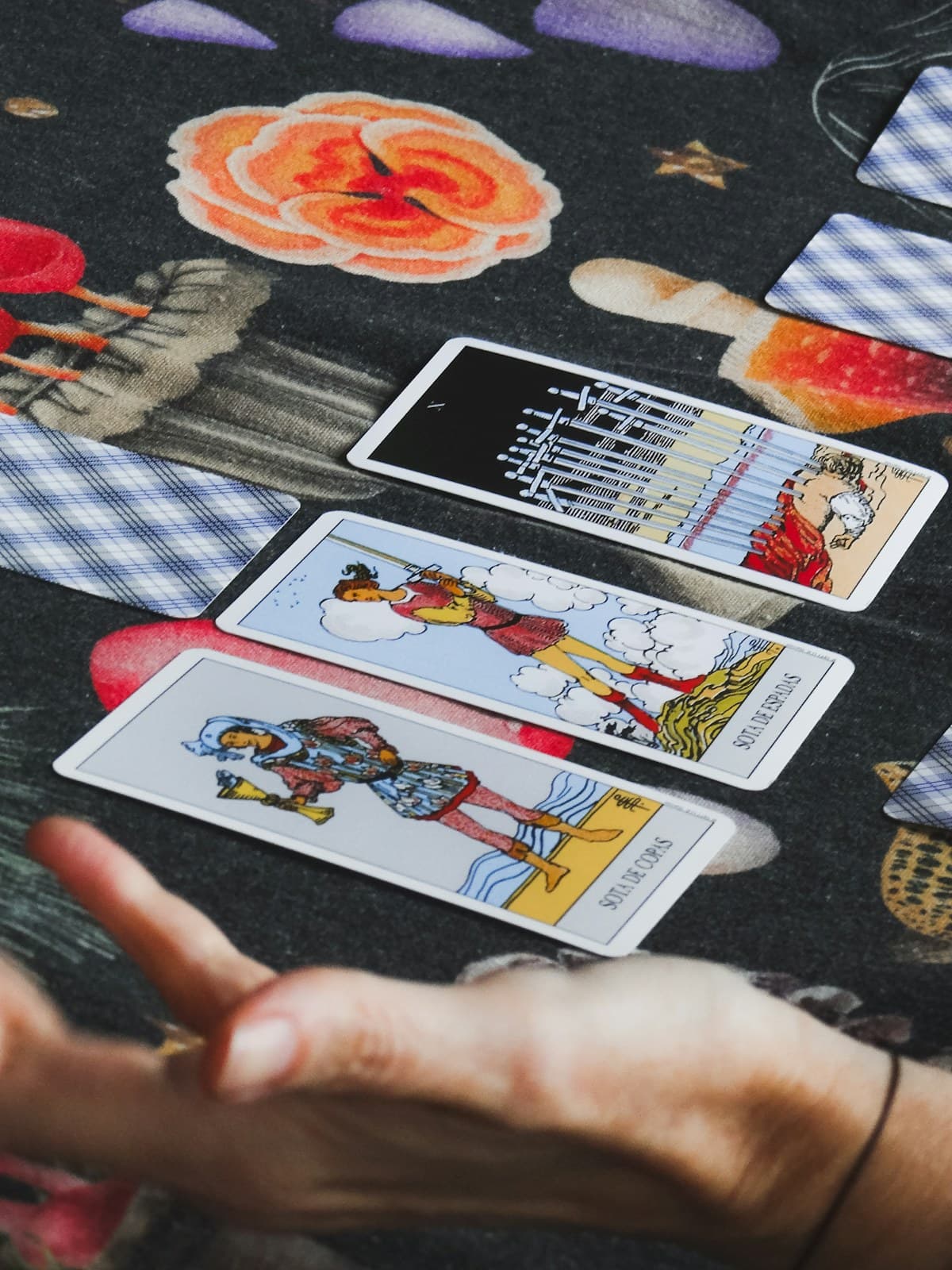
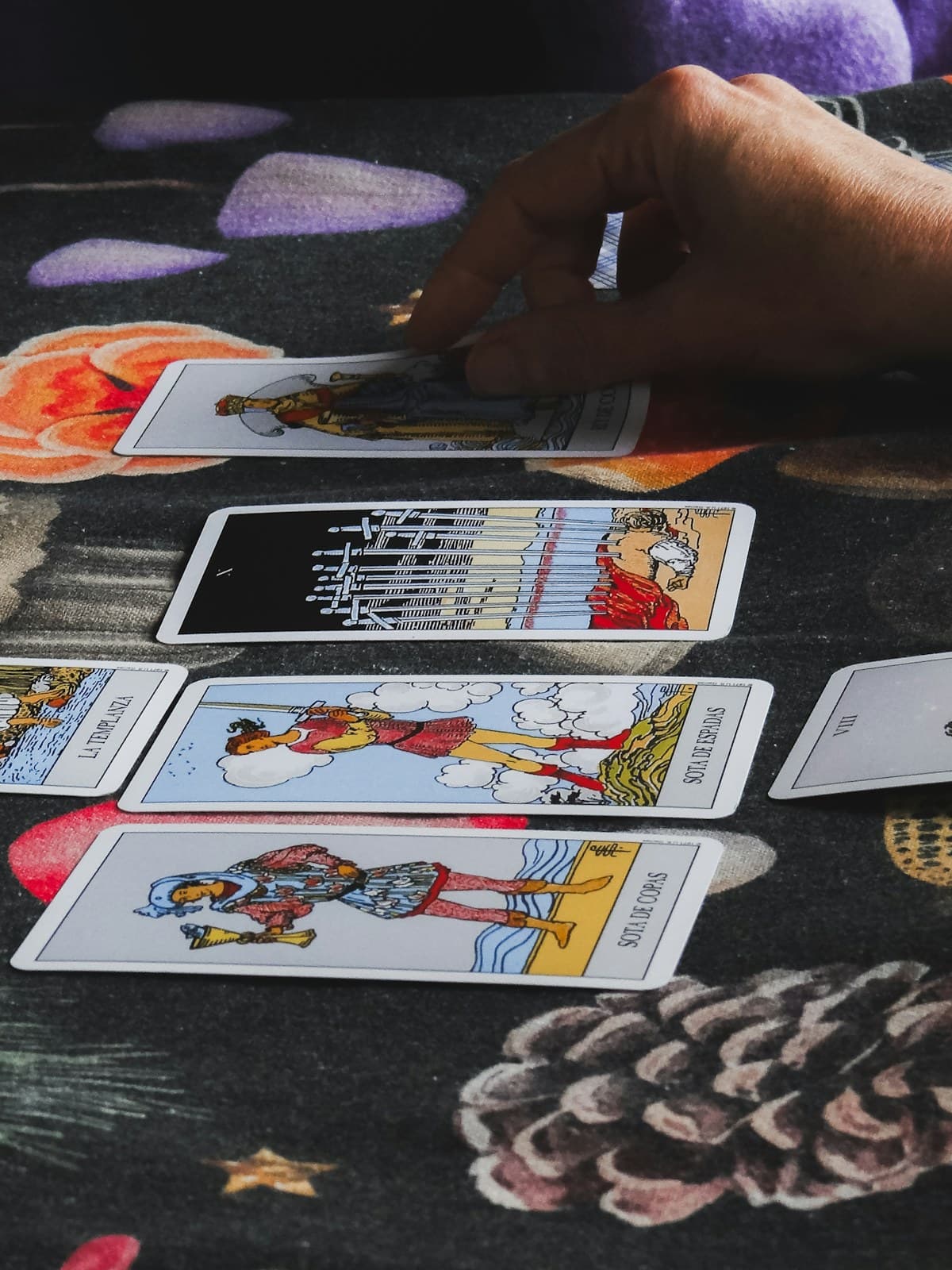
Photos: Camila Vélez on Unsplash.
What clients actually look at
Ask working readers how their clients chose them and a certificate is rarely the first answer. Clients tend to look at these instead:
- Reviews and referrals. A friend's recommendation usually outweighs any document.
- How you read. A short sample reading, a written example or posts that show how you think about a card.
- What you will not do. Clear lines on health, legal and money questions reassure exactly the clients you want.
- How you describe tarot. A structured way to think a situation through earns more trust than promises about the future.
- The practical basics. Clear prices, a cancellation policy and a word on confidentiality.
A certificate supports that picture rather than replacing it. It helps most in three places: on a profile or website where a stranger is deciding whether to trust you, with shops and online platforms that screen new readers, some of which run a test reading of their own, and in your own confidence that someone other than you has checked what you know.
Describe it precisely. A line that names the certificate, the level, the issuer and a page where anyone can check it is accurate and hard to argue with. Words such as licensed or official belong only on documents that literally are those things, and in a field without licensing a tarot certificate is neither.
Check yourselfThe Rider-Waite-Smith deck has barely changed since 1909. Before you read on: why would a certificate in reading it come with an expiry date at all?Show the answerHide the answer
Because the certificate is evidence about you, not about the deck. It records what you could answer on one day, and knowledge that is not used fades. A validity date tells whoever checks it how recent that evidence is, and a short renewal test brings it up to date. A certificate with no end date says the same thing in year ten as on day one, which is exactly why it says less.
How to judge any tarot certificate
Six questions tell you what any certificate is worth, yours or another reader's.
- 1Who issued it? A named organisation you can look up, or only a logo.
- 2What did it test? A published list of topics, a number of questions and a time limit, or nothing you can see.
- 3Could the holder have failed? A pass mark means the certificate is withheld from people below the standard. Completion means it is not.
- 4Was it supervised? A proctored exam shows who sat it. An unsupervised one shows that the account passed. Both are legitimate, as long as the issuer says which.
- 5Can a stranger check it? A unique number and a public verification page turn a PDF into evidence.
- 6How recent is it? A certificate records what you knew on the day it was issued. Knowledge that is not used fades, so a validity date tells whoever checks it how fresh the evidence is, and a short renewal test brings it up to date.
A certificate that passes all six is worth showing. One that passes none may still mark a good course, but it tells a client very little.
What a tarot exam tests at foundations level
Foundations exams differ in detail, but the deck itself sets most of the ground. Expect questions on most of these areas:
- The structure. 78 cards: 22 Major Arcana from The Fool (0) to The World (XXI), and 56 Minor Arcana in four suits of fourteen.
- Suits, numbers and courts. In the Rider-Waite-Smith tradition, Cups are water, Wands fire, Swords air and Pentacles earth, and each number and court rank adds its own layer of meaning.
- Meanings, upright and reversed. Every card upright, plus the conventions for reading reversals and why they differ.
- Combinations. Which of two cards is the subject, how the suits interact and why repetition matters.
- Spreads. How a position changes what a card means, and the common layouts from three cards to the Celtic Cross.
A well-made exam tests reasoning as well as recall. Alongside what a card such as the Six of Cups means, expect questions that give you two cards, a position or a situation and ask what follows. How to Read Tarot Cards for Beginners covers the suits and numbers, and Tarot Card Combinations covers pairs.
How to prepare for a tarot exam
Many people prepare by rereading meanings until the cards feel familiar. Familiar is not the same as retrievable. In an exam the card comes first and the meaning has to come from you, with a clock running, and the only preparation that trains that is doing it.
- 1Test before you check. Turn a card, say its meaning out loud, then look it up. In Roediger and Karpicke's well-known 2006 study, students who practised recalling a text remembered considerably more of it a week later than students who spent the same time rereading it.
- 2Space it out. Short daily sessions over several weeks do more than the same hours crammed into a few weekends.
- 3Learn the structure first. Four suits and fourteen ranks generate the 56 minor cards. Only the 22 majors have to be learned one by one.
- 4Pick one reversal convention and name it. Mixing systems from different books is a common source of wrong answers.
- 5Practise pairs, not just cards. Draw two, say one sentence, then check it against the combination rules.
- 6Rehearse at exam pace. At a minute or so per question there is no time to look things up, so practise at that speed.
Before you book a tarot exam
Ticked: 0 of 5
With four or five ticks, a practice test is the sensible next step. Each line you could not tick is where your next study sessions should go.
Where Astra's level-1 Tarot exam fits
Astra's certification is the exam-only route: what it sells is the exam, not a course. You can learn anywhere and prepare however you like, including with the Tarot course, and subscribers get level 1 included.
The exam has 40 questions in 45 minutes, with up to 90 seconds per question. The pass mark is 70%. Score 90% or more and the certificate says With distinction; the percentage itself is never printed. Two attempts are included, and the second opens 24 hours after the first.
Level 1 is unsupervised: no webcam and no proctor. We say so plainly because it matters. The certificate shows that your account passed a timed exam. It cannot show that nobody sat beside you, and if a client or venue needs a supervised assessment, this is not one.
Pass, and the certificate carries your name, the direction, Level 1 · Foundation, a unique number in the form AST-XXX-XXXXXX, a QR code and a public verification page where anyone can check it. It names the subject, Tarot, rather than giving you a job title. It is valid for two years, then renewed with a short test, and it comes in eight languages, as a PDF and an image, with an Add to LinkedIn button.
It is not a licence, an accreditation, a state or official qualification, or a right to practise. It confirms that you passed an Astra exam. Level 2, which adds a practical task checked by a reviewer, is coming soon, and the Tarot certification page has a waitlist for it.
What to take from this
Certified tarot reader is not a protected title, which is exactly why the certificate behind it deserves a closer look. Ask who issued it, what it tested, whether it could be failed, whether a stranger can check it and how recent it is.
Clients will judge you mostly on how you read and how you conduct yourself. A good certificate backs that up; it does not replace it. If you want one, prepare the way an exam will test you: recall before checking, one reversal convention, cards read in pairs and practice against the clock.
Test yourself
Question 1 of 3
Every tarot certificate is private. What does the article say follows from that?
Is there an official tarot certification?
No. No government or regulator certifies tarot readers, and there is no official register of qualified readers. Every tarot certificate is issued by a private school, society or exam provider, and it is worth what that issuer checked.
Do I need a certificate to read tarot professionally?
No. No certificate is required to read tarot for money. Local rules on paid readings, where they exist, concern the business, such as a permit, consumer protection or limits on paid fortune-telling, not your knowledge of the cards, so check what applies where you work.
What does a tarot certification exam cover?
At foundations level, usually the deck's structure, the suits and their elements, what numbers and court cards add, upright and reversed meanings, combinations and spreads. Good exams test reasoning about cards together, not just keywords.
How long does it take to prepare for a tarot certification exam?
It depends on where you start. Recognising all 78 cards takes most people four to eight weeks of regular practice, and reading combinations fluently takes longer. How Long Does It Take to Learn Tarot? breaks it down.
Can I get tarot certified online?
Yes. Many tarot courses and certification exams run online. Check who issues the certificate, whether there is a pass mark, whether the exam is supervised and whether a stranger can verify it. Astra's level-1 Tarot exam is online and unsupervised.
Does a tarot certificate expire?
Some do and many do not. A validity date shows how recent the evidence is. Astra's certificate is valid for two years and is then renewed with a short test.
How should I describe my tarot certificate to clients?
Name the certificate, the level and the issuer, and link to the verification page if there is one. Avoid words such as licensed or official: tarot has no licensing, so a tarot certificate is neither.
Where this leads. How to Become a Tarot Reader: Honest Guide covers what no certificate can: reading for another person, the subjects to decline and how the work builds over the first years.