Two cards, read one after the other, give you two answers. The skill is getting them to give you one.
Two verdicts is not a reading
The common failure is easy to recognise once named. A reader turns the first card, gives its meaning, turns the second, gives its meaning, and stops.
The output is two statements sitting next to each other, frequently in tension, with nothing indicating how they relate. The person receiving it is left to do the synthesis, which is the part they came for.
A tarot reading is not a list of card meanings any more than a sentence is a list of word definitions.
What follows is how practitioners make pairs speak together. The same logic scales to larger spreads, covered in the companion article on reading a spread as one story.
Noun and adjective
The simplest and most reliable structure, and it is worth applying before anything more elaborate.
In most pairs, one card is the subject and the other describes it. Establish which is which and the pair resolves immediately.
Three things that usually identify the subject.
Position, if the spread assigns one. A card in a position labelled situation is the subject; one in a position labelled influence modifies it.
Major over minor. A major arcana card alongside a minor is usually read as the larger condition, with the minor describing how it is showing up.
Concrete over abstract. A card depicting a specific situation tends to be the subject, with a more general card qualifying it.
Once the subject is fixed, the reading becomes a phrase rather than two sentences. Not "the Tower, and also the Three of Cups", but "an upheaval that arrives through or affects a celebration".
Four ways two cards relate
Beyond subject and modifier, pairs fall into recognisable relationships. Naming which one you have prevents most misreadings.
Reinforcing. Both cards point the same way, and the pair intensifies rather than adds information. Two cards about waiting mean waiting, emphatically.
Qualifying. The second card narrows or conditions the first. A card about success with a card about caution gives success that requires care rather than either alone.
Opposing. The two point in different directions, which is information rather than a problem. Opposition usually indicates genuine tension in the situation, and the useful reading names the tension rather than picking a winner.
Sequencing. One leads to the other. This reading is available when the spread implies time, and it converts a pair into a small narrative: this, then that.
The discipline is to choose one relationship deliberately rather than sliding between them until something sounds good. Sliding is how readings become unfalsifiable, which is a failure mode worth guarding against in any interpretive practice.
How this is taught inside Astra Trainer
This is Tarot Combinations, one of four sub-topics in the Tarot direction of the Spiritual world, whose stated aim is pairing two cards and telling the one story the combination is telling instead of two separate verdicts.
It follows Tarot Cards and Tarot Reversed, since combination work requires the individual meanings first, and it precedes Tarot and Astrology. Lessons take about five minutes, and there is a discussion thread under every one.
What the suits do to each other
The minor arcana suits carry elemental associations, and the relationship between two elements is a standard part of combination reading.
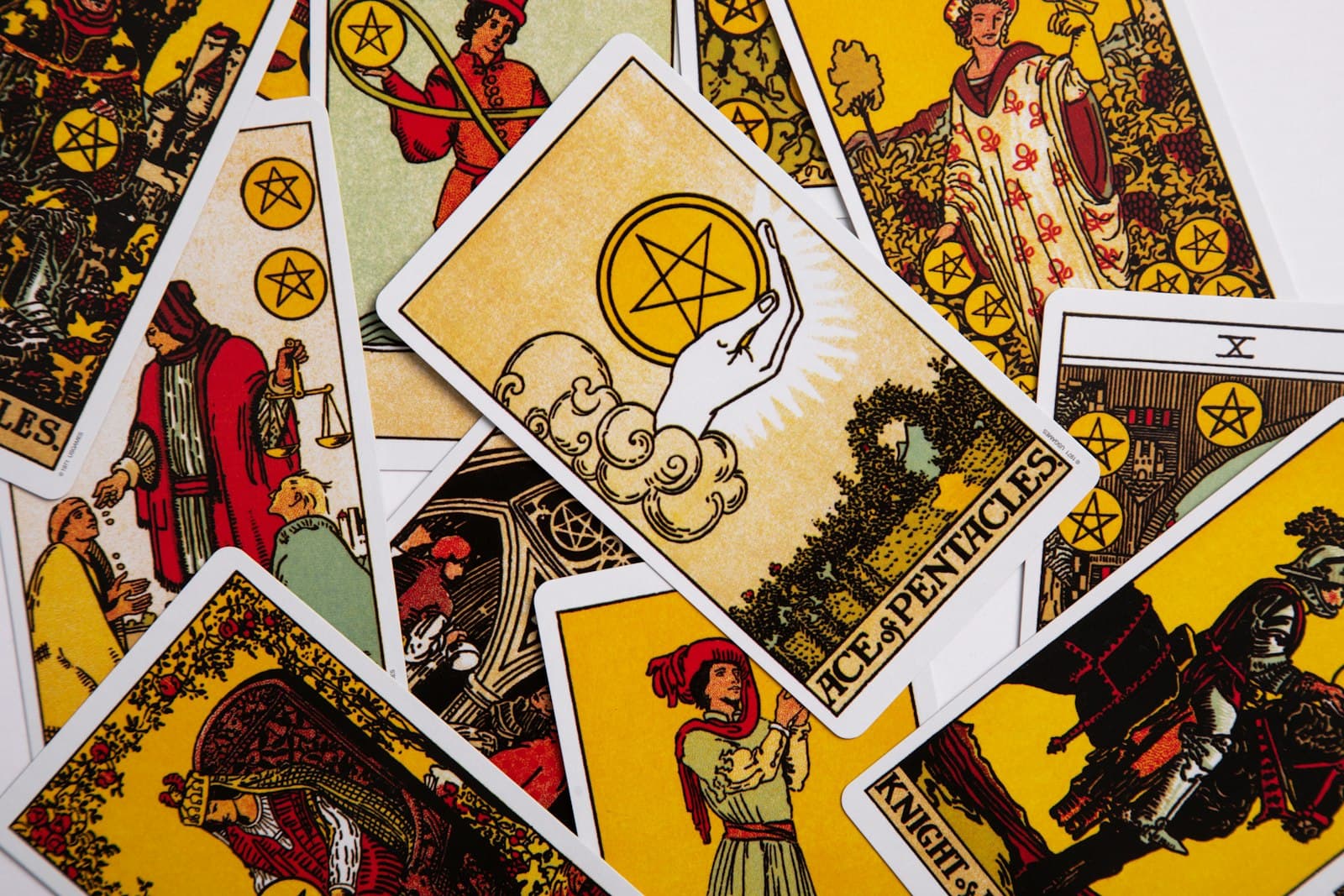
The usual attributions: Wands with fire, Cups with water, Swords with air, Pentacles with earth.
How pairs interact follows the elemental logic used throughout this world.
Same suit. The strongest interaction. Two cards of one suit concentrate that element and the reading intensifies in that register.
Compatible elements. Fire with air, and earth with water. These reinforce each other and the cards are read as working together.
Opposed elements. Fire with water, and air with earth. These are read as weakening or complicating each other, and the pair usually indicates friction.
Neutral pairings. The remaining combinations interact less strongly, and the cards are read closer to their individual meanings.
This is elemental dignity applied to tarot, and it comes from the same nineteenth-century synthesis that produced the astrological attributions. That history is covered in the two articles on tarot and astrology in this direction, and it is worth knowing that this technique is not ancient.
Repetition inside a pair
The strongest single signal in combination reading, and the first thing to check.
Repeated number. Two cards of the same number across different suits. Two threes, two nines. The number's theme is being emphasised across different areas, and practitioners read this as the pair's actual subject.
Repeated suit. Covered above, and it concentrates the element.
Two majors. Read as a situation operating at a larger scale than the person's immediate choices, since the majors are traditionally treated that way.
Two court cards. Frequently read as people or as two stances a person is taking, and the pair is about the relationship between them.
The habit worth building: scan for repetition before interpreting anything. If two cards share a number or a suit, that shared feature is usually what the pair is about, and building the reading around it produces something coherent rather than assembled.
Worked pairs
The method applied, so the abstraction has something to hold.
The Tower with the Three of Cups. Subject is the Tower, since a major outranks a minor. Relationship is qualifying: the Three of Cups tells you where the upheaval lands. Reading: a sudden disruption involving a celebration, a friendship group, or a shared happiness. Not two events, one event with a setting.
Two of Swords with Two of Pentacles. Repeated number, so the number is the subject. Twos concern choice and balance. Two suits, air and earth, which are opposed and therefore complicating. Reading: a decision that is difficult to hold in balance, with the mental choice and the practical juggling pulling against each other.
The Hermit with the Ten of Cups. Major as subject, minor as modifier, and the relationship is opposing. Withdrawal set against domestic fullness. The useful reading names the tension: a pull between solitude and family, rather than deciding which wins.
Ace of Wands with Knight of Wands. Same suit, so the element concentrates. Also a sequence: an initiating spark followed by someone acting on it. Reading: a new impulse being pursued energetically, with the fire doubled and therefore the pace and the risk of overextension both raised.
Not a basis for decisions. This article describes an interpretive practice as its own tradition teaches it. Tarot is not a source of medical, psychological, financial or legal guidance, and nothing here should inform decisions in those areas. For health concerns see a qualified medical professional, and for financial or legal matters a qualified professional in that field.
What to take from this
Two cards read separately give two verdicts, which is the commonest reason a reading feels empty.
Establish which card is the subject and which modifies it, and the pair becomes a phrase rather than two sentences.
Name the relationship deliberately: reinforcing, qualifying, opposing or sequencing. Sliding between them until something sounds right is how readings stop meaning anything.
Elements interact, with same suit strongest, fire and air and earth and water compatible, and the opposed pairings complicating.
And check for repetition first. A shared number or suit is usually what the pair is actually about.
How do I read two tarot cards together?
Decide which card is the subject and which modifies it, then name the relationship between them: reinforcing, qualifying, opposing or sequencing. The result should be one statement rather than two.
Which card is the subject?
Usually the one in a position the spread designates as the situation, or the major arcana card if one is a major and one a minor, or the more concrete of the two.
What do the suits do in a combination?
They carry elements: Wands fire, Cups water, Swords air, Pentacles earth. Same suit concentrates, fire with air and earth with water reinforce, and fire with water or air with earth complicate each other.
What if two cards contradict each other?
That is information rather than a problem. Opposition usually indicates real tension in the situation, and the useful reading names the tension instead of choosing which card wins.
What should I look for first?
Repetition. Two cards sharing a number or a suit are emphasising that shared feature, and it is usually what the pair is about.