

Скоро
Bioprocessing & Biomanufacturing
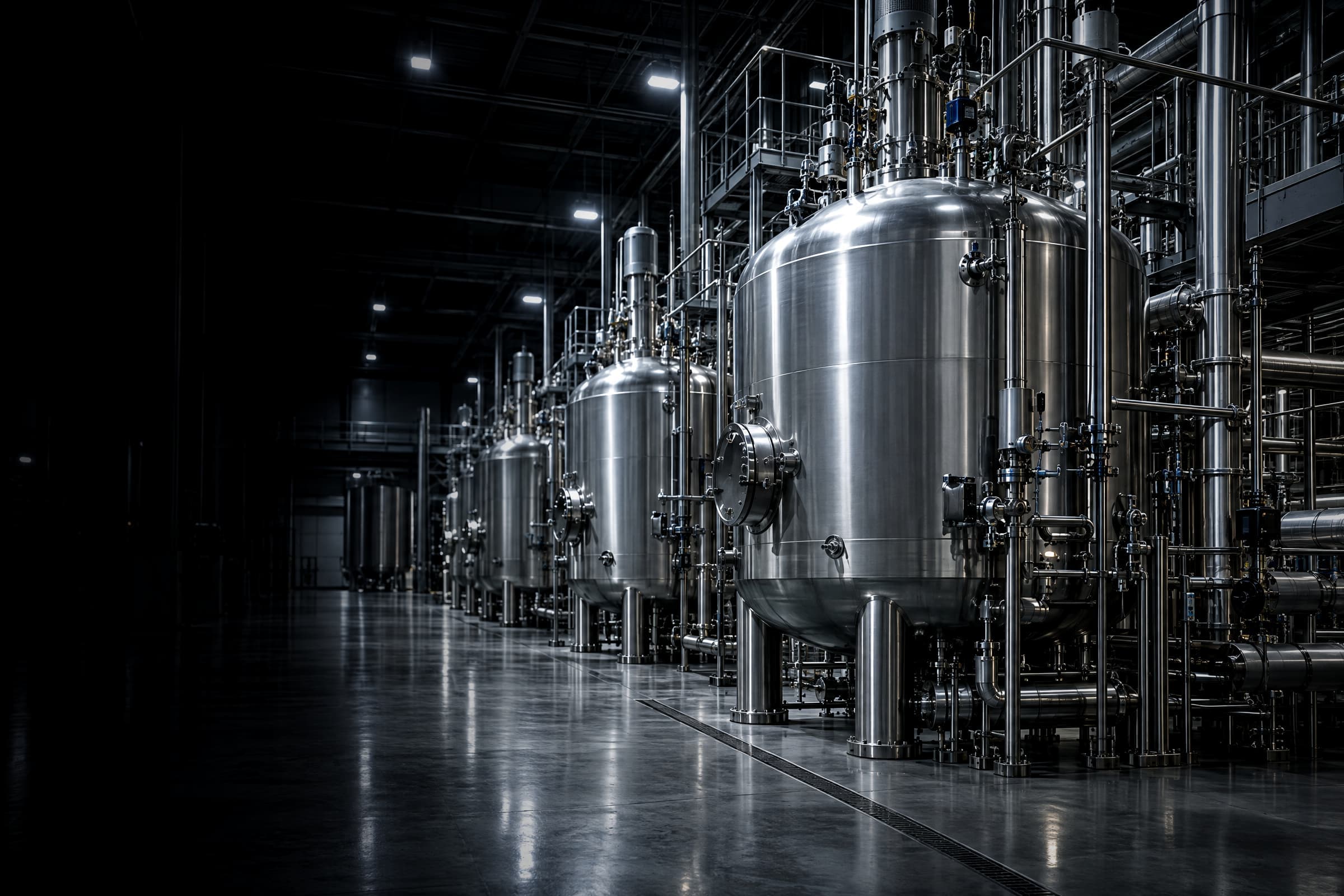
Превратите один флакон клеток в тонны продукта.
Полный курс
- модулей
- 90
- тем
- 900
- минут на урок
- 15
60%
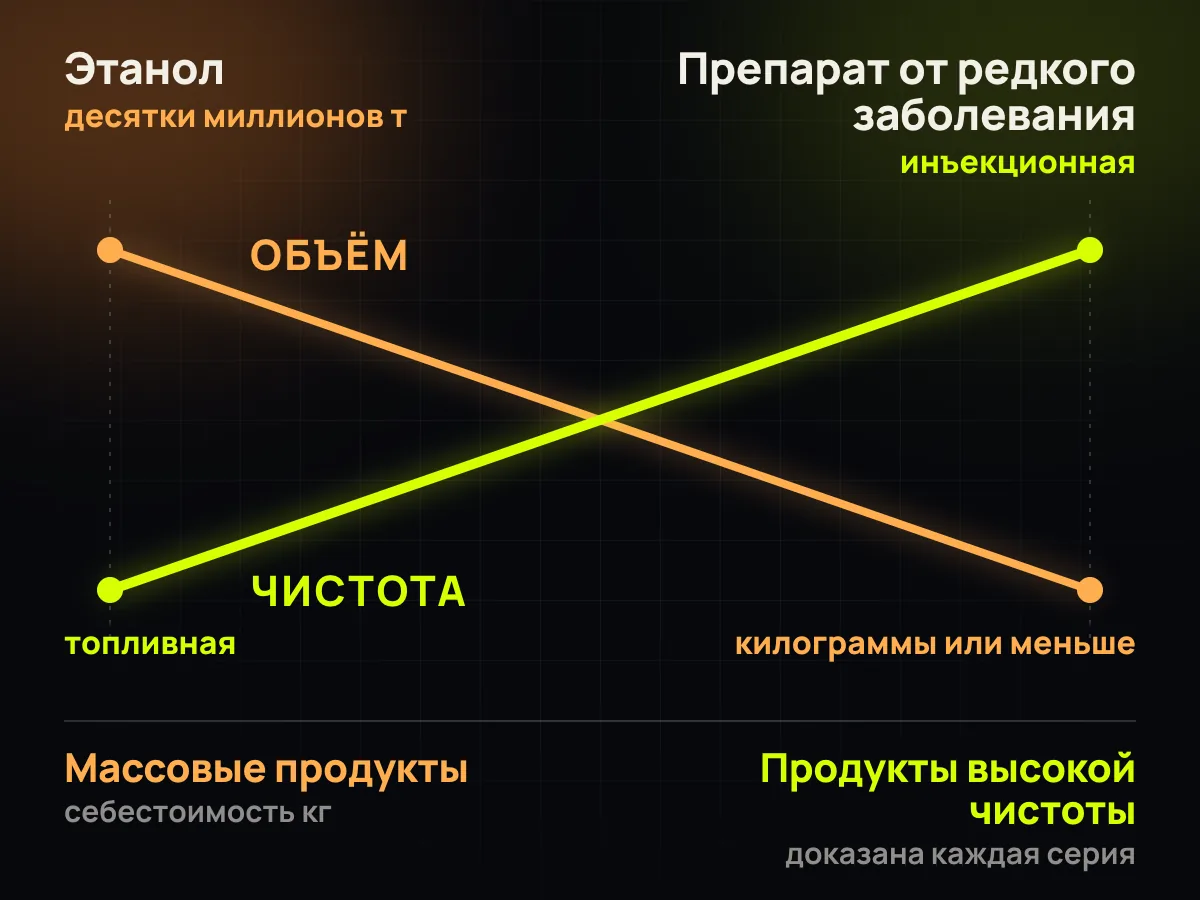
физического сырья мировой экономики в принципе можно производить биологически.
Что вы сможете делать.

Замыкайте баланс массы и энергии
Этап 1 · Process Foundations & Aseptic Practice
Управляйте кислородом, pH и сдвигом в баке
Этап 2 · Bioreactors & Process Control
Масштабируйте, не меняя процесс
Этап 3 · Platforms, Modalities & Scale-Up
Проектируйте очистку в три стадии
Этап 4 · Downstream Purification
Составляйте и разливайте стерильный продукт
Этап 5 · Formulation, Fill-Finish & Quality
Ведите и документируйте серию по GMP
Этап 6 · Facilities, GMP Operations & Data
Семь этапов.Один ровный подъём.
Среда — биореактор, колонка — флакон, лабораторный процесс — валидированный завод.
в 7 этапах
≈ 10 на модуль
в уроках по 15 минут
до конца всего курса
- 1
Process Foundations & Aseptic Practice
Балансы, среды, стерильность
16 модулей · 160 тем · ≈ 40 ч
- 2
Bioreactors & Process Control
Внутри бака: кислород и контроль
14 модулей · 140 тем · ≈ 35 ч
- 3
Platforms, Modalities & Scale-Up
Микробы, клетки, векторы — и масштаб
20 модулей · 200 тем · ≈ 50 ч
- 4
Downstream Purification
Как получить молекулу чистой
16 модулей · 160 тем · ≈ 40 ч
- 5
Formulation, Fill-Finish & Quality
Стабильно, стерильно, в упаковке
12 модулей · 120 тем · ≈ 30 ч
- 6
Facilities, GMP Operations & Data
Площадки, валидация, протоколы серий
7 модулей · 70 тем · ≈ 18 ч
- 7
Transfer, Economics & Capstone
Перенос, стоимость, свой завод
5 модулей · 50 тем · ≈ 13 ч
Месяцы
Часы и месяцы — оценка: один 15-минутный урок на тему, каждый день.
Каждый модуль.Каждая тема.
Названия модулей и тем остаются на английском — на этом языке говорит отрасль.
Этап 1
Process Foundations & Aseptic Practice
Балансы, среды, стерильность
16 модулей · 160 тем
1Scope of Bioprocessing and Biomanufacturing10 тем
- Biological Production Systems and Manufactured Products
- Upstream, Downstream, Formulation, and Final Product Operations
- Microbial, Cell Culture, and Cell-Free Production Platforms
- Biomass, Secreted Products, and Intracellular Products
- Bulk Ingredients and High-Purity Biological Products
- Research, Pilot, Clinical, and Commercial Manufacturing Contexts
- Process Development and Routine Production Responsibilities
- Relationships Between Product Quality and Process Performance
- Interfaces with Genetic Engineering and Application-Specific Biotechnology
- The Product and Process Lifecycle from Concept to Supply
2Product Requirements and Manufacturing Specifications10 тем
- Intended Product Use and Required Quality
- Identity, Purity, Potency, and Composition Targets
- Product Quantity, Concentration, and Physical Form
- Stability and Handling Requirements
- Permissible Impurities and Contamination Risks
- Demand, Batch Size, and Production Frequency
- Raw Material and Facility Constraints
- Product Specifications and In-Process Acceptance Criteria
- Manufacturing Cost and Supply Reliability Targets
- Translating Product Requirements into Process Decisions
3Process Architecture and Flowsheet Development10 тем
- Defining the Process Boundary
- Block Flow Diagrams and Process Flow Diagrams
- Linking Unit Operations into a Complete Process
- Product and Impurity Paths Through the Flowsheet
- Batch, Semicontinuous, and Continuous Architectures
- Intermediate Pools, Transfers, and Hold Steps
- Recycle Streams and Purge Requirements
- Alternative Recovery and Purification Sequences
- Bottlenecks and Interdependencies Between Operations
- Flowsheet Selection Against Technical and Economic Criteria
4Material and Energy Balances10 тем
- Choice of Calculation Basis and System Boundary
- Total Mass and Component Balances
- Batch Accumulation and Continuous Flow Balances
- Biomass, Substrate, Product, and Byproduct Accounting
- Gas-Liquid Balances and Off-Gas Streams
- Water, Salt, and Buffer Contributions
- Recovery, Concentration, and Dilution Calculations
- Heat Generation and Heat Removal Requirements
- Balance Closure and Unaccounted Material
- Using Balances to Detect Process and Measurement Errors
5Growth and Product Formation Kinetics10 тем
- Specific Growth Rate and Doubling Time
- Substrate-Limited Growth Models
- Growth-Associated and Nongrowth-Associated Production
- Maintenance Requirements and Biomass Yield
- Substrate and Product Inhibition
- Cell Death, Lysis, and Viability Decline
- Specific Productivity and Volumetric Productivity
- Lag, Exponential, and Stationary Growth Behavior
- Parameter Estimation from Process Measurements
- Limits of Simplified Kinetic Models
6Metabolic Stoichiometry for Process Engineering10 тем
- Carbon and Electron Balances
- Biomass Composition and Empirical Formulae
- Theoretical and Observed Product Yields
- Oxygen Demand and Carbon Dioxide Formation
- Respiratory Quotient and Metabolic State Interpretation
- Overflow Metabolism and Undesired Byproducts
- Cofactor and Energy Requirements at Process Level
- Nutrient Limitation and Product Distribution
- Elemental Balance Checks for Process Data
- Linking Metabolic Constraints to Feasible Production Targets
7Production Platform Selection10 тем
- Matching Product Attributes to Host Capabilities
- Microbial and Mammalian Platform Tradeoffs
- Expression, Folding, and Post-Translational Requirements
- Secreted and Intracellular Production Strategies
- Suspension, Adherent, and Immobilized Systems
- Product Toxicity and Host Tolerance
- Growth Rate and Process Duration
- Recovery Complexity and Impurity Burden
- Platform Maturity and Supply-Chain Availability
- Selecting a Platform for the Complete Manufacturing Process
8Cell Banks and Production Organism Management10 тем
- Master and Working Cell Bank Concepts
- Production Strain and Cell Line Identity
- Genetic and Phenotypic Stability
- Bank Characterization and Documentation
- Storage, Inventory, and Access Control
- Passage History and Generation Tracking
- Recovery Consistency and Production Performance
- Adventitious Agent and Contamination Assessment
- Bank Replacement and Comparability Considerations
- Traceability from Bank Material to Product Batch
9Raw Materials and Feedstock Qualification10 тем
- Critical and Noncritical Material Classification
- Chemically Defined and Complex Raw Materials
- Feedstock Composition and Lot Variability
- Supplier Qualification and Change Notification
- Certificates, Identity Testing, and Incoming Controls
- Trace Impurities and Process Sensitivity
- Animal-Origin and Other Source-Related Risks
- Material Storage and Expiry Management
- Supply Continuity and Alternative Source Qualification
- Connecting Raw Material Attributes to Product Quality
10Medium Development and Preparation10 тем
- Carbon, Nitrogen, Mineral, and Vitamin Requirements
- Defined, Serum-Free, and Protein-Free Formulations
- Complex Nutrients and Variability Management
- Osmolality and Ionic Strength
- Nutrient Stability and Chemical Compatibility
- Solubility, Precipitation, and Preparation Order Concepts
- Medium Concentrates and Feed Solutions
- Mixing, Filtration, and Storage Interfaces
- Medium Performance Across Production Scales
- Balancing Growth, Productivity, Quality, and Cost
11Buffer Systems and Solution Management10 тем
- Buffer Capacity and Target pH
- Temperature Effects on Buffer Behavior
- Conductivity and Ionic Composition
- Buffer Compatibility with Product and Equipment
- Concentrates, Dilution, and Inline Conditioning
- Large-Volume Preparation and Mixing Constraints
- Filtration and Bioburden Control
- Solution Hold Times and Storage Conditions
- Buffer Inventory and Manufacturing Scheduling
- Reducing Buffer Demand Through Process Design
12Process Utilities and Support Systems10 тем
- Process Water and Water Quality Requirements
- Clean Steam and Plant Steam Interfaces
- Process Gases and Gas Quality
- Compressed Air and Instrument Air
- Heating, Cooling, and Chilled Water Systems
- Vacuum and Exhaust Services
- Utility Capacity and Peak Demand
- Distribution Loops and Point-of-Use Requirements
- Utility Monitoring and Maintenance
- Utility Failure Effects on Process and Product
13Contamination Prevention Across the Process10 тем
- Microbial, Particulate, and Chemical Contamination Sources
- Open and Closed Processing Boundaries
- Personnel, Material, and Equipment Flows
- Raw Material and Utility Contributions
- Contamination Routes During Transfers and Sampling
- Segregation of Products and Production Stages
- Bioburden Trends and Early Warning Indicators
- Contamination Impact on Yield and Product Quality
- Investigation of Suspected Contamination
- Building a Process-Wide Contamination Control Strategy
14Aseptic Handling and Closed Transfers10 тем
- Aseptic Processing as a System of Controls
- Sterile Connections and Disconnections
- Closed Sampling Architectures
- Transfer Assemblies and Fluid Path Integrity
- Operator Interventions and Exposure Risk
- Aseptic Material Addition and Removal
- Equipment Set-Up and Connection Verification
- Leak Detection and Integrity Assurance
- Training and Qualification of Critical Handling Activities
- Documenting and Evaluating Aseptic Interventions
15Sterilization and Decontamination Principles10 тем
- Sterilization, Sanitization, and Disinfection
- Heat-Based Sterilization Concepts
- Sterilizing Filtration for Heat-Sensitive Materials
- Radiation and Chemically Based Treatment Interfaces
- Load Characteristics and Treatment Uniformity
- Biological and Physical Indicators
- Sterilization Effects on Media and Materials
- Equipment Design for Effective Treatment
- Cycle Development and Validation Principles
- Maintaining the Treated State Until Use
16Inoculum and Seed Train Development10 тем
- Production Start-Up from Qualified Bank Material
- Seed Expansion Stages and Vessel Progression
- Inoculum Quality and Physiological State
- Viability, Density, and Growth Consistency
- Timing and Transfer Windows
- Scale Transitions During Seed Expansion
- Contamination Prevention in Seed Operations
- Seed Train Capacity and Facility Scheduling
- Variability Propagation into Production
- Seed Train Performance and Acceptance Criteria
Этап 2
Bioreactors & Process Control
Внутри бака: кислород и контроль
14 модулей · 140 тем
17Batch Production Processes10 тем
- Batch Process Phases and Operating Profiles
- Initial Nutrient Availability and Growth Progression
- Substrate Depletion and Product Accumulation
- Changing Oxygen and Heat Demands
- Production Timing and Harvest Decisions
- Batch Duration and Equipment Occupancy
- Within-Batch and Between-Batch Variation
- Batch Yield and Productivity Metrics
- Failure Modes in Batch Operation
- Selecting Batch Processing for a Product Requirement
18Fed-Batch Production Processes10 тем
- Nutrient Addition as a Process Control Variable
- Feed Profiles and Biological Demand
- Substrate Limitation and Excess Substrate Effects
- Growth and Production Phase Coordination
- Changing Working Volume and Dilution
- Feed Composition and Osmolality Effects
- Feedback-Based and Predetermined Feeding Concepts
- Feed Delivery Accuracy and Reliability
- Interpreting Metabolic Changes During Feeding
- Comparing Fed-Batch Performance with Alternative Modes
19Continuous Culture and Chemostat Systems10 тем
- Dilution Rate and Residence Time
- Steady State and Transient Operation
- Growth Limitation and Biomass Concentration
- Washout and Operating Stability
- Product Formation Under Continuous Conditions
- Genetic Stability Over Extended Operation
- Contamination Risk During Long Campaigns
- Start-Up, Shutdown, and Disturbance Recovery
- Continuous Sampling and Material Accounting
- Throughput and Quality Compared with Batch Production
20Perfusion and Cell Retention10 тем
- Medium Exchange and Cell Retention Concepts
- Cell-Specific Perfusion Requirements
- Retention Devices and Separation Principles
- Cell Bleed and Population Management
- Product Passage and Retention Behavior
- Fouling and Retention Device Performance
- Nutrient, Metabolite, and Viability Control
- Harvest Stream Consistency and Downstream Interfaces
- Long-Duration Operation and Campaign Stability
- Evaluating Media Demand and Product Quality Tradeoffs
21Bioreactor Types and Configuration10 тем
- Stirred-Tank Bioreactors
- Airlift and Bubble Column Systems
- Rocking-Motion and Wave-Mixed Systems
- Fixed-Bed and Packed-Bed Bioreactors
- Hollow-Fiber Culture Systems
- Photobioreactor Architectures
- Solid-State Fermentation Equipment Concepts
- Stainless-Steel and Single-Use Vessel Platforms
- Vessel Geometry and Operational Flexibility
- Selecting Reactor Architecture for Biological and Process Needs
22Mixing and Fluid Behavior10 тем
- Flow Regimes and Reynolds Number
- Impeller Types and Pumping Behavior
- Mixing Time and Blend Uniformity
- Power Input and Power per Unit Volume
- Baffles and Vessel Flow Patterns
- Newtonian and Non-Newtonian Broths
- Viscosity Changes During Production
- Local Concentration Gradients
- Dead Zones and Short-Circuiting
- Connecting Mixing Performance to Cellular Exposure
23Gas Transfer and Oxygen Supply10 тем
- Gas-Liquid Mass Transfer Principles
- Volumetric Mass Transfer Coefficient
- Oxygen Transfer Rate and Oxygen Uptake Rate
- Gas Solubility and Driving Force
- Sparger Design and Bubble Distribution
- Agitation, Aeration, and Pressure Effects
- Oxygen Enrichment and Gas Supply Constraints
- Carbon Dioxide Removal and Accumulation
- Effects of Broth Properties on Transfer Performance
- Balancing Gas Transfer with Shear and Foam Control
24Heat Transfer and Temperature Control10 тем
- Biological and Mechanical Heat Generation
- Heat Transfer Through Vessel Walls and Coils
- Surface-Area-to-Volume Changes with Scale
- Cooling Capacity and Temperature Uniformity
- Dynamic Temperature Profiles
- Heating and Cooling During Process Preparation
- Utility Temperature and Heat Transfer Driving Force
- Fouling and Declining Thermal Performance
- Temperature Excursions and Biological Consequences
- Designing Temperature Control for Peak Process Demand
25Shear, Hydrodynamic Stress, and Cell Damage10 тем
- Stress Near Impellers and Spargers
- Bubble Rupture and Gas-Liquid Interfaces
- Cell Type and Shear Sensitivity
- Aggregate and Microcarrier Damage
- Pumping and Transfer-Induced Stress
- Shear Effects on Product Integrity
- Protective Medium Components and Tradeoffs
- Local Stress and Bulk Operating Measurements
- Separating Mechanical Damage from Other Causes of Cell Loss
- Balancing Mixing, Transfer, and Cell Protection
26Foam and Interfacial Phenomena10 тем
- Biological and Chemical Causes of Foaming
- Foam Formation and Stability
- Product and Cell Partitioning into Foam
- Foam Sensors and Measurement Limitations
- Mechanical and Chemical Foam Control
- Antifoam Effects on Oxygen Transfer
- Antifoam Carryover into Downstream Processing
- Exhaust Line and Filter Protection
- Process Variability Associated with Foam Events
- Integrating Foam Management into Process Design
27pH, Dissolved Gases, and Osmolality Control10 тем
- Biological Production and Consumption of Acidic Species
- pH Control and Buffer Capacity
- Local Excursions During Reagent Addition
- Dissolved Oxygen Control Cascades
- Carbon Dioxide and Acid-Base Interactions
- Osmolality Changes from Feeds and Reagents
- Sensor Location and Measurement Representativeness
- Control Interactions and Competing Objectives
- Product Quality Responses to Culture Conditions
- Defining Operating Ranges from Biological Evidence
28Bioprocess Instrumentation and Measurement10 тем
- Temperature, Pressure, Flow, and Level Measurements
- pH and Dissolved Oxygen Probes
- Off-Gas Oxygen and Carbon Dioxide Analysis
- Biomass, Viability, and Capacitance Measurements
- Weight-Based Material Tracking
- At-Line Metabolite Measurements
- Sensor Calibration and Drift
- Measurement Delay and Sampling Frequency
- Sensor Fouling and Diagnostic Checks
- Measurement Uncertainty in Process Decisions
29Bioprocess Control Strategies10 тем
- Feedback and Feedforward Control
- Proportional-Integral-Derivative Control Concepts
- Cascade and Ratio Control
- Alarm Limits and Action Limits
- Automated Sequences and Interlocks
- Control Loop Interaction
- Setpoint Changes and Dynamic Response
- Disturbance Rejection and Recovery
- Manual Intervention and Automated Decision Boundaries
- Connecting Control Actions to Product Quality Objectives
30Process Analytical Technology10 тем
- Inline, Online, At-Line, and Offline Measurements
- Spectroscopic Monitoring Concepts
- Multivariate Calibration Models
- Soft Sensors and Inferred Process Variables
- Representative Sampling and Reference Assays
- Model Maintenance Across Batches and Scales
- Real-Time Process Understanding
- Data Quality and Instrument Qualification
- Process Feedback Based on Analytical Information
- Evidence Requirements for Using PAT in Control and Release
Этап 3
Platforms, Modalities & Scale-Up
Микробы, клетки, векторы — и масштаб
20 модулей · 200 тем
31Bacterial Production Processes10 тем
- Fast Growth and High Oxygen Demand
- High-Cell-Density Production Constraints
- Carbon Feeding and Overflow Metabolism
- Induction Timing and Production Burden
- Intracellular and Secreted Product Recovery Implications
- Cell Lysis and Impurity Generation
- Heat Removal at High Productivity
- Genetic Stability During Production
- Broth Properties and Harvestability
- Platform-Specific Links Between Culture Conditions and Product Quality
32Yeast and Filamentous Fungal Processes10 тем
- Yeast Growth and Production Characteristics
- Secretion and Extracellular Product Stability
- Fungal Morphology and Process Performance
- Pellets, Filaments, and Broth Rheology
- Oxygen Transfer in Viscous Cultures
- Carbon Source and Metabolic Regulation
- Protease Activity and Product Degradation
- Foaming and Surface-Active Products
- Harvest and Clarification Challenges
- Consistency of Morphology and Productivity Across Scales
33Mammalian Cell Culture Processes10 тем
- Suspension Cell Culture and Production Phenotypes
- Chemically Defined Media and Feed Strategies
- Nutrient Uptake and Inhibitory Metabolites
- Viable Cell Density and Culture Longevity
- Product Glycosylation and Culture Conditions
- Temperature and Production Phase Transitions
- Dissolved Carbon Dioxide and Osmolality Effects
- Cell Death and Downstream Impurity Burden
- Consistency Across Cell Line and Process Changes
- Balancing Titer, Quality, and Manufacturability
34Insect Cell Manufacturing Platforms10 тем
- Insect Cell Culture Characteristics
- Suspension Growth and Medium Requirements
- Expression System and Production Phase Interfaces
- Culture Synchrony and Product Heterogeneity
- Cell Density and Production Performance
- Protein Processing and Product Attributes
- Cell Viability and Harvest Timing
- Platform-Related Impurities and Clearance Needs
- Scale Translation and Operational Consistency
- Comparing Insect Cell Platforms with Alternative Hosts
35Plant Cell and Algal Production Systems10 тем
- Plant Cell Suspensions and Aggregate Formation
- Product Accumulation and Secretion Strategies
- Light-Dependent and Heterotrophic Production
- Light Distribution and Self-Shading
- Gas Exchange and Carbon Supply
- Growth, Differentiation, and Product Formation
- Shear Sensitivity and Culture Heterogeneity
- Biomass Harvesting and Dewatering
- Product Recovery from Complex Biomass
- Platform-Specific Scale and Resource Constraints
36Adherent Cells, Microcarriers, and Three-Dimensional Culture10 тем
- Surface Area as a Production Capacity Constraint
- Microcarrier Material and Surface Properties
- Cell Attachment and Distribution
- Aggregate Formation and Size Heterogeneity
- Nutrient and Oxygen Gradients Within Cell Structures
- Mixing and Suspension of Carriers
- Cell Expansion and Phenotype Maintenance
- Detachment and Harvest Recovery
- Residual Carrier and Aggregate Removal
- Scaling Surface-Dependent Production Platforms
37Biocatalytic Manufacturing Processes10 тем
- Isolated Enzymes and Whole-Cell Catalysts
- Catalyst Activity, Selectivity, and Stability
- Substrate Solubility and Product Inhibition
- Cofactor Supply and Regeneration Interfaces
- Immobilized and Soluble Catalysts
- Batch and Continuous Biotransformations
- Mass Transfer Limitations Around Biocatalysts
- Catalyst Reuse and Declining Performance
- Product Separation from Reaction Components
- Process Selection Based on Conversion, Purity, and Cost
38Cell-Free Manufacturing Processes10 тем
- Extract-Based and Reconstituted Production Systems
- Biological Inputs and Lot Consistency
- Energy Supply and Reaction Longevity
- Template, Substrate, and Cofactor Requirements
- Batch and Exchange-Based Reaction Architectures
- Product Folding and Assembly Requirements
- Inhibitory Byproducts and Reaction Limitations
- Scale Translation of Cell-Free Reactions
- Recovery from Complex Reaction Mixtures
- Comparing Cell-Free and Cell-Based Manufacturing Economics
39Recombinant Protein Process Development10 тем
- Soluble, Insoluble, and Secreted Expression Products
- Protein Folding and Disulfide Formation
- Product Degradation During Production and Recovery
- Inclusion Body Recovery Concepts
- Solubilization and Refolding Interfaces
- Aggregation and Misfolded Species
- Product Variants and Post-Translational Modifications
- Purification Sequence Selection from Product Properties
- Functional Activity and Structural Integrity
- Linking Upstream Choices to Final Product Recovery
40Antibody and Complex Protein Manufacturing10 тем
- Platform Processes and Molecule-Specific Exceptions
- Antibody Assembly and Product-Related Variants
- Glycosylation, Charge, and Size Heterogeneity
- Fragmentation and Aggregation
- Capture Platform Selection
- Impurity Clearance Across Polishing Steps
- Concentrated Protein Solution Behavior
- Multispecific and Fusion Protein Manufacturing Constraints
- Comparability Across Process Improvements
- Product Quality Control Across the Full Process
41Plasmid DNA Manufacturing10 тем
- Plasmid Identity and Structural Forms
- Production Host and Construct Stability Interfaces
- Biomass Production and Plasmid Yield
- Recovery Selectivity Between Plasmid and Host Material
- Shear Sensitivity and Structural Integrity
- Host DNA, RNA, Protein, and Endotoxin Impurities
- Separation of Desired and Undesired Plasmid Forms
- Concentration, Buffer Exchange, and Bulk Handling
- Analytical Characterization of Purity and Topology
- Scale and Quality Tradeoffs in Plasmid Production
42RNA Manufacturing and Product Handling10 тем
- Template and Raw Material Quality
- Enzymatic RNA Production as a Manufacturing Platform
- Transcript Identity, Length, and Integrity
- Capping and Polyadenylation as Product Attributes
- Truncated and Double-Stranded RNA Impurities
- Nuclease Control and Degradation Prevention
- Purification and Concentration Interfaces
- RNA Formulation and Delivery Material Interfaces
- Cold-Chain and Hold-Time Requirements
- Analytical Confirmation of Composition and Function
43Viral Vector and Virus-Like Particle Manufacturing10 тем
- Platform Choice and Product Quality Requirements
- Producer Cell and Production System Interfaces
- Product Assembly and Population Heterogeneity
- Physical Particle and Functional Activity Measurements
- Harvest Location and Recovery Strategy
- Empty, Full, and Aberrant Particle Species
- Product-Related and Host-Related Impurities
- Purification Recovery and Structural Integrity
- Containment and Platform-Specific Facility Requirements
- Consistency, Stability, and Manufacturing Comparability
44Cell-Based Product Manufacturing10 тем
- Autologous and Allogeneic Manufacturing Architectures
- Starting Material Variability and Acceptance
- Cell Selection, Expansion, and Processing Interfaces
- Cell Identity and Phenotype Preservation
- Viability, Recovery, and Functional Potency
- Closed Processing and Contamination Prevention
- Chain of Identity and Chain of Custody
- Short Shelf Life and Release Timing
- Scale-Out and Scale-Up Tradeoffs
- Scheduling Production Around Individual or Shared Product Lots
45Extracellular Vesicles and Other Particulate Products10 тем
- Product Definition and Source Cell Attributes
- Particle Heterogeneity and Population Identity
- Culture Conditions and Product Composition
- Separation from Cells, Debris, and Soluble Components
- Concentration and Fractionation Challenges
- Particle Number, Size, and Composition Measurements
- Product Function and Potency Assessment
- Co-Isolated Impurities and Analytical Limitations
- Storage, Freeze-Thaw, and Structural Stability
- Reproducibility Across Batches and Production Scales
46Scale-Up Principles and Engineering Criteria10 тем
- Geometric Similarity and Scale-Dependent Differences
- Constant Power per Volume as a Scale-Up Criterion
- Oxygen Transfer and Gas Supply Constraints
- Tip Speed and Hydrodynamic Stress Limits
- Mixing Time and Local Gradient Formation
- Heat Transfer Capacity at Production Scale
- Pressure, Gas Residence, and Carbon Dioxide Removal
- Equipment-Specific Scale Translation
- Conflicting Scale-Up Criteria and Practical Compromises
- Pilot Evidence and Risk-Based Scale-Up Decisions
47Scale-Down Models and Process Representativeness10 тем
- Purpose and Scope of a Scale-Down Model
- Matching Relevant Process Responses
- Reproducing Production-Scale Gradients
- Small-Scale Mixing and Aeration Differences
- Product Quality and Impurity Profile Comparability
- Equipment and Material Differences
- Model Qualification and Acceptance Criteria
- Using Scale-Down Models for Characterization Studies
- Model Limitations and Extrapolation Boundaries
- Maintaining Representativeness After Process Changes
48Experimental Design and Process Optimization10 тем
- Screening Process Factors and Material Attributes
- Factorial and Fractional Factorial Designs
- Main Effects and Interaction Effects
- Response Surface Methods
- Replication, Blocking, and Randomization
- Multiple Responses and Competing Objectives
- Robustness Across Raw Material and Equipment Variation
- Sequential Experimentation and Learning Efficiency
- Confirmatory Runs at Selected Conditions
- Distinguishing Statistical Improvement from Manufacturing Value
49Process Modeling and Simulation10 тем
- Mechanistic Models of Biological Production
- Dynamic Models of Bioreactors and Unit Operations
- Empirical and Hybrid Modeling Approaches
- Parameter Estimation and Identifiability
- Model Calibration and Independent Validation
- Sensitivity and Uncertainty Analysis
- Flowsheet Simulation and Material Integration
- Equipment Sizing and Resource Demand Prediction
- Digital Twin Concepts and Practical Boundaries
- Using Model Predictions in Engineering Decisions
50Process Intensification and Integrated Manufacturing10 тем
- Increasing Productivity per Unit of Facility Capacity
- Intensified Seed and Production Strategies
- High-Density and Extended-Duration Processes
- Linking Continuous Upstream and Downstream Operations
- Surge Capacity and Interstage Buffering
- Residence Time Distributions and Material Traceability
- Start-Up, Shutdown, and Nonconforming Material Diversion
- Control Strategy Across Connected Operations
- Product Quality During Transient Conditions
- Evaluating Complexity, Reliability, and Economic Benefit
Этап 4
Downstream Purification
Как получить молекулу чистой
16 модулей · 160 тем
51Harvest Strategy and Primary Recovery10 тем
- Harvest Timing and Product Quality
- Product Location and Recovery Requirements
- Cell Removal and Product Release Objectives
- Broth Composition and Separation Difficulty
- Product Stability During Harvest
- Transfer Time and Intermediate Hold Conditions
- Temperature, Shear, and Exposure Management
- Recovery Yield and Impurity Carryover
- Matching Harvest Capacity to Upstream Output
- Selecting Primary Recovery for the Complete Purification Train
52Centrifugation and Settling-Based Separations10 тем
- Sedimentation Principles and Separation Efficiency
- Particle Size, Density, and Broth Viscosity
- Batch and Continuous Centrifuge Architectures
- Disc-Stack Centrifugation Concepts
- Feed Acceleration and Shear Exposure
- Solids Discharge and Product Loss
- Clarification Performance and Residual Particulates
- Scale Translation and Equipment Capacity
- Cleaning, Containment, and Maintenance Interfaces
- Comparing Centrifugation with Filtration Alternatives
53Depth Filtration and Clarification10 тем
- Depth Capture and Surface Retention Mechanisms
- Filter Media and Material Compatibility
- Solids Loading and Capacity
- Pressure Rise and Filtration Endpoint
- Staged Clarification Architectures
- Product Adsorption and Recovery Loss
- Flocculation as a Clarification Interface
- Scale-Up from Filter Screening Studies
- Filter Variability and Supply Considerations
- Clarified Feed Quality for Downstream Operations
54Cell Disruption and Product Release10 тем
- Mechanical and Nonmechanical Disruption Classes
- Product Location and Required Release Extent
- Cell Wall Properties and Platform Differences
- Heat Generation During Disruption
- Product Denaturation and Proteolysis
- Debris Size and Downstream Separability
- Viscosity from Released Intracellular Material
- Containment of Disrupted Biological Material
- Recovery Efficiency and Impurity Burden
- Integrating Disruption with Immediate Product Stabilization
55Precipitation, Flocculation, and Crystallization10 тем
- Selective Solubility and Phase Formation
- Salt, pH, Solvent, and Polymer Effects
- Product Precipitation and Impurity Precipitation
- Mixing and Local Supersaturation
- Particle Growth and Separation Behavior
- Reversibility and Product Activity Retention
- Wash and Redissolution Interfaces
- Crystallization as a Purification Option
- Yield, Purity, and Physical Form Tradeoffs
- Scale Translation of Phase-Based Recovery Operations
56Extraction and Partition-Based Recovery10 тем
- Partition Coefficients and Phase Equilibria
- Aqueous Two-Phase Systems
- Solvent Compatibility with Biological Products
- Product Selectivity and Impurity Distribution
- Phase Mixing and Mass Transfer
- Phase Separation and Emulsion Formation
- Multistage Recovery Concepts
- Solvent and Phase-Forming Material Removal
- Environmental and Equipment Compatibility
- Comparing Extraction with Adsorptive Purification Routes
57Chromatography Fundamentals for Manufacturing10 тем
- Binding, Retention, and Elution Principles
- Stationary Phase Properties and Selectivity
- Dynamic Binding Capacity
- Residence Time and Mass Transfer
- Breakthrough Curves and Loading Decisions
- Resolution, Recovery, and Purity
- Column Packing and Flow Distribution
- Pressure Drop and Mechanical Limits
- Resin Lifetime and Reuse Strategy
- Scaling Chromatographic Operations from Development Data
58Affinity Capture Processes10 тем
- Specific Binding as a Capture Mechanism
- Ligand and Product Compatibility
- Protein A and Alternative Affinity Platforms
- Feed Conditioning and Binding Performance
- Wash Selectivity and Impurity Removal
- Elution Conditions and Product Stability
- Ligand Leaching and Related Impurities
- Resin Fouling and Declining Capacity
- Cleaning Compatibility and Lifetime Evaluation
- Capture Step Integration with Subsequent Polishing
59Ion-Exchange Chromatography10 тем
- Anion and Cation Exchange Modes
- Product Charge and Solution Conditions
- Bind-Elute and Flow-Through Operation
- Conductivity and Binding Selectivity
- Separation of Charge Variants
- Host Protein and Nucleic Acid Clearance
- Aggregate Separation Opportunities and Limits
- Gradient and Step Elution Concepts
- Load Density and Robust Operating Ranges
- Positioning Ion Exchange Within a Purification Sequence
60Hydrophobic Interaction and Reversed-Phase Separations10 тем
- Hydrophobic Retention Mechanisms
- Ligand Chemistry and Selectivity
- Salt Effects in Hydrophobic Interaction Chromatography
- Organic Solvent Effects in Reversed-Phase Separations
- Product Conformation and Activity Risks
- Separation of Product-Related Variants
- Feed Compatibility and Conditioning Requirements
- Recovery and Elution Challenges
- Equipment and Solvent Management Constraints
- Selecting Hydrophobic Separation Modes for Product Properties
61Size-Based and Multimodal Chromatography10 тем
- Size Exclusion and Molecular Size Distribution
- Resolution and Sample Volume Constraints
- Aggregate and Fragment Separation
- Desalting and Buffer Exchange Applications
- Multimodal Ligands and Combined Interactions
- Selectivity Across pH and Conductivity Ranges
- Product-Specific Polishing Opportunities
- Throughput and Manufacturing-Scale Limitations
- Complementarity with Other Separation Mechanisms
- Selecting Final Polishing Steps from Remaining Impurities
62Continuous and Multicolumn Chromatography10 тем
- Sequential Column Operation and Process Cycling
- Countercurrent Separation Concepts
- Improved Utilization of Binding Capacity
- Loading, Washing, Elution, and Regeneration Scheduling
- Column Switching and Flow Path Management
- Product Pool Definition and Collection Logic
- System Transients and Cycle-to-Cycle Consistency
- Resin Aging and Column Performance Differences
- Integration with Continuous Feed Streams
- Throughput, Recovery, and Operational Complexity Tradeoffs
63Ultrafiltration and Diafiltration10 тем
- Membrane Retention and Molecular Size Cutoff
- Tangential Flow Filtration Principles
- Concentration Factor and Product Recovery
- Diafiltration and Solute Exchange
- Transmembrane Pressure and Flux
- Concentration Polarization and Membrane Fouling
- Product Viscosity and High-Concentration Operation
- Shear Exposure and Product Stability
- Membrane Area, Hold-Up Volume, and Scale Translation
- Endpoint Selection and Final Pool Consistency
64Membrane Adsorbers and Alternative Separation Devices10 тем
- Convective Adsorption and Mass Transfer
- Membrane and Monolith Architectures
- Flow-Through Impurity Removal
- Capture Applications and Binding Capacity
- Residence Time and Throughput
- Feed Compatibility and Fouling
- Disposable Device Integration
- Device Sizing and Scale Translation
- Recovery, Selectivity, and Material Consumption
- Comparing Membranes, Monoliths, and Packed Columns
65Viral Safety and Clearance Strategy10 тем
- Source-Related and Process-Related Viral Risks
- Prevention, Detection, and Clearance as Complementary Controls
- Inactivation and Removal Mechanisms
- Product Compatibility with Clearance Operations
- Orthogonal Clearance Steps
- Virus Filtration Performance and Fouling
- Product Aggregates and Filter Interactions
- Scale-Down Studies and Clearance Evidence
- Process Variability and Robustness of Clearance
- Interpretation and Limits of Viral Safety Claims
66Impurity Characterization and Clearance10 тем
- Host Cell Proteins and Residual Host DNA
- Endotoxins and Other Microbial Components
- Process Additives and Residual Reagents
- Leached Ligands and Product-Contact Materials
- Product-Related Aggregates, Fragments, and Variants
- Impurity Generation During Processing
- Clearance Factors Across Unit Operations
- Assay Coverage and Matrix Interference
- Impurity Fate Mapping Through the Process
- Connecting Impurity Profiles to Product Specifications
Этап 5
Formulation, Fill-Finish & Quality
Стабильно, стерильно, в упаковке
12 модулей · 120 тем
67Formulation Development and Product Stabilization10 тем
- Product Degradation Pathways
- Buffer, pH, and Ionic Strength Selection
- Stabilizers, Surfactants, and Other Excipients
- Aggregation and Interfacial Stress
- Oxidation, Deamidation, and Hydrolysis
- Concentration and Viscosity Constraints
- Compatibility with the Intended Delivery or Use Format
- Container and Closure Interactions
- Formulation Screening and Confirmatory Studies
- Linking Formulation to Manufacturing and Storage Requirements
68Intermediate Holds and Bulk Product Handling10 тем
- Hold-Time Requirements Between Unit Operations
- Temperature, Mixing, and Light Exposure
- Bulk Container and Contact Surface Selection
- Surface-to-Volume Effects on Bulk Product Recovery
- Freeze-Thaw Effects and Cryoconcentration
- Controlled Thawing and Pool Homogeneity
- Transfer Losses and Residual Hold-Up
- Microbial Control During Extended Holds
- Sampling and Testing of Intermediate Pools
- Validating Handling Conditions Against Product Stability
69Sterilizing Filtration and Final Fluid Preparation10 тем
- Filtration as a Sterility Assurance Operation
- Membrane Compatibility and Product Recovery
- Filterability and Pre-Filtration Requirements
- Pressure, Flow, and Filtration Capacity
- Product Aggregation and Filter Blockage
- Filter Integrity Testing Principles
- Sterile Downstream Fluid Path Requirements
- Maximum Hold Times Before and After Filtration
- Scale and Redundancy Considerations
- Process Validation and Product-Specific Suitability
70Aseptic Filling and Final Container Operations10 тем
- Bulk-to-Final-Container Process Interfaces
- Filling Accuracy and Product Loss
- Vials, Syringes, Cartridges, and Other Formats
- Container Preparation and Component Handling
- Isolators and Restricted Access Barrier Systems
- Critical Interventions and Exposure Control
- Stoppering, Sealing, and Closure Integrity
- Visible and Subvisible Particulate Considerations
- Aseptic Process Simulation Concepts
- Linking Fill-Finish Performance to Final Product Quality
71Lyophilization and Freeze-Dried Products10 тем
- Freezing, Primary Drying, and Secondary Drying
- Product Thermal Properties and Phase Behavior
- Heat and Mass Transfer During Drying
- Cake Structure and Physical Stability
- Residual Moisture and Product Performance
- Container Geometry and Fill Volume
- Edge-Vial and Shelf-Location Effects
- Reconstitution Time and Product Recovery
- Cycle Scale-Up and Equipment Constraints
- Linking Dried Product Attributes to Storage Stability
72Spray Drying and Other Product Finishing Methods10 тем
- Atomization and Droplet Formation
- Thermal Exposure and Biological Activity Retention
- Powder Moisture and Particle Properties
- Carrier Materials and Protective Formulations
- Agglomeration and Powder Handling
- Vacuum and Alternative Drying Concepts
- Biomass and Enzyme Product Finishing
- Dust, Containment, and Cleaning Requirements
- Packaging Compatibility and Moisture Protection
- Selecting Finishing Methods for Product Use and Economics
73Packaging, Storage, and Cold-Chain Distribution10 тем
- Primary and Secondary Packaging Functions
- Product-Container Compatibility
- Light, Moisture, and Oxygen Protection
- Temperature-Controlled Storage Systems
- Shipping Qualification and Route Variability
- Excursions and Stability-Based Assessment
- Mechanical Stress During Transport
- Inventory Rotation and Remaining Shelf Life
- Product Traceability Through Distribution
- Matching Supply Architecture to Product Stability
74Analytical Characterization and Quality Control10 тем
- Identity, Quantity, Purity, and Structural Attributes
- Orthogonal Analytical Methods
- Chromatographic and Electrophoretic Measurements
- Spectroscopic and Mass-Based Characterization
- Particle and Aggregate Measurements
- Reference Standards and System Suitability
- Method Specificity, Accuracy, and Precision
- Sampling Plans and Representative Results
- Analytical Method Transfer and Lifecycle Management
- Connecting Test Results to Product Disposition
75Potency and Functional Performance Assays10 тем
- Biological Activity and Product Quantity
- Mechanism-Relevant Assay Selection
- Cell-Based and Biochemical Assay Formats
- Relative Potency and Reference Comparators
- Dose-Response Behavior and Assay Range
- Variability in Biological Reagents
- Matrix Effects and Interference
- Stability-Indicating Functional Measurements
- Assay Qualification and Validation Concepts
- Interpreting Functional Results Alongside Structural Attributes
76Microbiological Quality Control10 тем
- Bioburden Measurement and Trending
- Sterility Testing and Its Limitations
- Endotoxin Testing and Matrix Interference
- Mycoplasma and Adventitious Agent Testing Interfaces
- Environmental and Personnel Monitoring
- Rapid Microbiological Methods
- Sample Handling and False Contamination
- Alert Levels, Action Levels, and Investigation
- Method Suitability for Different Product Types
- Integrating Microbiological Evidence into Batch Decisions
77Stability Programs and Shelf-Life Assessment10 тем
- Long-Term and Accelerated Stability Studies
- Stress Studies and Degradation Pathway Understanding
- Stability-Indicating Methods
- Physical, Chemical, and Functional Stability
- Container-Closure and Storage Condition Effects
- In-Use and Reconstituted Product Stability
- Intermediate and Bulk Stability
- Trend Analysis and Shelf-Life Justification
- Manufacturing Changes and Stability Commitments
- Managing Uncertainty in Stability Extrapolation
78Quality by Design and Process Characterization10 тем
- Quality Target Product Profiles
- Critical Quality Attributes
- Critical Process Parameters and Material Attributes
- Risk Assessment and Prioritization
- Parameter-Attribute Relationships
- Process Characterization Study Design
- Design Space and Proven Acceptable Ranges
- Integrated Control Strategy Development
- Residual Risk and Knowledge Gaps
- Updating Process Understanding Across the Product Lifecycle
Этап 6
Facilities, GMP Operations & Data
Площадки, валидация, протоколы серий
7 модулей · 70 тем
79Facility Layout and Equipment Engineering10 тем
- Process Adjacencies and Material Movement
- Personnel Flows and Segregation
- Controlled Environments and HVAC Interfaces
- Equipment Footprints and Maintenance Access
- Piping, Valves, Drainability, and Dead-Leg Considerations
- Product-Contact Materials and Surface Finish
- Modular and Multiproduct Facility Concepts
- Utility Distribution and Expansion Capacity
- Maintainability, Calibration, and Equipment Reliability
- Facility Design from Process and Contamination Control Requirements
80Single-Use Systems and Hybrid Facilities10 тем
- Disposable Bags, Tubing, Connectors, and Assemblies
- Single-Use Bioreactors and Downstream Skids
- Material Compatibility and Product Adsorption
- Extractables and Leachables Assessment
- Assembly Integrity and Leak Risk
- Supplier Qualification and Component Changes
- Storage, Handling, and Installation Controls
- Waste Generation and End-of-Life Options
- Hybrid Stainless-Steel and Single-Use Architectures
- Evaluating Flexibility, Reliability, and Total Cost
81Cleaning, Sanitization, and Changeover10 тем
- Residue Types and Cleaning Challenges
- Cleaning-in-Place and Cleaning-Out-of-Place
- Cleaning Agent Compatibility and Removal
- Flow Coverage and Equipment Cleanability
- Sanitization and Bioburden Reduction
- Dirty and Clean Hold Times
- Sampling Locations and Recovery Considerations
- Cleaning Acceptance Criteria and Validation
- Cross-Contamination Control in Multiproduct Facilities
- Changeover Duration and Manufacturing Capacity
82Qualification, Validation, and Manufacturing Quality Systems10 тем
- Good Manufacturing Practice Principles in Biomanufacturing
- Equipment Design and User Requirement Specifications
- Installation, Operational, and Performance Qualification
- Process Design and Process Performance Qualification
- Continued Process Verification
- Validation of Supporting Systems and Critical Methods
- Document Control and Approved Procedures
- Training, Competency, and Quality Responsibilities
- Product-Specific Requirements Across Manufacturing Sectors
- Maintaining a Validated State During Routine Operation
83Automation, Manufacturing Data, and Digital Integrity10 тем
- Supervisory Control and Distributed Control Systems
- Recipe Management and Automated Batch Execution
- Manufacturing Execution Systems and Electronic Records
- Historian Data and Time Alignment
- Data Context, Units, and Equipment Metadata
- Access Control and Audit Trails
- Data Review and Exception Handling
- Computerized System Validation Concepts
- Backup, Recovery, and Operational Continuity
- Reliable Data for Process Trending and Decision Support
84Batch Execution and Routine Manufacturing Operations10 тем
- Production Readiness and Pre-Batch Checks
- Material Dispensing and Reconciliation
- Equipment Status and Line Clearance
- Approved Instructions and Execution Records
- In-Process Sampling and Decision Points
- Operator Handoffs and Shift Communication
- Alarms, Interventions, and Escalation
- Yield Reconciliation and Batch Review
- Quality Disposition and Product Release Interfaces
- Operational Discipline and Right-First-Time Performance
85Deviations, Root Cause, and Change Management10 тем
- Deviation Detection and Initial Containment
- Product Impact and Batch Impact Assessment
- Root-Cause Investigation and Evidence Quality
- Corrective and Preventive Actions
- Effectiveness Checks and Recurrence Prevention
- Out-of-Specification and Out-of-Trend Results
- Planned Changes and Risk Assessment
- Comparability Requirements After Process Changes
- Documentation and Cross-Functional Review
- Learning from Process Failures Without Unsupported Conclusions
Этап 7
Transfer, Economics & Capstone
Перенос, стоимость, свой завод
5 модулей · 50 тем
86Technology Transfer and Manufacturing Readiness10 тем
- Sending and Receiving Site Responsibilities
- Process Description and Transfer Documentation
- Critical Knowledge and Tacit Operational Dependencies
- Equipment Fit and Scale Differences
- Analytical Method and Reference Material Transfer
- Raw Material and Supplier Alignment
- Engineering Runs and Readiness Assessment
- Training and On-Site Technical Support
- Transfer Acceptance Criteria and Open Issue Management
- Product Comparability Across Manufacturing Sites
87Capacity Planning, Scheduling, and Supply Continuity10 тем
- Process Cycle Time and Equipment Occupancy
- Upstream and Downstream Capacity Matching
- Shared Equipment and Utility Bottlenecks
- Campaign Length and Changeover Frequency
- Buffer, Media, and Intermediate Storage Capacity
- Labor, Sampling, and Quality Testing Constraints
- Raw Material Lead Times and Inventory Strategy
- Failure Recovery and Schedule Resilience
- Make-or-Buy and Contract Manufacturing Interfaces
- Planning Supply Against Demand and Product Shelf Life
88Bioprocess Economics and Investment Decisions10 тем
- Capital Expenditure and Operating Expenditure
- Cost of Goods and Cost per Functional Unit
- Titer, Rate, Yield, and Recovery as Economic Drivers
- Raw Materials, Consumables, Labor, and Utilities
- Facility Utilization and Depreciation
- Batch Failure and Quality-Related Costs
- Sensitivity Analysis and Uncertain Assumptions
- Scale-Up Economics and Commercial Throughput
- Comparison of Alternative Platforms and Flowsheets
- Linking Development Priorities to Manufacturing Economics
89Environmental Performance and Operational Safety10 тем
- Energy, Water, and Material Intensity
- Waste Stream Segregation and Treatment Interfaces
- Biological Containment and Exposure Prevention
- Pressure, Thermal, Chemical, and Mechanical Hazards
- Gas Handling and Oxygen-Deficient Atmospheres
- Dust and Aerosol Control
- Resource Recovery and Process Integration
- Lifecycle Boundaries and Environmental Tradeoffs
- Emergency Response and Operational Resilience
- Balancing Environmental Improvement with Product Quality and Reliability
90Integrated Biomanufacturing Design Projects10 тем
- Flowsheet Design for a Secreted Protein Product
- Scale-Up Assessment for a High-Density Microbial Process
- Fed-Batch and Perfusion Comparison for a Defined Production Goal
- Primary Recovery Selection for an Intracellular Product
- Purification Train Design from Product and Impurity Properties
- Formulation and Storage Strategy for an Unstable Biological Product
- Capacity and Cost Assessment for a Multiproduct Facility
- Technology Transfer Plan with Comparability and Readiness Criteria
- Investigation and Redesign of a Process with Variable Product Quality
- Integrated Review of Performance, Quality, Scale, Supply, and Economics
Пятнадцать минут.Каждый день.
- 1
Урок влезает в обеденный перерыв
По одной мысли за раз, на коротких слайдах. Весь урок — около пятнадцати минут.
- 2
Практика с мгновенной обратной связью
Вопросы — внутри урока. Отвечаете и сразу видите, получилось ли.
- 3
Стрик, который возвращает вас снова
Урок в день держит стрик. Короткие регулярные занятия доводят до конца курса.
- 1
Урок влезает в обеденный перерыв
По одной мысли за раз, на коротких слайдах. Весь урок — около пятнадцати минут.
- 2
Практика с мгновенной обратной связью
Вопросы — внутри урока. Отвечаете и сразу видите, получилось ли.
- 3
Стрик, который возвращает вас снова
Урок в день держит стрик. Короткие регулярные занятия доводят до конца курса.
Для тех, кто выпускает серию.
Инженеры-химики, идущие в биотех
Где вы вырастете сильнее всего
Масштабируйте, не меняя процесс
Этап 3 · Platforms, Modalities & Scale-UpУчёные из лаборатории — в производство
Производственники, осваивающие upstream
Где вы вырастете сильнее всего
Ведите и документируйте серию по GMP
Этап 6 · Facilities, GMP Operations & Data
Куда ведёт этот курс.
Работа, вокруг которой построен курс, и как в неё попадают.
Bioprocess Engineer
Берёт производственный штамм или клеточную линию и превращает их в процесс, который работает в масштабе.
Все карьеры будущегоВ работе
- Разработать и оптимизировать процесс ферментации или культивирования клеток
- Спроектировать линию очистки и выйти на целевую чистоту
- Масштабировать процесс и передать его в производство
Как туда попадают
Обычно — диплом по химической или биохимической инженерии либо биотехнологии с опытом в процессах; опыт GMP ценится высоко.

Будьте первыми в очереди.
Ранний доступ — для частных лиц, пилот — для команд. Расскажите, кто у вас учится.
enterprise@astratrainer.com