
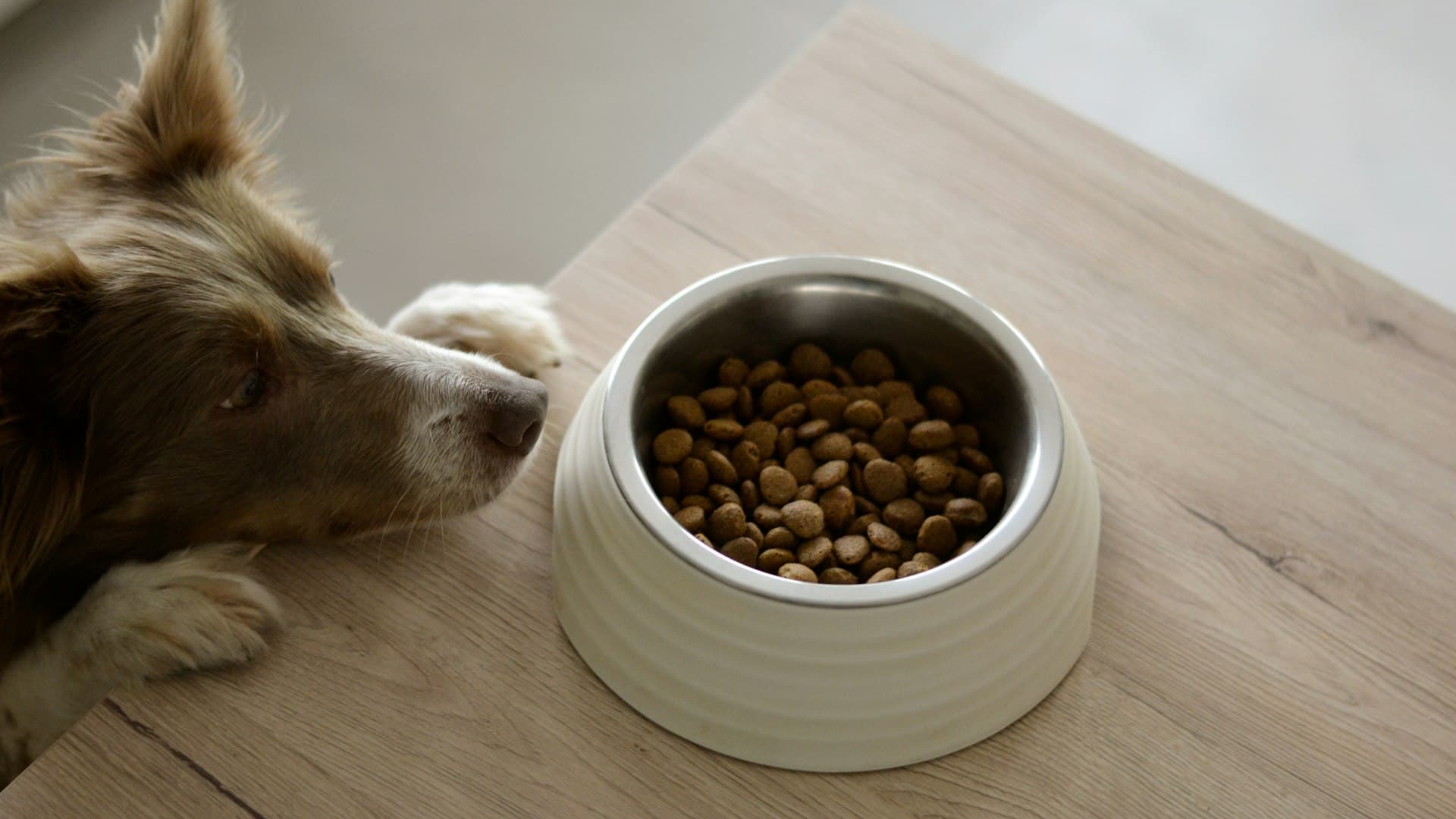
You open social media and within thirty seconds you have seen three strong opinions. Kibble is harmful. Homemade is best. Grain-free is healthier.
A week later, another expert says the opposite of all three, with equal confidence and a similar number of followers.
The natural response is to keep researching until you find the answer. That response is the problem, and recognising why is the single most useful thing in this article.
Thirty seconds, three contradictions
Notice the structure of what you encountered. Three claims, each stated as settled, each contradicting the others, none accompanied by the kind of evidence that would let you adjudicate.
If this were a field with a clear answer, that would not be the state of the discourse. Fields with clear answers are boring. Loud, confident, permanently contested advice is characteristic of areas where the evidence is genuinely thin, where commercial interests are large, and where people's feelings about their animals are strong.
Pet nutrition is all three.
The confusion is not a sign that you have not researched enough. It is a sign that the confident answers are less supported than they sound.
The mistake hidden inside the confusion
The hidden mistake is the premise: that there exists a perfect food, that it is discoverable, and that your job is to find it.
Once you hold that premise, every contradictory claim is an obstacle between you and the right answer, so you keep looking. The search is unending, because the thing being searched for does not exist in the form assumed.
Dogs are individuals. They vary in size, age, activity, breed predisposition, digestive sensitivity and what they will actually eat. A food that suits one does not suit another, and "best" is not a property of a food, it is a relationship between a food and a particular animal.
Which changes the question usefully. Not "what is the best dog food" but "is this food working for this dog." The second is answerable, by observation, within weeks.
Why the debate is so loud and so unresolved
Four reasons, worth knowing because they explain why more research does not help.
The evidence base is thinner than in human nutrition. Long-term controlled feeding trials in dogs are expensive and rare. A great deal of what circulates is extrapolation, mechanism-based reasoning, or observation.
The commercial stakes are large. Pet food is a substantial industry, and much of the available content is produced by people with something to sell, including both mainstream brands and the alternative-feeding movement that positions against them.
Anecdote is powerful here. Someone's dog improved after a food change, and that is real to them. Individual cases cannot distinguish the food from the dozen other things that changed, and they are enormously persuasive.
People love their dogs. Feeding is one of the main ways care gets expressed, which makes the topic emotionally loaded in a way that makes calm disagreement difficult.
What actually matters, in order
Roughly in order of how much difference each makes.
Complete and balanced, appropriate to life stage. A food formulated to meet established nutritional standards for your dog's stage, puppy, adult or senior. In many markets this is indicated on the label. This single criterion does most of the work, and it is the thing the debate rarely discusses because it is unexciting.
The right amount. Portion size affects health more than brand choice does, and overfeeding is common. Body condition is the measure that matters, not the number on the bag.
Your dog does well on it. Good energy, stable weight, reasonable stool, decent coat, actually eats it. These are observable and they are the real test.
Consistency. Frequent switching causes digestive upset and makes it impossible to tell what is working. Changes should be gradual, over about a week.
Everything else. Specific ingredients, grain content, protein percentages, the order of items on the label. These get almost all the attention and matter considerably less for a healthy dog on a complete food.
| Gets attention | Actually matters more |
|---|---|
| Which brand | Whether it is complete and balanced for the life stage |
| Grain or grain-free | Portion size and body condition |
| First ingredient on the label | Whether this dog does well on it |
| Protein percentage | Consistency rather than frequent switching |
How this is taught inside Astra Trainer
This is a lesson called The Perfect Food Myth inside the Nutrition & food direction of the Dogs world, and it opens from exactly the scenario this article does: three strong opinions in thirty seconds, then the opposite a week later.
The direction runs to seven courses on deciding what and how much to feed at every life stage, reading an ingredient label past the marketing claims on the front, and catching what the bowl and the stool tell you about digestion and weight. That last part is the useful orientation, because it moves the question from what to buy to what to observe. Lessons take about five minutes and a guide walks you through anything strange.
A worked example: two owners, two approaches
Two people get dogs of similar size and age in the same month.
Owner one searches for the best food. Reads extensively, encounters contradictory claims, and switches four times in six months: a premium grain-free, then a raw plan after reading about ancestral diets, then back to kibble when the raw proved difficult to manage, then a different premium brand after a video about ingredient quality.
The dog has intermittent loose stool throughout, which owner one attributes to whichever food is current, which drives the next switch. By month six she cannot tell which food suits the dog, because no food was fed long enough to find out, and the switching itself was causing much of the digestive upset.
She has also spent a great deal more money and a considerable amount of worry.
Owner two picks one and watches. Chooses a complete and balanced food appropriate to the life stage, from a brand that employs qualified nutritionists, at a price he can sustain. Measures the portion with a scale rather than a scoop. Feeds it consistently.
He watches four things over the following weeks: weight and body condition, stool quality, energy, and whether the dog eats willingly. All four are fine.
At month six he is still feeding the same food, because nothing has indicated a reason to change.
Owner two did not find a better food. He asked a better question, and he got an answer because he held the variable still long enough to observe.
Why switching hides the answer. Digestive systems take time to adjust, and a change of food commonly produces a few days of unsettled stool regardless of the food's quality. If you switch every few weeks, you are permanently in that adjustment window, and you will read the adjustment as evidence against whatever you have just started. Gradual transitions over about a week, then several weeks of consistency, is what makes observation possible.
The grain-free question, handled honestly
This deserves a direct answer because it is one of the loudest claims and the honest position is genuinely uncertain.
In 2018 the US Food and Drug Administration announced it was investigating reports of dilated cardiomyopathy, a serious heart condition, in dogs eating certain diets. Many of the reported cases involved grain-free foods, and particularly those high in peas, lentils and other legumes.
What followed is instructive. The investigation generated substantial attention and has not produced a confirmed causal mechanism. The FDA has continued to describe the relationship as unproven, subsequent research has been mixed, and some scientists have criticised aspects of how the early reports were interpreted. Others maintain there is a real signal that warrants caution.
So the honest summary: there is a documented association that remains unexplained, it does not amount to established causation, and it is not settled in either direction.
What follows practically. There is no strong evidence that grains are harmful to dogs generally, and grain-free is not inherently healthier, which is the claim that drove the trend. Unless your dog has a diagnosed grain sensitivity, which is less common than the marketing implies, there is no particular reason to seek grain-free. And if you are feeding grain-free and your dog is well, this is a conversation for your vet rather than a reason to panic.
Anyone telling you confidently that grain-free causes heart disease, or confidently that the concern was entirely baseless, is going beyond what is known.
Raw feeding, handled honestly
The other loud position, and it also deserves a straight answer rather than avoidance.
Advocates report improvements in coat, energy and stool. Those reports are sincere and some may reflect real effects.
The documented concerns are specific rather than vague. Raw meat carries bacterial contamination risk, including salmonella and listeria, which affects the household as well as the dog, and is a particular consideration where there are young children, elderly people or anyone immunocompromised. Home-prepared raw diets are frequently found to be nutritionally unbalanced when analysed, especially in calcium and phosphorus ratios, which matters most for growing puppies. And bones carry fracture and obstruction risks.
Major veterinary organisations in several countries have issued cautions about raw feeding on these grounds.
None of that makes it impossible to do carefully, with commercially prepared complete raw products and proper hygiene. It does mean it requires more knowledge and more care than the enthusiastic version usually conveys, and that a home-mixed raw diet without professional formulation is a genuine risk rather than a philosophical choice.
Learning to read labels rather than trust claims
Most of the confusion in this area happens at the point of purchase, in front of a shelf, reading marketing language designed to look like nutritional information.
The Nutrition & food direction covers reading an ingredient label past the marketing claims on the front, which is the practical skill that makes the rest of this manageable. Quizzes follow each topic and each course ends with a ten-question final exam, and the daily Connections round and 10x10 crossword are generated from this world's own lessons, so the vocabulary of protein, fat, fiber and calcium comes back as practice rather than as something skimmed once.
A Circle gives you a small group with a shared weekly goal, which on this subject is useful mainly because it is a place to check a claim you have just seen online against people who have studied the same material.
What to do instead of searching
Pick one complete and balanced food appropriate to the life stage. From a manufacturer that employs qualified nutritionists and conducts feeding trials, at a price you can sustain indefinitely.
Measure portions with a scale. Scoops vary and estimates drift upward. This is the highest-impact single change most owners can make.
Learn to assess body condition. You should be able to feel ribs without pressing hard, see a waist from above, and see a tuck from the side. This tells you more than the feeding guide on the bag, which is a starting point rather than a prescription.
Feed it consistently for at least six to eight weeks. Long enough for adjustment to finish and observation to mean something.
Watch four things. Weight and condition, stool quality, energy, and willingness to eat.
Change only for a reason. A specific observed problem, a life stage transition, or veterinary advice. Not because of something you read.
When to stop reading and call a vet
This article is about choosing food for a healthy dog. Several things are not food-choice questions and should go to a vet rather than into a search.
Persistent diarrhoea or vomiting, particularly beyond a day or two. Any blood in stool or vomit. Weight loss that was not intended. A dog that stops eating or eats markedly less than usual. Lethargy or a noticeable change in energy. Persistent itching or skin problems, which are frequently blamed on food and frequently have other causes. Any suspected obstruction, which is an emergency.
Also worth saying: if you are considering a home-prepared diet of any kind, cooked or raw, the right step is a consultation with a veterinary nutritionist rather than a recipe from the internet. Nutritional deficiencies from home diets develop slowly and are difficult to spot until they are significant, and puppies are most vulnerable.
Nothing in this article is veterinary advice, and your vet knows your particular dog.
What to take from this
There is no perfect food, and the search for one is the mistake that keeps you switching.
The loudness and contradiction of the debate reflects thin evidence, commercial interest and emotional investment rather than a secret that better research will reveal.
Complete and balanced for the life stage, in the right amount, fed consistently, on a dog that is doing well. That covers most of it.
Portion size matters more than brand and gets a fraction of the attention.
And on the contested questions, grain-free and raw, the honest answer involves real uncertainty and specific documented risks rather than a confident verdict in either direction.
Is expensive dog food better?
Price correlates loosely with quality and is not a reliable guide. What matters more is whether the food is complete and balanced for the life stage and whether the manufacturer employs qualified nutritionists. Some mid-priced foods meet those criteria and some premium ones market heavily on ingredients that make little practical difference.
How do I know if a food is not agreeing with my dog?
Persistently loose or unusually hard stool, unintended weight change, low energy, poor coat, or refusing to eat. Give a new food six to eight weeks before judging, since the first week or so of any change commonly produces some unsettlement.
Should I add fresh food to kibble?
Small amounts of appropriate fresh food as a topper are generally fine for a healthy dog, provided they stay a modest proportion of daily intake so the balance of the complete food is not substantially disrupted. Avoid foods toxic to dogs, and check with your vet if your dog has a health condition.
Is grain-free bad for dogs?
Unproven either way. The FDA investigation identified an association with heart disease that has not been causally explained and remains contested. There is also no good evidence that grain-free is healthier, which was the original claim. Unless your dog has a diagnosed sensitivity, there is no particular reason to seek it out.
Where can I learn this systematically?
The Nutrition & food direction inside the Dogs world of Astra Trainer runs to seven courses on what and how much to feed at every life stage and reading labels past the marketing. Lessons take about five minutes and the first needs no card. You can see what is inside the world here.