Taking the runes in their historical order, eight at a time, is the difference between learning a system and memorising a list of moods.
What an aett is
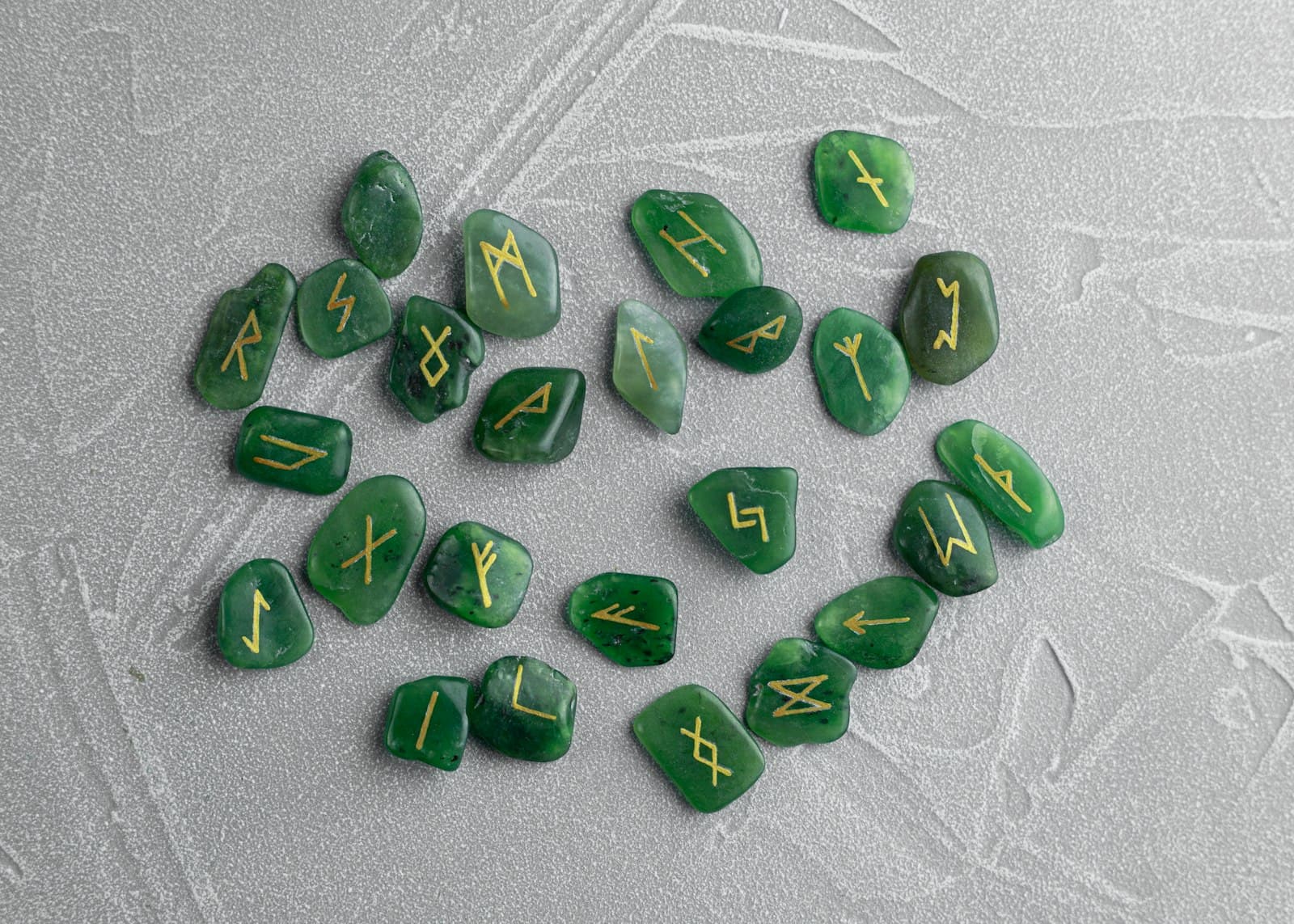
The 24 characters of the Elder Futhark are divided into three groups of eight. Each group is an aett, a word related to the sense of a family or group of eight.
The division is genuine. Inscriptions that set out the full futhark show the grouping, and the order within it is stable across finds. This is not a modern organising convenience.
What is later convention is the naming. Calling the first aett Freyr's, the second Hagal's and the third Tyr's is a usage that became standard in modern practice rather than something the medieval sources supply. It is useful shorthand and worth knowing as shorthand.
The grouping is historical. The gods' names attached to the groupings are not, and being clear about which is which is the habit this whole subject rewards.
Fehu
The first rune, sound value f, name meaning cattle and by extension wealth or movable property.
In a society where livestock was the principal measure of wealth, cattle and wealth were close to the same word, and the rune sits at the head of the alphabet.
The interesting part is what the rune poems do with it. The Old English poem, having named wealth as a comfort to all, turns almost immediately to the point that a person must give it out freely if they want to be well regarded. The Norse poems are sharper still, associating wealth with strife among kinsmen.
So the oldest treatments of the wealth rune are largely about wealth's social hazards: hoarding, envy, and conflict over inheritance. Modern books tend to give abundance and prosperity and stop there, which loses the entire point the sources were making.
Uruz
Sound value u, name meaning aurochs, the large wild cattle of Europe, extinct since the seventeenth century.
The Old English poem describes the aurochs as fierce, horned, a bold fighter that stalks the moors. It is a description of a dangerous wild animal.
The contrast with fehu is the structure worth noticing. Fehu is domestic cattle, owned and countable. Uruz is wild cattle, untamed and dangerous. The first two runes of the alphabet set domesticated wealth against wild strength, which is a reasonable pairing to open with.
Modern readings usually give strength, vitality and untamed potential, which is a fair extension of the source rather than a departure from it.
Thurisaz
Sound value th, name relating to a giant or hostile supernatural being in the Norse material, and to a thorn in the Old English tradition.
This is the clearest case of the poems disagreeing. The Old English poem treats it as a thorn: sharp, painful to grasp, harmful to anyone who rests among thorns. The Norse poems treat it as a giant or ogre and associate it with torment and sickness of women, a line that has been read in several ways and is uniformly unpleasant.
Both readings converge on something hostile, painful or dangerous, approached from different directions.
Modern treatments often soften this into conflict, a catalyst or a necessary challenge. The sources are blunter, and one of the recurring features of the rune poems is that they do not reassure.
Ansuz
Sound value a, name relating to a god in the Norse tradition, specifically of the Æsir, and in the Old English poem to a mouth.
The divergence here is partly linguistic, the words having drifted, and the Old English poem takes the mouth reading and makes it about speech: the mouth as the source of language, a comfort and a support to the wise.
The Norse poems keep the god reading and associate the rune with Odin, who is the god of poetry, speech and the runes themselves.
Both lines converge on speech, language and inspired utterance, which is why this rune is consistently associated with communication across traditions that otherwise differ.
How this is taught inside Astra Trainer
This is the 1st Aett, Freyr's Aett, one of eight sub-topics in the Runes direction of the Spiritual world.
It follows Essentials of Rune Wisdom, which covers the sources, and precedes the second and third aettir. Working through eight at a time, in the historical order, is how the direction is structured, and each rune is given with what the poems say rather than only with a modern gloss. Lessons take about five minutes, and there is a discussion thread under every one.
Raidho
Sound value r, name meaning riding, a ride or a journey, and in some readings a wagon or a cart.
The Old English poem makes an observation that is easy to miss and rather good: riding is easy for a warrior sitting in the hall talking about it, and considerably harder for the one actually on the horse covering the miles.
That is a verse about the difference between discussing a journey and making one. Modern readings give travel, movement and progress, which is accurate as far as it goes and drops the sharp part.
Kenaz
Sound value k, and one of the more contested names in the set.
The Old English poem has a rune whose name relates to a torch, describing a flame that is bright and burning, found where people sit together indoors. The Norse poems have a name relating to an ulcer or sore, describing it as a disease fatal to children or a painful affliction.
A torch and an ulcer are not the same idea, and the two lines of tradition have diverged substantially. Modern practice almost always takes the torch reading, giving illumination, knowledge, craft and controlled fire.
Worth flagging that this is a choice rather than a consensus. Taking the torch is defensible and the Norse reading is equally attested, and a book that gives you only the torch is not telling you that.
Gebo and Wunjo
The last two of the aett, and both are unusually positive by the standards of these poems.
Gebo, sound value g, name meaning gift. The Old English poem treats giving as an honour and a support, and as something that helps those who have nothing else. The rune sits in a culture where gift-giving carried heavy social obligation: a gift created a relationship and an expectation of return, and generosity was how status was built and maintained. It is not a neutral transfer.
Wunjo, sound value w, name meaning joy. The Old English poem describes joy as belonging to one who knows little of suffering, who has prosperity and happiness and a good enough dwelling. It is joy defined largely by the absence of hardship, which is a very medieval way to define it.
Together they close the first aett on gift and joy, after wealth, wild strength, hostility, speech, journey and fire. As an eight-item sequence it has a shape, and noticing the shape is part of what the aett division is for.
On symbols and modern use. Some historical runes have been appropriated by extremist groups and now carry a second public meaning, discussed fully in the article on rune sources. The runes in this article are presented as a historical writing system and a cultural heritage, and nothing here endorses any political use of them.
What to take from this
The three-way division into aettir is historical and attested on inscriptions. The gods' names attached to them are a later convention.
The first aett runs fehu, uruz, thurisaz, ansuz, raidho, kenaz, gebo, wunjo, and most of those names denote concrete things.
Fehu's oldest treatments are largely about wealth's social hazards rather than about abundance, which is the clearest case of the modern version dropping the source's actual argument.
Thurisaz and kenaz differ substantially between the English and Norse traditions, and modern practice quietly picks one.
And the poems do not reassure. They are verses about hail, thorns, ulcers and the difficulty of long rides, which is worth knowing before expecting them to sound like a modern rune book.
What is an aett?
One of three groups of eight into which the 24 Elder Futhark runes divide. The division is attested on inscriptions that set out the full futhark, so it is historical rather than a modern convenience.
Is Freyr's Aett the historical name?
No. Naming the three aettir after Freyr, Hagal and Tyr is a modern convention. The grouping is historical; the divine names attached to it are not supplied by the medieval sources.
What does fehu actually mean?
Cattle, and by extension movable wealth. The rune poems focus on wealth's social dangers, with the Old English poem stressing the obligation to give it away and the Norse poems associating it with strife among kinsmen.
Why do sources disagree about kenaz?
Because the traditions diverged. The Old English poem has a torch, bright and burning indoors. The Norse poems have an ulcer or sore, described as a painful affliction. Modern practice almost always takes the torch, which is a choice rather than a consensus.
What is gebo really about?
Gift, in a culture where giving carried heavy social obligation. A gift created a relationship and an expectation of return, and generosity was how status was built, so it is not a neutral transfer.