
Othala Key Facts
What the record shows
- Sound
- /o/
- Ætt
- Tyr's ætt, 8th of 8
- Literal meaning
- Ancestral property; inherited land or estate
- Rune poems
- Old English only: an estate is dear to all who prosper at home; no Norse stanza
- Other names
- Ēþel (Old English), utal (Gothic letter name), Odal, Othila
In modern rune reading
- Associated deity
- —
- Element
- —
- Yes or No?
- Yes
- Love
- Home, family, lasting commitment; family conflict when reversed
- Career & money
- Inheritance, property, a family business; loss of assets when reversed
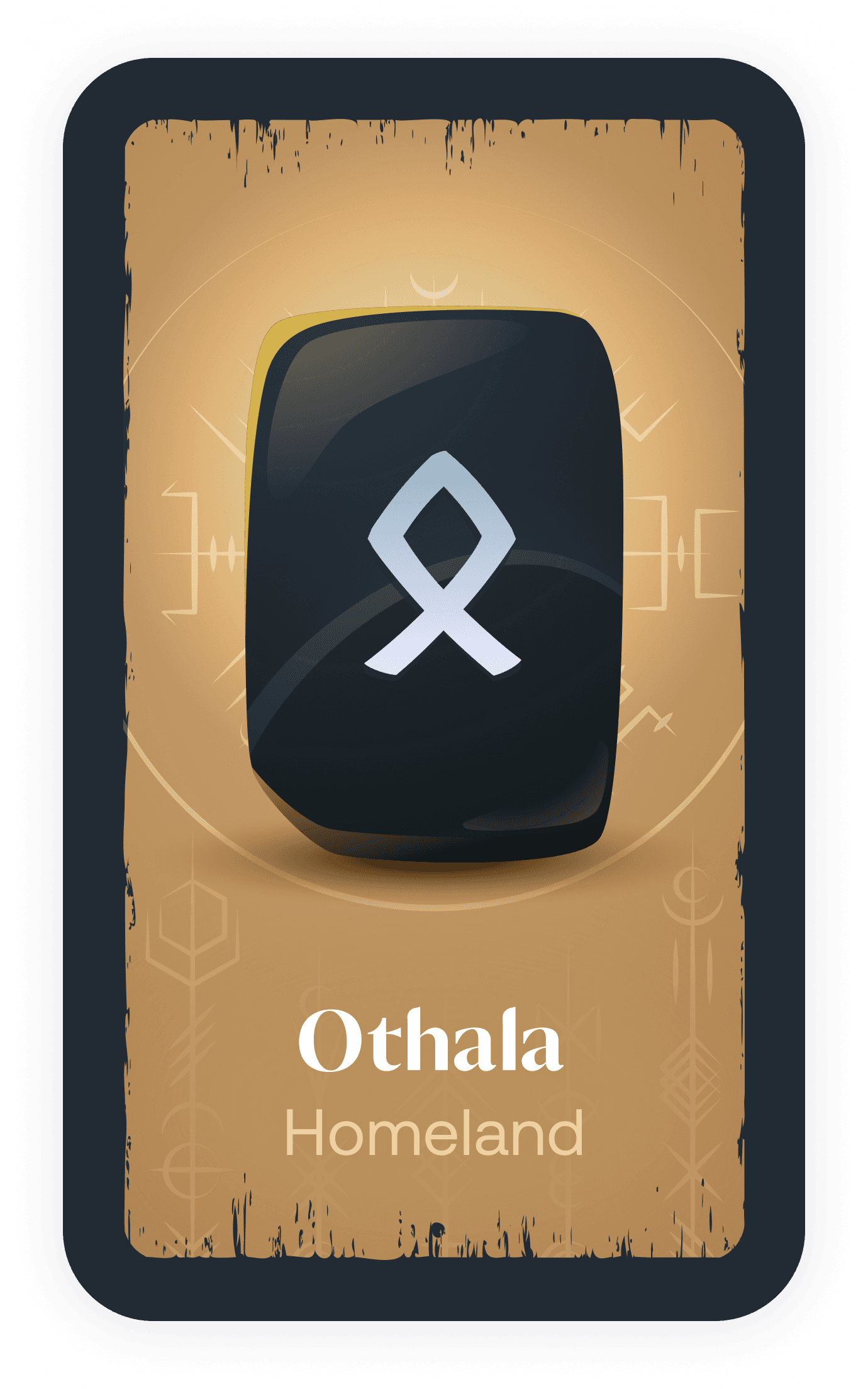
Othala is the last rune of the Elder Futhark as most modern lists give it, and its name meant ancestral property — the land or estate a family holds and hands down. This page keeps two layers apart, what the historical record supports and what modern rune reading has built on top of it, and notes the rune's modern misuse.
What does Othala mean?
Othala stood for the sound /o/. Its name is reconstructed from Proto-Germanic *ōþala or *ōþila, "inherited property, patrimony", the root behind Old English ēþel, "homeland, estate", and Old Norse óðal, land a family owned by inheritance. The Gothic letter name utal matches. In Old English manuscripts, Beowulf among them, the rune could even stand in for the word ēþel itself.
Its position is not fixed. The Kylver Stone, about 400 CE, ends with Dagaz then Othala; the Vadstena bracteate reverses the pair. The Younger Futhark dropped the rune entirely, which is why no Norse rune poem mentions it.
Othala carries modern baggage. Nazi Germany used the rune, including in the insignia of two Waffen-SS divisions, and it appears in white-nationalist iconography today. That has nothing to do with its historical meaning, but if you are wearing or displaying runes it is context you need.
What do the rune poems say about Othala?
Only the Old English poem has a stanza for this rune.
- Old English (the Anglo-Saxon futhorc, 8th–9th century): an estate is very dear to every man, if in his own home he can enjoy what is right and proper in lasting prosperity.
- Old Norwegian (c. 13th century, Younger Futhark): no stanza. The Younger Futhark dropped Othala and wrote /o/ with other runes.
- Old Icelandic (c. 15th century, Younger Futhark): no stanza, for the same reason.
The poems are late and describe later rune rows. The Old English poem belongs to the Anglo-Saxon futhorc; the Norse poems to the 16-rune Younger Futhark. Othala's one stanza is about a well-run household, not about bloodlines or ancestry in any modern sense.
The stanza links home with right conduct and prosperity: the estate matters because it lets a person live well and properly. Modern readers widen that into heritage and belonging — what you receive rather than earn — which is a fair extension of the word, as long as it is not bent into a claim about race.
Othala upright meaning
In modern rune reading an upright Othala is the rune of inheritance in a broad sense: home, family, heritage, and anything you receive rather than build from scratch — property, traditions, skills, values. Readers also use it for belonging: the place and people you come back to.
- Inheritance — property, a legacy, something passed down to you.
- Home — a stable base, family ties, the place you belong.
- Stewardship — looking after what you received so it can be handed on.
Othala reversed (merkstave) meaning
Drawn upside down, Othala is read as inheritance going wrong: loss of property, a quarrel over a will, rootlessness, or feeling cut off from family. Some readers see the opposite problem — clinging to the past, or a narrow loyalty that shuts other people out.
Reversed readings are a modern convention. The rune poems give one stanza per rune and no inverted counterpart; merkstave meanings come from 20th-century rune books. Many practitioners find them useful — just know which layer you are using.
Othala in love and relationships
In a love reading Othala points to home and commitment: building a household together, a partner who feels like family, or a relationship shaped by both families' expectations. Reversed, readers look for family interference, clashing traditions, or a relationship held together only by habit.
Othala in career and money
Upright Othala suggests work tied to legacy: a family business, property, a long-established employer, or knowledge handed down by a mentor. Reversed, it warns of losing assets, disputes over ownership, or staying in a role only because it has always been done that way.
Is Othala a yes or no rune?
In yes-or-no rune reading an upright Othala is a yes, especially for questions about home, family or property; reversed, most readers take it as a no. This is purely modern divinatory practice — there is no historical evidence of runes being read this way.
What is attested and what is modern
| Layer | Othala | How solid |
|---|---|---|
| Sound | /o/ | Solid — read in surviving inscriptions |
| Name and literal meaning | *ōþala, inherited property | Strong — Old English ēþel, Gothic utal |
| An estate as home and prosperity | Old English poem only | Attested, but medieval |
| Nazi and white-nationalist use | 20th-century appropriation | Real, and unrelated to the rune's history |
| Heritage, merkstave, yes or no | Modern divination | 20th-century practice |
Othala closes Tyr's ætt and the whole row; before it comes Dagaz, the day, which one early rune row places last instead. Readers often pair it with Fehu, the movable wealth that opens the Futhark, against the land that stays, and with Mannaz, the person within a community. For all 24 runes, see Elder Futhark rune meanings.
What does the Othala rune mean?
Othala literally meant ancestral property — inherited land or an estate — and stood for the sound /o/. The Old English poem calls an estate dear to anyone who prospers at home. Modern readers use it for inheritance, home, heritage and belonging.
What does Othala mean reversed?
In modern practice a reversed Othala is read as loss of property, family conflict, rootlessness or clinging to the past. Reversed meanings are a 20th-century convention; the single rune-poem stanza gives no inverted reading.
Is Othala a hate symbol?
The rune is ancient, but Nazi Germany used it, including in Waffen-SS insignia, and it appears in white-nationalist iconography today, sometimes in a serifed "winged" form. Its historical meaning is unrelated, yet the modern association is real.
Is Othala the last rune of the Elder Futhark?
In most modern lists, yes, following the Kylver Stone of about 400 CE, which ends with Dagaz then Othala. The Vadstena bracteate, about a century later, reverses the pair, so some lists end with Dagaz.