
Thurisaz Key Facts
What the record shows
- Sound
- /θ/ (th)
- Ætt
- Freyr's ætt, 3rd of 8
- Literal meaning
- Giant (thurs); the Old English name is thorn
- Rune poems
- A sharp thorn (Old English); a giant who torments women (Norwegian, Icelandic)
- Other names
- Þorn (Old English), Þurs (Old Norse), thyth (Gothic letter name)
In modern rune reading
- Associated deity
- Thor — a modern link, not attested
- Element
- Fire in some systems; no agreed element
- Yes or No?
- Maybe
- Love
- Boundaries and hard truths; hostility or spite when blocked
- Career & money
- Clearing an obstacle by force; conflict or rash moves when blocked
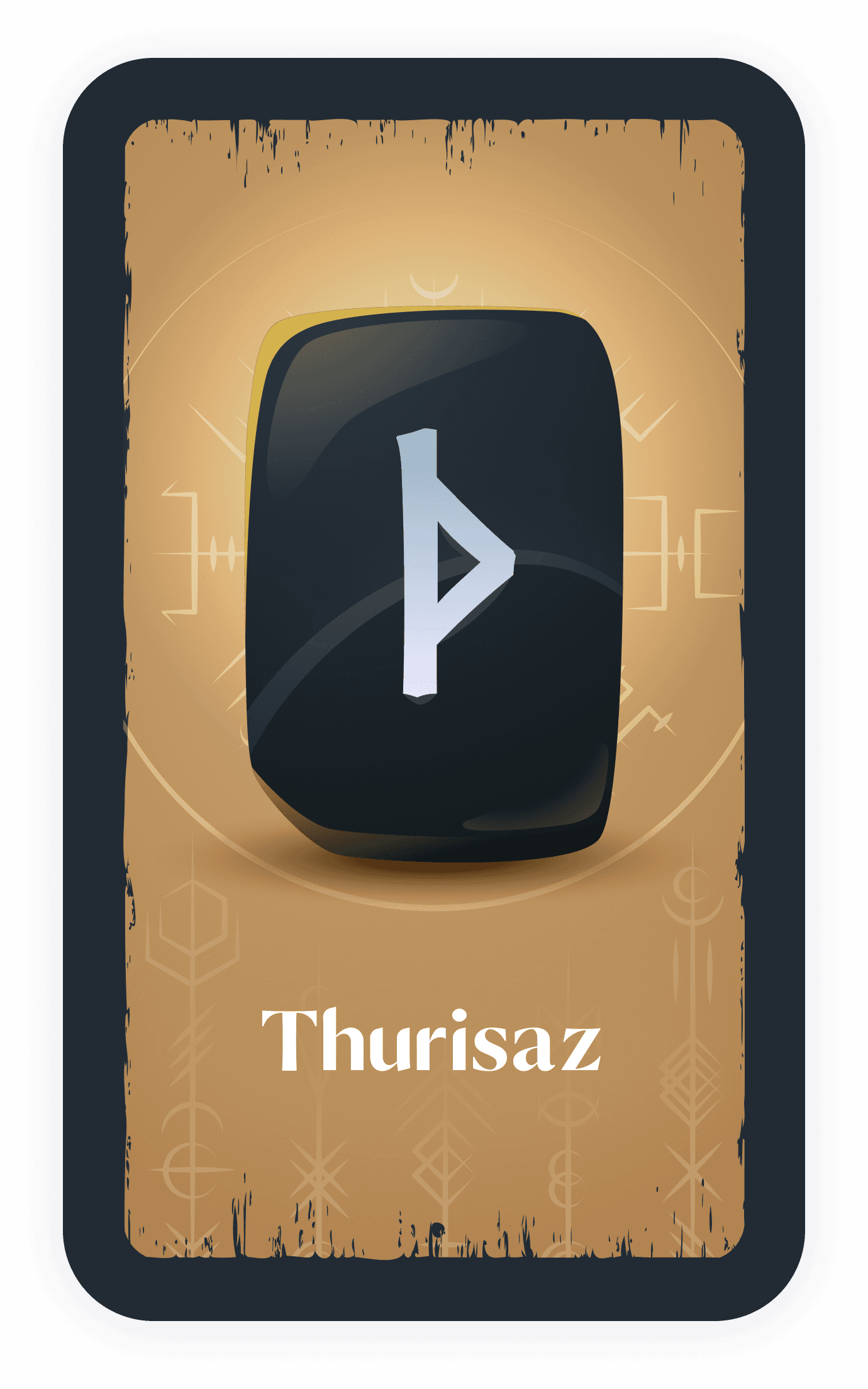
Thurisaz is the third rune of the Elder Futhark, the th in "futhark". Its name is reconstructed as a giant, but the one English source calls it a thorn — two images of danger that modern readers have fused into a rune of disruptive force and defended boundaries. This page keeps the historical layer and the modern layer apart.
What does Thurisaz mean?
Thurisaz stood for /θ/, the voiceless th of English thing. Its name is reconstructed from the Norse evidence as Proto-Germanic *þurisaz, "giant", matching Old Norse þurs and Old English þyrs. These are not friendly giants: in the old stories they are hostile, monstrous beings, enemies of gods and people alike.
English tradition gave the rune a different name, þorn, "thorn" — and that name outlived the runes. The letter þ, taken into Old English manuscripts, is still part of the Icelandic alphabet today. Whether "thorn" replaced an unwelcome heathen word or worked as a figure for the giant is debated. The Gothic letter name, thyth, may mean "good" and fits neither, which makes this one of the harder names in the row to reconstruct.
What do the rune poems say about Thurisaz?
All three poems include the rune. The English one describes a plant; the two Norse ones describe a monster.
- Old English (the Anglo-Saxon futhorc, 8th–9th century): the thorn is exceedingly sharp, an evil thing for any warrior to grasp and harsh on anyone who rests among thorns.
- Old Norwegian (c. 13th century, Younger Futhark): the giant causes anguish to women; misfortune makes few men cheerful.
- Old Icelandic (c. 15th century, Younger Futhark): the giant is the torment of women, a dweller in cliffs and the husband of a giantess, glossed with the Latin Saturnus.
The poems are late and describe later rune rows. The Old English poem belongs to the Anglo-Saxon futhorc; the Norse poems to the 16-rune Younger Futhark. They are the best evidence for what the Elder Futhark names meant — and here they show England and Scandinavia already reading this rune through different images.
Read together, the stanzas agree on one thing: this rune hurts. A thorn that wounds the hand and a giant that brings suffering are neither of them allies. The modern habit of reading Thurisaz as a defended boundary fits the thorn — sharp things keep people off — but no poem makes that point.
Thurisaz upright meaning
In modern rune reading an upright Thurisaz is a rune of force meeting resistance: conflict, a sudden obstacle, or the power to break through one. Many readers also read it as defence — a boundary that holds, and a reason to pause before reaching into the thorns.
- Disruptive force — a problem arriving, or the energy to smash through it.
- Defence — protecting what is yours, saying no, holding a line.
- Pause before acting — look at the thorns before you reach in.
Thurisaz reversed (merkstave) meaning
Drawn upside down, Thurisaz is read as the force turning against you: danger, malice, being pushed into a decision, or lashing out and doing harm. Where upright it is a boundary that holds, reversed it is the boundary failing — or someone else's thorn.
Reversed readings are a modern convention. The rune poems give one stanza per rune and no inverted counterpart; merkstave meanings come from 20th-century rune books. Many practitioners find them useful — just know which layer you are using.
Thurisaz in love and relationships
In a love reading Thurisaz is rarely soft. Upright it can mean a necessary argument, a hard truth finally spoken, or healthy boundaries being set. Reversed, readers see hostility, jealousy, spite, or a partner pushing past limits that should have held.
Thurisaz in career and money
At work Thurisaz points to obstacles and confrontation: a competitor, a difficult negotiation, a problem that will not go away politely. Upright it suggests you can clear it if you act deliberately. Reversed it warns against rash moves, workplace feuds, or being pressured into a bad call.
Is Thurisaz a yes or no rune?
In yes-or-no rune reading, Thurisaz is usually a maybe with a warning attached — yes if you are ready for a fight, no if you hoped it would be easy. Reversed, most readers take it as a no. This is purely modern divinatory practice; there is no historical evidence of runes being read this way.
What is attested and what is modern
| Layer | Thurisaz | How solid |
|---|---|---|
| Sound | /θ/ (th) | Solid — read in surviving inscriptions |
| Name and literal meaning | *þurisaz, giant; Old English þorn, thorn | Probable, but the traditions disagree |
| The letter þ | Still used in Icelandic | Solid — a direct descendant of the rune |
| Thor | Modern association | No historical source links him to the rune |
| Upright, merkstave, yes or no | Modern divination | 20th-century practice |
Thurisaz is the third rune of Freyr's ætt, after Uruz and before Ansuz — a giant followed by a god. Readers often compare it with Algiz, the other rune read as protection, and with Hagalaz, disruption from outside. For the full row and the names still in dispute, see Elder Futhark rune meanings.
What does the Thurisaz rune mean?
Thurisaz stood for the sound /θ/ (th). Its name is reconstructed as *þurisaz, a giant, while the Old English rune poem calls it a thorn. Modern rune readers use it for conflict, disruptive force, defence and the boundaries you hold.
What does Thurisaz mean reversed?
In modern practice a reversed (merkstave) Thurisaz is read as danger, malice, compulsion or rash action — force turned against you. Reversed meanings are a 20th-century convention; the medieval rune poems give one stanza per rune and no inverted reading.
Is Thurisaz Thor's rune?
Not in any historical source. The rune's name means giant, and Thor is the giant-killer of Norse myth, which is how modern rune books came to link them. None of the three rune poems mentions Thor in its stanza for this rune.
Why is Thurisaz called both giant and thorn?
The Norwegian and Icelandic poems name the rune þurs, giant, while the Old English poem names it þorn, thorn. Scholars usually reconstruct the older name from the Norse side; the English name survives as the letter þ.