
Algiz Key Facts
What the record shows
- Sound
- /z/
- Ætt
- Hagal's ætt, 7th of 8
- Literal meaning
- Disputed: elk, protection or sedge
- Rune poems
- Old English: elk-sedge that cuts the hand; no Norse stanza of its own
- Other names
- Elhaz, Eolh / Eolhx (Old English), ezec (Gothic letter name)
In modern rune reading
- Associated deity
- —
- Element
- —
- Yes or No?
- Yes
- Love
- Loyalty and feeling safe; defensiveness or distrust when blocked
- Career & money
- A protected position, good boundaries; exposure when reversed
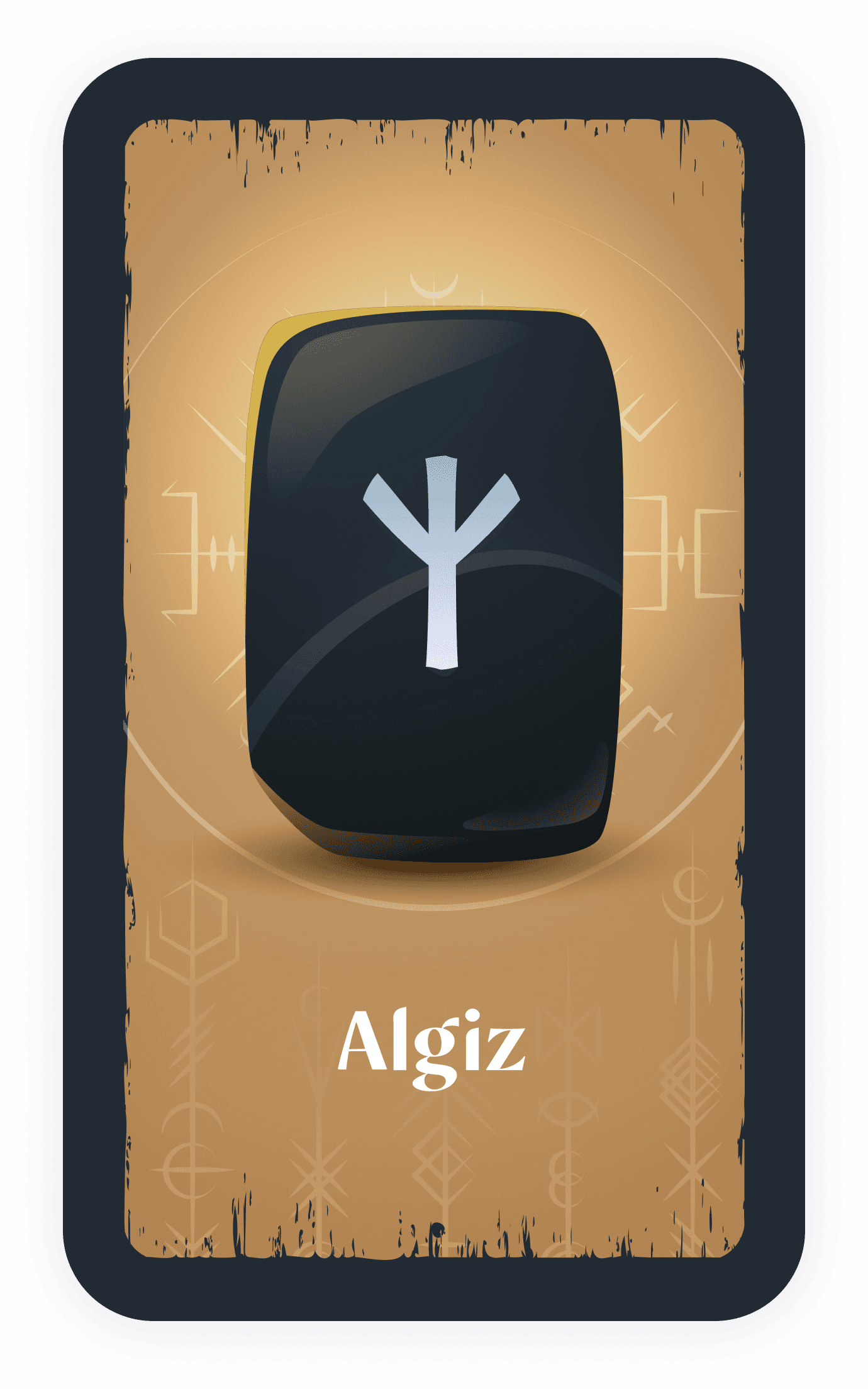
Algiz is the fifteenth rune of the Elder Futhark, and one of its genuinely contested ones: scholars have read its name as elk and as protection, while the Old English poem describes a sharp-edged sedge. This page keeps two layers apart: what the historical record supports, and what modern rune reading has built on top of it.
What does Algiz mean?
Algiz spelled /z/, a sound that never begins a word in early Germanic and mostly appears as an ending, the -z of masculine nouns such as *dagaz, "day". So the rune could not be named with a word starting in its own sound, and its name is less secure than most. The usual reconstruction is *algiz, "elk", which is where "the elk rune" comes from. The Gothic letter name ezec is the only independent evidence for the name, and it does not settle the question.
A second proposal reads the name as a word for protection or defence. A third image comes from the Old English rune poem, which calls the rune eolh-secg, elk-sedge, a marsh plant with blades that cut. Elk, protection and a sharp reed are three quite different pictures; the modern warding reading blends the second and third while keeping the first as a name.
What do the rune poems say about Algiz?
No poem gives this rune a stanza under a name that clearly continues *algiz, which is part of why it stays disputed.
- Old English (the Anglo-Saxon futhorc, 8th–9th century): the eolh-sedge lives mostly in the fen, grows in water and wounds grimly, covering in blood any warrior who grasps it. In that rune row the rune spelled x.
- Old Norwegian (c. 13th century, Younger Futhark): no stanza for Algiz as such. Its Younger Futhark successor, ýr, kept the sound and an upside-down form of the shape but took the name "yew", and its stanza is about the yew tree.
- Old Icelandic (c. 15th century, Younger Futhark): the same ýr rune — a bent bow, brittle iron — again a yew, not an elk or a ward.
The poems are late and describe later rune rows. The Old English poem belongs to the Anglo-Saxon futhorc; the Norse poems to the 16-rune Younger Futhark. By the time the Norse poems were written, Algiz's shape, sound and name had already come apart. None of the three is a manual for how anyone used ᛉ.
Put together, the evidence gives Algiz one attested image — a sedge that injures the hand that seizes it — and two reconstructed ones. The popular protection meaning is defensible as a blend, since something that wounds whoever grabs it is, in effect, defended. But it is an interpretation, not a record.
Algiz upright meaning
In modern rune reading an upright Algiz is the rune of protection. Readers see in its shape a raised hand, an elk's antlers, or a figure reaching upward, and read it as a guard around you and a line of connection to something higher.
- Protection — being shielded, a safe position, support arriving when needed.
- Boundaries — the sedge's edge: saying no, keeping out what should stay out.
- Vigilance — the elk's alertness; noticing danger early and trusting your instincts.
Algiz reversed (merkstave) meaning
Drawn upside down, Algiz is read as protection failing: vulnerability, exposure to a risk you have not seen, or support being withdrawn. Some readers see the opposite excess — defensiveness so strong that nothing gets in, good or bad. The inverted shape is also the Younger Futhark ýr rune, a historical shape with no historical reversed meaning.
Reversed readings are a modern convention. The rune poems give one stanza per rune and no inverted counterpart; merkstave meanings come from 20th-century rune books. Many practitioners find them useful — just know which layer you are using.
Algiz in love and relationships
In a love reading Algiz is about safety. Upright it points to a protective partner, loyalty, or a relationship where both people feel secure enough to be open. Reversed, readers look for walls: one partner guarding too hard, trust not yet earned, or a reason to protect yourself from someone.
Algiz in career and money
Upright Algiz suggests a protected position: a stable contract, a mentor watching your back, or boundaries that keep work from swallowing everything else. Reversed, readers look for exposure — an unguarded risk, a colleague who is not an ally, or a reason to read the fine print twice.
Is Algiz a yes or no rune?
In yes-or-no rune reading an upright Algiz is generally a yes, often with the sense "yes, and you are covered"; reversed, most readers take it as a no, or a warning to protect yourself first. This is purely modern divinatory practice — there is no historical evidence of runes being read this way.
What is attested and what is modern
| Layer | Algiz | How solid |
|---|---|---|
| Sound | /z/ (x in Old English) | Solid — read in surviving inscriptions |
| Name | *algiz; eolh, ezec | Reconstructed; weaker than most runes |
| Literal meaning | Elk, protection or sedge | Disputed — no consensus |
| A sedge that cuts the hand | Old English poem only | Attested, but medieval |
| Protection, merkstave, yes or no | Modern divination | 20th-century practice |
Algiz is the seventh rune of Hagal's ætt, after Perthro and before Sowilo, the sun. Readers often set it beside Thurisaz, the other rune of a defended boundary, and it has a historical link to Eihwaz, whose yew name its Norse successor inherited. For the dispute in context, see Elder Futhark rune meanings.
What does the Algiz rune mean?
Its literal meaning is disputed. The common reconstruction is elk, a protective sense has also been proposed, and the Old English poem describes a sedge that cuts the hand. Modern rune readers use Algiz for protection, boundaries and vigilance.
What does Algiz mean reversed?
In modern practice a reversed Algiz is read as vulnerability, exposure, lost support or excessive defensiveness. Reversed meanings are a 20th-century convention; the rune poems give one stanza per rune and no inverted reading.
Why is Algiz called the elk rune?
Because the usual reconstruction of its name, *algiz, means elk. That is only one reading: a protective sense has been proposed, and the Old English poem calls the rune elk-sedge, a marsh plant rather than an animal.
Is Algiz a hate symbol?
Not by origin. Nazi Germany used it as the "life rune", and some white-supremacist groups still use it, so context matters. Its historical meaning is unrelated, and most people who use Algiz today have no such association.