
Keter Key Facts
In Jewish Kabbalah
- Number
- 1 of 10
- Hebrew
- כתר, pronounced keh-TER
- Meaning
- Crown
- Pillar
- Middle Pillar, at the top
- Triad
- Supernal triad, with Chokhmah and Binah
- Divine name
- Ehyeh (אהיה), "I will be"
- Partzuf
- Arikh Anpin, the Long Face (Lurianic)
- Other spellings
- Kether, Keter Elyon (Supreme Crown)
In Hermetic Qabalah (Golden Dawn)
- Archangel
- Metatron
- Planet / sphere
- Primum Mobile, the first swirlings
- Colour (Queen scale)
- Brilliance (white)
- Virtue
- Attainment, completion of the Great Work
- Vice
- —
- Tarot
- The four Aces
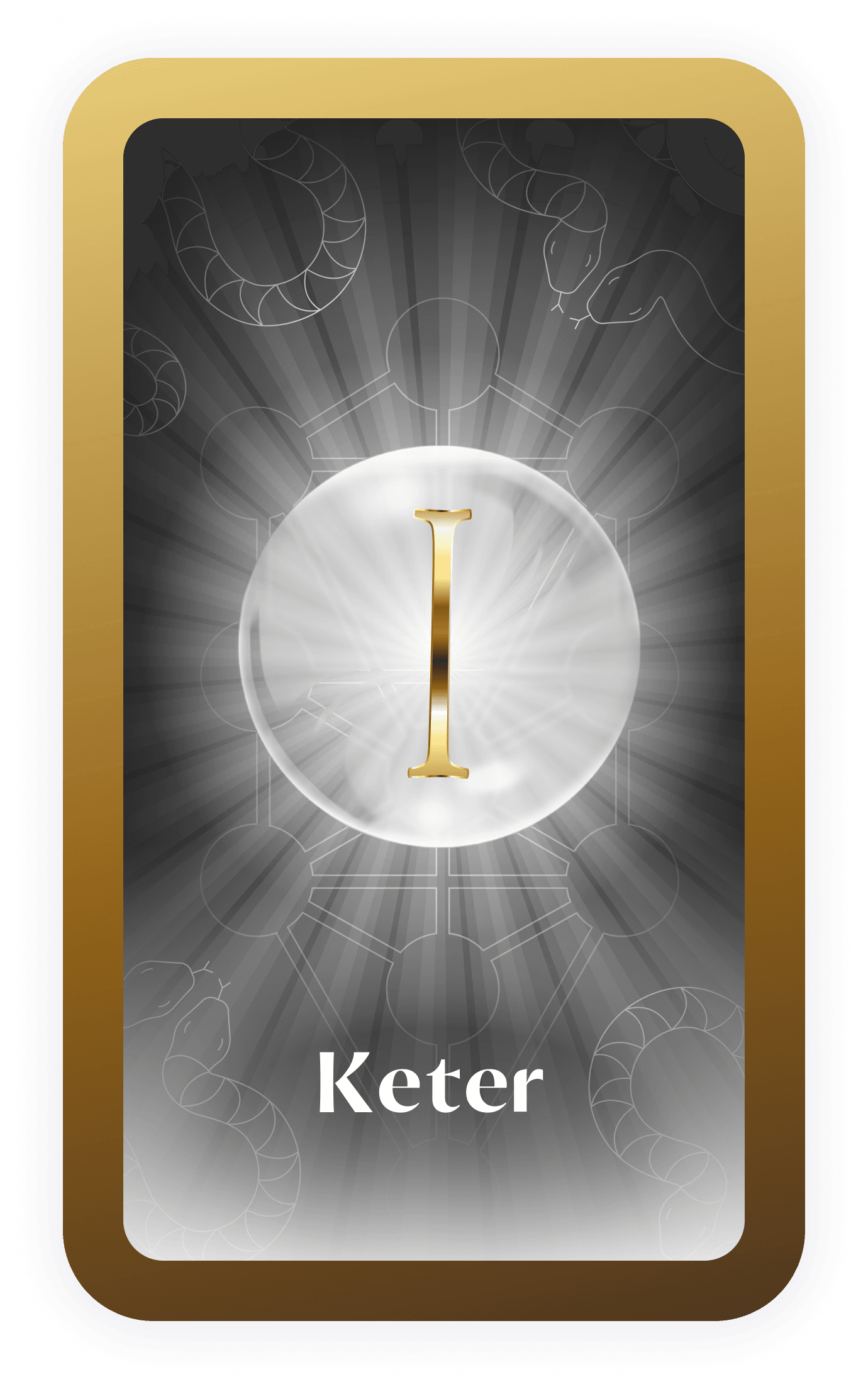
Keter is the first of the ten sephirot and the top of the Tree of Life: the point where, in Kabbalistic thought, the infinite first turns toward becoming something at all. This page keeps two traditions apart — Jewish Kabbalah, where the sephirot come from, and the Hermetic Qabalah of the 19th century, which added angels, planets and tarot cards.
What does Keter mean?
Keter (כתר) is an ordinary Hebrew word for a crown. The image is exact: a crown sits on the head but is not part of the body, and Keter sits above the other nine sephirot in the same way — the highest of them and yet barely one of them. The Zohar also calls it Keter Elyon, the Supreme Crown.
Behind Keter stands Ein Sof (אין סוף), "without end": God as infinite and beyond any attribute. Keter is the first stirring from that silence, which is why the sources describe it by what it is not. Some texts name it Ayin, "nothing" — not because it is empty, but because nothing can yet be said about it. Others describe it as ratzon, the will that precedes every thought.
Keter on the Tree of Life
On the diagram Keter crowns the Middle Pillar, the column of balance that runs down through Tiferet and Yesod to Malkhut. With Chokhmah, wisdom, and Binah, understanding, it forms the supernal triad — the three sephirot of the mind, above everything that follows.
Three paths leave Keter on the familiar Western diagram: to Chokhmah, to Binah, and straight down to Tiferet. Sefer Yetzirah ties the 22 paths to the 22 Hebrew letters, but it never says which letter joins which pair of sephirot; that wiring is a much later construction, and versions of it disagree.
Keter in Jewish Kabbalah
- Divine name. Keter is paired with Ehyeh (אהיה), "I will be", from the burning bush in Exodus 3:14 — a name in the future tense for the sephirah that is pure potential.
- Partzuf. In the Lurianic system of the 16th century the sephirot are also read as partzufim, divine "faces"; Keter's is Arikh Anpin, the Long Face or Long-Suffering One, with Atik Yomin, the Ancient of Days, as its innermost aspect.
- Counted or not. Because Keter is so close to Ein Sof, some traditions — Chabad Hasidism among them — sometimes leave it out of the ten and count Da'at, knowledge, in its place. Sefer Yetzirah insists there are ten, not nine and not eleven, so the two are never counted together.
Keter is also absent from the best-known practice built on the sephirot. During Sefirat ha-Omer, the 49 days between Passover and Shavuot, each day is counted through the seven lower sephirot; the upper three, Keter included, are not part of the count.
Everything in the second half of the panel is Hermetic, not Jewish. Archangels, planets, colours, virtues and tarot cards on the sephirot come from Western occultism — Renaissance occult philosophy, then Éliphas Lévi in the 1850s and the Golden Dawn after 1888. They are a consistent system — and a later overlay on a medieval Jewish structure.
Keter in Hermetic Qabalah
The Hermetic Order of the Golden Dawn, founded in 1888, turned the Tree into a table of correspondences, spelling the name Kether. Its archangel is Metatron; its celestial sphere is the Primum Mobile, the "first swirlings" that set the heavens moving; its colour is pure brilliance. The virtue most tables give, attainment, the completion of the Great Work, with no vice, comes from Dion Fortune's The Mystical Qabalah (1935).
In tarot the numbered cards follow the sephirot, so the four Aces sit on Kether: the Ace of Wands, Ace of Cups, Ace of Swords and Ace of Pentacles, each the pure root of its suit. The three paths from Kether carry The Fool (Aleph), The Magician (Beth) and The High Priestess (Gimel).
Keter in meditation and practice
In Jewish contemplative practice Keter is approached less as an object of meditation than as a limit: the point where description stops. The emphasis falls on intention — kavanah — and on the humility of acknowledging what cannot be grasped.
Hermetic practice is more visual. The Middle Pillar exercise, popularised by Israel Regardie in the 1930s, begins by imagining a sphere of white light just above the crown of the head for Kether, then draws that light down the body through the other points of the Middle Pillar.
What is Jewish and what is Hermetic
| Keter | Where it comes from | When |
|---|---|---|
| Name, "crown", place atop the Tree | Jewish Kabbalah, the Zohar | 13th century |
| Divine name Ehyeh | Jewish Kabbalah | Medieval |
| Arikh Anpin | Lurianic Kabbalah | 16th century |
| Metatron, Primum Mobile, brilliance | Hermetic Qabalah, Golden Dawn | 1880s onward |
| The four Aces; Fool, Magician, High Priestess on its paths | Lévi, then the Golden Dawn | 1850s onward |
From Keter the Tree unfolds into Chokhmah, the second sephirah. See all ten sephirot on the Tree, or read the Kabbalah Tree of Life explained for how the pillars and paths work together, and Kabbalah for beginners for the difference between the traditions.
What does Keter mean?
Keter (כתר) is Hebrew for "crown". It is the first and highest sephirah on the Tree of Life, the first stirring of the infinite toward creation, often described as pure will or potential.
Is Keter the same as Ein Sof?
No. Ein Sof is God as infinite and beyond all attributes; Keter is the first emanation from it. Because Keter is so close to Ein Sof, some texts call it Ayin, "nothing", and some traditions leave it out of the count of ten.
Which tarot cards belong to Keter?
In Hermetic Qabalah the four Aces sit on Kether, and the paths from it carry the Fool, the Magician and the High Priestess. These are Golden Dawn attributions from the 19th century, not part of Jewish Kabbalah.
What is the divine name of Keter?
Ehyeh (אהיה), "I will be", the name God gives at the burning bush in Exodus 3:14. Its future tense suits the sephirah of pure potential.