

This dog body language quiz gives you twelve situations you are likely to meet with your own dog or someone else's: at the food bowl, on the sofa, at the vet's, in the park. For each one, decide what the dog is telling you before you read the answer. Each answer explains the reasoning and, where it matters, adds a safety note.
Score a point for each answer you get right in substance. Nine or more is a strong start; five or fewer usually means the quiet signals are slipping past you, which is common.
Before you start: three habits of a good reader
- Watch the dog, not the scene. A party does not make a dog happy. Read what its body shows.
- Read clusters. A lip lick alone means little. A lip lick with a head turn, ears back and weight shifted away is a clear message.
- Know this dog's normal. Ear carriage, tail set and energy vary by breed and by individual, so a change from the usual tells you more than a rule from a chart.
Eyes and mouth
1. Your dog is chewing a bone. As you walk past, he stops chewing and turns his head slightly away, eyes still on you, whites showing. What is he telling you?
Answer: he is uneasy about you near the bone and wants you to keep away. The white crescent is whale eye: the head turns away while the eyes stay locked on the worry. With the stopped chewing, the cluster says guarding. Safety note: do not reach for the bone or lean over him. Walk on. If guarding is frequent or intense, work on it with a qualified professional.
2. A child hugs your dog around the neck for a photo. His ears go back and his tongue flicks over his nose twice. No food is around. What do the licks mean?
Answer: discomfort. A quick lick of the nose or lips with no food in sight is one of the most common signs of mild stress, and hugs are a classic trigger: many dogs tolerate being held around the neck without enjoying it. Safety note: end the hug calmly and call the dog away. Teach children to let a dog come to them, and never leave a young child alone with a dog, however gentle.
3. In the vet's waiting room your dog yawns three times in five minutes. He slept well and it is mid-morning. Tired, or something else?
Answer: something else. A yawn away from waking or rest often signals mild stress, and a waiting room is full of strange smells, sounds and animals. Look for the rest of the cluster: panting when it is not warm, pacing, a lowered tail. Safety note: give him room, wait in a quiet corner or outside, and tell the vet he is anxious. More in Dog Calming Signals.
Tail and body
4. A dog you do not know walks towards you with its tail held high and wagging fast in short, stiff sweeps, its body upright and leaning forward. Friendly?
Answer: do not assume so. A wag shows arousal, which can be delight, frustration or the build-up to a challenge. A high, stiff, fast tail on an upright, forward-leaning body points to a tense, alert dog. A friendly wag is looser and wider. Safety note: do not reach out. Turn side-on, keep your hands still and let the dog pass or sniff.
5. At a busy market your dog's tail drops between her legs, her weight shifts back and she presses in behind you. What is she feeling?
Answer: fear. A tucked tail, weight shifted back and a move behind you all put distance between her and something she finds frightening. Many owners push on so the dog will "get used to it", which piles on pressure. Safety note: add distance. Move to a quieter spot and let her watch from there. A frightened dog with no way out is far more likely to snap.
6. Your dog meets another dog in the park and the fur along his back rises from shoulders to tail. Is a fight coming?
Answer: not necessarily. Raised hackles show arousal, and arousal can come from excitement, uncertainty or fear as well as threat. They tell you the dog is highly activated, so read everything else: a loose, bouncy body with a soft face is a different dog from a stiff one with a hard stare. Safety note: keep the meeting short while the hackles are up, and call your dog away in a cheerful voice if his body stiffens.
Stillness and warnings
7. A guest strokes your dog on the head. The dog, wriggly a moment ago, goes completely still and stiff, mouth closed, eyes fixed ahead. Is he enjoying it?
Answer: no. Sudden stillness with a closed mouth and fixed eyes is a freeze, one of the last signals before a snap. People read it as calm or good behaviour because the dog stopped moving. Safety note: ask the guest to stop and step back at once, calmly, and let the dog move away. Do not scold him for the freeze.
8. Your dog is asleep on the sofa. You lean over to move him and he growls. Should you tell him off?
Answer: no. The growl is the clearest warning a dog gives, and it did its job: you stopped. Punishing it teaches him that growling brings trouble while the reason for the growl stays, so next time he may skip the warning and snap. Safety note: do not lift or push a dog that has just growled. Next time, wake him by name from across the room and invite him down with a treat, and if growling over resting places keeps happening, bring in a qualified professional.
When to stop reading and act. If a dog is growling, showing teeth or has frozen with a hard stare, stop what you are doing and back away calmly. If a dog has bitten, or its behaviour has changed suddenly, see a vet first to rule out pain, then a qualified behaviour professional. When to Call a Dog Behaviorist explains who to look for.
Check yourselfGood play is noisy: growls, teeth, body slams. Before reading on, what quick test would tell you whether both dogs still want to play?Show the answerHide the answer
Hold the dog that seems to be winning back for a few seconds, or call it away. If the other dog comes straight back for more, the play is mutual. If it uses the break to leave or to hide behind you, it was putting up with the game rather than enjoying it, whatever the noise suggested. The test lets the quieter dog vote with its feet.
Play, greetings and walks
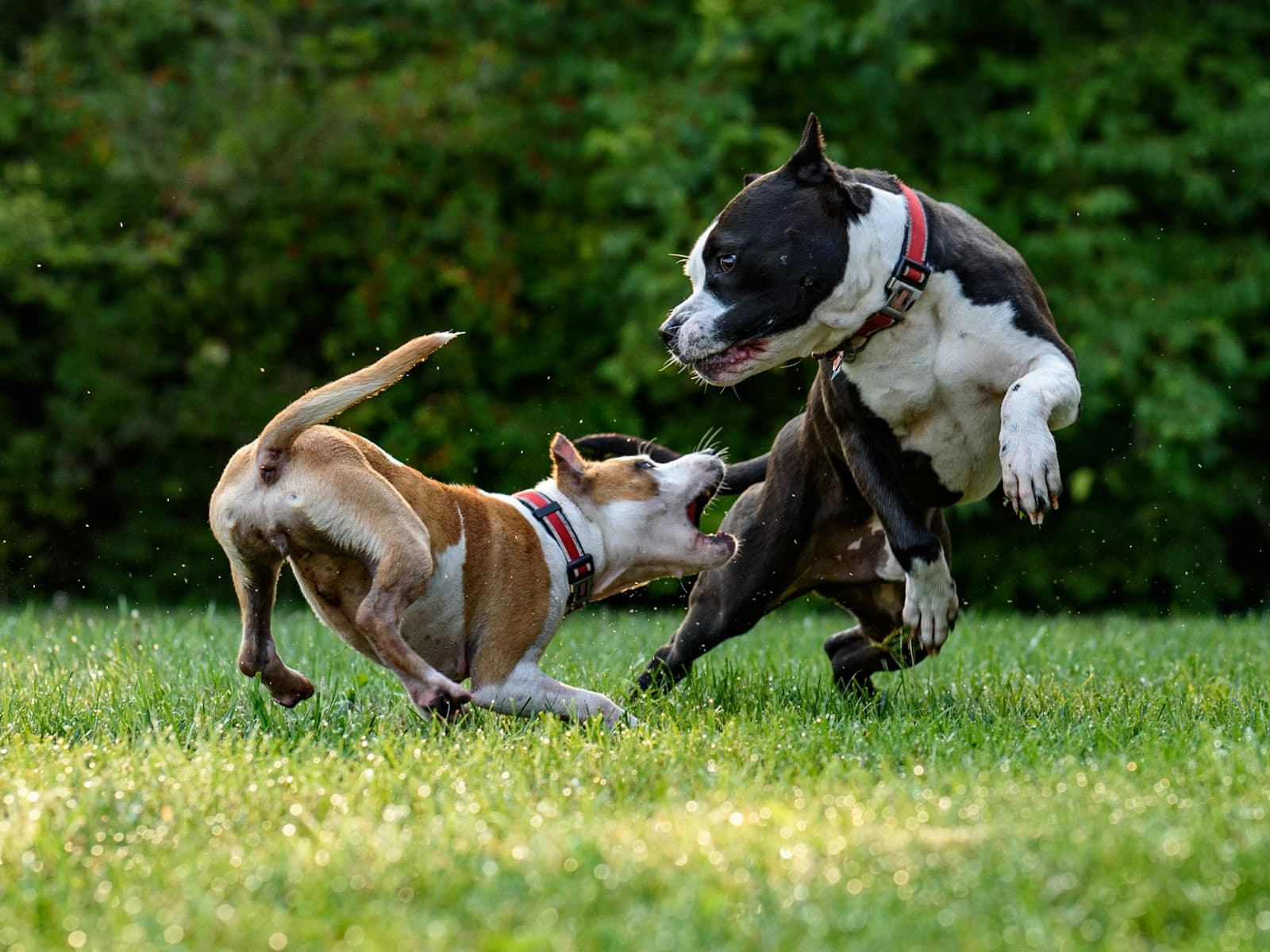
9. Two dogs are running together. One drops its front end to the ground, rear in the air, holds it for a second and bounces off sideways. What does the bow mean?
Answer: it is a play signal, an invitation to play or a reminder that the rough moves around it are still a game. Dogs often bow after a hard bump or a pause, as if to reset. The bouncy, exaggerated movement confirms the reading. Safety note: a bow is an offer. Watch the other dog's reply, and if it turns away or leaves, let it go.
10. Your large dog lies on his back while a small puppy climbs over him, growling and mouthing. Every so often they swap. Should you step in?
Answer: probably not. A big dog that lies down and lets the smaller one win is handicapping himself, and swapping roles is a sign of healthy play. To check, hold the puppy back for a few seconds: if your dog invites more, both are enjoying it; if he uses the break to walk off, he was only tolerating it. Step in if the swaps stop, if one dog keeps trying to leave, or if the play loses its pauses. Safety note: call the dogs apart or step between them with your body, and never reach between their heads. More in Dog Play or Fighting?
11. On a walk, your dog and another approach each other in a curve, sniff for about three seconds, then both turn away and carry on. Good greeting, or a missed chance?
Answer: a good greeting. Comfortable dogs approach at an angle, keep it short and disengage on their own. Long face-to-face meetings on tight leads are where most trouble starts, because the lead stops the movement dogs use to manage a meeting. Safety note: keep the lead loose and move on after a few seconds. Passing without a greeting is a good outcome too, as Dogs Greeting Each Other explains.
Two signals in the wild
A play bow and a polite greeting, as you will meet them in a park.
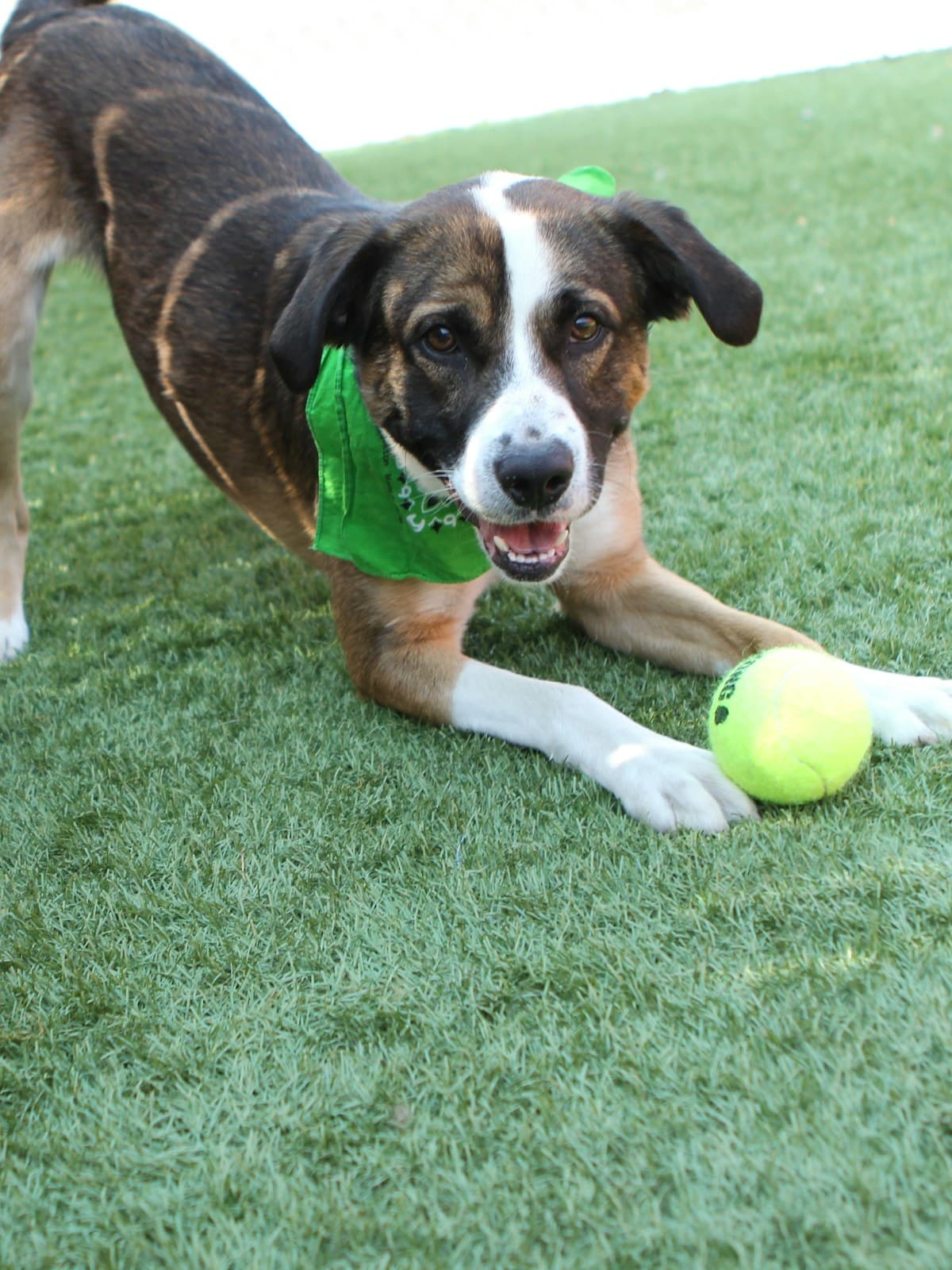
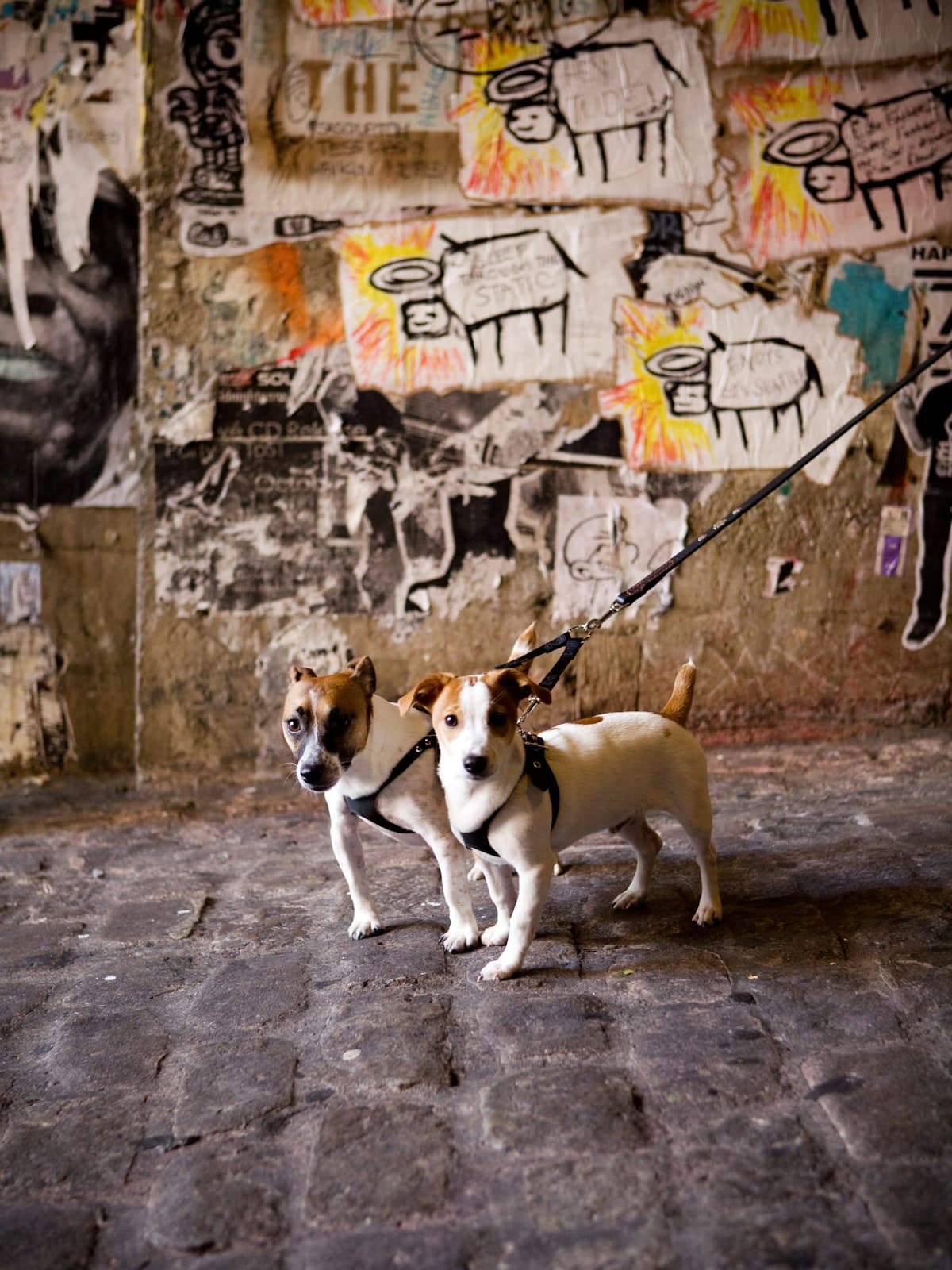
Photos: Judy Beth Morris and Erin Vey on Unsplash.
12. Another dog is coming towards you on a narrow path. Your dog suddenly buries his nose in the verge and will not look up. Is he ignoring you?
Answer: he is more likely avoiding the approaching dog. Sudden, intense sniffing at a tense moment is a displacement behaviour, often listed among calming signals: a way to take pressure out of the meeting. Pulling him back to attention punishes an attempt to keep things calm. Safety note: step aside to give both dogs more room, and let him sniff until the other dog has passed.
What the twelve answers have in common
The same habits run through all twelve answers. The meaning sits in the cluster: a lick, a head turn and weight shifted back say more together than any of them alone. Context sets the meaning: the same yawn means tiredness on the sofa and stress at the vet. And the right response to nearly every uneasy signal is the same: stop what you are doing, add distance and let the dog choose.
The quiet signals matter most because they come first. By the time a dog freezes or growls, it has usually tried several quieter ways of saying the same thing. Why Dogs Bite: Reading the Warning Signs follows that sequence from the first lip lick to the snap.
Try it this week, on your own dog
Ticked: 0 of 5
Two or three ticks is an ordinary start. A week of watching your own dog fills in the rest faster than more reading.
How to check your reading properly
A quiz you mark yourself flatters you: you read slowly, you know the topic, and you decide what counts as right. Two steps give you a harder check.
First, watch real dogs. Film a few minutes of your dog at a greeting, at the vet's door or in play, then play it back slowly and name each signal you see. The signals you missed in real time are the ones to practise.
Second, take a test that someone else marks.
For a certificate of what you know, the level-1 Dog language exam has 40 questions in 45 minutes, up to 90 seconds each, and a pass mark of 70%, with a pass with distinction from 90%. It is unsupervised: no webcam, no proctor. A pass brings a certificate with your name, a number and a QR code that opens a public verification page, valid for two years and then renewed with a short test.
The certificate shows that you passed a timed knowledge exam on reading dogs. It is not a licence or an accreditation, and it does not qualify you to take on behaviour cases, which is work for qualified behaviour professionals. If you would rather learn the signals in order first, the Dog language course teaches them in short lessons.
Test yourself
Question 1 of 3
Your dog yawns on the sofa late at night, and again when a stranger leans over him. Why does this article read the two yawns differently?
What is whale eye in dogs?
Whale eye is the white crescent that shows at the corner of a dog's eye when it turns its head away but keeps its eyes on something. It usually signals unease, often around guarded food, during hugs or when a dog feels cornered.
Does lip licking mean a dog is stressed?
Often, when there is no food around. A quick flick of the tongue over the nose or lips during handling, a hug or a tense meeting is one of the most common signs of mild stress. After a meal, it means the meal.
Does a wagging tail mean a dog is happy?
Not by itself. A wag shows arousal, which can be delight, anxiety or frustration. A loose, wide wag with a relaxed body is usually friendly; a high, stiff, fast wag on a tense body is not.
What does a play bow mean?
A play bow, front end down and rear end up, invites play, and mid-game it shows that the rough moves around it are still a game. Watch the other dog's answer: play needs two willing dogs.
Why is freezing a warning sign in dogs?
A dog that goes suddenly still and stiff, often with a closed mouth and fixed eyes, is close to the end of its tolerance. A freeze is one of the last signals before a snap, so stop what you are doing and give the dog space.
How can I test my dog body language knowledge?
Mark yourself on a quiz like this one, film your dog and name the signals in slow playback, then take a test someone else marks, such as Astra's free ten-question Dog language practice test.
Where this leads. Understanding Dog Behaviour: What to Learn, in Order sets out the order to learn the rest in, from the signal vocabulary to the discomfort that looks like misbehaviour.