The jade meaning offered by most crystal books is prosperity, harmony and protection, and the trouble starts one step earlier than that. Before you can say what jade means you have to say what jade is, and the answer is that the word has never named a single thing.

Affiliate link: if you buy through it, Astra Trainer may earn a commission. The price is the same for you.
Photographs courtesy of Aven Atelier.
One word, two minerals
Jadeite and nephrite are not variants of one another. They are not close cousins. They belong to different mineral families, form under different conditions, and share almost nothing chemically.
Jadeite is a pyroxene, rich in aluminium and sodium. Nephrite is an amphibole, rich in magnesium and calcium. If you were shown their compositions without being told what they were, nothing would suggest they belonged in the same sentence.
What they share is what a polished surface does. Both take a soft, slightly waxy lustre. Both are unusually tough, which is a different property from hardness: they resist breaking rather than resisting scratching, because both are built from interlocking fibrous or granular crystals rather than a single cleavable structure. That toughness is why jade was worked into tools and blades before it was worked into ornaments.
So the answer to what jade is turns out to be a description of behaviour rather than of substance. Two unrelated materials that behave the same way under a carver's hand ended up with one name, and kept it.
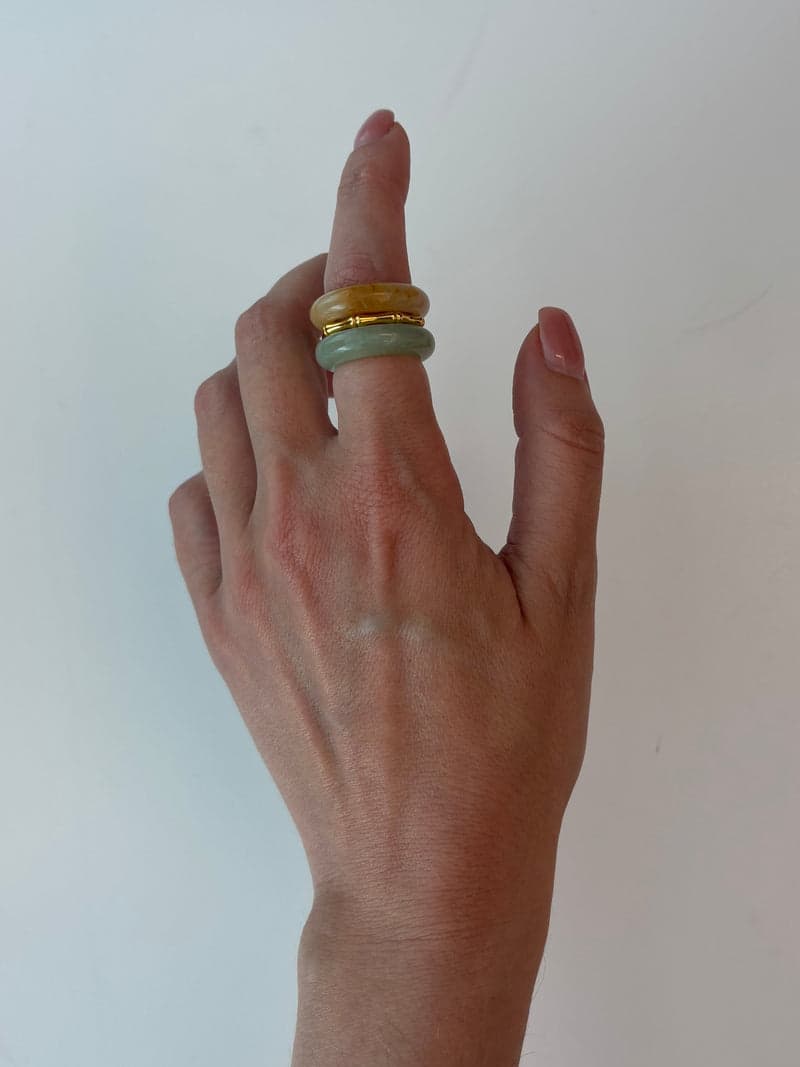
Affiliate link: if you buy through it, Astra Trainer may earn a commission. The price is the same for you.
Photographs courtesy of Aven Atelier.
What Damour settled in 1863
The person who separated them was Alexis Damour, a French mineralogist, in 1863. He analysed material that had all been sold and collected as jade and found that it resolved into two distinct minerals. He named the newer one jadeite. The older, more familiar material took the name nephrite.
Two things about that date are worth holding onto.
The first is how late it is. Jade had been worked continuously for something like seven thousand years by then. Every ritual disc, every burial suit, every carved seal predates the moment anyone could say with authority what the material was.
The second is that Damour was not discovering something nobody had noticed. Chinese carvers and dealers had long distinguished between the familiar stone and a harder, more vividly coloured one arriving from Burma, and had separate words for them. What Damour supplied was the chemistry underneath a distinction the trade had been making by eye for generations.
Not a health or safety instrument. No stone treats any illness, and there is no evidence that jade or any other mineral has therapeutic effects on physical or mental health conditions. Nothing here is medical advice, and no stone should be used in place of medical care.
Check yourselfBefore you read on: picture a piece of jade from ancient China, a ritual disc or a Han burial suit. What colour do you see, and which colour do you think was prized most?Show the answerHide the answer
Probably not emerald green. Ancient Chinese jade is almost always nephrite, which comes in white, cream, grey, brown and a green closer to olive or spinach than to emerald. The most prized of it was a pale, slightly translucent white, traditionally compared to mutton fat. The vivid green the word now suggests is mostly jadeite, which reached China from Burma only in the eighteenth century.
Nephrite, the older jade
Nephrite is the jade of almost all of Chinese history. When you read about jade in a Neolithic grave, a Zhou ritual, a Han burial suit or a Ming carving, the material is nephrite.
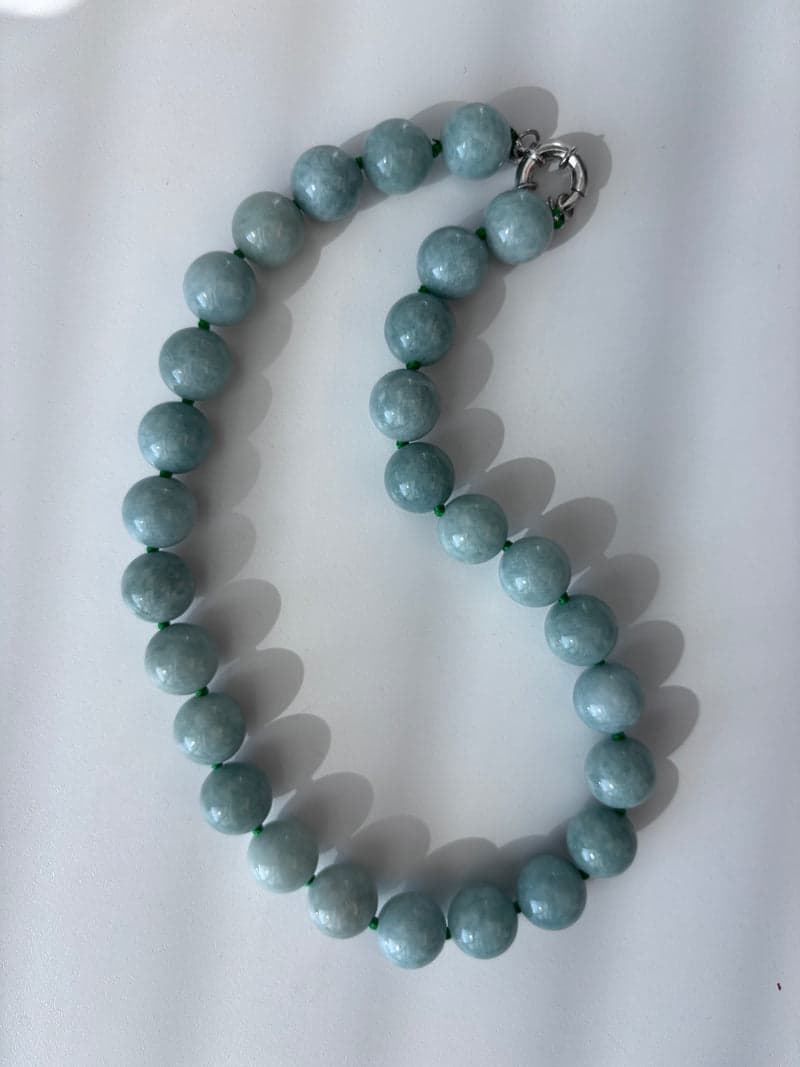
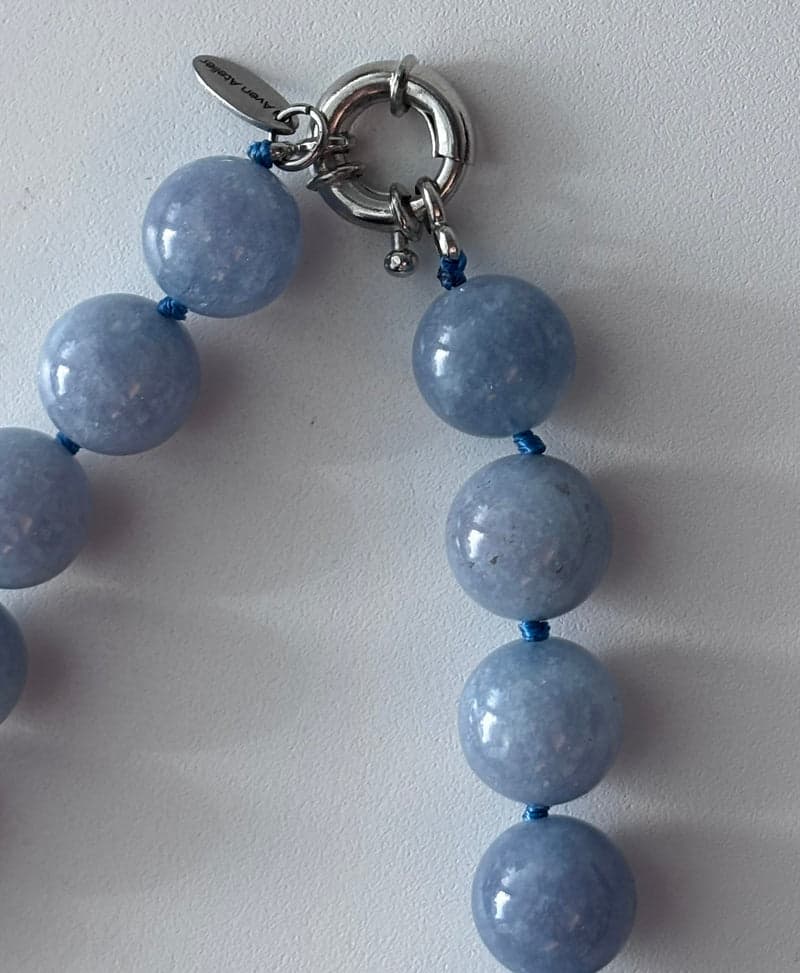
Affiliate link: if you buy through it, Astra Trainer may earn a commission. The price is the same for you.
Photographs courtesy of Aven Atelier.
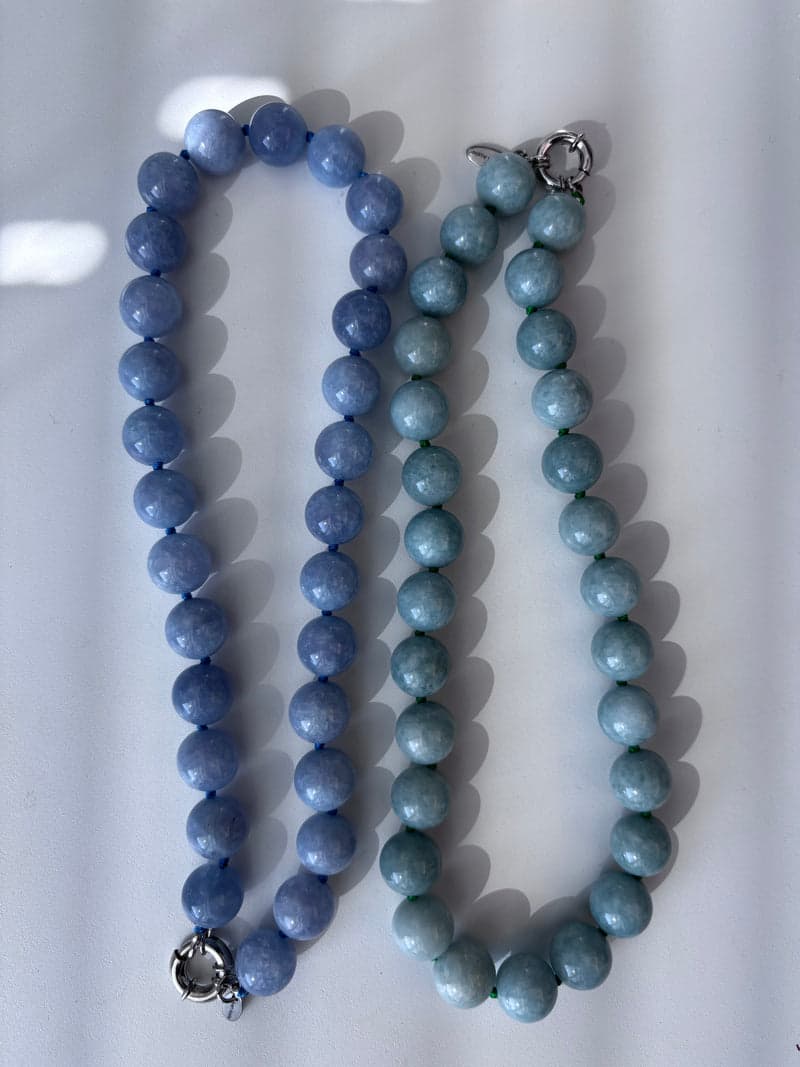
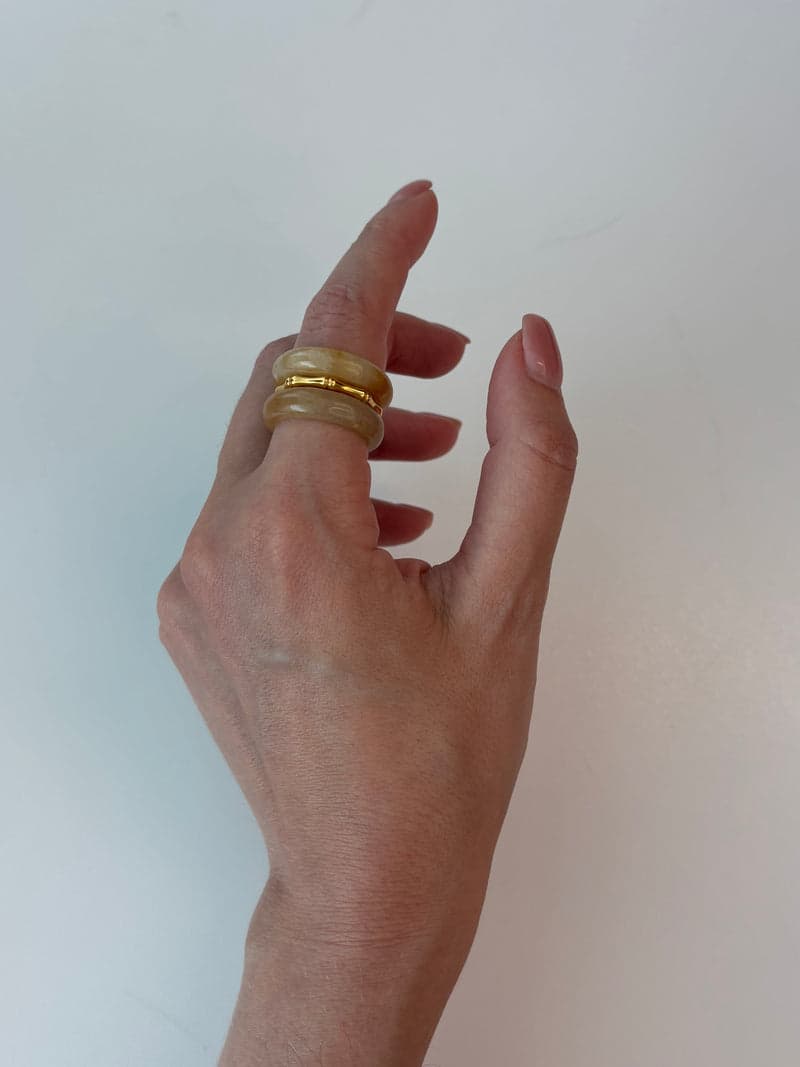
It occurs in a narrower colour range than most people expect: white, cream, grey, brown, and a green that runs more towards olive and spinach than towards emerald. The most prized Chinese nephrite is not green at all. It is a pale, slightly translucent white, and the traditional comparison for it is mutton fat.
Nephrite is marginally softer than jadeite but slightly tougher, which matters enormously for carving. It takes fine detail without shattering, and it holds a thin edge. The Neolithic cultures that produced the first great jade objects, Hongshan in the north and Liangzhu on the Yangtze delta, were working nephrite with abrasive sand and bow drills, without metal tools of any kind.
Jadeite, the late arrival
Jadeite entered Chinese use only in the eighteenth century, arriving from Burma, and it arrived into a culture that had spent millennia deciding what jade was supposed to look like.
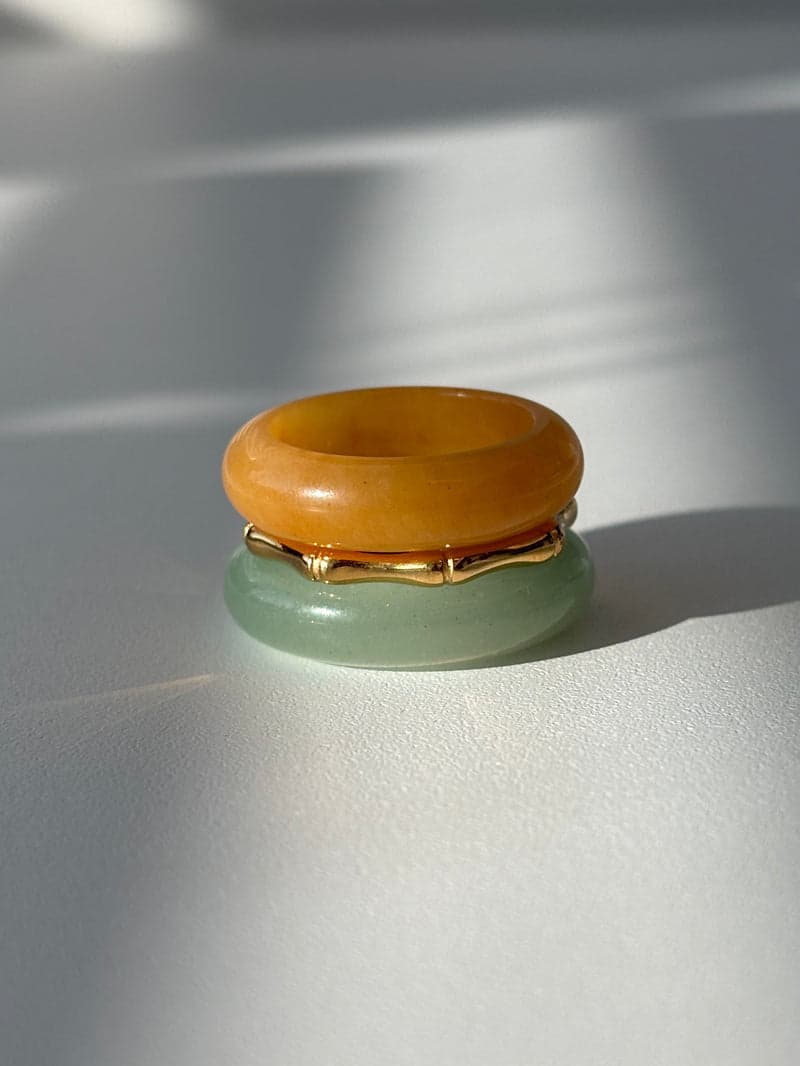
It broke the rules pleasantly. Jadeite occurs in far more colours than nephrite, including lavender, orange, black and the saturated emerald green now called imperial jade. It is harder, more translucent, and takes a glassier polish. The Chinese name for it, fei cui, borrows from the kingfisher, a bird whose plumage runs from red-brown to brilliant blue-green.
Almost everything that commands extraordinary prices at auction today is jadeite, and specifically Burmese jadeite. That is a two-hundred-year-old taste sitting on top of a seven-thousand-year-old tradition, which is worth knowing when a description implies that a green stone connects you to ancient China. The ancient material was usually paler, and often not green.
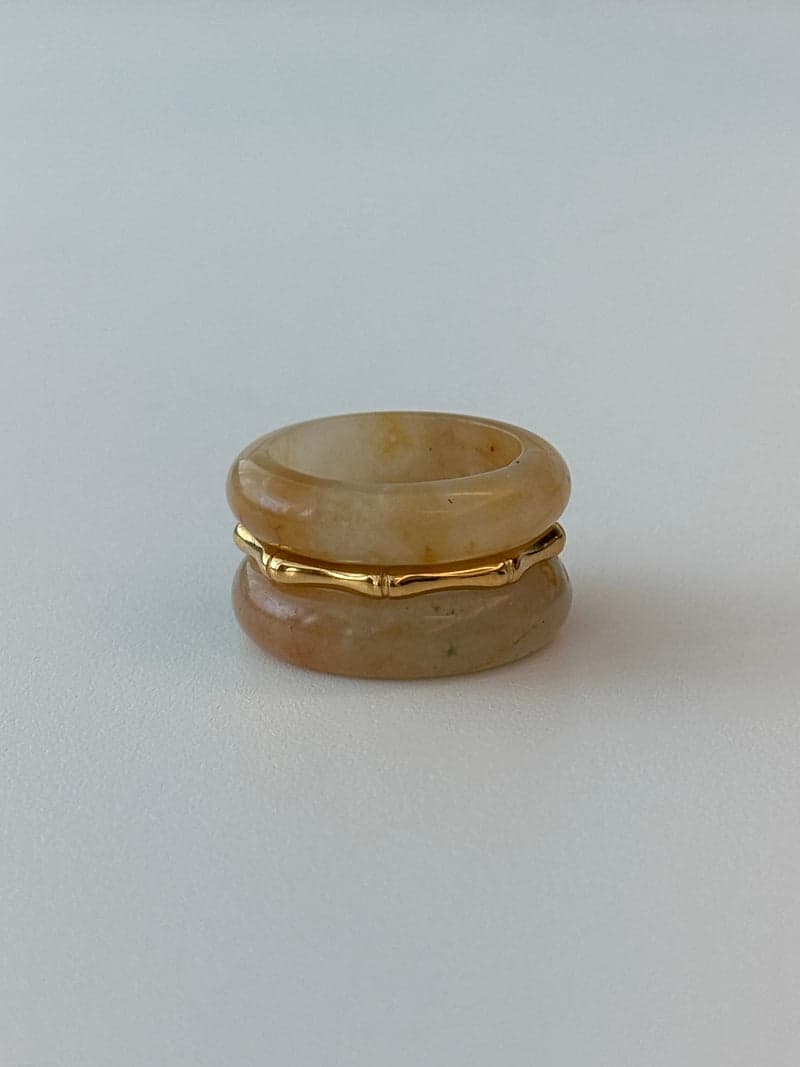
Affiliate link: if you buy through it, Astra Trainer may earn a commission. The price is the same for you.
Photographs courtesy of Aven Atelier.
What the stone meant in China
Here is where jade differs from most stones in the modern meaning lists, and differs in a direction that makes it more interesting rather than less.
The Chinese tradition around jade is not primarily a tradition of claims about what the stone does. It is a tradition of what the stone is compared to. The Book of Rites sets out eleven virtues read into jade, and Confucius is recorded comparing its qualities to those of a gentleman: warm to the touch like benevolence, firm like intelligence, sharp-edged without cutting like justice.
That is a metaphor doing moral work, not an assertion of influence. The stone is a standard to measure character against.
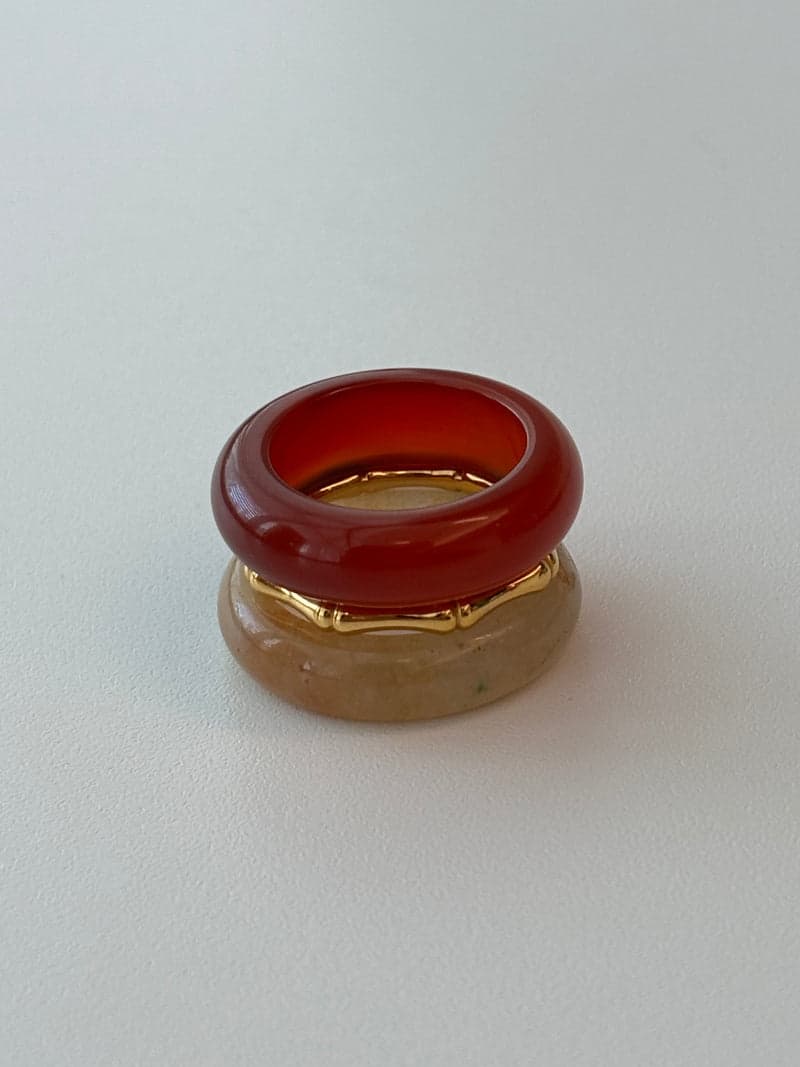
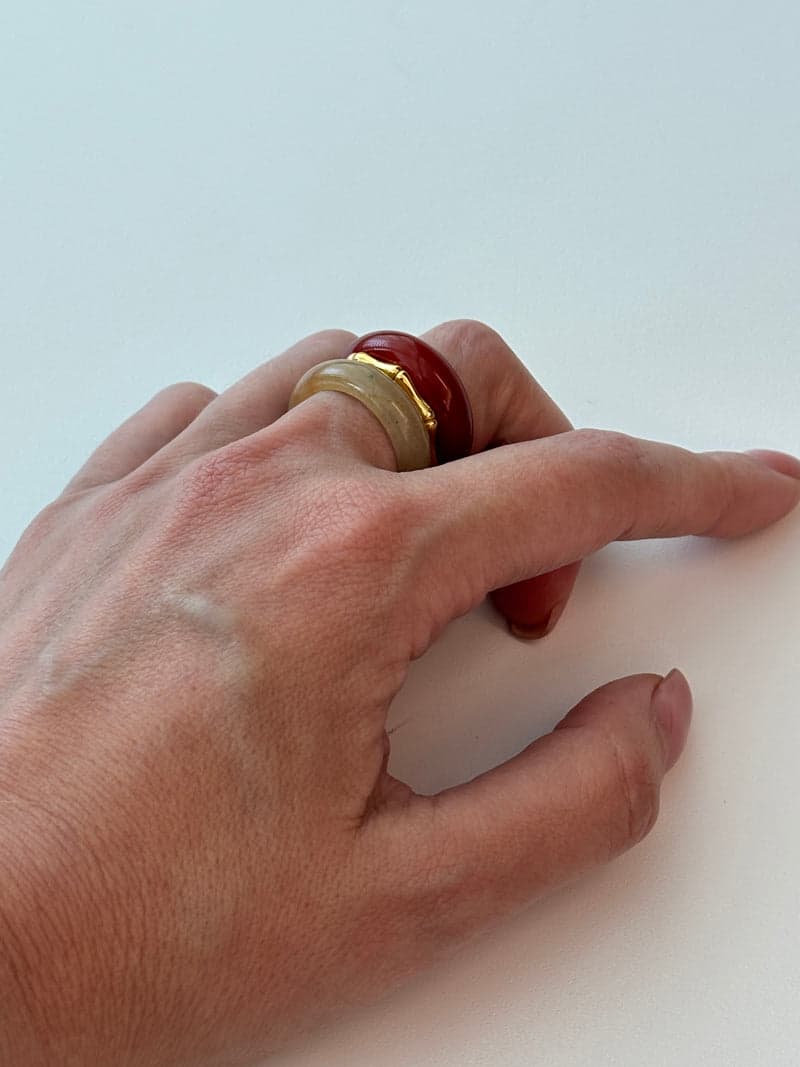
Jade was also the material of ritual objects whose purpose is still argued over. The bi, a flat disc with a central hole, and the cong, a tube square on the outside and round within, appear in Liangzhu graves from roughly 3300 BCE. The common reading is that the round and the square encode heaven and earth. That reading is plausible and it is also a later interpretation applied backwards, since the people who made them left no explanation.
What can be said without stretching is narrower and firmer. For several thousand years, in one of the world's oldest continuous civilisations, this material was the one reserved for the things that mattered most.
Affiliate link: if you buy through it, Astra Trainer may earn a commission. The price is the same for you.
Photographs courtesy of Aven Atelier.
The green that is not jade at all
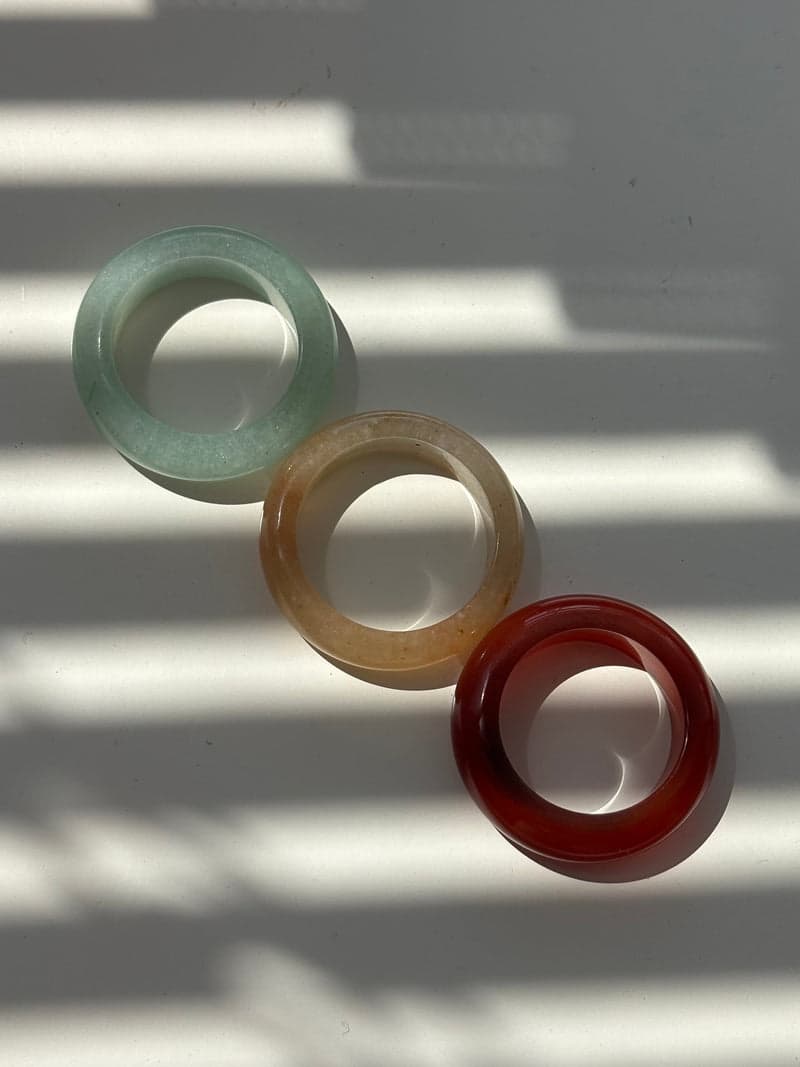
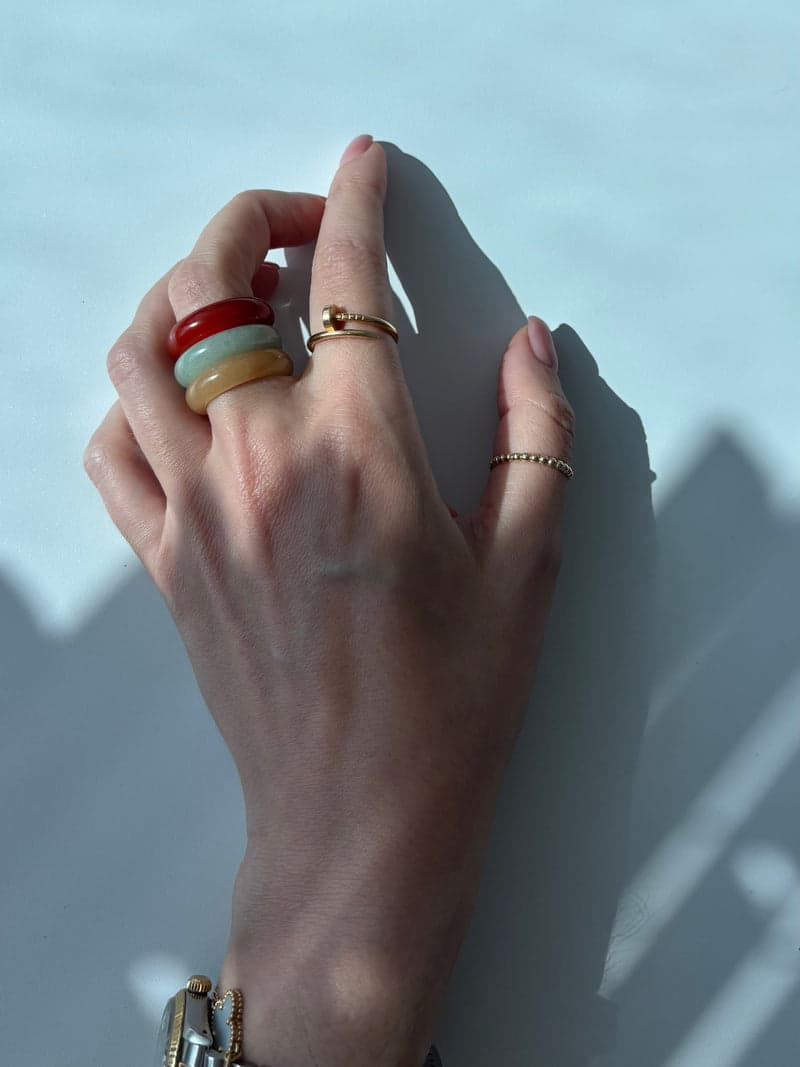
A large amount of what is sold as jade is serpentine.
Serpentine is a perfectly good decorative stone. It is attractive, it is inexpensive, and it is not jade. It carries a set of trade names designed to blur that: new jade, Korea jade, Suzhou jade, olive jade, and several more. Gemmological bodies regard these names as misleading, because they imply a relationship to jade that the mineralogy does not support.
The most common of them, new jade, is bowenite, a compact variety of antigorite within the serpentine group. It is translucent, waxy and pale green, and at a glance it passes convincingly for nephrite.
The practical difference is hardness. Serpentine sits at roughly 2.5 to 4 on the Mohs scale; jade sits at 6 to 7. Serpentine scratches with a hard steel point and jade does not, which is a test a jeweller can do in seconds and you should not attempt on something you already own.
None of this makes serpentine a bad thing to buy. It makes it a bad thing to buy while believing it is something else, at a price set by the something else.
Affiliate link: if you buy through it, Astra Trainer may earn a commission. The price is the same for you.
Photographs courtesy of Aven Atelier.
A, B and C, and what they actually describe
There is a widely used classification for jadeite that is regularly misread as a quality scale. It is not one. It describes treatment.
| Grade | What has been done |
|---|---|
| Type A | Untreated, or polished with wax only |
| Type B | Bleached with acid, then impregnated with polymer resin |
| Type C | Dyed, most often to introduce or deepen green, lavender or red |
| Type B+C | Both treatments |
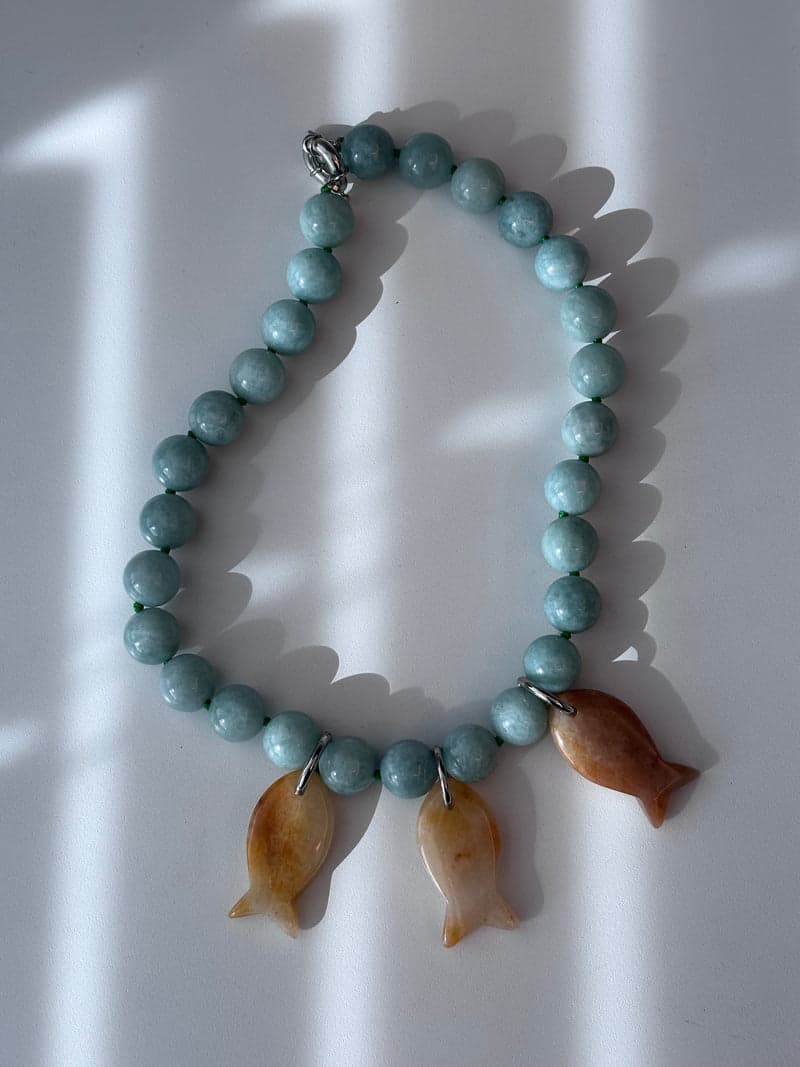
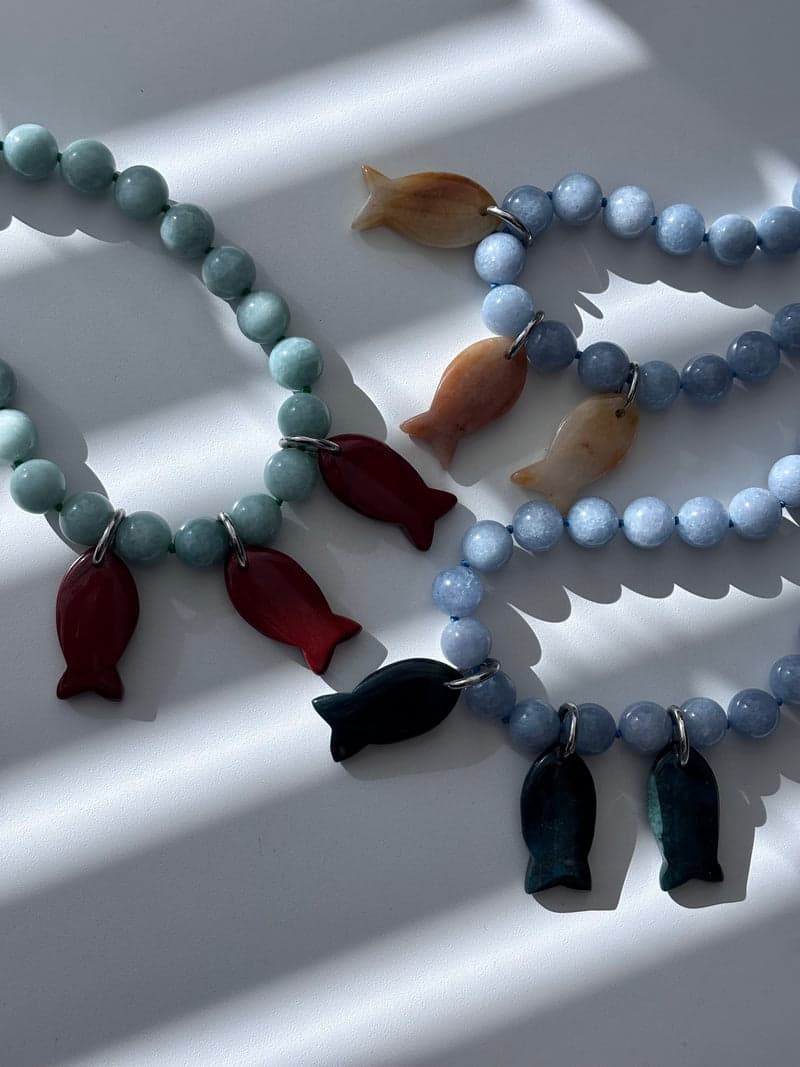
Type A does not mean fine. A dull, cloudy, cheap piece of jadeite that has been left alone is Type A. The letter records what was done to the material, not how good the material is.
Type B is the one that costs people money. The acid removes brown and grey iron staining from the fractures, then resin fills the spaces it leaves. The result can look like far better material than it is. It also degrades: the polymer yellows and crazes with time, and the stone is left structurally weaker than it began.
The uncomfortable part is that you cannot see it. Polymer impregnation is not reliably detectable by eye, by feel, or by any of the folk tests that circulate online. Infrared spectroscopy is the method that settles it. For anything at a serious price, that means a laboratory report rather than a conversation.
Affiliate link: if you buy through it, Astra Trainer may earn a commission. The price is the same for you.
Photographs courtesy of Aven Atelier.
Buying it, and the two questions that work
Almost all buying advice for jade is a list of things to look at. Colour, translucency, texture, the sound two pieces make when tapped together. Some of it is useful and none of it resolves the two things that actually determine what you have.
Two questions do more than the whole list.
Which mineral is it? Jadeite, nephrite, or something else. A seller who works with stone will answer this immediately and without defensiveness. Vagueness here, or a reply that names only a colour, tells you what you need to know.
What treatment has it had? For jadeite specifically, the answer should be a letter. For anything else, the question is whether it has been dyed or stabilised. Again, the useful signal is not the answer so much as whether the seller understands the question.
Neither question is hostile and neither requires expertise to ask. They are the two facts a seller ought to know about their own stock.

Affiliate link: if you buy through it, Astra Trainer may earn a commission. The price is the same for you.
Photographs courtesy of Aven Atelier.
What to take from this
Jade names two unrelated minerals, jadeite and nephrite, and the fact was only established in 1863 after several thousand years of use.
Nearly all historical Chinese jade is nephrite, and the most prized of it was white rather than green. The vivid green that now defines the word arrived from Burma in the eighteenth century.
The tradition around the stone is unusually sober. It compares jade to virtues rather than claiming the stone confers them, which is a more durable idea than anything in the modern lists.
A great deal sold as jade is serpentine wearing a trade name, and a great deal of real jadeite has been bleached, filled or dyed.
Which is why the jade meaning worth carrying is not a list of properties. It is that this is a material people have wanted badly enough, for long enough, to imitate thoroughly. Asking what a stone is turns out to be the interesting question, not what it does.
Test yourself
Question 1 of 3
Jadeite and nephrite share almost nothing chemically. Why, according to the article, did they end up with one name?
Is jade one stone or two?
Two. Jadeite is an aluminium-rich pyroxene and nephrite is a magnesium-rich amphibole. They are unrelated minerals that happen to look alike when polished, and both are correctly called jade. The distinction was established by Alexis Damour in 1863.
What does jade mean in Chinese tradition?
Yu, the Chinese word usually translated as jade, carried moral rather than magical weight. The Book of Rites lists eleven virtues read into the stone, and Confucius compared its qualities to those of a gentleman. For most of that history the material in question was nephrite.
Is new jade real jade?
No. New jade is a trade name for bowenite, a variety of serpentine. So are Korea jade, Suzhou jade and several others. Serpentine is a different mineral, softer at roughly 2.5 to 4 on the Mohs scale against jade's 6 to 7.
What do Type A, B and C mean for jade?
They describe treatment, not quality. Type A is untreated or waxed only. Type B has been acid-bleached and impregnated with polymer resin. Type C has been dyed. Type A does not mean fine jade, it means jade that has not been altered.
How can I tell what I am actually buying?
Ask the seller two questions: which mineral, and what treatment. A seller who knows will answer plainly. Polymer impregnation cannot be confirmed by eye, and infrared spectroscopy is the only method that detects it conclusively, so for anything expensive the answer is a laboratory report.
Where this leads. Crystal Meanings and Their Origins, Traced does for the whole list what this article does for one name: it follows the modern meanings back to the people who wrote them down, and finds them younger than expected.