Most lists of gemstone meanings give each stone a mood and a promise: calm for one, luck for another, protection for a third. This guide does something different. For nine of the stones most often worn as jewellery, it sets out what each one is actually made of, where its name and meaning came from, and the one thing most worth knowing before you buy it. Each section links to a full article on that stone.
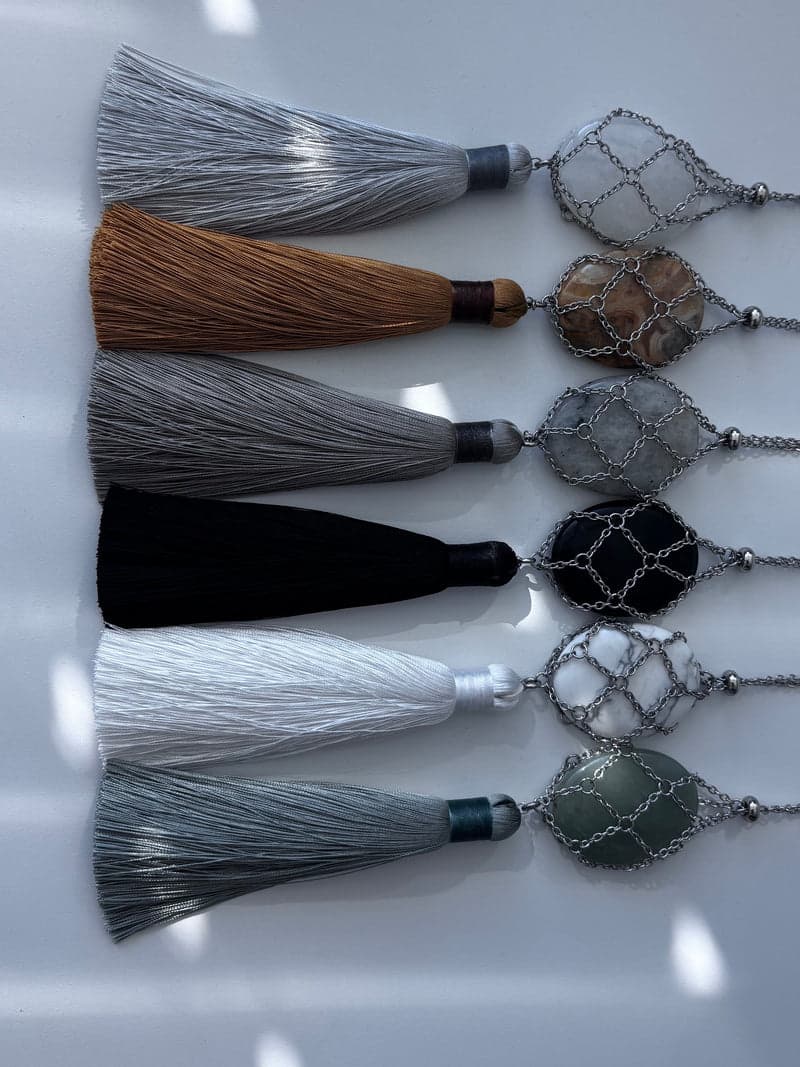
Affiliate link: if you buy through it, Astra Trainer may earn a commission. The price is the same for you.
Photographs courtesy of Aven Atelier.
How to read this guide
Gemstone meanings are real in one sense and not in another. They are real as history: people have attached beliefs to stones for thousands of years, and those beliefs tell you a great deal about the cultures that held them. They are not real as properties. No stone changes your mood, your luck or your health, and nothing here suggests otherwise.
What most modern meaning lists leave out is the more interesting part: the mineral itself, the history of its name, and the treatments and imitations that shape what is actually on sale. Much of the modern list was also assembled surprisingly recently. That history is traced in Crystal Meanings and Their Origins, Traced, which is the right companion to this guide.
Each stone below gets the same treatment: what it is, where its meaning came from, and what to check before buying. The full article for each goes much further.
The nine at a glance
| Stone | What it actually is | Worth knowing |
|---|---|---|
| Clear quartz | Crystalline silicon dioxide | Named from the Greek for ice; keeps time in watches |
| Amethyst | Quartz coloured by iron and natural radiation | Heated, it becomes most of the citrine sold |
| Aventurine | A quartzite rock with glittering mica | Named after a Venetian glass that imitates it |
| Agate | Banded chalcedony, fine-grained quartz | Bright and black colours are usually dyed |
| Jasper | Opaque chalcedony full of iron and clay | Many stones sold as jasper are not jasper |
| Onyx | Chalcedony with straight parallel bands | Modern black onyx is almost always dyed |
| Jade | Two unrelated minerals, jadeite and nephrite | Much sold as jade is another stone |
| Obsidian | Natural volcanic glass | Not a crystal at all; the first mirrors |
| Sodalite | A sodium-rich feldspathoid | Softer than quartz; often sold as lapis |
Six of the nine are quartz in one form or another. That single fact explains more about this list than any meaning attached to it.
Clear quartz
Clear quartz, or rock crystal, is transparent silicon dioxide, one of the most common minerals on earth. The word crystal comes from the Greek krystallos, ice, because ancient writers, Pliny among them, believed rock crystal was ice frozen so hard it could never melt.
Its modern reputation as a stone that amplifies has a real counterpart in physics. Quartz is piezoelectric: a shaped crystal vibrates at a very steady frequency when driven by a voltage, which is why a sliver of it keeps time in almost every watch and phone. The thing to check before buying is whether a flawless piece is quartz or glass, which warms quickly in the hand.
Read the full story of clear quartz
Affiliate link: if you buy through it, Astra Trainer may earn a commission. The price is the same for you.
Photographs courtesy of Aven Atelier.
Check yourselfAmethyst was once ranked alongside diamond and ruby. Before reading on: what do you think knocked it off that list, given that the stone itself never changed?Show the answerHide the answer
Supply. Huge Brazilian deposits made amethyst common in the nineteenth century. The stone was as purple as ever; there was simply far more of it, and once it was no longer scarce it lost its place beside diamond and ruby. Its rank had followed scarcity, not beauty.
Amethyst
Amethyst is quartz coloured purple by traces of iron combined with natural radiation over geological time. The name means not drunk in Greek, and the belief that it guarded against drunkenness is genuinely ancient. The myth usually told to explain it, of Bacchus and a maiden named Amethyste, was written by a French poet in 1576.
Amethyst was once ranked with diamond and ruby, until huge Brazilian deposits made it common in the nineteenth century. Worth knowing: heating turns it yellow, and most citrine on the market is heated amethyst.
Read the full story of amethyst
Aventurine
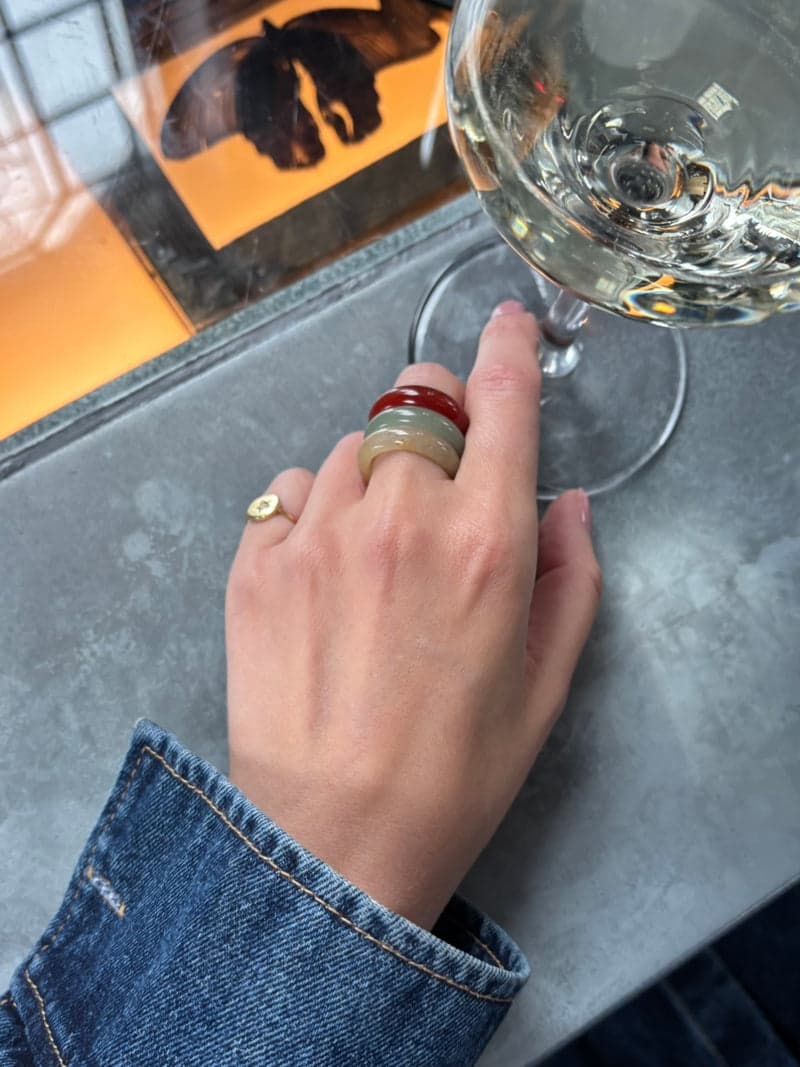
Aventurine is not a single mineral but a rock: a quartzite, packed quartz grains with flakes of green, chromium-bearing mica between them. Tilted in the light, those flakes flash, an effect called aventurescence.
Its meaning of luck comes from its name, and its name comes from a glass. Avventurina, from the Italian for by chance, was a glittering copper glass made in Venice, and the natural stone was named after it. The glass, now called goldstone, is still sold, often as a natural stone. Its flecks are coarser and more coppery than aventurine's.
Read the full story of aventurine
Affiliate link: if you buy through it, Astra Trainer may earn a commission. The price is the same for you.
Photographs courtesy of Aven Atelier.
Agate
Agate is banded chalcedony, quartz in fibres too fine to see, laid down in layers inside cavities in volcanic rock. The name comes from the river Achates in Sicily, recorded by Theophrastus around 315 BCE, and how its regular bands form is still debated by geologists.
Agate is slightly porous, and that one fact shaped its history. Pliny described stones boiled in honey to change their colour, and in the nineteenth century the town of Idar-Oberstein in Germany turned dyeing into an industry. Worth knowing: bright blue, green, pink and solid black agate are almost always dyed.
Jasper
Jasper is chalcedony so full of iron oxide and clay that no light passes through it. Hematite gives the classic brick red. The name is one of the oldest in continuous use, traced back through Greek to Hebrew and Akkadian, though the ancient stone of that name was often translucent and green.
Red jasper carries one of the earliest recorded meanings of any stone. Chapter 156 of the Egyptian Book of the Dead prescribes a knot amulet of Isis, made of red jasper, at the throat of the dead. Worth knowing: jasper is a generous trade name, and stones such as dalmatian jasper are not jasper at all.
Onyx
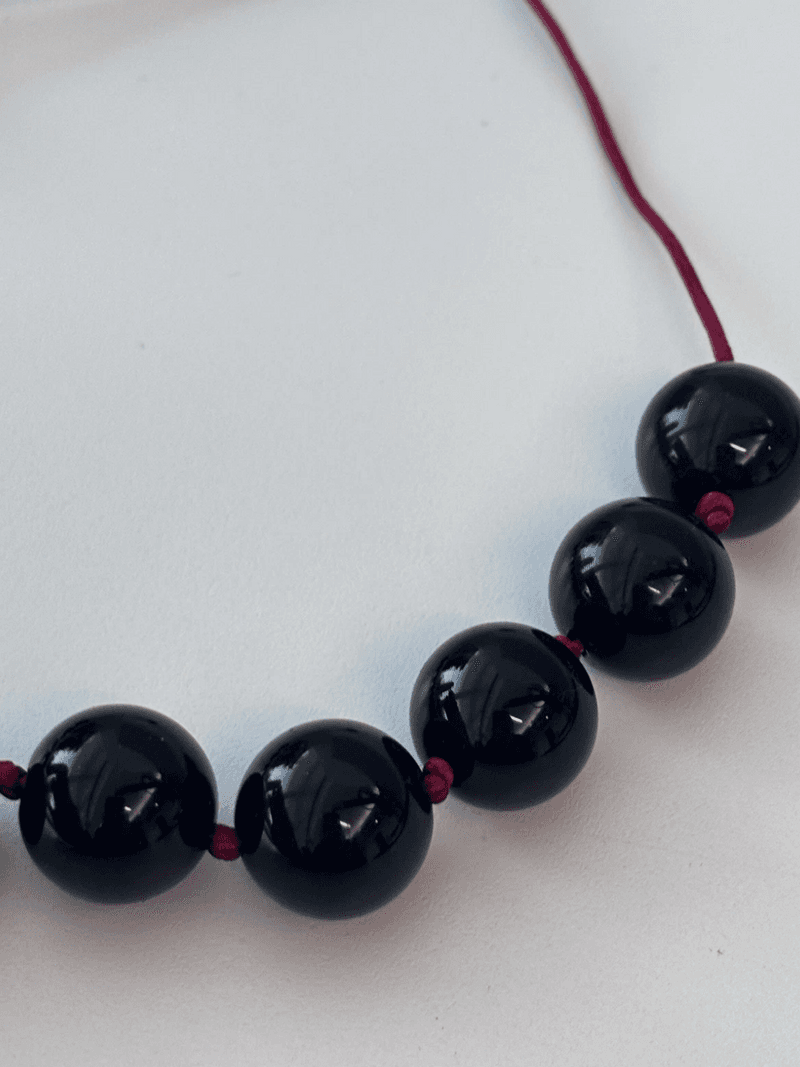
Onyx is chalcedony with straight, parallel bands of contrasting colour, classically black and white. The name means fingernail in Greek. Its straight layers made it the classic material for cameos, where a figure is carved in one colour against a ground of another, including the Gemma Augustea in Vienna.
Worth knowing: the solid black stone sold as black onyx today has no bands at all and is almost always dyed chalcedony, the same material often sold as black agate. Onyx marble, used for bowls and countertops, is a much softer calcite that only shares the name.

Affiliate link: if you buy through it, Astra Trainer may earn a commission. The price is the same for you.
Photographs courtesy of Aven Atelier.
Jade
Jade is not one stone but two unrelated minerals, jadeite and nephrite, which were only shown to be different in 1863. Almost all historical Chinese jade is nephrite, and the vivid green jadeite now associated with the word arrived from Burma in the eighteenth century.
The Chinese tradition around jade compared it to virtues rather than claiming it conferred them, which makes it one of the most thoughtful meanings attached to any stone. Worth knowing: a great deal sold as jade is serpentine or another stone under a trade name, and treated jadeite is graded A, B and C by treatment, not quality.
Obsidian
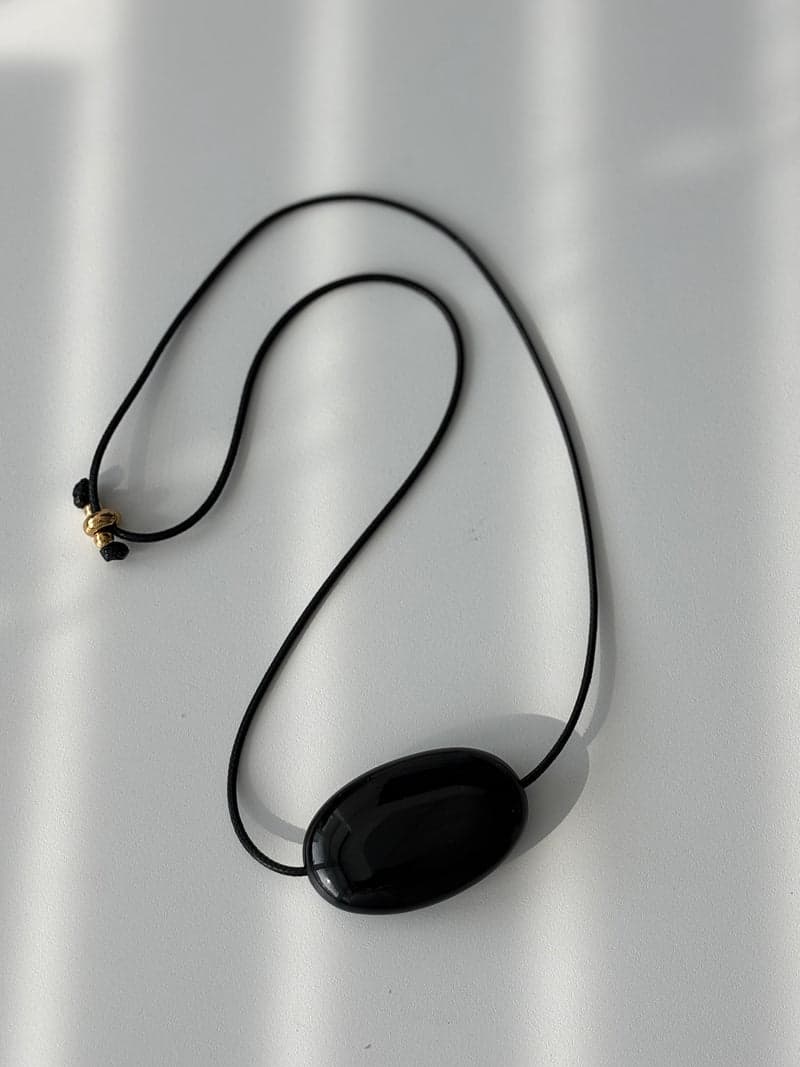
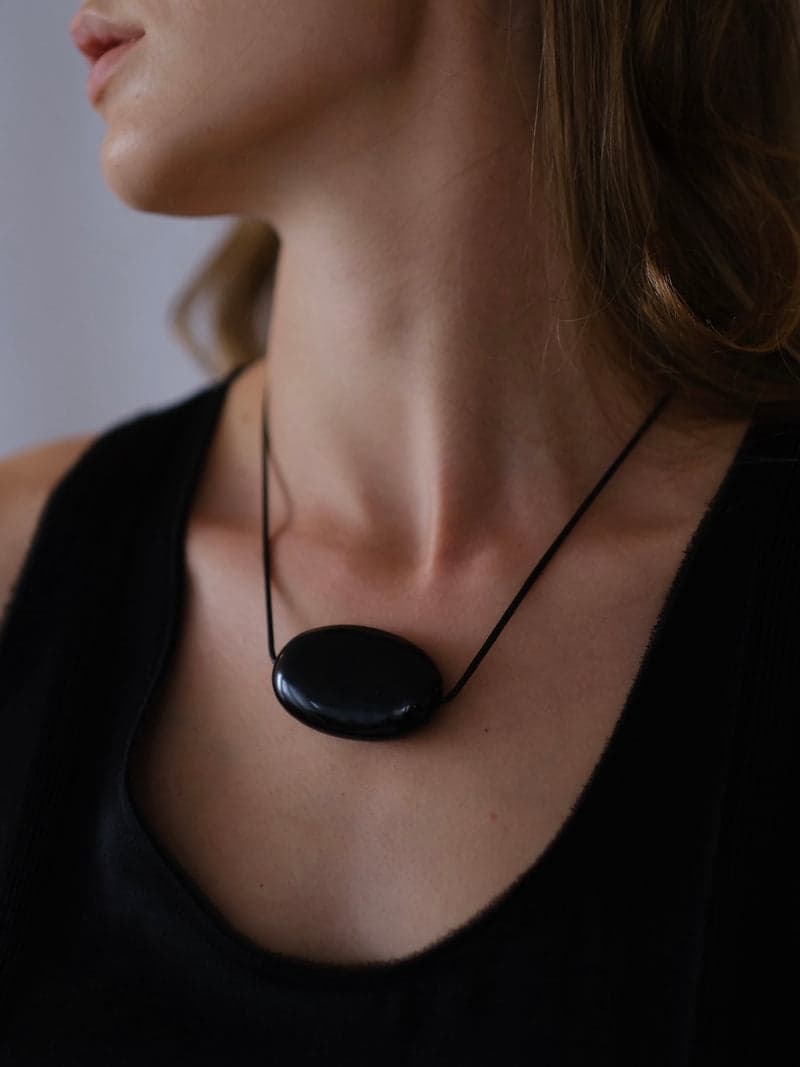
Obsidian is not a crystal or a mineral at all. It is natural volcanic glass, lava rich in silica that cooled too fast for crystals to form. That is why it breaks to an edge finer than surgical steel, and why it polishes to a true reflection rather than a shine. Even its name is an accident: Pliny called it the stone of Obsius, and an extra letter crept in through copying.
The oldest known mirrors anywhere are obsidian, from Neolithic Anatolia around 6000 BCE, and the scrying mirror of the Elizabethan magician John Dee was confirmed in 2021 to be Aztec obsidian from Mexico. Its modern meanings of protection and shadow work are recent, but its reputation for seeing is unusually well grounded, because people really did use it to see with.
Read the full story of obsidian
Affiliate link: if you buy through it, Astra Trainer may earn a commission. The price is the same for you.
Photographs courtesy of Aven Atelier.
Sodalite
Sodalite is the odd one out: not quartz but a feldspathoid, a sodium aluminium silicate that forms in rocks where quartz cannot. The chemist Thomas Thomson named it in 1811 for its unusually high sodium content. A royal gift of Bancroft sodalite in 1901 led to 130 tons being shipped to decorate Marlborough House in London.
Its white veins are its signature and the easiest way to tell it from lapis lazuli, whose blue comes from a mineral in the same family but which carries gold flecks of pyrite. Worth knowing: sodalite is softer than quartz, so it is best stored apart from harder stones.
Read the full story of sodalite
Not a health or safety instrument. No stone treats any illness, and there is no evidence that any gemstone or mineral has therapeutic effects on physical or mental health conditions. Nothing here is medical advice, and no stone should be used in place of medical care.
What to take from this
Six of these nine stones are quartz: clear quartz and amethyst as crystals, aventurine as a grainy rock, and agate, jasper and onyx as fine-grained chalcedony. Jade is two unrelated minerals, obsidian is glass, and sodalite is a feldspathoid.
Many of their names came from appearance, place or legend long before anyone knew their chemistry, and several, agate, onyx and jade among them, now cover material that is dyed, treated or another stone entirely.
Which is why the gemstone meanings worth keeping are not a list of moods and promises. They are the histories: of a Greek word for ice, a Venetian glass, an Egyptian amulet, a royal house in London. Each full article follows one of them.
Test yourself
Question 1 of 3
Where does the guide trace aventurine's meaning of luck?
Which gemstones are forms of quartz?
Clear quartz and amethyst are crystalline quartz, aventurine is a quartzite rock, and agate, jasper and onyx are chalcedony, a fine-grained form of quartz. Of the nine stones in this guide, only jade, obsidian and sodalite are not quartz.
Do gemstone meanings have any scientific basis?
No. There is no evidence that any gemstone affects mood, luck or health. Gemstone meanings are real as cultural history, and many are ancient, but they describe what people believed rather than what stones do.
Which gemstones are most often dyed?
Brightly coloured and solid black agate, black onyx and blue aventurine are commonly dyed, and most citrine is heated amethyst. A seller should be able to say whether a colour is natural, heated or dyed.
Is obsidian a crystal?
No. Obsidian is natural volcanic glass, formed when silica-rich lava cools too fast for crystals to grow. That is why it breaks to an extremely sharp edge and polishes to a true reflection.
What is the difference between jade and the stones sold as jade?
Real jade is one of two minerals, jadeite or nephrite. Many green stones sold under jade trade names are serpentine, aventurine or dyed quartzite. Asking which mineral a piece is, and what treatment it has had, settles most cases.
Where this leads. Crystal Meanings and Their Origins, Traced explains where the modern meaning lists came from as a whole, and why two crystal books that agree with each other are usually sharing a recent ancestor rather than an ancient tradition.