

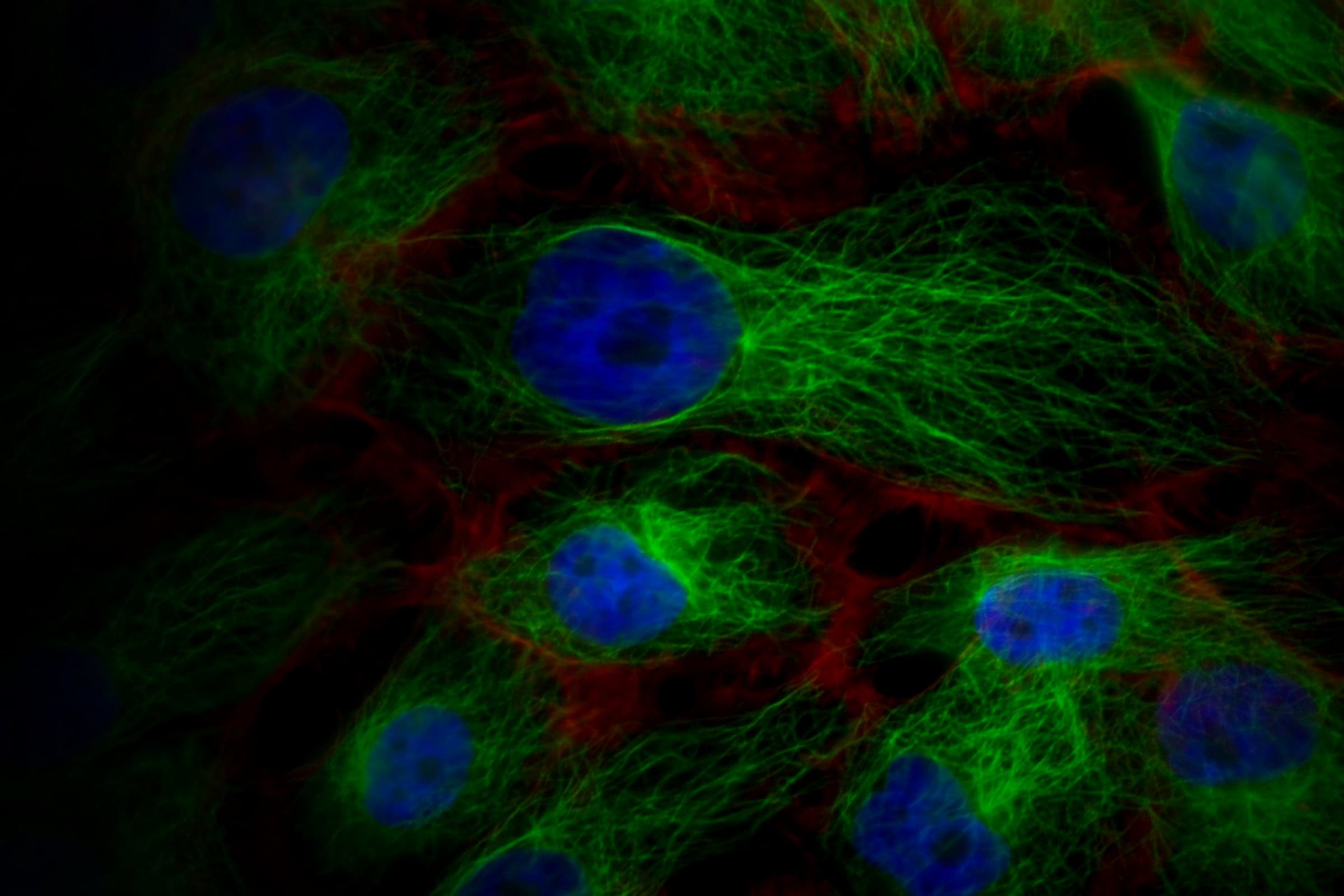
Bientôt disponible
Cell & Molecular Biology
Expliquez ce que fait une cellule, depuis les molécules.
Le cours complet
- modules
- 56
- thèmes
- 565
- min par leçon
- 15
9%
croissance prévue des postes de chercheur médical aux États-Unis d'ici 2034 — bien plus rapide que la moyenne.
U.S. Bureau of Labor Statistics, Occupational Outlook 2024–34
Ce que vous saurez faire.
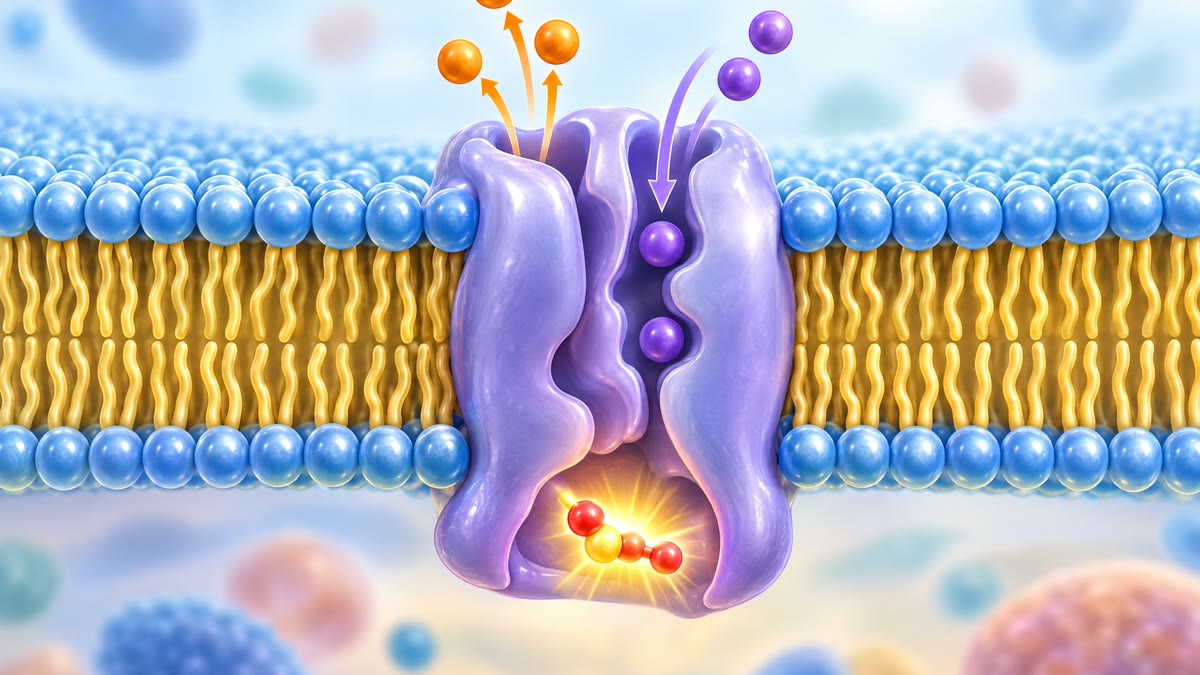
Suivez les ions et molécules à travers les membranes
Étape 1 · Cell Foundations
Suivez un gène de l'ADN à la protéine
Étape 2 · Genome & Gene Expression
Cartographiez le tri et le transport des protéines
Étape 3 · Membrane Traffic & Organelles
Expliquez comment les cellules bougent et gardent leur forme
Étape 4 · Cytoskeleton & Tissues
Décodez signalisation, division et mort cellulaire
Étape 5 · Signaling, Division & Fate
Concevez des expériences avec les bons témoins
Étape 6 · Methods & Case Studies
Six étapes.Une ascension continue.
Commencez à la membrane. Terminez par l'expérience qui prouve un mécanisme.
en 6 étapes
≈ 10 par module
en leçons de 15 minutes
pour finir tout le cours
- 1
Cell Foundations
Ce dont chaque cellule est faite
8 modules · 75 thèmes · ≈ 19 h
- 2
Genome & Gene Expression
Le génome, lu et entretenu
10 modules · 105 thèmes · ≈ 26 h
- 3
Membrane Traffic & Organelles
Où vont les protéines, et comment
10 modules · 97 thèmes · ≈ 24 h
- 4
Cytoskeleton & Tissues
Ce qui donne à une cellule sa forme et son mouvement
8 modules · 80 thèmes · ≈ 20 h
- 5
Signaling, Division & Fate
Comment une cellule décide de croître, se diviser ou mourir
15 modules · 154 thèmes · ≈ 39 h
- 6
Methods & Case Studies
Comment on sait ce qu'on sait
5 modules · 54 thèmes · ≈ 14 h
Mois
Heures et mois sont des estimations : une leçon de 15 minutes par thème, chaque jour.
Chaque module.Chaque thème.
Les titres des modules et des thèmes restent en anglais, la langue du secteur.
Étape 1
Cell Foundations
Ce dont chaque cellule est faite
8 modules · 75 thèmes
1Cells as Living Systems9 thèmes
- The Cell as the Fundamental Unit of Life
- Cell Theory and Its Modern Meaning
- What Makes a Cell a Living System
- Boundaries, Information, Energy, and Organization
- Structure and Function at the Cellular Scale
- Cells as Open, Dynamic Systems
- Homeostasis and Continuous Renewal
- From Molecular Interactions to Cellular Behavior
- Connecting Molecular, Cellular, and Tissue-Level Explanations
2Cell Diversity and Shared Architecture9 thèmes
- Bacterial, Archaeal, and Eukaryotic Cell Plans
- Features Shared Across Cellular Life
- Prokaryotic and Eukaryotic Organization
- Animal, Plant, and Fungal Cells
- Unicellular and Multicellular Lifestyles
- Cell Size, Shape, and Surface-Area Constraints
- Specialized Cells and Their Structural Adaptations
- Conserved Mechanisms and Cell-Type Differences
- Why No Single Cell Represents Every Cell
3The Molecular Components of Cells10 thèmes
- Water as the Cellular Medium
- Ions and Small Molecules
- Proteins as Cellular Machines and Structural Elements
- Lipids as Boundaries, Stores, and Signals
- Carbohydrates in Cell Recognition and Organization
- DNA as a Stable Information Molecule
- RNA as Information, Structure, and Regulation
- Noncovalent Interactions and Molecular Recognition
- Molecular Complexes and Functional Assemblies
- Connecting Molecular Properties to Cellular Roles
4Physical Principles of Cell Organization9 thèmes
- Brownian Motion and Molecular Encounters
- Diffusion and Its Distance Limits
- Concentration Gradients and Directional Movement
- Osmosis and Water Balance
- Molecular Crowding in the Cytoplasm
- Binding, Dissociation, and Dynamic Exchange
- Self-Assembly and Energy-Dependent Organization
- Mechanical Forces at Small Scales
- Why Cellular Processes Depend on Space and Time
5Membrane Structure and Dynamics10 thèmes
- Lipid Bilayers and Selective Boundaries
- Membrane Lipid Diversity
- Membrane Proteins and Their Orientations
- Membrane Asymmetry
- Membrane Fluidity and Lateral Diffusion
- Cholesterol and Membrane Properties
- The Glycocalyx and Cell-Surface Identity
- Membrane Domains and Their Dynamic Nature
- Membrane Curvature and Deformation
- Membrane Remodeling During Cellular Activity
6Transport Across Cell Membranes11 thèmes
- Permeability and the Limits of Simple Diffusion
- Channels, Carriers, and Pumps
- Facilitated Diffusion
- Transporter Specificity and Saturation
- Primary Active Transport
- Secondary Active Transport
- Symport and Antiport
- Electrochemical Gradients and Transport Direction
- Aquaporins and Water Movement
- Transport Across Polarized Cell Layers
- Coordinating Transport with Cellular Needs
7Ion Gradients and Cellular Homeostasis9 thèmes
- Unequal Ion Distributions Across Membranes
- The Origins of Membrane Potential
- Selective Permeability and Electrical Balance
- The Sodium-Potassium Pump
- Calcium Storage and Basal Calcium Control
- Proton Gradients and Organelle Acidification
- Intracellular pH Regulation
- Cell Volume and Osmotic Stress
- How Cells Recover from Ionic Disturbances
8Organelles and Cellular Compartmentalization8 thèmes
- Why Cells Divide Functions into Compartments
- The Cytosol and the Organelle Network
- Membrane-Bound and Membraneless Compartments
- Organelle Identity and Molecular Composition
- The Topology of Intracellular Membranes
- Organelle Formation, Growth, and Inheritance
- Membrane Contact Sites and Interorganelle Exchange
- Coordination Between Cellular Compartments
Étape 2
Genome & Gene Expression
Le génome, lu et entretenu
10 modules · 105 thèmes
9The Nucleus10 thèmes
- Nuclear Architecture and Cellular Function
- The Nuclear Envelope
- Nuclear Pore Complexes
- Selective Nuclear Import and Export
- Nuclear Localization and Export Signals
- The Ran System and Transport Directionality
- The Nuclear Lamina
- The Nucleolus and Ribosome Production
- Nuclear Bodies and Functional Organization
- Nuclear Reorganization During the Cell Cycle
10Chromatin and DNA Organization11 thèmes
- DNA Packaging in Eukaryotic Cells
- Histones and Nucleosomes
- Chromatin Accessibility
- Euchromatin and Heterochromatin
- Chromatin Remodeling Complexes
- Histone Modifications in Cellular Context
- DNA Methylation and Chromatin State
- Chromosome Territories and Nuclear Positioning
- Chromatin Loops and Regulatory Contacts
- Centromeres and Telomeres as Chromosomal Structures
- Dynamic Chromatin Organization Across Cell States
11DNA Replication as a Cellular Process10 thèmes
- Why DNA Must Be Copied Before Division
- Semiconservative Replication
- Replication Origins and Initiation
- Replication Fork Organization
- Leading-Strand and Lagging-Strand Synthesis
- Coordinating DNA Unwinding and DNA Synthesis
- Proofreading During Replication
- Replication Licensing and Once-Per-Cycle Control
- Replicating DNA Within Chromatin
- Completing Replication and Maintaining Chromosome Ends
12DNA Damage and Genome Maintenance10 thèmes
- Endogenous and Environmental Sources of DNA Damage
- DNA Lesions vs. Permanent Sequence Changes
- Recognizing Damage in Chromatin
- Repairing Small Base Lesions
- Repairing Bulky DNA Lesions
- Correcting Replication Mismatches
- Cellular Responses to Double-Strand Breaks
- Choosing Between Major Break-Repair Pathways
- Replication Stress and Stalled Forks
- Coordinating Repair with Cell-Cycle Checkpoints
13Transcription and RNA Production11 thèmes
- Transcription as Selective Information Use
- DNA Templates and RNA Synthesis
- Cellular Roles of Different RNA Classes
- Eukaryotic RNA Polymerases
- Promoters and Transcription Initiation
- General Transcription Factors
- Regulatory Transcription Factors and Cofactors
- Enhancers and Promoter Communication
- Transcription Elongation and Pausing
- Transcription Termination
- Transcriptional Bursts and Cell-to-Cell Variation
14RNA Processing and Maturation10 thèmes
- Primary Transcripts and Mature RNAs
- The 5' Cap and Its Cellular Functions
- Introns, Exons, and Splicing
- The Spliceosome as a Dynamic Molecular Machine
- Alternative Splicing and Protein Diversity
- 3' End Processing and Polyadenylation
- Alternative Polyadenylation
- Ribosomal RNA Processing
- Transfer RNA Processing and Maturation
- Coupling RNA Processing to Transcription and Export
15RNA Localization, Lifetime, and Regulation11 thèmes
- RNA-Binding Proteins and Ribonucleoprotein Complexes
- Messenger RNA Export and Quality Control
- Localizing RNA Within the Cytoplasm
- Local Translation and Spatial Control
- Messenger RNA Stability and Turnover
- Deadenylation, Decapping, and RNA Decay
- Nonsense-Mediated Decay
- MicroRNAs and Post-Transcriptional Regulation
- Small Interfering RNAs and RNA Silencing
- Long Noncoding RNAs in Cellular Organization
- Balancing RNA Storage, Translation, and Degradation
16Translation and Protein Synthesis11 thèmes
- From Messenger RNA to Polypeptide
- The Genetic Code as a Translation Rulebook
- Ribosome Structure and Cellular Distribution
- Transfer RNAs and Amino Acid Delivery
- Translation Initiation
- Elongation and Ribosome Movement
- Translation Termination and Ribosome Recycling
- Polysomes and Coordinated Protein Production
- Translational Control in Different Cell States
- Ribosome Stalling and Quality Control
- Matching Protein Synthesis to Cellular Demand
17Protein Folding, Modification, and Quality Control11 thèmes
- Folding in the Cellular Environment
- Molecular Chaperones and Folding Assistance
- Protein Assembly into Functional Complexes
- Protein Cleavage and Maturation
- Post-Translational Modifications as Cellular Controls
- Protein Damage, Misfolding, and Aggregation
- The Ubiquitin System and Protein Fate
- The Proteasome and Selective Protein Degradation
- Protein Turnover and Proteome Renewal
- Compartment-Specific Quality Control
- Proteostasis as a Coordinated Cellular Network
18Protein Targeting and Organelle Import10 thèmes
- How Proteins Reach the Correct Cellular Destination
- Targeting Signals and Recognition Factors
- Cotranslational and Post-Translational Targeting
- Signal Recognition Particles
- Protein Translocation Across Membranes
- Membrane Protein Insertion and Topology
- Mitochondrial Protein Import
- Chloroplast Protein Import
- Peroxisomal Protein Import
- Protein Retention, Retrieval, and Mistargeting
Étape 3
Membrane Traffic & Organelles
Où vont les protéines, et comment
10 modules · 97 thèmes
19The Endoplasmic Reticulum10 thèmes
- Rough and Smooth ER Organization
- The ER as a Continuous Membrane Network
- Entry into the Secretory Pathway
- Protein Folding in the ER Lumen
- Disulfide Bond Formation in Cellular Context
- Early Protein Glycosylation
- ER Quality Control and Retention
- ER-Associated Protein Degradation
- Lipid Production and Membrane Expansion
- Calcium Storage and ER Contact Sites
20The Golgi Apparatus9 thèmes
- Golgi Stacks and Cis-Trans Organization
- Receiving Cargo from the ER
- Golgi Compartments and Cargo Progression
- Protein Glycosylation and Maturation
- Lipid Modification and Sorting
- Cargo Selection at the Trans-Golgi Network
- Delivery to the Cell Surface
- Delivery to Endosomes and Lysosomes
- Golgi Maintenance and Reorganization
21Vesicle Formation, Targeting, and Fusion10 thèmes
- Vesicular Transport and Membrane Topology
- Cargo Recognition and Packaging
- Coat Proteins and Vesicle Budding
- COPII Transport from the ER
- COPI Retrieval and Intra-Golgi Traffic
- Clathrin-Coated Transport Carriers
- Membrane Scission and Coat Removal
- Rab Proteins and Compartment Recognition
- Tethering Factors and SNARE-Mediated Fusion
- Maintaining Directionality and Compartment Identity
22Endocytosis and Endosomal Sorting11 thèmes
- Why Cells Internalize Membranes and Extracellular Material
- Receptor-Mediated Endocytosis
- Clathrin-Independent Uptake
- Macropinocytosis
- Phagocytosis as a Cellular Uptake Process
- Early Endosomes and Sorting Decisions
- Receptor Recycling and Surface Availability
- Endosome Maturation
- Multivesicular Bodies and Cargo Selection
- Delivery to Lysosomes
- Linking Endocytosis to Signaling and Membrane Balance
23Secretion and Exocytosis9 thèmes
- Constitutive and Regulated Secretion
- Secretory Vesicles and Granule Maturation
- Vesicle Transport to the Cell Surface
- Docking, Priming, and Fusion Readiness
- Calcium-Triggered Exocytosis
- Fusion Pores and Cargo Release
- Polarized Secretion
- Membrane Retrieval After Exocytosis
- Extracellular Vesicles and the Limits of Their Interpretation
24Lysosomes and Autophagy11 thèmes
- Lysosome Structure and Acidic Compartments
- Lysosomal Enzymes and Cargo Breakdown
- Lysosomal Membrane Proteins and Metabolite Export
- Endocytic and Autophagic Routes to Degradation
- Macroautophagy and Autophagosome Formation
- Autophagosome Maturation and Lysosomal Fusion
- Selective Autophagy and Cargo Recognition
- Mitophagy and Organelle Quality Control
- Microautophagy and Chaperone-Mediated Autophagy
- Autophagic Flux vs. Autophagosome Accumulation
- Lysosomes as Recycling and Nutrient-Sensing Centers
25Mitochondria in Cellular Life11 thèmes
- Mitochondrial Compartments and Cristae
- Energy Conversion Across the Inner Membrane
- The Proton Gradient and ATP Production
- Mitochondrial DNA and Local Protein Production
- Coordination with Nuclear-Encoded Proteins
- Mitochondrial Fusion and Fission
- Mitochondrial Positioning and Cellular Demand
- Calcium Exchange and Organelle Communication
- Reactive Oxygen Species as Signals and Stressors
- Mitochondrial Quality Control
- Mitochondria in Cell Survival and Cell Death
26Peroxisomes and Lipid Droplets8 thèmes
- Peroxisome Structure and Cellular Distribution
- Peroxisomal Reactions in Cellular Context
- Hydrogen Peroxide Handling and Compartmentalization
- Peroxisome Formation, Growth, and Division
- Lipid Droplets as Dynamic Organelles
- The Lipid-Droplet Monolayer and Surface Proteins
- Lipid Storage, Mobilization, and Cellular Protection
- Communication Between Peroxisomes, Lipid Droplets, and Other Organelles
27Plant-Specific Cell Organization9 thèmes
- The Cell Wall as a Dynamic Cellular Structure
- Cellulose Orientation and Growth Direction
- Vacuoles and Turgor Pressure
- Vacuolar Storage and Degradation
- Chloroplast Compartments and Thylakoid Membranes
- Light-Driven Energy Conversion at the Organelle Level
- Plastid Diversity and Cellular Specialization
- Plasmodesmata and Intercellular Continuity
- Coordinating the Cell Wall, Vacuole, and Cytoskeleton
28Biomolecular Condensates and Membraneless Organization9 thèmes
- Organizing Cellular Reactions Without Membranes
- Multivalent Interactions and Dynamic Assemblies
- Phase Separation as One Organizational Mechanism
- Liquid-Like, Gel-Like, and More Stable States
- Molecular Exchange Between Condensates and Surroundings
- The Nucleolus as a Functional Compartment
- Stress Granules and Processing Bodies
- Regulation by RNA, Protein Modification, and Cellular Conditions
- Distinguishing Condensates, Aggregates, and Other Assemblies
Étape 4
Cytoskeleton & Tissues
Ce qui donne à une cellule sa forme et son mouvement
8 modules · 80 thèmes
29Actin and the Cell Cortex10 thèmes
- Actin Monomers and Filament Polarity
- Actin Nucleation and Filament Growth
- Branched and Unbranched Actin Networks
- Actin Turnover and Treadmilling
- Actin-Binding Proteins and Network Organization
- The Cell Cortex and Surface Mechanics
- Lamellipodia and Filopodia
- Stress Fibers and Contractile Bundles
- Actin in Endocytosis and Cell Shape Changes
- Spatial Control of Actin Assembly
30Microtubules and Cellular Organization10 thèmes
- Tubulin and Microtubule Structure
- Microtubule Polarity
- Dynamic Instability
- Microtubule Nucleation
- Centrosomes and Other Organizing Centers
- Microtubule-Associated Proteins
- Stabilization, Severing, and Network Remodeling
- Microtubules as Intracellular Tracks
- Microtubules in Organelle Positioning
- Reorganizing Microtubules for Cell Division
31Intermediate Filaments and Structural Integration9 thèmes
- Intermediate Filament Structure and Assembly
- Keratins and Epithelial Resilience
- Vimentin and Mesenchymal Cell Organization
- Neurofilaments and Long Cellular Processes
- Nuclear Lamins and Nuclear Integrity
- Linking Intermediate Filaments to Cell Junctions
- Cytolinkers and Connections Between Cytoskeletal Networks
- Mechanical Resilience vs. Dynamic Remodeling
- Coordinating the Cytoskeleton with the Nuclear Envelope
32Molecular Motors, Cilia, and Intracellular Movement10 thèmes
- Converting Molecular Energy into Directed Movement
- Myosin Motors on Actin Filaments
- Kinesin Motors on Microtubules
- Dynein and Its Regulatory Partners
- Cargo Recognition and Motor Recruitment
- Coordinating Opposing Motors
- Long-Distance Transport in Specialized Cells
- Cilia, Flagella, and Axonemal Organization
- Intraflagellar Transport and Cilium Maintenance
- Primary Cilia as Cellular Signaling Compartments
33The Extracellular Matrix and Cell-Matrix Adhesion11 thèmes
- Why Cells Build an Extracellular Matrix
- Collagens and Tissue-Level Organization
- Elastin and Elastic Networks
- Proteoglycans and Hydrated Matrices
- Fibronectin, Laminins, and Adhesive Organization
- Basement Membranes
- Integrins and Matrix Recognition
- Focal Adhesions and Cytoskeletal Coupling
- Bidirectional Signaling Across Adhesions
- Matrix Deposition, Remodeling, and Turnover
- Matrix Composition as a Regulator of Cell Behavior
34Cell-Cell Junctions and Tissue Architecture10 thèmes
- Cell Recognition and Selective Adhesion
- Cadherins and Calcium-Dependent Adhesion
- Adherens Junctions and Actin Coupling
- Desmosomes and Intermediate Filament Coupling
- Tight Junctions and Selective Barriers
- Gap Junctions and Direct Cellular Communication
- Junction Assembly, Maintenance, and Turnover
- Coordinating Neighboring Cells in an Epithelium
- Barrier Integrity and Junction Remodeling
- How Junctional Defects Disrupt Tissue Organization
35Cell Polarity and Migration11 thèmes
- What Cellular Polarity Means
- Apical-Basal Polarity
- Front-Rear Polarity
- Polarity Complexes and Spatial Cues
- Polarized Membrane Traffic
- Leading-Edge Protrusion
- Adhesion Formation and Turnover During Movement
- Actomyosin Contraction and Rear Retraction
- Chemotaxis and Directional Sensing
- Individual and Collective Cell Migration
- Migration Through Three-Dimensional Environments
36Mechanobiology and Cell Shape9 thèmes
- Cells as Force-Generating and Force-Sensing Systems
- Membrane Tension and Cortical Tension
- Cytoskeletal Prestress and Shape Stability
- Matrix Stiffness and Cellular Responses
- Mechanosensitive Channels
- Force Transmission Through Adhesions
- Mechanical Coupling to the Nucleus
- Mechanotransduction and Changes in Gene Expression
- Feedback Between Cell Shape, Force, and Function
Étape 5
Signaling, Division & Fate
Comment une cellule décide de croître, se diviser ou mourir
15 modules · 154 thèmes
37Principles of Cell Signaling11 thèmes
- Signals, Receptors, and Cellular Responses
- Endocrine, Paracrine, Autocrine, and Contact-Dependent Signaling
- Ligand Binding and Receptor Activation
- Signal Relay and Amplification
- Molecular Switches and Reversible Modification
- Specificity in Shared Signaling Networks
- Feedback and Feedforward Regulation
- Desensitization and Adaptation
- Spatial and Temporal Encoding of Signals
- Crosstalk Between Signaling Pathways
- Why the Same Signal Produces Different Cellular Responses
38Major Cell-Surface Receptor Pathways12 thèmes
- G-Protein-Coupled Receptors
- Heterotrimeric G Proteins and Signal Relay
- Receptor Tyrosine Kinases
- Ras-MAPK Signaling
- PI3K-Akt Signaling
- Cytokine Receptors and JAK-STAT Signaling
- TGF-Beta Receptors and SMAD Signaling
- Notch and Contact-Dependent Signaling
- Wnt Signaling and Cellular Organization
- Hedgehog Signaling and Cellular Context
- Adhesion Receptors as Signaling Platforms
- Receptor Trafficking as a Regulator of Pathway Activity
39Intracellular Messengers and Signal Integration11 thèmes
- Cyclic AMP and Protein Kinase A
- Phosphoinositides as Membrane Signals
- IP3, Diacylglycerol, and Calcium Release
- Calcium Pulses, Waves, and Oscillations
- Calmodulin and Calcium-Dependent Responses
- Small GTPases as Spatial Switches
- Kinases, Phosphatases, and Signaling Balance
- Scaffolds and Local Signaling Complexes
- Intracellular Receptors and Lipid-Soluble Signals
- Signal-Dependent Nuclear Entry and Exit
- Integrating Conflicting and Simultaneous Signals
40Gene Expression and Cell Identity10 thèmes
- Shared DNA and Different Cellular Programs
- Combinations of Transcription Factors
- Cell-Type-Specific Enhancer Activity
- Chromatin Accessibility and Regulatory Competence
- Feedback Loops That Stabilize Cell States
- Coordination of Transcriptional and Post-Transcriptional Control
- Environmental Signals and Changes in Gene Expression
- Cellular Memory and Epigenetic Maintenance
- Reversible Responses vs. Stable Identity Changes
- Variation Between Cells of the Same Type
41Cell Growth and Metabolic Coordination9 thèmes
- Cell Growth vs. Cell Division
- Building Cellular Biomass
- Matching Energy Supply to Cellular Work
- Nutrient Availability and Transporter Regulation
- mTOR Signaling and Growth Decisions
- AMPK and Cellular Energy Stress
- Coordinating Protein Synthesis and Ribosome Production
- Balancing Growth, Recycling, and Maintenance
- Cell Size Control and Resource Allocation
42Cell-Cycle Organization and Control11 thèmes
- G1, S, G2, and M Phases
- Cell-Cycle Entry and Commitment
- Cyclins and Cyclin-Dependent Kinases
- CDK Inhibitors and Regulatory Phosphorylation
- The Restriction Point and Growth-Factor Dependence
- DNA-Damage Checkpoints
- Replication Completion and the G2-M Transition
- The Spindle Assembly Checkpoint
- Regulated Protein Degradation and Irreversible Transitions
- Quiescence and Cell-Cycle Reentry
- Coordinating Cell Growth with Cell-Cycle Progression
43Mitosis and Chromosome Segregation10 thèmes
- Preparing Chromosomes for Segregation
- Sister Chromatid Cohesion
- Condensins and Mitotic Chromosome Organization
- Centrosome Separation and Spindle Assembly
- Nuclear Envelope Breakdown
- Kinetochores and Microtubule Attachment
- Chromosome Congression and Biorientation
- Detecting and Correcting Attachment Errors
- Anaphase and Chromosome Movement
- Mitotic Exit and Nuclear Reassembly
44Cytokinesis and Division Asymmetry9 thèmes
- Coordinating Chromosome Separation with Cell Cleavage
- Positioning the Division Plane
- The Actomyosin Contractile Ring
- Cleavage Furrow Ingression
- The Midbody and Abscission
- Membrane Delivery During Cytokinesis
- Cell Plate Formation in Plant Cells
- Symmetric and Asymmetric Cell Division
- Distributing Organelles and Cell-Fate Determinants
45Meiosis and Reproductive Cell Biology9 thèmes
- Why Meiosis Requires a Specialized Division Program
- One DNA Replication Followed by Two Divisions
- Homolog Pairing and Synapsis
- The Synaptonemal Complex
- Recombination as a Physical Link Between Homologs
- Homolog Segregation in Meiosis I
- Sister Chromatid Segregation in Meiosis II
- Cellular Origins of Meiotic Segregation Errors
- Gamete Specialization and Fertilization at the Cellular Level
46Differentiation and Stem Cell States11 thèmes
- Differentiation as Coordinated Cellular Reorganization
- Potency, Commitment, and Specialization
- Stem Cells and Progenitor Cells
- Self-Renewal vs. Differentiation
- Intrinsic Cell-Fate Determinants
- Stem Cell Niches and External Signals
- Asymmetric Outcomes and Population-Level Balance
- Remodeling Organelles During Differentiation
- Cellular Plasticity and State Transitions
- Reprogramming as a Biological Concept
- Identifying Cell States Without Overinterpreting Markers
47The Cellular Basis of Tissue Formation and Renewal10 thèmes
- From Individual Cells to Organized Tissues
- Cell Sorting and Differential Adhesion
- Morphogens and Position-Dependent Cell Responses
- Coordinating Proliferation, Migration, and Differentiation
- Epithelial Folding and Shape Change
- Lumen Formation and Tubular Organization
- Epithelial-Mesenchymal Plasticity
- Cell Extrusion and Tissue Cell-Number Control
- Cellular Coordination During Wound Closure
- Balancing Renewal with Tissue Architecture
48Cellular Stress Responses11 thèmes
- Stress Sensing and Adaptive Responses
- Heat Shock and Proteotoxic Stress
- The Unfolded Protein Response
- The Integrated Stress Response
- Oxidative Stress and Cellular Defense
- Hypoxia and Oxygen-Sensitive Cell Programs
- Nutrient Starvation and Resource Conservation
- Osmotic Stress and Volume Adaptation
- Organelle-Specific Stress Communication
- Transient Adaptation vs. Persistent Dysfunction
- Recovery, Survival, and Commitment to Cell Death
49Cell Death and Cellular Clearance11 thèmes
- Accidental Cell Death and Regulated Cell Death
- Apoptotic Cell Morphology
- Intrinsic Apoptosis and Mitochondrial Permeabilization
- Extrinsic Apoptosis and Death Receptors
- Caspases and the Execution Phase
- Survival Signals and Apoptotic Thresholds
- Necroptosis as a Regulated Death Pathway
- Pyroptosis at the Cellular Mechanism Level
- Ferroptosis and Lipid-Damage-Dependent Cell Death
- Recognition and Clearance of Dying Cells
- Distinguishing Cell-Death Mechanisms from Experimental Readouts
50Cellular Senescence and Aging9 thèmes
- Senescence vs. Quiescence and Differentiation
- Replicative Senescence
- Stress-Induced Senescence
- Persistent DNA-Damage Signaling
- Senescence-Associated Secretory Changes
- Proteostasis and Organelle Function During Aging
- Mitochondrial Changes in Aging Cells
- Beneficial and Harmful Effects of Senescent Cells
- Limits of Cellular Aging Models and Biomarkers
51When Cellular Systems Fail10 thèmes
- Connecting Molecular Defects to Cellular Phenotypes
- Protein Misfolding and Loss of Cellular Function
- Trafficking Defects and Mislocalized Proteins
- Lysosomal Storage and Failed Cellular Clearance
- Mitochondrial Dysfunction and Energy-Demanding Cells
- Ciliary Defects and Altered Cell Signaling
- Junctional and Cytoskeletal Defects
- Loss of Growth Control in Cancer Cells
- Chromosome Instability and Abnormal Cell States
- Distinguishing Causes, Consequences, and Compensatory Responses
Étape 6
Methods & Case Studies
Comment on sait ce qu'on sait
5 modules · 54 thèmes
52Model Systems for Studying Cells9 thèmes
- Why Cell Biology Uses Model Systems
- Conserved Mechanisms and Limits of Generalization
- Primary Cells and Established Cell Lines
- Stem-Cell-Derived Cellular Models
- Two-Dimensional and Three-Dimensional Cell Organization
- Spheroids, Organoids, and Tissue Explants
- Living Organisms as Contexts for Cellular Behavior
- Cell Identity, Contamination, and Model Quality
- Choosing a Model That Matches the Biological Question
53Microscopy and Cellular Imaging12 thèmes
- Magnification, Resolution, and Contrast
- Bright-Field and Phase-Contrast Microscopy
- Fluorescence Microscopy
- Confocal Imaging and Optical Sectioning
- Live-Cell Imaging and Time-Lapse Observation
- Super-Resolution Imaging: Capabilities and Limits
- Electron Microscopy and Cellular Ultrastructure
- Labels, Markers, and Localization Claims
- Photobleaching and Phototoxicity
- Imaging Molecular Mobility and Turnover
- Colocalization vs. Physical Interaction
- Quantifying Images Without Losing Biological Context
54Measuring Molecules and Cellular Processes12 thèmes
- Cell Fractionation and Organelle Enrichment
- Antibody-Based Detection and Specificity Controls
- Immunoblotting as Evidence of Protein Abundance
- RNA Detection and In Situ Hybridization
- Flow Cytometry and Cellular Heterogeneity
- Pulse-Chase Approaches and Molecular Turnover
- Protein Interaction Measurements and Their Limits
- Reporters of Localization, Signaling, and Cell State
- Measuring Proliferation and Cell-Cycle Distribution
- Measuring Cell Death, Viability, and Recovery
- Measuring Transport, Secretion, and Autophagic Flux
- Distinguishing Molecular Abundance from Molecular Activity
55Experimental Reasoning in Cell Biology10 thèmes
- Turning a Biological Question into a Testable Hypothesis
- Observation, Perturbation, and Causal Inference
- Positive, Negative, and Procedural Controls
- Biological and Technical Replicates
- Time Courses, Dose Responses, and Context Dependence
- Necessity, Sufficiency, and Rescue Evidence
- Off-Target Effects and Alternative Explanations
- Cell Heterogeneity and Misleading Population Averages
- Orthogonal Measurements and Reproducibility
- Reading Figures and Building Mechanistic Conclusions
56Integrated Cellular Mechanisms and Case Studies11 thèmes
- Following a Secreted Protein from Transcription to Release
- Following a Surface Receptor Through Activation and Recycling
- How a Cell Responds to Nutrient Withdrawal
- How a Cell Detects and Repairs DNA Damage
- How a Dividing Cell Coordinates Chromosomes, Organelles, and Shape
- How a Migrating Cell Establishes Direction and Generates Force
- How an Epithelial Layer Maintains a Selective Barrier
- How a Misfolded Protein Activates Quality-Control Systems
- How a Stem Cell Changes Identity and Cellular Architecture
- How a Cell Chooses Between Recovery, Senescence, and Death
- Explaining a Cellular Phenotype Through Multiple Interacting Systems
Quinze minutes.Chaque jour.
- 1
Une leçon tient dans une pause déjeuner
Une idée à la fois, en diapositives courtes. Une leçon entière prend environ quinze minutes.
- 2
Des exercices corrigés à l'instant
Les questions sont dans la leçon. Répondez et voyez tout de suite si c'est juste.
- 3
Une série qui donne envie de revenir
Une leçon par jour entretient la série. De petites séances régulières vous mènent au bout.
- 1
Une leçon tient dans une pause déjeuner
Une idée à la fois, en diapositives courtes. Une leçon entière prend environ quinze minutes.
- 2
Des exercices corrigés à l'instant
Les questions sont dans la leçon. Répondez et voyez tout de suite si c'est juste.
- 3
Une série qui donne envie de revenir
Une leçon par jour entretient la série. De petites séances régulières vous mènent au bout.
Pour les futurs scientifiques et cliniciens.
Étudiants en biologie au-delà du cours d'introduction
Là où vous progresserez le plus
Suivez un gène de l'ADN à la protéine
Étape 2 · Genome & Gene ExpressionÉtudiants en médecine qui veulent le mécanisme
Là où vous progresserez le plus
Décodez signalisation, division et mort cellulaire
Étape 5 · Signaling, Division & FateTechniciens de labo qui veulent comprendre le protocole
Là où vous progresserez le plus
Concevez des expériences avec les bons témoins
Étape 6 · Methods & Case Studies
Où mène ce cours.
Le métier autour duquel ce cours est construit, et comment on y entre.
Research Associate
Mène des expériences dans un laboratoire de recherche ou de biotech et garde des données propres.
Toutes les carrières d'avenirAu quotidien
- Pratiquer la culture cellulaire, la PCR et les autres techniques de base du laboratoire
- Consigner chaque étape pour qu'une expérience puisse être reproduite
- Analyser les résultats et les présenter à l'équipe
Comment y entrer
Un diplôme en biologie ou dans une science voisine est la norme pour les postes de laboratoire.

Soyez parmi les premiers.
Accès anticipé pour les particuliers, pilotes pour les équipes. Dites-nous qui va apprendre.
enterprise@astratrainer.com