
Sowilo Key Facts
What the record shows
- Sound
- /s/
- Ætt
- Hagal's ætt, 8th of 8
- Literal meaning
- Sun
- Rune poems
- The sun in all three: seafarers' hope (OE), light of the lands (Norw.), shield of the clouds (Icel.)
- Other names
- Sigel (Old English), Sól (Old Norse), sugil (Gothic letter name), Sowelu
In modern rune reading
- Associated deity
- Sól, the personified sun — a modern link, not attested
- Element
- Fire in some systems; no agreed element
- Yes or No?
- Yes
- Love
- Warmth, confidence, love in the open; burnout in a hard spread
- Career & money
- Success, recognition, clear direction and energy
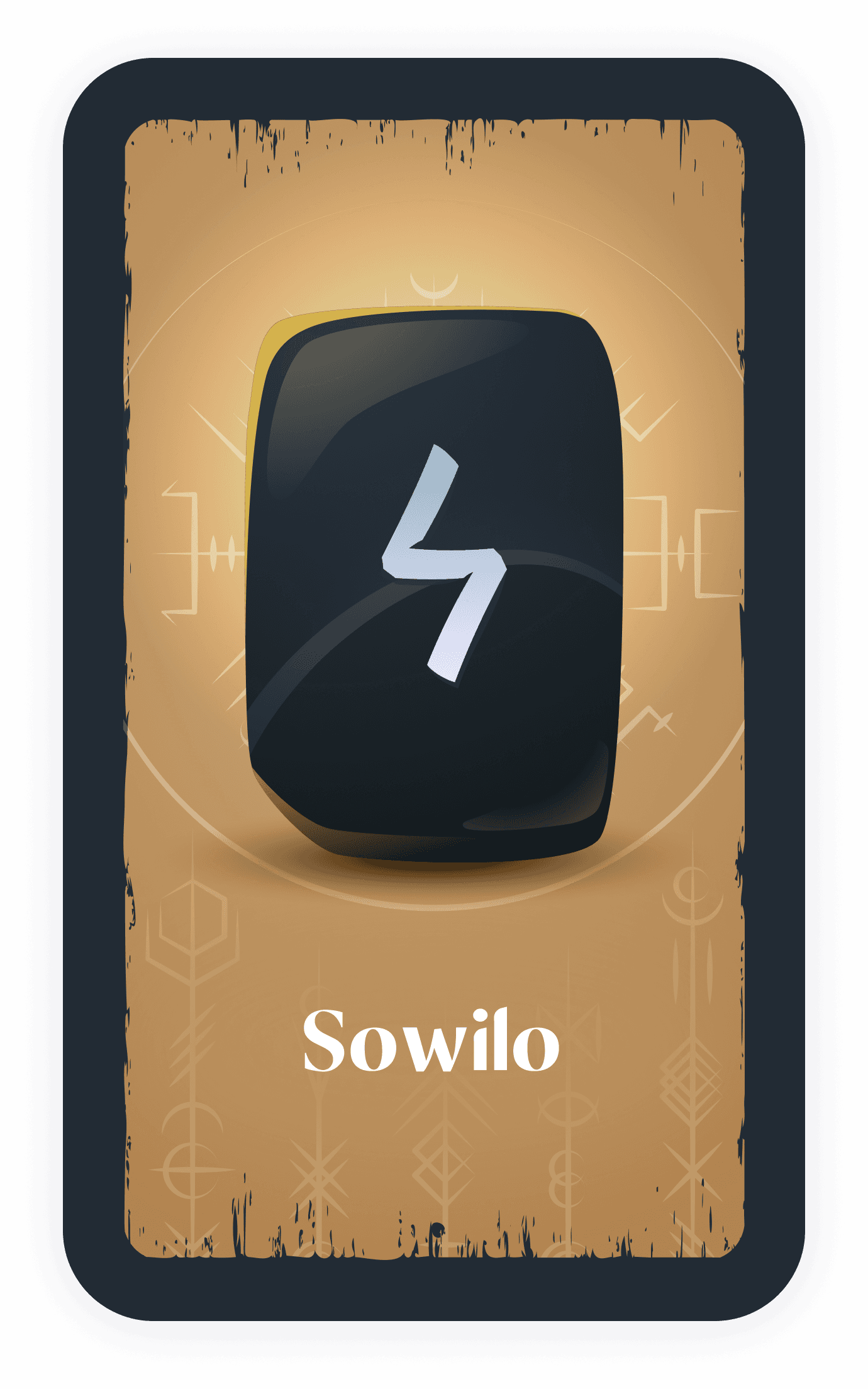
Sowilo is the sixteenth rune of the Elder Futhark and the last of its second group of eight. Its name meant the sun, and all three medieval rune poems agree. This page keeps two layers apart — what the historical record supports, and what modern rune reading has built on top of it — and notes the rune's modern misuse.
What does Sowilo mean?
Sowilo stood for the sound /s/. Its name is reconstructed from Proto-Germanic *sōwilō, "sun", related to Latin sol and Old Norse sól. The Old English rune name sigel looks different but is probably a relic of another old form of the same word, and the Gothic letter name sugil points the same way. Few rune names are this secure.
The shape changed over time. The earliest inscriptions carve a zigzag of four strokes; from about the 5th century a three-stroke form like a lightning flash takes over, and that is the form most rune sets use. The three-stroke Sowilo looks the same when turned half a turn, which matters for reversals below.
Sowilo carries modern baggage. The doubled Sowilo was the SS insignia, and neo-Nazi groups still use it. That has nothing to do with the rune's historical meaning, but if you are wearing or displaying runes it is context you need.
What do the rune poems say about Sowilo?
All three poems have a stanza for this rune, and all three read it as the sun — seen from very different places.
- Old English (the Anglo-Saxon futhorc, 8th–9th century): the sun is always a hope to seafarers crossing the fishes' bath, until the horse of the sea brings them to land.
- Old Norwegian (c. 13th century, Younger Futhark): the sun is the light of the lands, and in the second line the poet bows to divine judgement.
- Old Icelandic (c. 15th century, Younger Futhark): the sun is the shield of the clouds, a shining ray and the destroyer of ice, glossed with the Latin rota, wheel.
The poems are late and describe later rune rows. The Old English poem belongs to the Anglo-Saxon futhorc; the Norse poems to the 16-rune Younger Futhark. They are the best evidence for what the Elder Futhark names meant, not a manual for how anyone used Sowilo in a reading.
Together the stanzas treat the sun as something practical before it is anything mystical: the light you steer by, the warmth that ends the ice. The Norwegian poet adds a line of piety. Modern ideas of guidance and success follow those images closely.
Sowilo upright meaning
In modern rune reading Sowilo is one of the most plainly positive runes: success, vitality, clarity and energy made visible. Readers lean on the Old English image of a sun that brings ships home and read it as direction as much as brightness.
- Success — goals reached, a win, recognition for work done.
- Vitality — health, confidence, energy returning after a low period.
- Guidance — seeing the way clearly; a course that corrects itself.
Sowilo reversed: why there is no merkstave
The usual three-stroke Sowilo looks the same upside down, so it cannot be drawn reversed, and many rune books give it no merkstave meaning. Readers who want its shadow read it through the runes beside it: next to Isa or Hagalaz the sun can mean burnout, overexposure, pride before a fall, or success chased at any cost.
Reversed readings are a modern convention anyway. The rune poems give one stanza per rune and no inverted counterpart, and symmetrical runes such as Sowilo, Isa, Gebo and Ingwaz show the limit of the idea. More in how to read runes for beginners.
Sowilo in love and relationships
In a love reading Sowilo is warmth and visibility: a relationship that feels good in daylight, confidence between partners, affection shown openly. In a hard spread readers see too much sun instead — one partner's ego taking all the light, or a romance that burns hot and fast.
Sowilo in career and money
Sowilo is among the best runes to draw for work: success, recognition, a project finally coming together, or the clarity to choose a direction. In a difficult spread readers watch for overwork and burnout, or ambition that loses sight of the people around it.
Is Sowilo a yes or no rune?
In yes-or-no rune reading Sowilo is a clear yes, and because it cannot be reversed it stays a yes whichever way it lands. This is purely modern divinatory practice — there is no historical evidence of runes being read this way.
What is attested and what is modern
| Layer | Sowilo | How solid |
|---|---|---|
| Sound | /s/ | Solid — read in surviving inscriptions |
| Name and literal meaning | *sōwilō, sun | Strong — cognates, Gothic sugil, the poems |
| The sun as the rune's idea | In all three rune poems | Strong, but the poems are medieval |
| SS and neo-Nazi use | 20th-century appropriation | Real, and unrelated to the rune's history |
| Success, vitality, yes or no | Modern divination | 20th-century practice |
Sowilo closes Hagal's ætt, which opened with the hail of Hagalaz; the next rune, Tiwaz, begins Tyr's ætt. Readers often set it against Isa — the sun as destroyer of ice, just as the Icelandic poem has it — and beside Dagaz, the day. For the whole alphabet, see Elder Futhark rune meanings.
What does the Sowilo rune mean?
Sowilo literally meant the sun and stood for the sound /s/. All three medieval rune poems read it as the sun, a guide to sailors and a destroyer of ice. Modern rune readers use it for success, vitality, clarity and guidance.
Does Sowilo have a reversed meaning?
Not really. The usual Sowilo shape looks the same upside down, so it cannot be drawn reversed. Some readers take a darker tone from the surrounding runes, and reversed meanings in general are a modern convention.
Is Sowilo a Nazi symbol?
The rune is far older, but the SS insignia was a doubled Sowilo, and neo-Nazi groups still use that form. The historical meaning is unrelated, yet the modern association is real and worth knowing before wearing or displaying it.
Is Sowilo a yes or no rune?
In modern practice Sowilo is one of the clearest yes runes, and since it has no reversed position it reads as yes however it lands. Yes-or-no reading is modern; no historical source uses runes this way.