
The agate meaning in most crystal books is grounding, balance and stability. The history of the stone points somewhere more interesting: agate is the material the jewellery trade learned to recolour first, most thoroughly, and on the largest scale. To understand what an agate means you have to know which parts of it the earth made and which parts a workshop added.
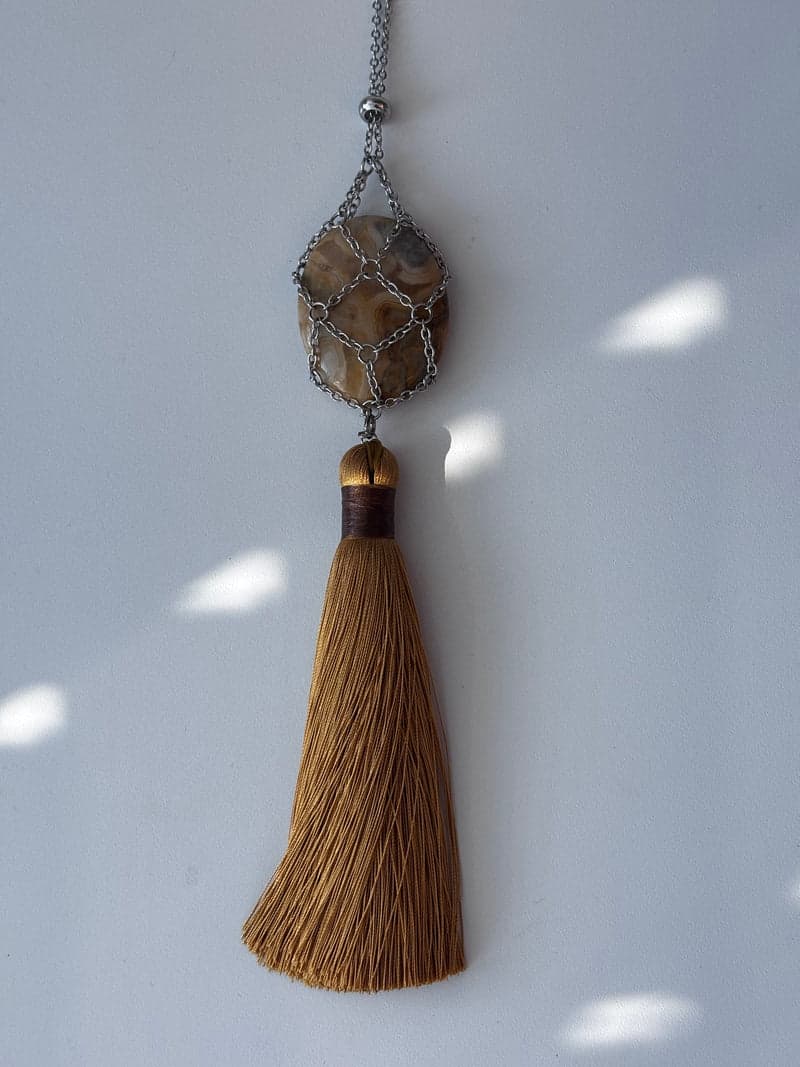
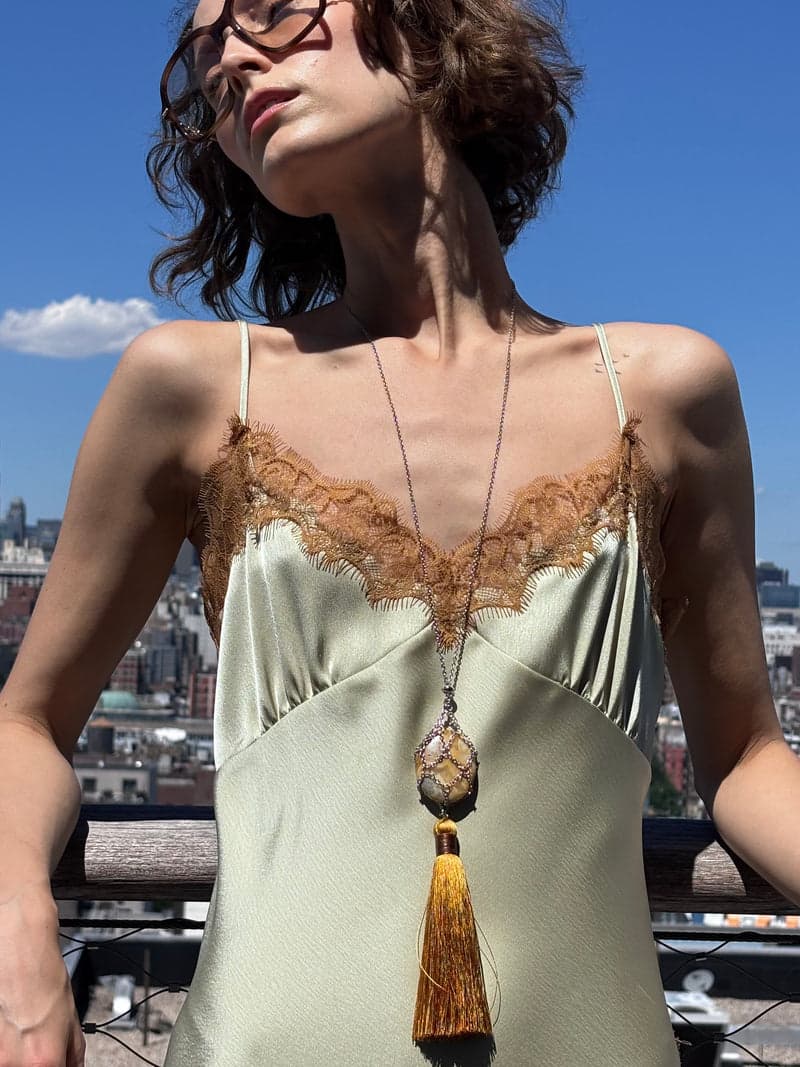
Affiliate link: if you buy through it, Astra Trainer may earn a commission. The price is the same for you.
Photographs courtesy of Aven Atelier.
What agate actually is
Agate is a banded form of chalcedony, and chalcedony is quartz in a form too fine to see. Instead of growing as the clear six-sided crystals most people picture, the silica in chalcedony packs into microscopic fibres, mixed with a small amount of a related mineral called moganite.
That fibrous structure explains almost everything about agate. It makes the stone tough and able to take a high polish, at roughly 6.5 to 7 on the Mohs scale. It lets light pass a little way in, which is why good agate glows at the edges. And it leaves tiny spaces between the fibres, so the stone is slightly porous. Porosity is the fact the rest of this article depends on.
Agate forms in cavities. Most of it grows inside gas bubbles left in cooling volcanic rock, where silica-rich water seeps in over a very long time and deposits layer after layer against the walls. Crack a nodule open and the layers run parallel to the cavity's outline, like the rings of a tree drawn in stone.
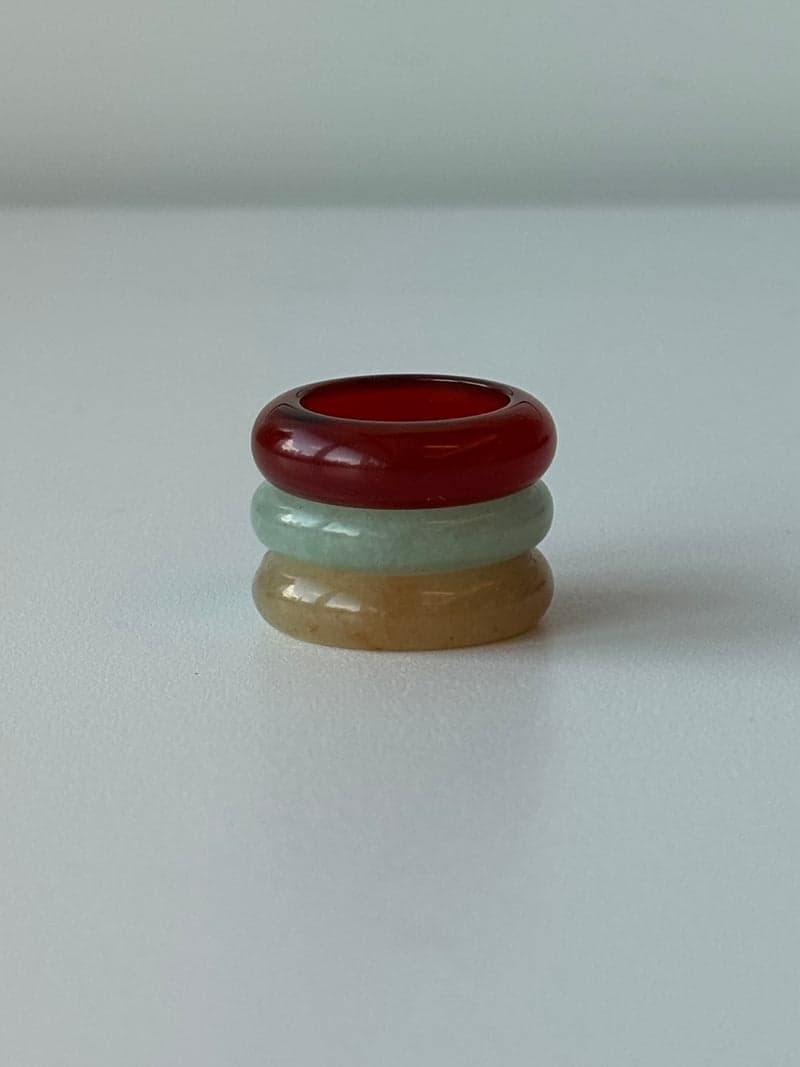
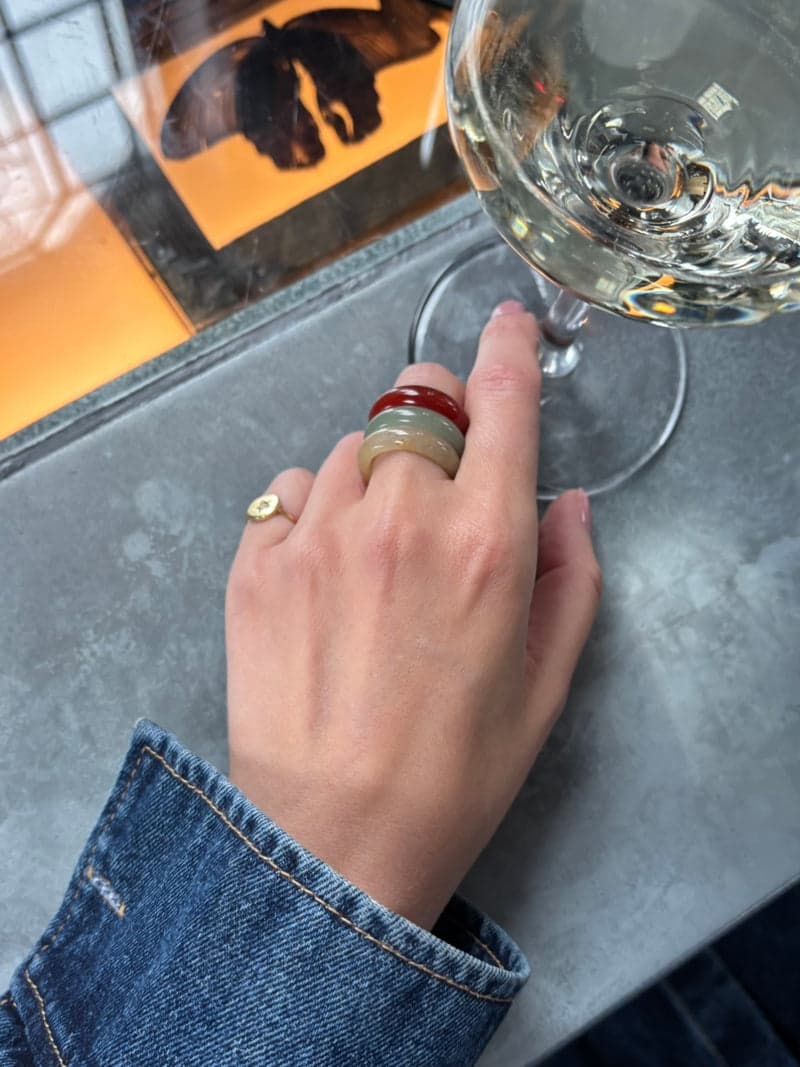
Affiliate link: if you buy through it, Astra Trainer may earn a commission. The price is the same for you.
Photographs courtesy of Aven Atelier.
A name from a Sicilian river
The name is one of the oldest in mineralogy. Theophrastus, the Greek philosopher who succeeded Aristotle, wrote around 315 BCE in his treatise On Stones that the achates took its name from the river Achates in Sicily, where it was found. The river is now called the Dirillo.
Etymologists are less sure than Theophrastus was. The river may have been named after the stone rather than the other way round, and the deeper origin of the word is unknown. What is certain is that the name has stayed attached to the same kind of material for more than two thousand years, which is rare among stone names.
Pliny the Elder, writing in the first century CE, recorded the beliefs attached to it in his time, including the claim that Sicilian agates neutralised the sting of scorpions. He was cataloguing what people said, not vouching for it, and it is worth reading modern agate meanings in the same spirit.
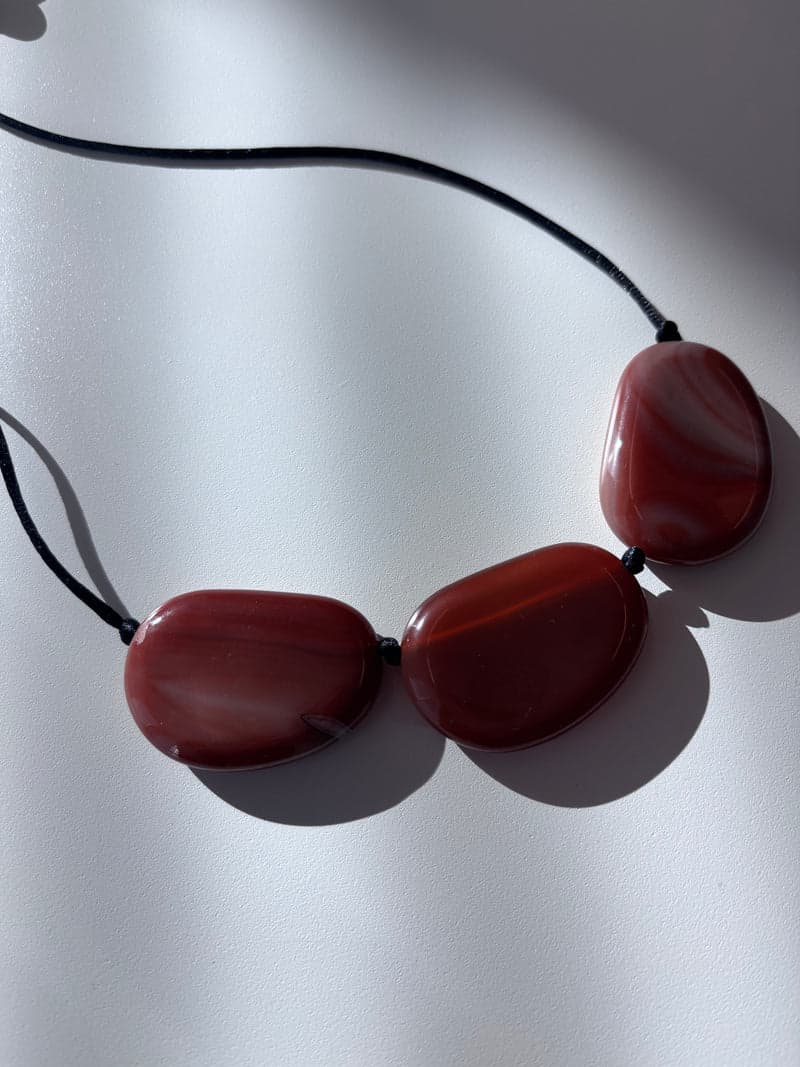

Affiliate link: if you buy through it, Astra Trainer may earn a commission. The price is the same for you.
Photographs courtesy of Aven Atelier.
How the bands form, and what nobody fully knows
The bands are the signature of the stone, and the honest position is that their formation is still argued over. Geologists agree on the broad outline: silica arrives in solution, is deposited in the cavity, and builds up over time. They do not agree on why it builds up in such regular, rhythmic layers, sometimes hundreds of them, rather than filling the space in one mass.
Competing explanations involve repeated pulses of fluid, self-organising chemical patterns within a gel, and changes in the chemistry of the silica as it crystallises. Papers on the question are still being published. For a stone found in every gift shop, that is a surprising amount of open science.
What this means for a reader is simple. The pattern in a natural agate is a record of slow, uneven deposition. It wanders, thickens and thins, and follows the shape of its cavity. That irregularity is one of the most useful things to know when you look at one.
Moss agate, which has no bands at all
Moss agate breaks the rule its name implies. It is chalcedony, but it is not banded. Instead it holds branching green inclusions, usually chlorite or hornblende, that spread through clear or milky stone like moss or small trees. The branching shapes are called dendrites, from the Greek for tree.
The trade kept the name agate anyway, and gemmologists accept it by convention. It is a small example of a pattern that runs through this whole subject: the names in use were settled by dealers long before anyone was classifying carefully, and they stuck.
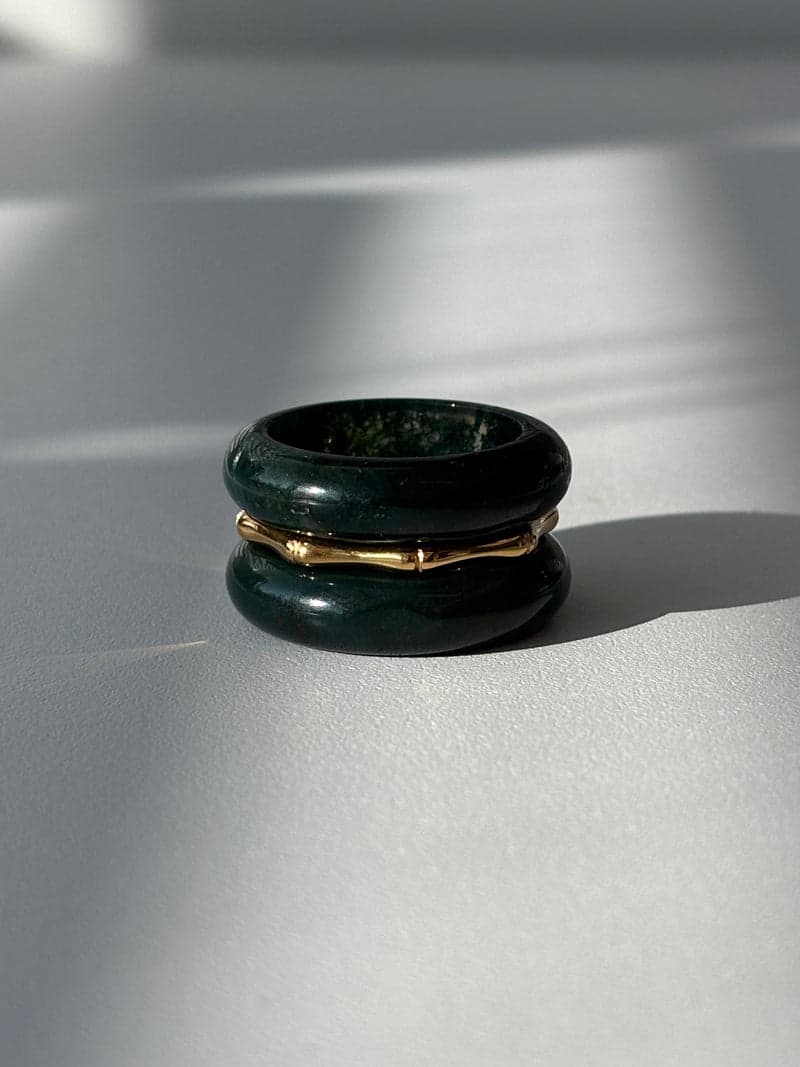
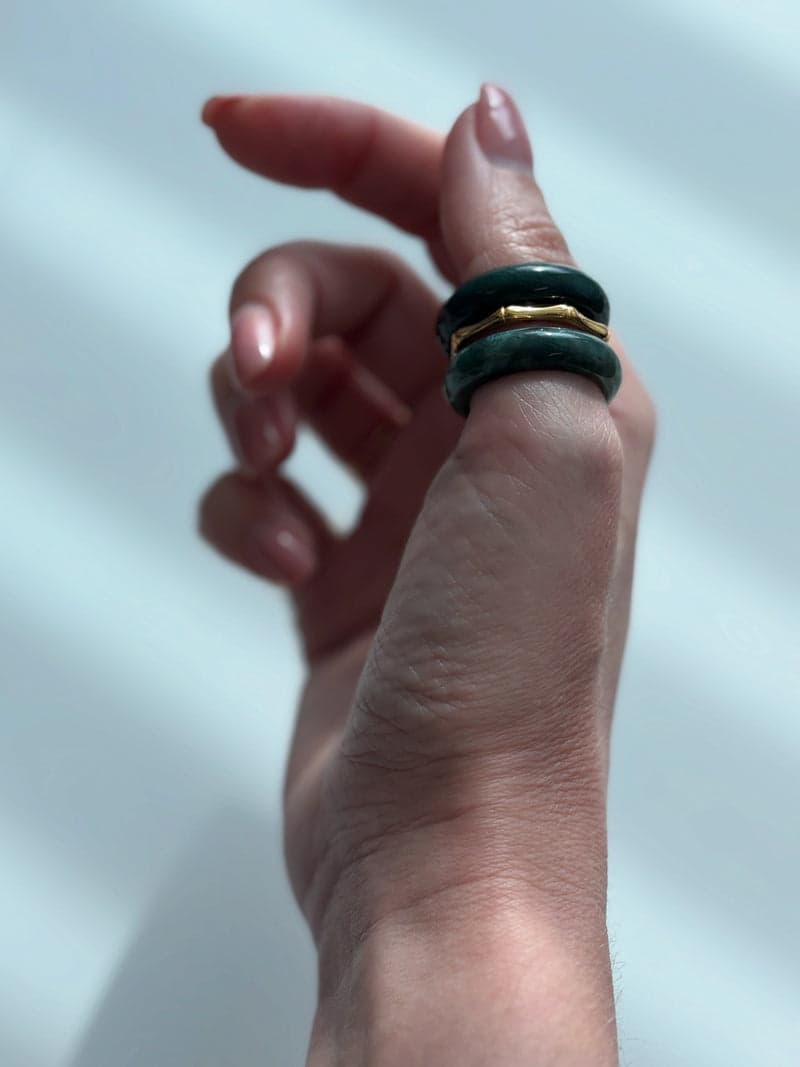
Affiliate link: if you buy through it, Astra Trainer may earn a commission. The price is the same for you.
Photographs courtesy of Aven Atelier.
Red agate and the oldest treatment
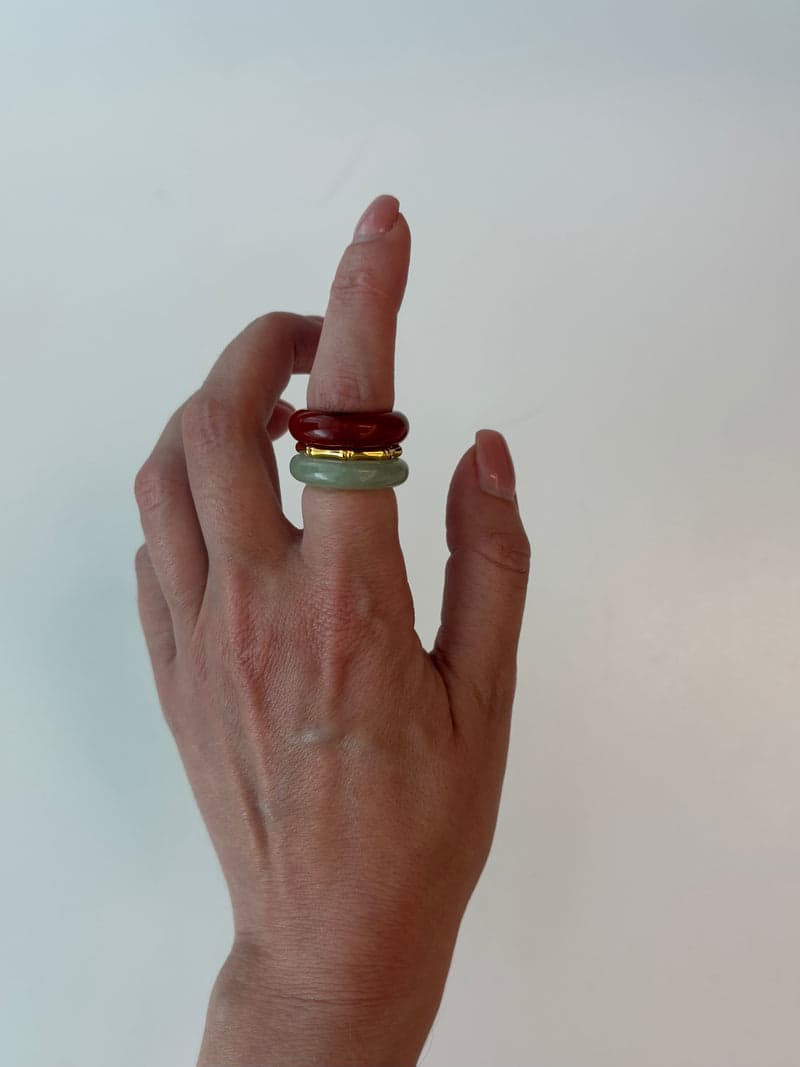
The natural colours of agate are quieter than a shop display suggests: grey, white, cream, brown, dull red and a pale, smoky blue. The reds and oranges come from iron. Where iron oxide is present in the silica, the stone warms from yellow through orange to red.
Heat pushes that further, and people learned this very early. Heating converts the iron compounds to a redder form, and heat-treated red chalcedony beads have been found at Harappan sites of the Indus Valley, from roughly 2600 to 1900 BCE. Around the Gulf of Khambhat in western India, bead makers have heated agate and carnelian in kilns and beds of hot sand for thousands of years, and the craft continues there today.
So the first treatment in the history of agate is also the gentlest. It works with what is already in the stone rather than adding anything to it, and it has been practised for so long that it is closer to a tradition than a trick.
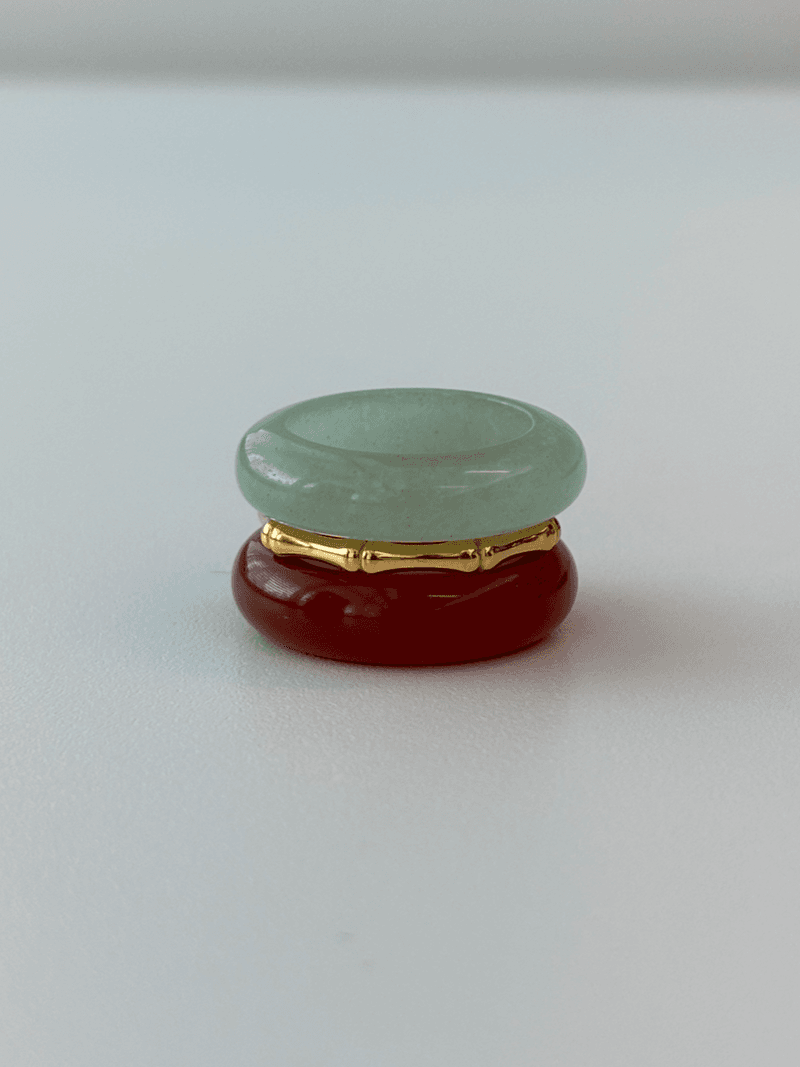
Affiliate link: if you buy through it, Astra Trainer may earn a commission. The price is the same for you.
Photographs courtesy of Aven Atelier.
Check yourselfBefore you read on: Pliny described stones boiled in honey for days, after which they could be given veins and spots. Given what you now know about agate's structure, how could soaking in honey change the pattern of a stone?Show the answerHide the answer
Through its pores. The honey soaks into the slightly porous layers, and strong acid then chars the sugar inside to carbon, which stays in the pores. Layers that absorbed more honey turn darker and layers that absorbed little stay pale, so a dull grey agate comes out with crisp black and white bands. Scholars long treated Pliny's passage as fanciful. It was not.
Pliny's honey, and the town that industrialised it
Pliny also described stones boiled in honey for seven days and nights, after which they could be given veins and spots to suit the buyer. For centuries scholars treated the passage as fanciful. It was not.
The honey soaks into the porous layers of the stone. Treated afterwards with strong acid, the sugar inside is charred to carbon, and the carbon stays in the pores. Layers that absorbed more honey turn darker. Layers that absorbed little stay pale. A dull grey agate comes out with crisp black and white bands.
The town that turned this into an industry was Idar-Oberstein, in western Germany. Its cutters had worked local agate for centuries. By the early nineteenth century the local deposits were running out, and in 1827 emigrants from the town found enormous agate deposits in Rio Grande do Sul in southern Brazil. Brazilian rough began arriving in the 1830s, and the town's workshops had the material and the method at the same moment.
The dates recorded by a family of Idar lapidaries give the sequence: black dyeing in 1819, blue from 1845 using the pigment Prussian blue, green from 1853 using chromium and nickel salts. Buyers judged rough by licking a chip and watching which bands soaked the moisture up fastest, because those were the bands that would take colour. By the early twentieth century an American mineral dealer could write that nearly all agates offered for sale were artificially coloured.

Affiliate link: if you buy through it, Astra Trainer may earn a commission. The price is the same for you.
Photographs courtesy of Aven Atelier.
Black agate, said plainly
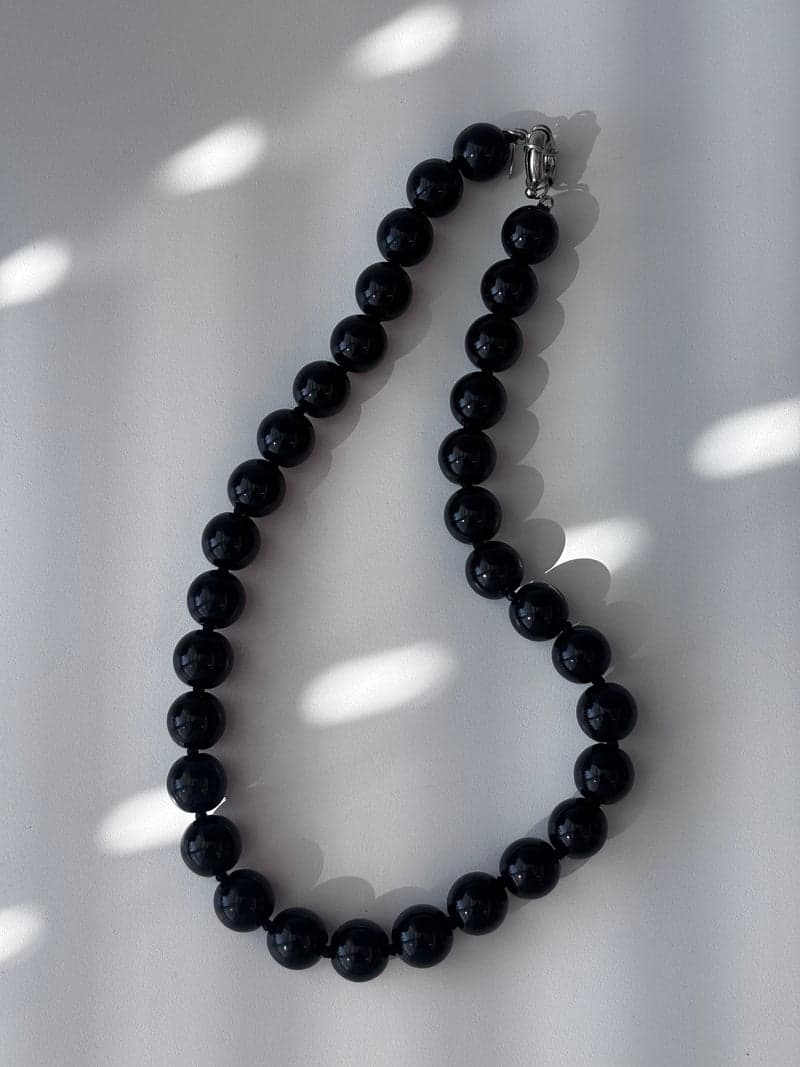
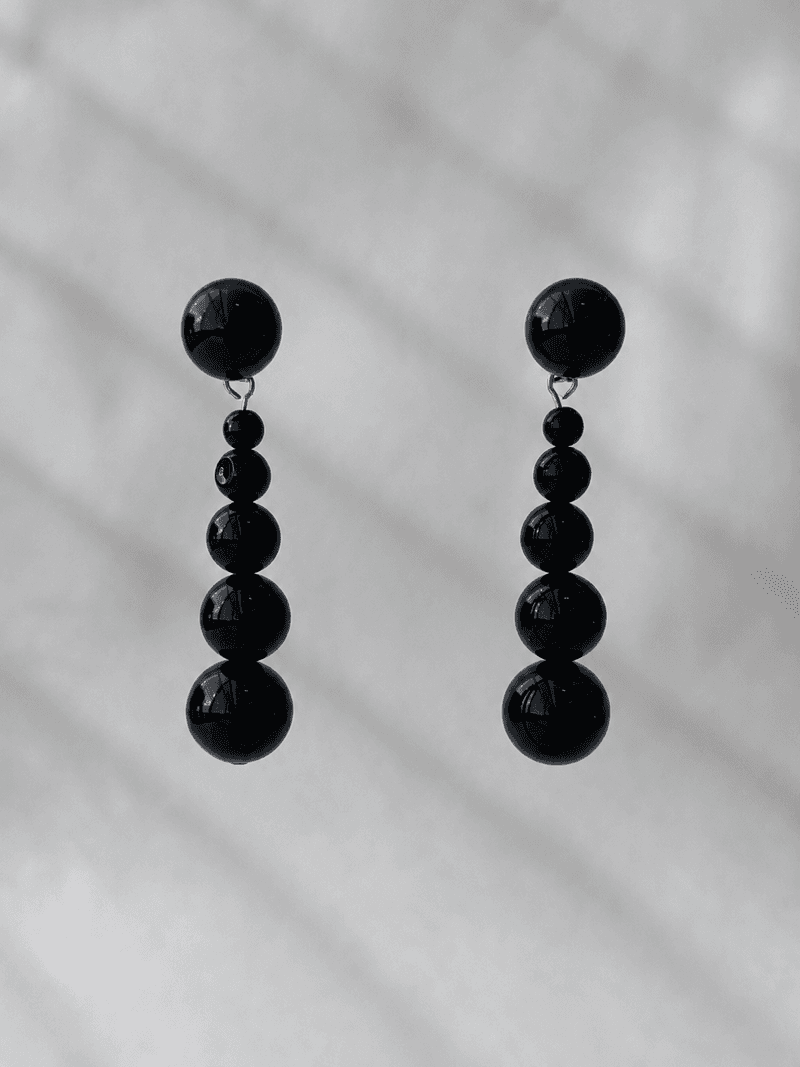
Solid, even black is not a colour natural agate usually comes in. Black agate on the market is almost always dyed, by the sugar and acid method or a modern equivalent. The same is true of most black onyx, which in the trade is usually dyed chalcedony too.
That is not a reason to avoid it. Carbon dyeing is stable, it does not wash out, and it has been done for two hundred years. A black agate bead is still chalcedony, with chalcedony's toughness and polish. The treatment changes the colour, not the stone.
What matters is that the colour is described accurately. A black agate necklace is a dyed agate necklace, and saying so costs the piece nothing.
Not a health or safety instrument. No stone treats any illness, and there is no evidence that agate or any other mineral has therapeutic effects on physical or mental health conditions. Nothing here is medical advice, and no stone should be used in place of medical care.
Affiliate link: if you buy through it, Astra Trainer may earn a commission. The price is the same for you.
Photographs courtesy of Aven Atelier.
Telling natural from dyed
You cannot always tell by eye, but a few signs do most of the work.
| What you see | What it usually means |
|---|---|
| Grey, white, cream, brown, dull red, pale blue | Colours natural agate commonly has |
| Bright blue, vivid green, pink, purple | Almost always dyed |
| Colour concentrated along cracks | Dye travelling along the easiest path |
| Translucent zones that are strongly coloured | Dye has filled layers that are naturally clear |
| Solid, uniform black | Carbon dyed, by the sugar and acid method or similar |
The single most useful sign is colour that pools in fractures. Natural colour sits in the structure of the stone. Dye goes where it can get in, and it gets in most easily through cracks, so it collects there and stops abruptly at their edges.
Beyond that, the reliable method is the same as for any stone: ask. Which colours are natural, and which are dyed or heated? A seller who knows will answer at once, and treated agate is common and inexpensive enough that nobody has a reason to be evasive about it.

Affiliate link: if you buy through it, Astra Trainer may earn a commission. The price is the same for you.
Photographs courtesy of Aven Atelier.
What to take from this
Agate is banded chalcedony, a fine-grained quartz, and its name comes from a Sicilian river recorded by Theophrastus more than two thousand years ago.
Its bands are a record of slow deposition in a cavity, and the mechanism behind their regular rhythm is still debated. Moss agate carries the name without the bands.
Red agate owes its colour to iron, and heating to deepen that red goes back to the Indus Valley. Dyeing goes back at least to Pliny's honey and became an industry in Idar-Oberstein in the nineteenth century. Solid black agate is almost always dyed.
Which is why the agate meaning worth keeping is not a list of properties. It is that this stone is a collaboration: the earth lays down the pattern over a very long time, and people have been deciding what colour it should be for almost as long as they have been wearing it.
Test yourself
Question 1 of 3
What do geologists still disagree about when it comes to agate's bands?
What is agate made of?
Agate is a banded form of chalcedony, which is quartz made of microscopic fibres rather than visible crystals, mixed with a little of a related mineral called moganite. It sits at roughly 6.5 to 7 on the Mohs scale and is slightly porous, which is why it can be dyed.
Where does the name agate come from?
Theophrastus wrote around 315 BCE that the stone was named after the river Achates in Sicily, now called the Dirillo, where it was found. Some etymologists think the river was named after the stone instead, and the deeper origin of the word is uncertain.
Is moss agate a real agate?
It is chalcedony, like all agate, but it is not banded. Its green, branching inclusions are usually chlorite or hornblende. The trade has always called it agate and gemmologists accept the name by convention.
Is black agate natural?
Almost never. Solid, even black is not a colour natural agate usually has, and black agate is dyed, traditionally by soaking the stone in a sugar solution and charring it with acid. The dye is stable and the stone is still genuine chalcedony.
How can I tell if agate is dyed?
Look for colour pooling along cracks, strongly coloured translucent zones, and colours agate rarely has naturally, such as bright blue, vivid green, pink or purple. The most reliable approach is to ask the seller which colours are natural and which are dyed or heated.
Where this leads. Crystal Meanings and Their Origins, Traced does for the whole list what this article does for one stone: it follows the modern meanings back to the people who wrote them down, and finds them younger than expected.